

Geocell for Road Construction
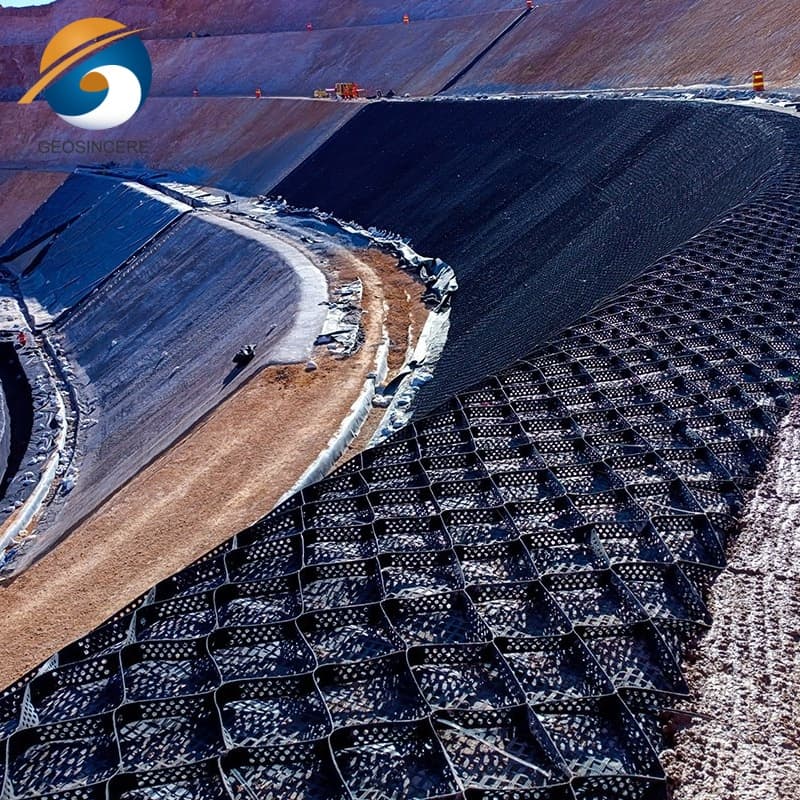
Geocell for road construction is a high-performance HDPE cellular confinement system designed to improve load distribution and stabilize weak subgrades in road construction. By forming a three-dimensional honeycomb structure filled with soil, gravel, or sand, geocells significantly enhance bearing capacity, reduce rutting, and extend the service life of roads. It is widely used in highways, access roads, and temporary construction roads due to its cost-effectiveness and easy installation.
- High Strength HDPE Material for Long-Term Durability
- Excellent Load Distribution and Ground Reinforcement
- Reduces Rutting and Maintenance Costs
- Easy Installation with Low Labor Requirements
- Suitable for Soft Soil, Sand, and Weak Subgrades
- Eco-Friendly Solution with Minimal Material Usage
Geocell for road construction refers to a modern HDPE cellular confinement system that is primarily aimed at improving ground firmness and maximizing the bearing capacity of roads. When geocell is expanded at the site, they form a three-dimensional honeycomb structure which is then filled with soil, gravel, or other materials to produce a stable and reinforced base layer. This confinement system controls the lateral displacement of the infill materials, facilitates load distribution over a larger area, and substantially enhances the load-bearing capacity of weak subgrades.
In comparison to more conventional road-building techniques, the use of geocell technology leads to fewer amounts of aggregate layers being necessary without sacrificing the long-lasting strength and resistance characteristics to rutting and settlement. Besides, it can be effectively employed in poor soil conditions like soft soil, sandy soil, and places that have high moisture levels. Due to being cheap and environmentally friendly it has become the favorite street construction material in many areas including highways, main roads, construction platforms, and temporary roads because it provides reliable performance and results in an extended lifespan.
1. Using Geocell for Road Construction is a High-Performance Cellular Confinement System
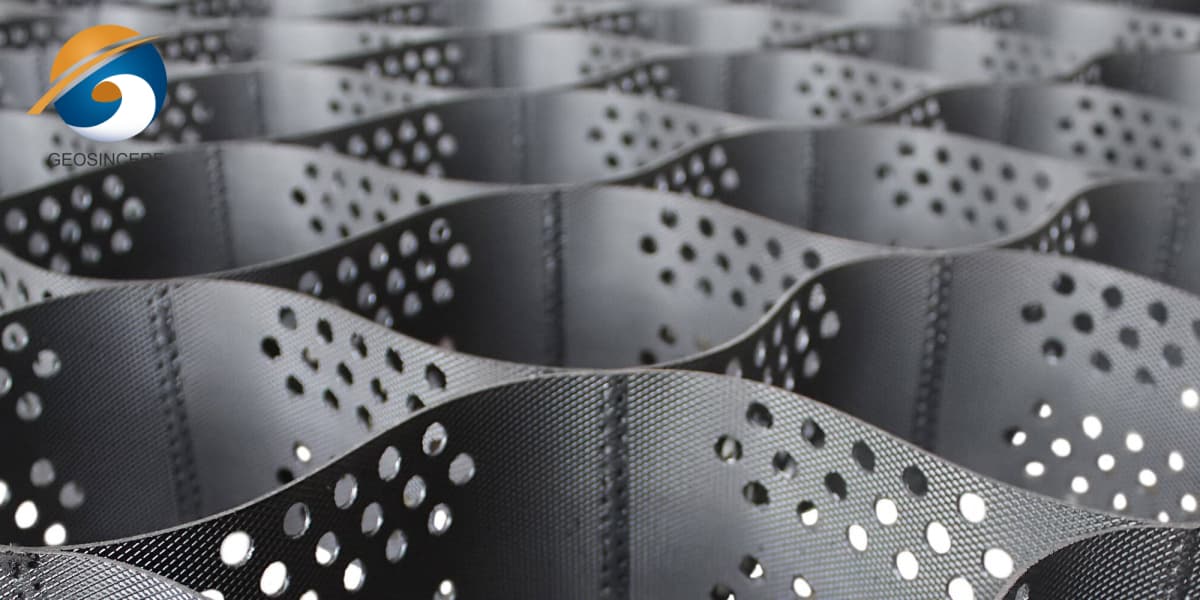
Geocell is a grid of HDPE strips welded together which is flexible and can be expanded. Once the geo geocell is laid out onsite, they are stretched and fixed; then different filling materials like crushed stones or sand can be used. Due to the cellular configuration, loading is shared very effectively over a wide area without much risk of deformation or reduction in the structural integrity.
1.1 Structure and Material Composition
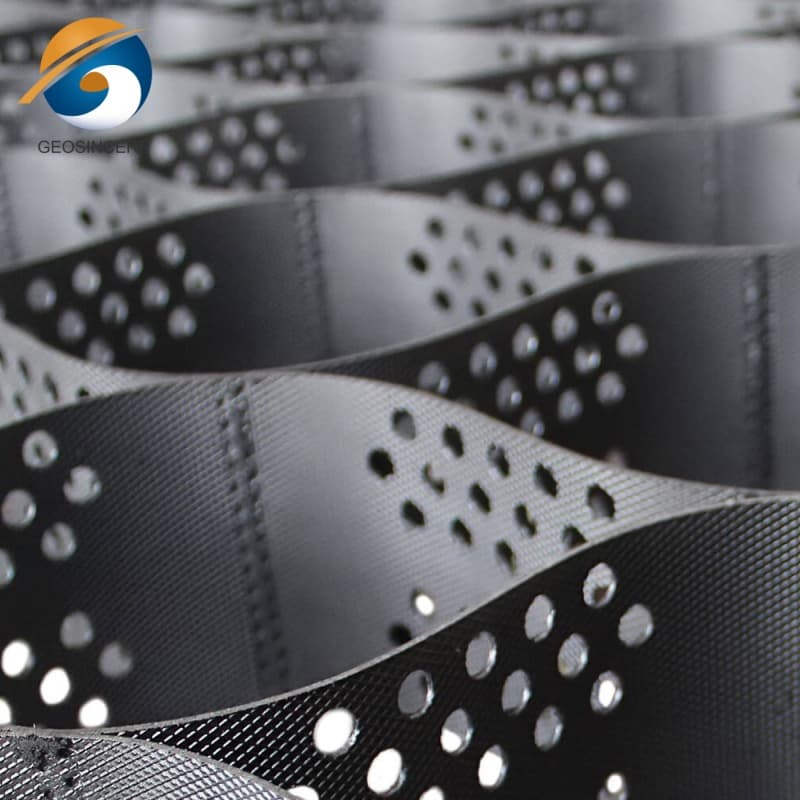
Geocell is made with tough HDPE strips which are fused with ultrasonic waves at the points where they are intersected so as to make a strong honeycomb structure. It gives greater flexibility not only at the time of installation but also in terms of tensile strength that will be used when subjected to heavy loads for a long period of time.
1.2 Working Principle of Cellular Confinement
After being expanded and loaded, the geocell structure encloses the infill materials in its cells such that their movement sideways is very limited. The confinement significantly raises the level of resistance to shear and creates a slab that is partly rigid helping to better load distribution over weak ground conditions.
1.3 Load Distribution and Ground Stabilization
The 3D structure of the geocell allows for the vertical loading to be spread over an even larger area than usual thereby lessening the stress on the sub-soil. As a consequence, issues such as sinking, getting tracks (ruts), and deforming the surface can be curtailed very much if not totally. This property makes the geocell material perfectly suited for road construction on soft or unstable ground, possibly even without presenting any layers of geotextiles.
1.4 Installation and Field Application
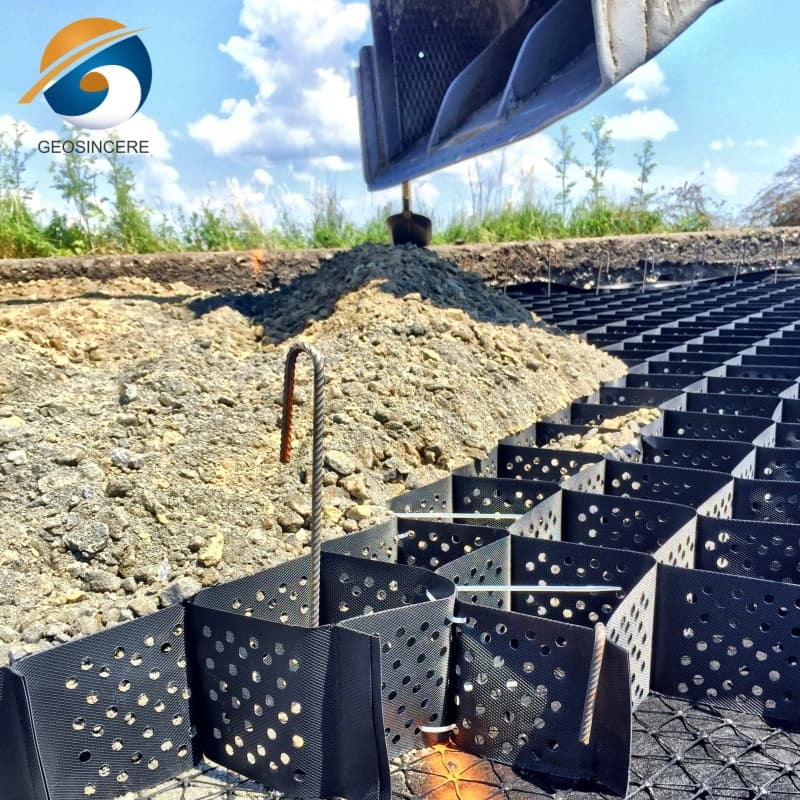
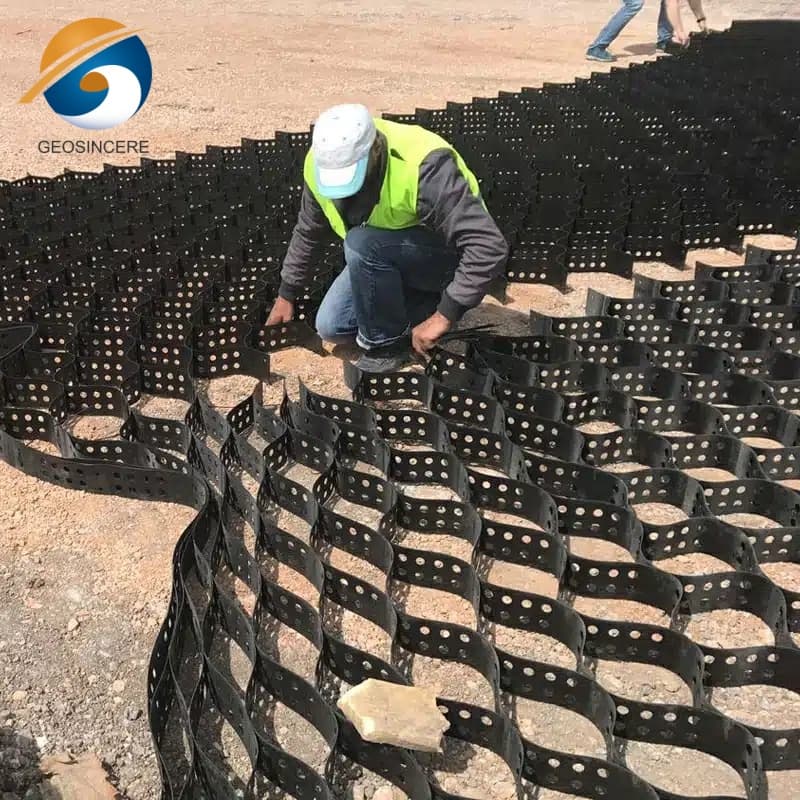
Geo cell comes in a compact form, is lightweight, and can be easily installed. Upon arrival, the panels are opened onsite, fastened with anchors, and then loaded with locally procured materials, thereby rendering the system effective and economical for different road construction projects.
2. Key Benefits of Geocell for Road Construction
2.1 Enhanced Load Distribution
One of the main features that make geocell special is its ability to redistribute loads over a significantly larger surface area which has the effect of lowering normal stresses in the subgrade layers and forbidding ending up with failure at one point only. The issue of subgrade failure caused by heavy vehicle traffic can thus be averted by ensuring that the loads are not concentrated on a small area only.
2.2 Improved Road Stability
Decreased rutting and settlements are some of the main advantages brought about by the technology of cellular confinement. So, in the long run, it will be possible to have a stable and maintain a more or less intact road structure season after season. Moreover, geocell erosion control contributes to the preservation of the road surface by virtue of its capability to withstand repeated loadings and traffic movements.
2.3 Cost-Effective Solution
Thanks to the geocell, HDPE geocell is only natural that you shall no longer require to use thick aggregate layers which in turn translates to less material being used and a decline in construction expenses overall without affecting high levels of performance at all. As a result, the option definitely suits budgets when it comes to the construction of major road projects but still without any loss of quality.
2.4 Durability and Longevity
Geocell, being a product of fine-grade HDPE, stands the test of UV rays along with chemicals and environmental stress cracking. This quality not only promises reliability over the years but even in the toughest of conditions. Such great qualities of the material make geocell work effectively in very cold or very hot weather or very aggressive environments.
2.5 Fast and Easy Installation
Its featherweight and bendy structure mean it is possible to install a whole geocell system in just a few hours and with minimal tools and workers. Besides making the construction process more efficient and the whole project shorter, use of geocell slope protection is a very neat and clean way to reclaim even very irregular terrain and you don't necessarily have to rely on the use of heavy equipment to get the job done.
2.6 Eco-Friendly Performance
Originally a military technology, geocell for driveway not only makes modern roads more environmentally friendly but also help saving nature. For one, they decrease a road construction site’s consumption of raw materials and help lower the resultant environmental footprint. Besides, geocells in road construction offer an eco-friendly alternative that helps reduce carbon emissions due to the substantial product transportation and excavation requirements.

3. Geocell for Road Construction Technical Specifications
Most commonly used road geocell specifications can be changed so that they perfectly fit a certain project and as a result help achieve optimal road performance and long-term dependability in different road construction spot conditions.
3.1 Material
Geocell road is a product of Polyethylene with high density (HDPE) that comes with great strength in tension, is elastic, and is resistant to the effect of UV rays, chemicals, and environmental stress leading to degradation of the material. Hence, the material is guaranteed to remain hardy even when exposed to very harsh outdoor conditions.
3.2 Cell Height
Cell heights from 50 mm to 200 mm, provide engineers with the flexibility of choosing the most suitable depth for load-bearing capacity, soil confinement, and slope stabilization considerations. Cell depth decisions can be made based on live load and dead load analysis that is associated with the structure and soil/stabilizing medium, respectively i.e. short cells/girders suffice for ground surfaces that are lightly loaded, while taller cells are more suitable for applications where very heavy loads are encountered.
3.3 Welding Distance
Between 300 and 800 mm apart are the spots where HDPE strips get welded thus giving rise to a strong cellular structure that can maintain its shape and stability even under heavy loads. This spacing will also come in handy for the flexibility of fitting the terrain during the installation process.
3.4 Sheet Thickness
In terms of thickness, it ranges between 1.0 mm and 1.5 mm, providing a compromise between ease of flexibility during the installation stage and robustness to sustain the wear and tear in road construction applications over time. In general, thicker sheets equate to increased load-bearing capacity whereas thinner sheets lead to increased ease of handling and expansion.
3.5 Surface
If geocell material is to be used for very heavily loaded applications, then the surface texture will have to be rough so that more interlocking between the geocell and the in situ soil can be achieved and also, for preventing any relative movement between the two. In some cases, you can even go ahead and have the surface roughened where there is a need to control interface slippage.
3.6 Color Options
In general, black and green are the two most common colors of geocells although there is an option of customization to a specific requirement of a project. The provision for custom color choice can serve the purpose of making the implementation less conspicuous and more natural or it may even correspond to the branding need of the client.

4. Geocell for Road Construction Installation Process
Despite the fact that geocell installation for road construction is quite simple and at the same time efficient, making sure that the step taken will lead one up to the final product of a stable and durable road is through a careful control of the whole process. It is equally important to remember that witness by an experienced party, each step is measured, weighed, and recorded successively in order to build from stable bases the maximum load-bearing capacity and the best function of soil stabilization.
4.1 Subgrade Preparation
Ensure that the foundation surface is free of trash, unwanted small plants, and is compacted with a layer of firm soil. Leveling is the next step as it will provide a flat surface only. Apart from this, one should carry out proper subgrade preparation to ensure that geocell panels will be laid in an even and functional manner.
4.2 Geocell Placement
First, the geocell slope is unpacked and then laid out as per the project design. Your careful work ensures the entire length of the road with its area facing will be covered in a perfect way and the panels will be laid in the correct order to achieve their best structural performance.
4.3 Anchoring
Fixed the location by using stakes, pins, or other anchors to make sure that the filling of the cells and the subsequent stages of the work won't result in their displacement. Apart from anchoring the geocell hdpe is further strengthened in the sense that the structure of the cell will be kept and, in the cases of slopes or uneven terrain, the geocell will not accidentally be dislodged which in turn can cause imperfection or even failure of a stabilized soil structure or soil-reinforced structure.
4.4 Filling
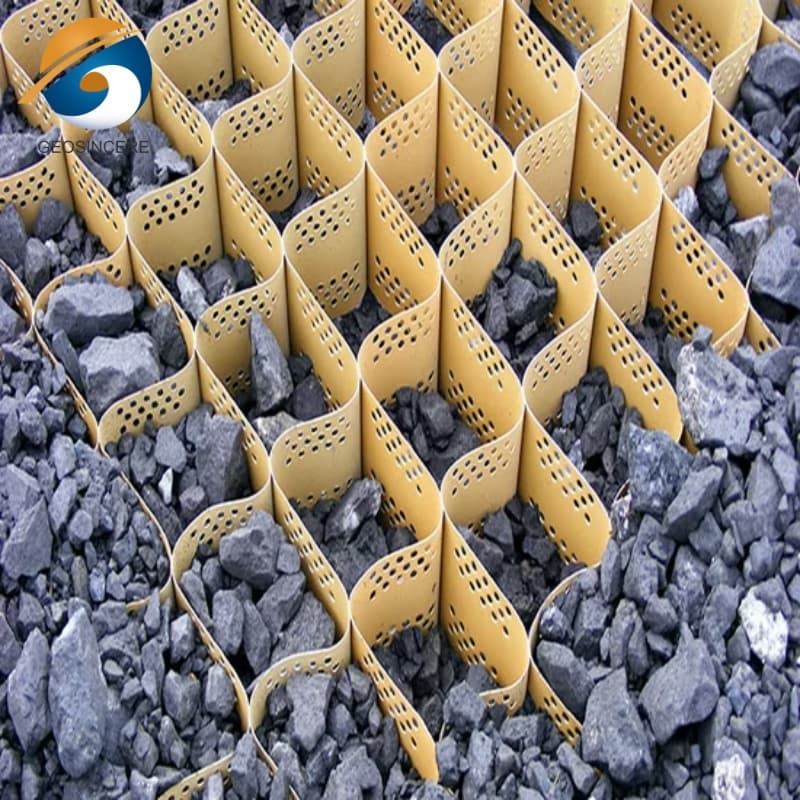
Methods of filling the cells include using crushed stone, gravel, sand, or soil. The choice of the infill material depends on the load carrying capacity & requirements and project specifications. Proper filling is essential for uniform confinement.
4.5 Compaction
The compacting after the filling is done is to enhance the density and stability of the material. Compaction leads to better distribution of loads, reduction in settlement, and ensures road surface will be durable in the long term.
5. GEOSINCERE Geocell for Road Construction Solutions Provide Reliable and Professional Support
5.1 Professional Manufacturer with Rich Project Experience
With its geocell solutions, GEOSINCERE Geosynthetics has been successfully executing road construction and civil engineering projects around the world for many years. This level of expertise helps us to give the most suitable product and technical instructions to each project for high performance.
5.2 Strict Quality Control and International Standards Compliance
The highly robust quality checks are carried out on all GEOSINCERE geocell products. Besides, these products meet the requirements of international engineering standards. So, you can always expect them to be strong, durable, and reliable.
5.3 Custom Sizes and Technical Support Available
To meet the requirements of different projects, we manufacture plastic geocell in a variety of sizes, heights, and thicknesses. Our technical experts will be happy to assist you with all your needs from design, installation, to material selection.
5.4 Competitive Factory Price with Global Supply Capability
GEOSINCERE offers world-class driveway hdpe geocell made at competitive prices directly from the factory and has the capability to support any project size globally. Also, our logistics system is very efficient & we deliver on time.
5.5 Reliable After-Sales Service and Engineering Guidance
Our dedication to our customers does not stop at simply supplying products. GEOSINCERE also offers a wide range of after-sales services, such as the provision of installation guidance, troubleshooting, and even engineering consultation, to name a few.
6. Take Action Today
Purchasing GEOSINCERE Geosynthetics Geocell is one of the best decisions you can make to enhance your road infrastructure in a way that is durable, affordable, and environmentally friendly. Our geocell systems are capable of providing excellent performance in the construction of highways, access roads, and even industrial yards.
Get in touch with us if you wish to receive a quote, technical support, or want to develop customized geocell solutions for your road construction project.
7. Geocell for Road Construction – Extended FAQ
Q1: Can Geocell Be Used in Extreme Weather Conditions?
A: Geocell is manufactured from resilient HDPE which can endure high temperatures, low temperatures, and heavy rainfall. Besides that, its cellular structure protects against material erosion and helps the road to remain stable even under severe weather conditions.
Q2: Is Geocell Suitable for Heavy Traffic Roads?
A: Geocell acts to improve the load-bearing capacity by evenly distributing the loads of traffic to the subgrade. This feature makes it well-suited for use on highways, industrial access roads, and other areas with high vehicle densities.
Q3: How Long Does a Geocell-Enhanced Road Last?
A: Geocell-reinforced roads if installed correctly and maintained adequately can outlast traditional roads by 20 to 30%. With the help of cellular confinement, the subgrade is protected from failure and the frequency of maintenance is reduced.
Q4: Can Geocell Be Used on Slopes and Hilly Terrain?
A: Geocell performs a great function when it comes to slope reinforcement and erosion control. Due to the honeycomb structure, the soil or aggregate is contained which results in the stabilization of the slope and it also prevents landslides or washouts.
Q5: What Types of Infill Materials Can Be Used with Geocell?
A: Geocell being very versatile can be filled with one type of material or a combination of gravel, crushed stone, sand, and soil, depending on the requirements of the project. The selection of infill material affects the load capacity, drainage, and durability of the road.
Q6: Does Geocell Improve Drainage?
A: Indeed. Geocell forms a semi-rigid framework that not only allows water permeability through the infill but also stops soil from washing away. What this means is that it enhances road drainage and significantly lowers both waterlogging and surface damage issues.
Q7: Can Geocell Be Installed on Soft or Weak Soils?
A: In fact, yes. Geocell acts as a reinforcement for soft or vulnerable subgrades by limiting the movement of the infill and distributing the applied loads over a larger surface area. With the help of geocell, construction can proceed in turning what would have been difficult or unsuitable soils for heavy traffic into viable ones.
Q8: How Portable and Easy to Transport Is Geocell?
A: Transporting geocell panels is quite straightforward, as they are small in size, weigh very little, and fold easily. In fact, they can be rolled up or stacked on top of each other, which adds to their convenience when working on secluded areas or handling massive projects.
Q9: How Does Geocell Contribute to Project Cost Savings?
A: To begin with, geocell helps in reducing the thickness of aggregate layers and also lessens the excavation of the subgrade, thereby saving on material, transport, and labor costs. Besides, the quicker installation also leads to shorter project durations, which means more savings.

Conclusion
Used in road construction, Geocell is a trustworthy, highly efficient, and budget-friendly means to enhance ground stability and increase pavement life. Be it permanent highways or temporary access roads, Shandong Geosino New Material Co., Ltd. (GEOSINCERE Geosynthetics) geocell systems offer excellent performance even under very demanding ground conditions, which is why this material has become a must-have in present-day civil engineering projects.


