Hdpe liner manufacturer & exporter
HDPE liner is a high-density polyethylene geomembrane engineered for fluid containment, environmental protection, and structural isolation. Manufactured through controlled extrusion and calendaring, it provides low permeability, chemical resistance, and long-term mechanical stability for industrial and civil engineering applications.
Technical Parameters & Specifications
All specifications below follow commonly adopted international engineering practices and are adjustable based on project requirements.
| Parameter | Typical Range |
|---|---|
| Density | ≥ 0.94 g/cm³ |
| Thickness | 0.5 mm – 3.0 mm |
| Width | 5 m – 8 m |
| Tensile Strength | ≥ 15 MPa |
| Elongation at Break | ≥ 700% |
| Carbon Black Content | 2.0% – 3.0% |
| Permeability Coefficient | ≤ 1 × 10⁻¹³ cm/s |
| Service Temperature | -40°C to +60°C |
Structure & Material Composition
Base Resin: High-purity HDPE resin with stable molecular weight distribution
Carbon Black: Uniform dispersion for UV resistance
Antioxidants: Thermal and oxidative aging protection
Optional Layers: Textured or conductive surface layers
Manufacturing Process
Engineering-Oriented Production Flow
Raw material batching and gravimetric dosing
High-temperature extrusion using flat-die or blown film equipment
Calendering for thickness uniformity
Surface texturing (if required)
Controlled cooling and stress relief
Inline thickness and defect inspection
Rolling, labeling, and traceability coding
Key process control points include melt temperature stability, die pressure balance, and carbon black dispersion uniformity.
Industry Comparison
| Material | Chemical Resistance | Flexibility | Service Life | Typical Applications |
|---|---|---|---|---|
| HDPE Liner | Excellent | Moderate | 20–30 years | Landfills, ponds, mining |
| LDPE Liner | Good | High | 10–15 years | Irrigation, temporary lining |
| PVC Liner | Moderate | High | 8–12 years | Decorative ponds |
| EPDM | Good | Very High | 15–20 years | Roofing, specialty containment |
Application Scenarios
Environmental protection projects for EPC contractors
Mining tailings ponds and heap leaching systems
Wastewater treatment facilities
Agricultural reservoirs and irrigation canals
Industrial chemical containment for distributors and importers
Core Pain Points & Engineering Solutions
Leakage Risk: Addressed through low-permeability resin selection and certified welding procedures
UV Degradation: Mitigated by controlled carbon black formulation
Installation Damage: Reduced via thickness optimization and surface texturing
Quality Inconsistency: Controlled through batch traceability and inline inspection
Risk Warnings & Mitigation
Avoid exposure to sharp subgrade materials without protective layers
Ensure qualified welding operators and calibrated equipment
Do not mix liners from different production batches in critical zones
Verify chemical compatibility before application
Procurement & Selection Guide
Define containment medium and chemical exposure
Confirm required thickness and surface type
Request technical datasheets and test reports
Evaluate manufacturer production capacity and export experience
Confirm compliance with relevant standards
Assess logistics, packaging, and lead time
Request project-specific samples if necessary
Engineering Application Case
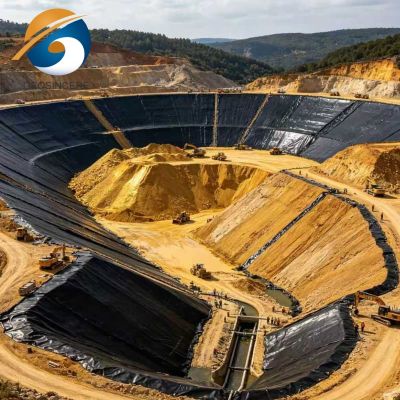
In a mining tailings pond project, a 2.0 mm textured HDPE liner was deployed over 120,000 m². The liner was factory-prefabricated, welded on-site using dual-track hot wedge welding, and subjected to non-destructive air pressure testing. The system achieved zero leakage during commissioning and remained stable under cyclic thermal conditions.
FAQ
What thickness is suitable for landfill liners? Typically 1.5–2.0 mm.
Can HDPE liners be welded on-site? Yes, using hot wedge or extrusion welding.
Are textured liners necessary? Recommended for slope stability.
What is the expected service life? 20–30 years under normal conditions.
Is UV resistance mandatory? Yes for exposed installations.
How are rolls packaged for export? PE film wrapping with steel cores.
Can liners be customized? Width, thickness, and surface finish are customizable.
What testing is performed? Tensile, tear, puncture, and permeability tests.
Is third-party inspection available? Commonly supported for export orders.
What standards are commonly referenced? ASTM and equivalent international standards.
Request Quotation or Technical Documentation
For project-based pricing, detailed technical datasheets, or engineering samples, submit your application requirements including thickness, quantity, and installation environment.
E-E-A-T Author Credentials
This article is authored by a materials engineering specialist with over 15 years of experience in geomembrane manufacturing, international project supply, and EPC technical support, contributing to large-scale environmental and industrial containment projects worldwide.