How to select Damliner?
Introduction
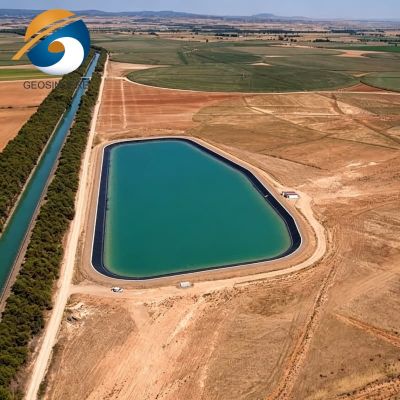
In South Africa, Australia, and several other English-speaking regions, the word "damliner" is used more often than "geomembrane" or "pond liner" in everyday conversation. A damliner is a synthetic waterproof barrier installed in an earthen dam, reservoir, or farm dam to prevent water from seeping into the ground. The term is practical rather than technical, and it reflects how these liners are actually used: to hold water in places where the soil cannot.
Water loss through seepage is one of the most underestimated problems in farm dams and small reservoirs. An unlined earthen dam sitting on sandy or fractured soil can lose more than half of its stored volume through the base and sides. In dry regions where every cubic meter of water has to be pumped, stored, and protected, that loss is not a minor inefficiency. It is the difference between a dam that works and a dam that fails its purpose. A properly installed damliner solves this problem, but only when the material, thickness, and installation are matched to the site.

1. What a Damliner Actually Is?
A damliner is a flexible polymer sheet—typically HDPE, LLDPE, or PVC—manufactured to a controlled thickness and installed as a continuous barrier across the floor and sides of a dam. The panels are joined in the field by thermal welding or solvent bonding to create a single, sealed membrane. When properly installed, the dam liner reduces seepage to near zero, holding water in storage rather than allowing it to drain into the subsoil.
The word covers a wide range of products. A dam geomembrane liner sold for a small garden dam may be 0.5 mm thick and made from PVC. A damliner specified for a commercial irrigation reservoir may be 1.0 mm or 1.5 mm HDPE, with factory-fabricated panels, welded seams, and a geotextile cushion underneath. The performance gap between these two products is enormous, even though both are called damliners.
1.1 Material Selection: HDPE, LLDPE, or PVC
The choice of geomembrane material is the first decision, and it depends on the site, the water use, and the exposure conditions.
1.1.1 HDPE
HDPE is the most durable option for larger dams and long-term storage. It offers the highest tensile strength, the best chemical resistance, and the longest service life when buried or covered. A 1.5 mm HDPE damliner meeting GRI-GM13 requirements will typically deliver tensile yield strength above 22 kN/m and puncture resistance above 480 N. HDPE is rigid, which makes it suitable for large, well-prepared surfaces. It does not conform easily to irregular ground, so subgrade preparation and a geotextile cushion are essential.
1.1.2 LLDPE
LLDPE is the flexible alternative. It stretches further before breaking—often exceeding 800 percent elongation—which allows it to settle into contours and accommodate minor ground movement without cracking. On dams with uneven bases, rocky patches, or slopes that are difficult to shape precisely, LLDPE reduces installation risk. The trade-off is slightly lower puncture resistance compared to HDPE at the same thickness.
1.1.3 PVC
PVC damliners are common in smaller dams, garden ponds, and ornamental water features. PVC is the most flexible of the three materials and the easiest to install by hand, which makes it popular for farm dams where professional welding crews are not available. The limitation is UV exposure. PVC degrades faster than HDPE when exposed to sunlight, so PVC damliners perform best when covered with soil, gravel, or water. For exposed dams in high-sunlight regions, HDPE is the more reliable long-term choice.
1.2 Thickness: Matching the Liner to the Site
Damliner thickness ranges from 0.5 mm to 2.0 mm, and the correct specification depends on three factors: the size of the dam, the condition of the subgrade, and whether the liner will be exposed or covered.
For small farm dams and garden water features, 0.5 mm to 0.75 mm is often adequate. For medium-sized irrigation dams and stock watering reservoirs, 1.0 mm is the practical minimum. For large commercial reservoirs, dams with rocky or uneven bases, and sites where equipment operates near the liner, 1.5 mm is the standard specification. For dams containing aggressive water or located on fractured rock, 2.0 mm may be justified.
The most common mistake in geo membranes damliner selection is choosing thickness as a substitute for subgrade preparation. A 2.0 mm liner laid over sharp rocks will be punctured during backfill or when the dam first fills. A 1.0 mm liner laid over a smooth, compacted base with a geotextile cushion will often outperform it. Thickness matters, but it is only one part of the system.
1.3 Subgrade Preparation and the Geotextile Cushion
The subgrade is the surface on which the damliner rests, and it determines whether the geomembrana liner survives installation and service. The base and sides of the dam must be cleared of rocks, roots, vegetation, and debris. Any sharp object left in place is a potential puncture point.
The surface should be graded smooth and compacted. Soft spots, mud, and standing water must be addressed before liner placement. If groundwater infiltrates the excavation, crews should pump and line around wet areas rather than laying the liner over them, because trapped water creates wrinkles and stress points when the dam fills.
A nonwoven geotextile cushion beneath the damliner is standard practice on any site where the subgrade cannot be walked without encountering angular material. The cushion distributes point loads and protects the geomembrane liner from irregularities in the base. For commercial and mining applications, 300 g/m² is often the minimum specification. The cushion is not a replacement for proper subgrade preparation, but it is an essential layer of protection.

2. Installation: Where Damliners Succeed or Fail
Damliner installation follows a sequence that has been refined over decades, and the details determine whether the dam holds water.
2.1 Panel placement comes first.
The hdpe membrane is unrolled across the dam floor and up the sides, with the roll direction following the longest dimension or the main slope. Panels are positioned to minimize seams and to place seams away from corners and high-stress areas. Overlaps for thermal welding are typically 100 to 150 mm.
2.2 Welding is the critical operation.
HDPE and LLDPE panels are joined using hot wedge welders for long straight seams and extrusion welders for T-joints, pipe penetrations, and repairs. Wedge temperature, speed, and pressure must be adjusted for sheet thickness and ambient conditions. A weld made in cold weather without adjusting parameters will be weak even if it looks acceptable.
2.3 Seam testing is mandatory.
Every dual-track wedge weld creates an air channel that must be pressure-tested before the hdpe geomembrane is covered. Every extrusion weld must be vacuum box tested. A pinhole leak that passes visual inspection will only reveal itself after the dam is filled, by which point repair requires draining the dam and excavating the liner.
2.4 Anchoring completes the installation.
The geomembrane sheet edges are buried in an anchor trench around the perimeter of the dam, typically 0.3 to 0.45 meters deep and 0.3 meters wide. The trench is backfilled and compacted to lock the liner in place and prevent it from slipping down the slopes.
3. Damliner Cost Considerations
3.1 Material & Manufacturing Expenses
Damliner cost depends on material, thickness, panel fabrication, and installation. Material prices for HDPE damliners range from roughly $1.50 to $3.00 per square meter for 1.0 mm to 1.5 mm sheet, with LLDPE and PVC at similar or slightly different levels depending on the market. Bulk orders and factory-direct sourcing reduce per-unit cost.
3.2 Installation & Total System Costs
Installation adds significantly to the total. Welding labor, seam testing, subgrade preparation, geotextile cushion, and anchor trench excavation can account for more than half of the installed cost. For a large dam, the installed cost of a complete damliner system may range from $10 to $25 per square meter, depending on site conditions and location.
3.3 The True Cost of Cheap Materials (Lifecycle Economy)
The cheapest damliner is rarely the most economical. A hdpe dam liners that fails after two years requires draining the dam, removing the failed material, re-preparing the subgrade, and installing a new liner—costing several times the original installation. In water storage, reliability is the primary economic value.

4. Damliner Common Mistakes to Avoid
4.1 The most frequent mistake is skipping the geotextile cushion to save money.
The cushion is inexpensive relative to the liner and the installation, and it prevents the puncture failures that are the leading cause of damliner replacement.
4.2 The second mistake is inadequate subgrade preparation.
Laying a damliner over rocks, roots, or soft mud creates problems that no thickness specification can overcome.
4.3 The third is poor seam testing.
A damliner is only as watertight as its seams. Untested seams are the most common source of leaks in new installations.
4.4 The fourth is exposing PVC liners to sunlight without protection.
PVC liner should be covered or buried for maximum service life. If the liner will remain exposed, HDPE is the better material choice.
5. Conclusion
Shandong Geosino New Material Co., Ltd. (GEOSINCERE Geosynthetics) damliner is a practical solution to a practical problem: keeping water in storage where the soil cannot. The material choice, thickness, subgrade preparation, and installation quality all determine whether the liner performs for decades or fails within a few seasons. HDPE offers the best durability for large and exposed dams. LLDPE provides flexibility for irregular sites. PVC remains a cost-effective option for smaller dams where installation is done by hand and the liner can be covered.
Select the damliner for the site, not for the price list. Prepare the subgrade, install the cushion, weld and test every seam, and anchor the edges properly. A damliner is a simple product, but a reliable water storage system depends on the decisions made before the first panel is unrolled.