

The 7 Best Liner in Landfill Options Compared
Choosing the right liner in landfill is one of the most important decisions in the design and construction of a modern landfill. A properly engineered liner system helps prevent landfill leachate from migrating into surrounding soil and groundwater while providing long-term containment for municipal solid waste, industrial waste, and other materials.
Different projects require different landfill liner systems. Factors such as waste type, landfill size, soil conditions, groundwater level, climate, regulatory requirements, slope geometry, and expected service life all influence the appropriate liner selection.
This guide compares seven common landfill liner options based on specifications, cost considerations, durability, installation, and performance.
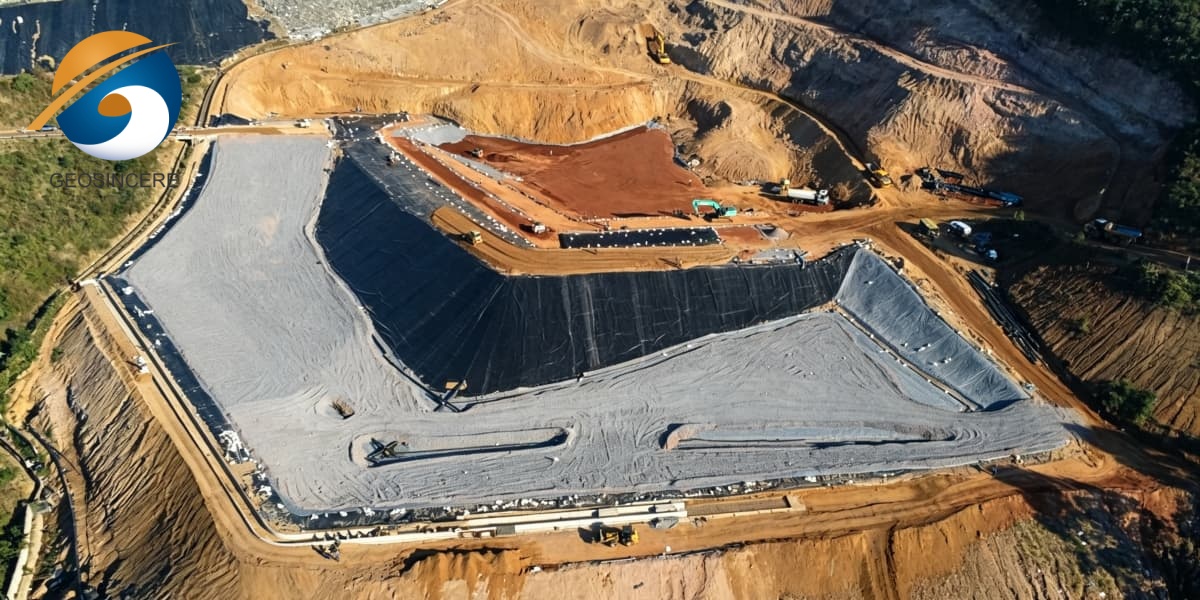
1. Landfill Liner: Smooth HDPE Geomembrane
1.1 What is an Liner in Landfill?
A smooth HDPE geomembrane is one of the most widely used materials in landfill containment applications. HDPE, or high-density polyethylene, provides a flexible and low-permeability barrier between waste and the underlying environment.
HDPE geomembranes are commonly manufactured in thicknesses such as 1.0 mm, 1.5 mm, 2.0 mm, and 2.5 mm, depending on project requirements.
A typical landfill liner structure may include compacted clay or another low-permeability soil layer underneath the geomembrane.
1.2 Advantages of Smooth HDPE
Smooth HDPE provides several important benefits:
- Very low permeability
- High tensile strength
- Good puncture resistance
- Good chemical resistance
- Excellent weldability
- Suitable for large-scale landfill projects
- Relatively efficient installation
Because HDPE geomembranes can be manufactured in large rolls, they can cover extensive landfill areas while minimizing the number of individual panels.
1.3 Cost and Performance
Smooth HDPE is generally considered a cost-effective option when compared with more specialized liner materials. However, the total project cost depends on thickness, resin quality, roll dimensions, transportation, installation, welding, testing, and site preparation.
For many large landfill projects, HDPE provides a strong balance between cost and long-term performance.
2. Liner in Landfill: Textured HDPE Geomembrane
2.1 Why Use a Textured Liner in Landfill?
A textured HDPE geomembrane has a textured surface designed to provide greater interface friction than a smooth membrane.
This can be particularly valuable on landfill slopes, where the stability of the complete liner system must be carefully considered.
A landfill may contain several layers, including geotextiles, drainage materials, geomembranes, and waste. These layers must remain stable under both static and changing loading conditions.
2.2 Key Applications
Textured HDPE can be considered for:
- Landfill side slopes
- Steep containment areas
- Leachate collection systems
- Composite liner systems
- Applications requiring increased interface friction
Textured geomembrane is often combined with smooth geomembrane in the same landfill project. For example, smooth material may be used on flatter areas while textured material is selected for slopes.
2.3 Cost Considerations
Textured HDPE may cost more than a comparable smooth geomembrane. However, the additional cost can be justified where improved interface friction helps meet the stability requirements of the engineered liner system.
The correct choice should be based on engineering calculations rather than price alone.
3. Liner in Landfill: Composite Geomembrane and Clay Systems
3.1 What Is a Composite Liner in Landfill?
A composite landfill liner combines a geomembrane with a low-permeability soil layer, commonly compacted clay or an engineered soil barrier.
The basic concept is to create multiple containment barriers rather than relying on one material.
A simplified composite liner structure can look like:
Waste → Drainage Layer → HDPE Geomembrane → Compacted Clay → Prepared Subgrade
The exact configuration depends on the landfill design and applicable regulations.
3.2 Why Use Multiple Barriers?
The purpose of a composite liner is to improve overall containment performance.
If one component experiences a localized defect, the additional low-permeability layer can provide another barrier against leachate migration.
This is especially important for engineered landfills where environmental protection is a major design objective.
3.3 Performance vs. Cost
Composite systems generally require more materials and installation processes than a single geomembrane layer, so the initial construction cost can be higher.
However, the additional protection may make a composite geomembrane liner more appropriate for high-risk landfill applications.

4. Liner in Landfill: Geosynthetic Clay Liner (GCL)
4.1 What is a GCL Liner in Landfill?
A geosynthetic clay liner, commonly called a GCL, is a geosynthetic product containing a layer of bentonite clay supported by geotextiles.
When hydrated under appropriate conditions, bentonite can form a low-permeability barrier.
GCLs can be used as part of composite landfill liner systems and may provide an alternative to certain compacted clay layers where site conditions and engineering requirements permit.
4.2 Benefits of GCL
A GCL can offer several practical advantages:
- Consistent manufactured thickness
- Relatively easy transportation
- Faster installation than thick compacted clay layers in some situations
- Lower material volume
- Good hydraulic barrier performance when properly designed
GCL can be particularly useful where obtaining suitable natural clay is difficult.
4.3 Important Limitations
A GCL should not automatically be considered a replacement for every compacted clay layer.
Performance can be influenced by:
- Hydration conditions
- Overburden pressure
- Chemical compatibility
- Installation quality
- Bentonite characteristics
- Confinement
Therefore, the GCL must be selected as part of the overall landfill liner system.
5. Liner in Landfill: PVC Geomembrane
5.1 PVC as a Landfill Liner Material
PVC geomembrane is another flexible membrane option for containment applications.
PVC can offer good flexibility and may be suitable for certain waste containment and environmental engineering applications.
Its properties differ from HDPE, so the choice should be based on the specific chemical, mechanical, installation, and environmental requirements of the landfill.
5.2 PVC vs. HDPE Landfill Liner
HDPE is often preferred for large landfill projects because of its strong mechanical properties, chemical resistance, and established thermal welding methods.
PVC may offer advantages in certain applications where flexibility and specific installation characteristics are important.
When comparing PVC and HDPE, buyers should evaluate:
- Thickness
- Tensile strength
- Elongation
- Puncture resistance
- Chemical compatibility
- UV resistance
- Welding method
- Expected service life
- Total installed cost
The lowest material price does not necessarily represent the lowest overall project cost.
6. Liner in Landfill: Reinforced Geomembrane
6.1 What Is a Reinforced Liner in Landfill?
A reinforced geomembrane incorporates a reinforcement layer within the membrane structure.
The reinforcement can improve dimensional stability and mechanical performance for certain specialized applications.
However, reinforced geomembranes are not necessarily the standard choice for every large municipal landfill.
6.2 When Should Reinforced Geomembranes Be Considered?
They may be considered when a project has particular requirements related to:
- Dimensional stability
- Installation conditions
- Specialized containment structures
- Difficult geometries
- High mechanical demands
Before selecting reinforced material, engineers should compare it with conventional HDPE geomembrane and other landfill liner systems.
7. Liner in Landfill: Double-Liner and Leachate Collection Systems
7.1 What Is a Double Landfill Liner System?
For demanding landfill applications, a double-liner system can provide multiple containment barriers.
The leak detection layer can help identify potential leakage from the primary containment barrier.
7.2 Why Is Leachate Collection Important?
Landfill waste can generate landfill leachate, a liquid that may contain dissolved and suspended substances from the waste.
An engineered leachate collection system is designed to collect and control this liquid rather than allowing uncontrolled migration into surrounding ground.
The liner and leachate collection system should therefore be considered together.
7.3 Cost and Performance
Double-liner systems require more materials, construction time, drainage components, and quality control. Consequently, they generally have a higher initial cost.
However, for projects with stringent environmental protection requirements, the additional containment and monitoring capabilities can provide significant value.

8. Liner in Landfill: How to Compare Specifications
8.1 Thickness
Thickness is one of the first specifications buyers normally compare.
Common HDPE geomembrane thicknesses include:
- 1.0 mm
- 1.5 mm
- 2.0 mm
- 2.5 mm
A thicker membrane generally provides greater material thickness and can offer increased resistance to certain mechanical stresses.
However, thicker does not automatically mean better. The required thickness should be determined according to the landfill design and expected loading conditions.
8.2 Mechanical Properties
Important specifications include:
- Tensile strength
- Elongation
- Tear resistance
- Puncture resistance
- Stress-crack resistance
- Dimensional stability
These properties help determine whether a geomembrane can withstand the conditions expected during installation and service.
8.3 Chemical Resistance
Landfill leachate can have complex chemical characteristics.
Therefore, material compatibility should be evaluated when selecting a HDPE landfill liner, particularly for industrial or specialized waste facilities.
9. Liner in Landfill: Cost Factors to Consider
9.1 Material Price
The quoted price per square meter is important, but it should not be the only factor used to compare suppliers.
A lower material price can sometimes be offset by:
- Higher installation costs
- More complicated welding
- Higher transportation costs
- Greater material waste
- Shorter expected service life
- Poor technical support
9.2 Installation Cost
Large landfill projects require extensive welding and quality control.
Installation costs may include:
- Site preparation
- Geotextile installation
- Geomembrane deployment
- Thermal welding
- Seam testing
- Repairs
- Final inspection
For this reason, suppliers offering technical support and reliable production can provide value beyond the material itself.
10. Liner in Landfill: How to Choose the Best Option?
10.1 Consider the Waste Type
The first consideration should be the type of waste being contained.
Municipal solid waste, industrial waste, hazardous waste, and other waste streams can have different containment requirements.
10.2 Consider Site Conditions
The site assessment should consider:
- Soil conditions
- Groundwater
- Climate
- Rainfall
- Temperature
- Landfill slope
- Foundation conditions
These factors can influence both the geomembrane selection and the overall liner configuration.
10.3 Consider the Complete System
A geomembrane should not be evaluated in isolation.
11. Conclusion
Selecting the right landfill liner requires more than comparing the price per square meter.
Smooth HDPE geomembrane is an attractive option for many large containment projects because of its low permeability, mechanical strength, chemical resistance, and efficient welding characteristics. Textured HDPE can be useful where additional interface friction is required, particularly on slopes. GCL and composite liners can provide additional barrier layers, while PVC and reinforced geomembranes may be suitable for more specialized applications.
For a successful landfill project, buyers should evaluate the entire containment system, including geomembranes, geotextiles, drainage layers, clay barriers, leachate collection, and installation quality.
For landfill developers, contractors, and material buyers, requesting detailed technical specifications, test reports, quality-control documentation, and project-specific recommendations from the manufacturer is an important step before placing a large order.


