Ultimate Guide to Waterproof Geomembrane
Introduction
A waterproof geomembrane is a synthetic barrier designed to prevent liquid migration into or out of a containment structure. It is used wherever water, leachate, or chemical solutions must be held in place—landfill cells, irrigation reservoirs, aquaculture ponds, mining leach pads, wastewater lagoons, and decorative lakes. The material itself is typically a thin, flexible polymer sheet manufactured from high-density polyethylene, linear low-density polyethylene, polyvinyl chloride, or flexible polypropylene. What separates a functioning waterproof geomembrane from a failed one is rarely the polymer name on the datasheet. It is the thickness, the seam quality, the subgrade preparation, and whether the installer understood what the liner was actually protecting against.

1. What Makes a Waterproof Geomembrane?
Waterproofing in geomembrane terms is not an absolute property. Every polymer allows some vapor transmission at a molecular level. What makes a geomembrane waterproof in practice is its hydraulic conductivity—the rate at which liquid passes through the intact sheet under pressure. Quality geomembranes achieve hydraulic conductivity below 10⁻¹² cm/s, which is effectively impermeable for containment purposes. A one-meter head of water pressing against a properly installed HDPE liner will lose less than a millimeter of water per year through the intact sheet.
The permeability of the seam is a different matter entirely. A geomembrane sheet may be perfectly waterproof, but if the field seams contain pinholes or cold welds, the containment system leaks. This is why seam testing is not optional. Every dual-track wedge weld must be air-pressure tested before the liner is covered. Every extrusion weld at a pipe penetration, corner, or repair must be vacuum box tested. A seam defect that passes visual inspection will only reveal itself after the pond is filled, by which point the repair cost has multiplied by an order of magnitude.
1.1 Material Types and Where They Perform
HDPE is the most widely specified waterproof geo membranes for environmental containment. It offers the highest tensile strength, the best chemical resistance, and the longest service life when buried. A 1.5 mm HDPE liner meeting GRI-GM13 requirements delivers tensile yield strength of at least 22 kN/m, puncture resistance above 480 N, and a projected service life exceeding fifty years in buried conditions. HDPE is rigid, which makes it ideal for large flat areas like landfill bases and mining pads, but it requires careful subgrade preparation because it will bridge over voids rather than conform to them.
LLDPE is the flexible alternative. It achieves elongation at break exceeding 800 percent, which allows it to conform to irregular subgrades, settle into contours, and accommodate differential settlement without cracking. On sites where the ground cannot be perfectly graded—most agricultural ponds and smaller reservoirs—LLDPE's flexibility reduces installation risk. The trade-off is lower puncture resistance compared to HDPE of the same thickness.
PVC geomembrane is the most flexible of the common waterproofing materials. A 40 mil PVC liner can be folded, bent around tight corners, and installed by crews with less specialized equipment than HDPE requires. PVC is frequently specified for irrigation canals, decorative ponds, and smaller aquaculture operations. Its limitation is UV sensitivity. PVC exposed to direct sunlight degrades faster than HDPE or LLDPE, so PVC liner should be buried or covered for maximum service life.
Flexible polypropylene, sometimes called fPP, occupies a middle position. It offers better chemical resistance than PVC and more flexibility than HDPE. It is used in some industrial containment applications where the chemical profile rules out other materials.

1.2 Thickness: Matching the Specification to the Risk
Waterproof hdpe liner thickness ranges from 0.5 mm for light decorative applications to 2.0 mm or more for hazardous waste containment. The correct thickness depends on what the liner is protecting against.
For decorative ponds and small water features, 0.5 mm to 0.75 mm is often sufficient. For commercial aquaculture ponds, irrigation reservoirs, and wastewater lagoons, 1.0 mm is the practical minimum. For landfill primary containment, mining leach pads, and industrial ponds where heavy equipment operates near the liner, 1.5 mm is the standard specification. For extreme applications with sharp subgrade or severe chemical exposure, 2.0 mm liners are specified.
The decision should not be based on thickness alone. A 1.0 mm HDPE geomembrane installed over a geotextile cushion on a smooth, compacted subgrade will outperform a 2.0 mm HDPE liner laid directly on rocky ground. The subgrade and the cushion are part of the waterproofing system, not separate from it.
1.3 Chemical Resistance and Application Matching
A waterproof geomembrane must resist the chemistry of what it contains. HDPE is resistant to a broad range of acids, alkalis, salts, and hydrocarbons, which is why it dominates landfill and mining applications. PVC offers good resistance to many chemicals but is more susceptible to certain solvents and oils. LLDPE falls between the two in chemical resistance.
For potable water storage, the liner must meet NSF/ANSI Standard 61 for drinking water contact. For aquaculture, the hdpe membrane must be fish-safe—formulated without plasticizers or additives that could leach into the water and harm aquatic life. These are not optional certifications. A liner that meets structural requirements but fails water quality standards is the wrong product for the application.
1.4 Installation Practices That Determine Performance
The installation of a waterproof geomembrane follows a sequence that has been refined over decades, but the details still determine success or failure.
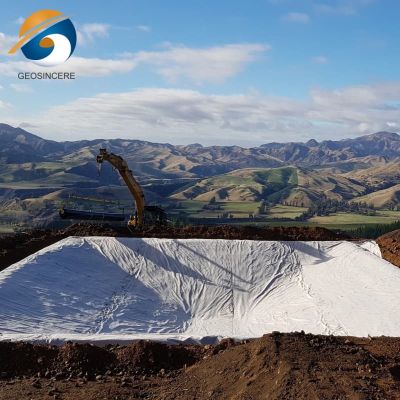
Subgrade preparation comes first. The surface must be smooth, compacted, and free of standing water. Rocks, roots, and construction debris must be removed. On sites where groundwater infiltrates the excavation, crews must pump and line around wet areas rather than over them. Laying a liner over mud or standing water creates wrinkles that become stress concentrations when the pond is filled.
Geotextile cushion placement follows. A nonwoven geotextile beneath the hdpe geomembrana distributes point loads and protects against subgrade irregularities. For aquaculture and mining applications, 300 g/m² is often the minimum specification. The cushion is not a substitute for proper subgrade preparation, but it is an essential second layer of protection.
Panel placement and welding come next. HDPE panels are positioned with the roll direction following the slope or flow path. Overlaps are typically 100 to 150 mm for wedge welding. Welding parameters—wedge temperature, speed, and pressure—must be adjusted for sheet thickness and ambient conditions. A weld made in cold weather without adjusting parameters will be weak even if it looks acceptable.
Seam testing is the final quality gate. Air-pressure testing of dual-track welds and vacuum box testing of extrusion welds must be performed before the high density polyethylene geomembrane is covered. Any defect found during testing is a defect that will not become a leak after filling.
1.5 Common Failure Modes and How to Avoid Them
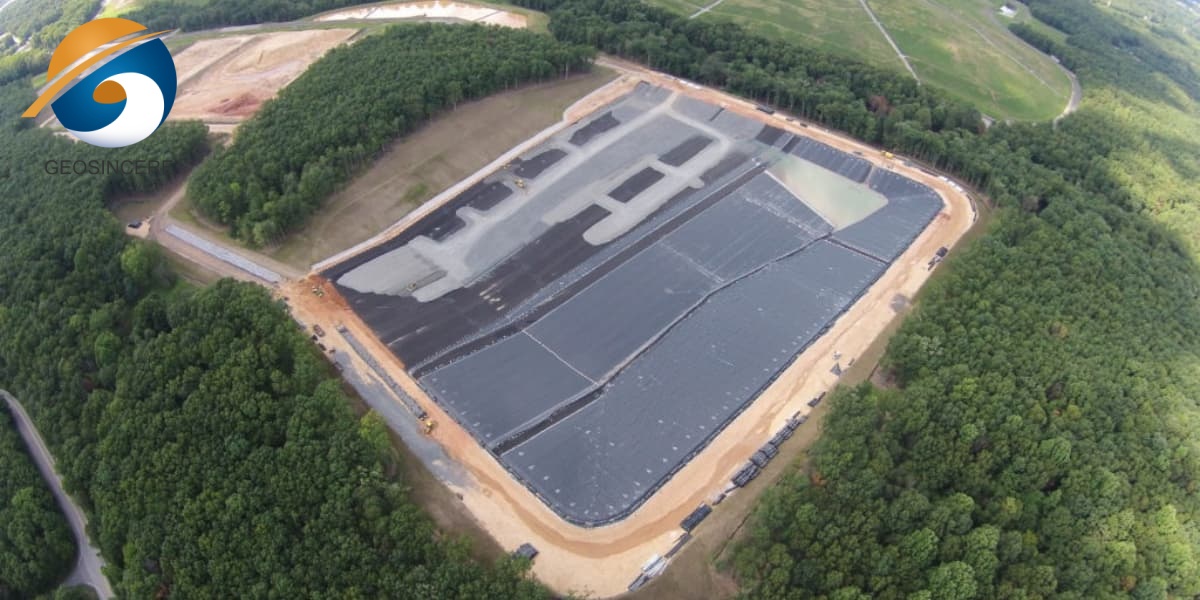
Waterproof geomembranes fail for predictable reasons. The most common is puncture during installation or backfill placement. This happens when the subgrade contains sharp objects, when the geotextile cushion is omitted or too light, or when cover material is dumped directly onto the liner rather than spread from the edge inward.
The second most common failure is seam defects. Cold welds, inadequate overlap, and contaminated contact surfaces all produce seams that pass visual inspection but leak under pressure. Air-pressure testing catches these defects before they become expensive.
UV degradation is the third major failure mode. Geomembrana in hdpe exposed to sunlight without adequate carbon black stabilization become brittle and crack at the waterline. Buried liners are protected; exposed liners must be specified with UV-stabilized formulations and inspected periodically.
Chemical incompatibility is the fourth. A HDPE geo membrane selected for mechanical properties but not chemical resistance may swell, soften, or dissolve when exposed to the contained liquid. Material selection must begin with the chemistry of the application.
2. Conclusion
Shandong Geosino New Material Co., Ltd. (GEOSINCERE Geosynthetics) waterproof geomembrane is a straightforward concept—a flexible polymer sheet that holds liquid—but a successful containment system depends on decisions made long before the first panel is unrolled. The polymer must match the chemistry. The thickness must match the mechanical risk. The subgrade must be prepared. The seams must be welded and tested. The cover must protect the liner from UV and physical damage.
HDPE, LLDPE, PVC, and fPP each occupy a specific position in the waterproofing landscape. None is universally superior. The right choice depends on what is being contained, where the liner will be installed, and how long it must perform. Specify the material for the application, verify it with third-party test data, and treat installation as an engineering operation rather than a construction formality. The liner is only as good as the system around it.