

What is Geotextile Nonwoven Fabric?
In the vast and often hidden world of civil and environmental engineering, few materials have revolutionized practice as quietly and profoundly as geotextile nonwoven fabric. These synthetic textiles, engineered for use within soil, rock, earth, or any other geotechnical-related material, form an integral part of the modern built environment. Unlike their woven counterparts, nonwoven geotextiles are manufactured through a process of entangling fibers mechanically, thermally, or chemically, resulting in a felt-like, porous sheet. This structure grants them a unique set of functions—separation, filtration, drainage, and protection—making them indispensable in applications ranging from road construction and landfill management to coastal defense and drainage systems. This article delves into the manufacturing processes, key properties, fundamental functions, and diverse applications of geotextile nonwoven fabrics, arguing that they are a foundational, if unseen, engine driving sustainability, durability, and efficiency in contemporary geotechnical projects.

1. Geotextile Nonwoven Fabric Manufacturing Processes: Creating the Engineered Felt
The performance of a geotextile nonwoven fabric is intrinsically linked to its method of production. The process begins with the extrusion of polymers, predominantly polypropylene or polyester, into continuous filaments or short staple fibers. These fibers are then formed into a loose web. The method of web formation and subsequent bonding defines the fabric's characteristics.
1.1 Web Formation:
1.1.1 Dry-Laid (Carding)
Staple fibers are combed (carded) into a parallel or cross-laid orientation to form a web. This method allows for good control over web uniformity and weight.
1.1.2 Spunbond (Polymer-Laid)
This is a continuous, integrated process where molten polymer is extruded through fine spinnerets to form endless filaments. These filaments are then laid randomly onto a moving conveyor belt, creating a web directly from the polymer melt. Spunbond fabrics are known for their high tensile strength and consistency.
1.2 Bonding Techniques:
1.2.1 Needle-Punching
This is the most common method for geotextiles. Barbed needles repeatedly punch through the fibrous web, mechanically entangling the fibers to create a strong, felt-like fabric. Needle-punched nonwovens are typically thick, with high porosity and in-plane permeability, making them excellent for filtration and drainage.
1.2.2 Heat-Bonding (Calendaring)
The web is passed through heated rollers (calenders) that melt the fiber surfaces at contact points, fusing them together. This produces a thinner, smoother fabric with lower porosity but high specific strength. Often used in combination with spunbond (spunbond-meltblown-spunbond, or SMS composites) for geotextiles requiring fine filtration.
1.2.3 Chemical Bonding
Binders or adhesives are applied to the web to glue fibers together. Less common for heavy-duty geotextiles but used for specific, lighter applications.
The combination of these processes allows engineers to specify geotextile fabric with precisely engineered thickness, weight, strength, and pore structure.
2. Geotextile Nonwoven Fabric Key Properties and Functions: The Multifunctional Workhorse
The value of geotextile nonwoven fabrics lies in their ability to perform multiple geotechnical functions simultaneously, often replacing traditional granular layers and complex, multi-layer systems.
2.1 Separation
This is a primary function. When placed between two dissimilar soil layers (e.g., soft subgrade and clean aggregate base in a road), the nonwoven fabric prevents their intermixing. Without separation, the stronger aggregate can be punched down into the soft soil, and fine soil particles can migrate upward into the aggregate, leading to a loss of structural integrity and premature failure. The fabric's toughness and permeability allow it to maintain the integrity and design characteristics of each layer indefinitely.
2.2 Filtration
Nonwoven fabrics, especially needle-punched ones, excel as filters. When placed adjacent to soil in drainage applications (e.g., behind retaining walls, around French drains, or in coastal structures), they allow water to flow through while preventing the uncontrolled migration of soil particles. The dense, random fiber network creates a tortuous pore structure that retains soil while maintaining water flow, preventing clogging (piping) and ensuring system longevity.
2.3 Drainage
Due to their significant thickness and in-plane porosity, nonwoven geotextiles can transmit water (or gases) within their plane. This function is crucial for relieving pore water pressure behind walls, in embankments, or beneath sport fields. They act as a "drainage core," conveying fluids to an outlet, thereby enhancing stability and performance.
2.4 Protection
Nonwovens act as a cushioning or protective layer. A common application is protecting geomembranes (impermeable liners) in landfills or reservoirs from puncture by sharp stones or irregularities in the subgrade. The non woven geotextile fabric absorbs and distributes local stresses, ensuring the integrity of the critical barrier layer.
2.5 Reinforcement
While woven geotextiles are typically stronger for pure tensile reinforcement, certain heavyweight needle-punched nonwovens contribute to soil reinforcement through confinement and interface friction. They help distribute loads and improve the performance of fill materials over weak soils.

3. Geotextile Nonwoven Fabric Applications: From Highways to Landfills and Beyond
The versatility of geotextile nonwoven geo fabric is demonstrated in their wide range of applications:
3.1 Transportation Infrastructure
They are ubiquitous in road, railway, and airport runway construction. Used for separation and filtration between subgrade and base course, they extend pavement life, reduce required aggregate thickness, and lower long-term maintenance costs. They are also used in subsurface drainage systems alongside roads to prevent water accumulation.
3.2 Environmental Protection
This is a critical domain. In modern landfill design, non woven geotextile is used in multiple layers: as a protective cushion above and below the geomembrane liner, as a filter in leachate collection systems, and as a filter in gas venting layers. In erosion control, they are used as underlayment for revetments (riprap) on slopes and shorelines, providing filtration and stabilization.
3.3 Drainage Systems
They are the filter wrap around perforated pipes, aggregate-filled drains, and prefabricated drainage composites. This application is vital in retaining walls, sport field drainage, plaza decks, and green roofs, where effective water management is paramount.
3.4 Hydraulic and Marine Works
In riverbank protection, coastal defenses, and canal construction, nonwoven fabrics prevent soil loss while allowing water pressure equalization. They are used beneath armor units (like concrete blocks or rock) in breakwaters and seawalls.
3.5 Geocomposites
Nonwovens are often laminated to other geosynthetics (like geonets or geomembranes) to create multifunctional geocomposites. For example, a drainage geocomposite might consist of a plastic drainage core thermally bonded to nonwoven filter fabrics on one or both sides.
4. Geotextile Nonwoven Fabric Advantages and Sustainability Impact
The adoption of geotextile drainage fabric brings significant technical, economic, and environmental benefits. Technically, they offer consistent, engineered performance, are lightweight and easy to install, and improve the long-term reliability of structures. Economically, they often reduce the need for high-quality, imported granular materials, lower transportation and labor costs, and accelerate construction timelines.
From a sustainability perspective, their impact is profound. By extending the service life of infrastructure, they reduce the frequency of repairs and reconstructions, conserving raw materials and energy. They enable the use of marginal, on-site soils that would otherwise be unsuitable, minimizing excavation and borrow-pit activities. In erosion control and landfill applications, they play a direct role in preventing environmental contamination and protecting ecosystems.
Conclusion
Geotextile nonwoven fabric is far more than simple felt or a piece of cloth; it is a highly engineered polymer-based product designed to solve fundamental geotechnical problems. Its random, entangled structure is its genius, providing an optimal balance of separation, filtration, drainage, and protection. From the roads we drive on to the landfills that manage our waste, from the walls that hold back earth to the systems that drain our fields and stadiums, this unassuming material works silently beneath the surface. As civil and environmental engineering continues to grapple with challenges of sustainability, resilience, and cost-efficiency, the role of geotextile nonwoven fabrics as a critical enabling technology will only grow more vital. It is truly the unseen engine, quietly ensuring the stability, durability, and environmental compatibility of our modern world.
Choose a reliable supplier to quote price for you :
Shandong Geosino New Material Co., Ltd. (GEOSINCERE Geosynthetics) is the professional Geosynthetic clay liners and geosynthetics manufacturer and wholesaler located in Shandong Province, China. We are an professional manufacturer, exporter and wholesaler for such geosynthetic products as HDPE Pool Liner, geotextiles, geogrids, geocells, geosynthetic clay liners (geosynthetic clay linerss), drainage boards, etc.
We have been exporting Geosynthetic clay liners and geosynthetics to over 100 countries such as Australia, France, Sweden, UK, Hong Kong, Hungary, New Zealand, Poland, Mexico, Ecuador, Brazil, Pakistan, Bangladesh, Thailand, Vietnam, Malaysia, Indonesia, Singapore, Philippines, Sri Lanka, India, UAE, Saudi Arabia, Qatar, Kenya, Ghana, Ethiopia, Somalia, Nigeria, South Africa, Switzerland, Mongolia, etc. They choose Geosincere as partner for more than 10 years.
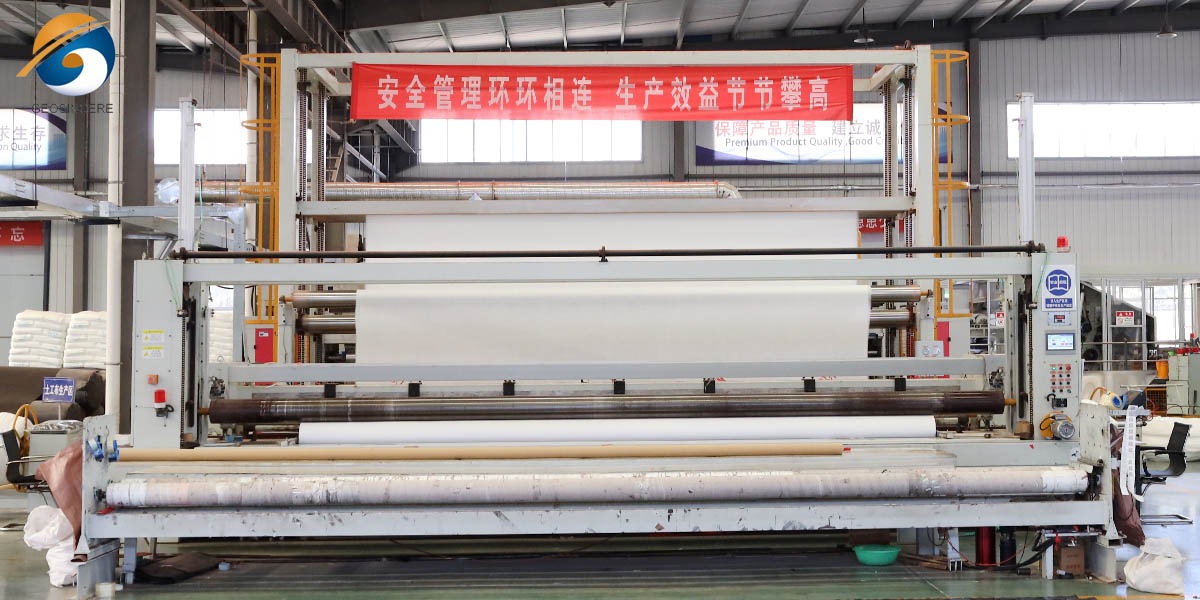
GEOSINCERE Geosynthetics has been keeping on investing in technological innovation, manufacturing facilities improvement and turnkey engineering abilities. We have invested 10 million dollars into our manufacturing factory which is equipped with state-of-the-art automatic production lines to manufacture high quality Geosynthetic clay liners and other geosynthetics with optimized processes. Our extensive lines of geosynthetics products are well known for their ensured quality, high performance, excellent durability and best cost effectiveness.
GEOSINCERE brand geotextile and other geosynthetics products and solutions can meet your requirements by our solid technologies, innovative engineering solutions and excellent customer services. GEOSINCERE always tries our best to solve the most complex civil, mining and environmental challenges with our innovative and high performance geosynthetic products. Quality assurance, factory price and fast delivery time are our competitive advantages.


