

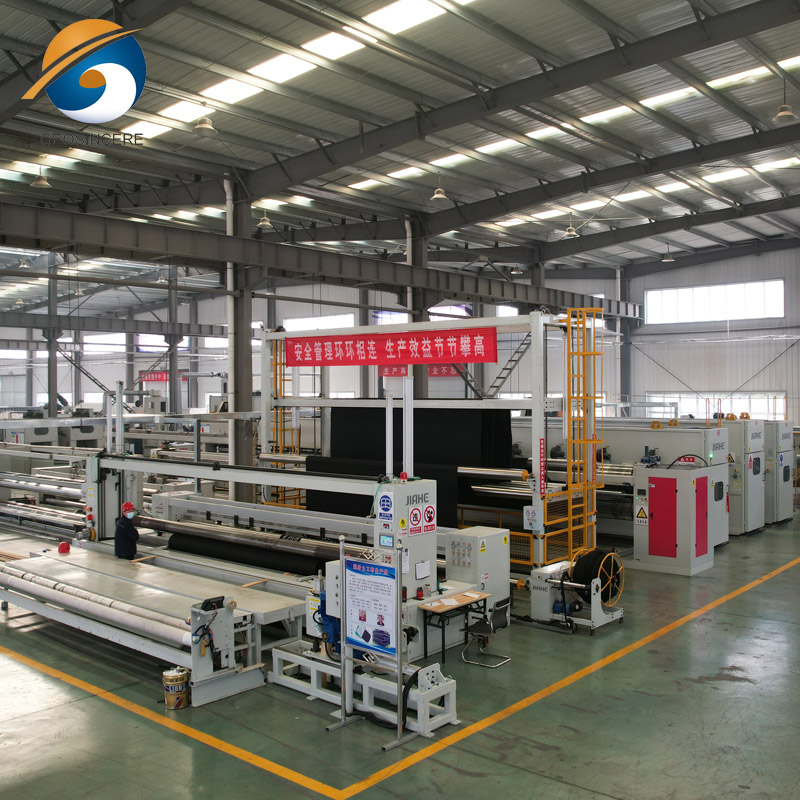
Geotextile for Slope Protection
Geotextile for slope protection is a permeable geosynthetic that stabilizes soil, prevents erosion, and supports vegetation. Installed on slopes, it provides filtration and reinforcement—allowing water to drain freely while holding fine soil in place against heavy rain and runoff.
- Superior Soil Erosion Control: Retains fine soil particles against rainfall impact and high-velocity water runoff.
- High Tensile & Puncture Resistance: Withstands lateral soil forces and prevents installation damage from sharp rocks or angular aggregates.
- Optimal Drainage & Permeability: Relieves hydrostatic pressure behind the slope face while maintaining effective subsurface filtration.
- Vegetation Growth Support: Stabilizes seedbeds and root systems to accelerate green slope restoration.
- UV & Chemical Durability: Resistant to continuous sunlight exposure, ground acids, alkalis, and biological degradation.
1. Geotextile for Slope Protection Solutions
Geotextile for slope protection is a synthetic, permeable geosynthetic material engineered specifically to stabilize soil structures, mitigate erosion, and support long-term vegetation establishment. Rather than acting as a simple temporary blanket, slope protection geotextile functions as a continuous separation, filtration, and reinforcement layer installed directly onto bare or structural slopes.
By allowing water to drain freely while holding fine soil particles in place, these engineered fabrics prevent deep soil migration, counteract hydraulic drag forces, and protect slope integrity under severe rain, surface runoff, or continuous water flow.
1.1 Core Functions on Slope Systems:
- Soil Erosion Prevention: Holds fine topsoil particles in place against surface runoff.
- Hydraulic Flow Dispersion: Breaks up sheet flows and dissipates kinetic energy from water movement.
- Subsurface Filtration: Permits water passage while preventing internal soil piping.
- Vegetation Growth Support: Creates a stable root zone substrate for seeded or planted vegetation.
- Soil Matrix Reinforcement: Adds tensile capacity to unstable, weak slope surfaces.
1.2 Primary Application Environments:
Highway and railway embankment slopes
Riverbanks, canal linings, and shoreline embankments
Dam spillways, dikes, and drainage channels
Commercial landscaping and residential retaining structures
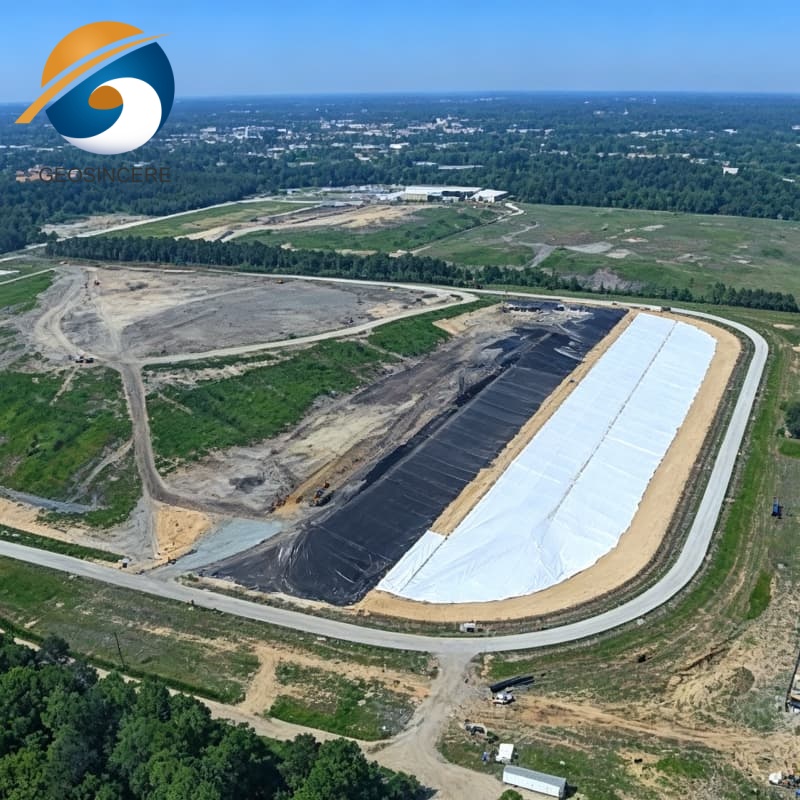
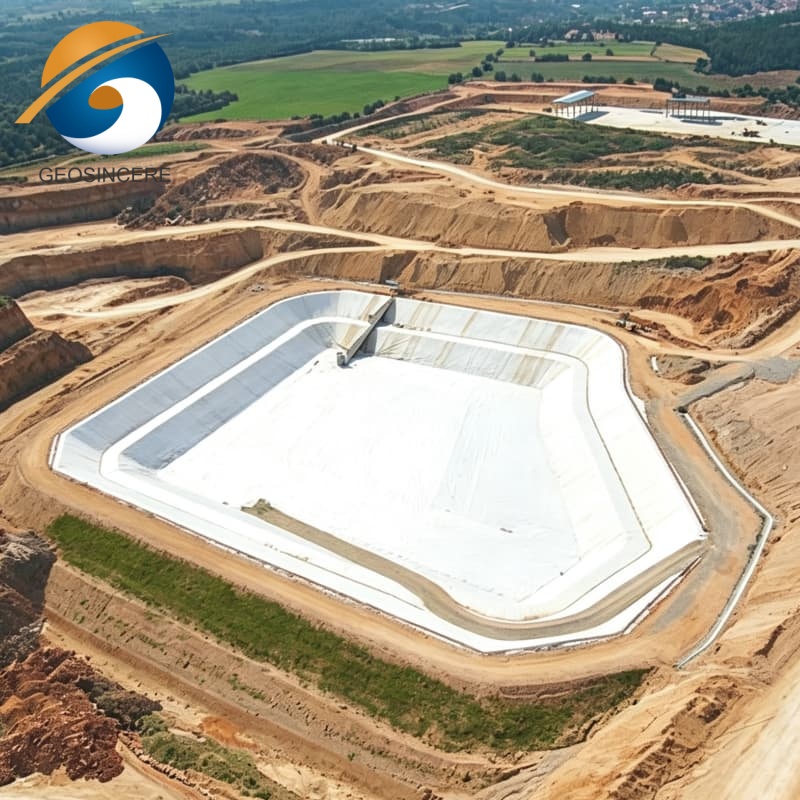
Mining tailing ponds and soil restoration slopes
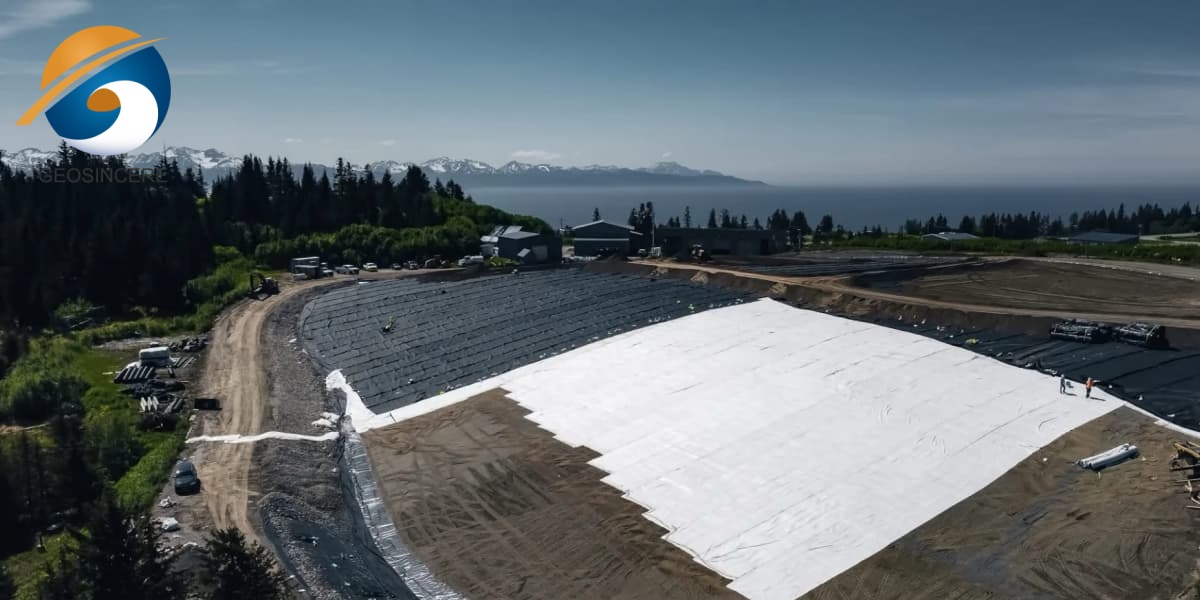
2. Causes of Slope Instability and the Role of Geotextile for Slope Protection
2.1 The Root Causes of Slope Erosion and Failure
Unprotected soil slopes are naturally highly vulnerable to atmospheric, mechanical, and hydraulic weathering forces. Over time, recurring rainfall impact breaks down topsoil aggregates, while unmanaged surface runoff sweeps loose soil particles downhill, triggering a progressive and often destructive breakdown of overall slope stability.
Rain Impact / Runoff ➔ Fine Particle Loss ➔ Rill & Gully Formation ➔ Slope Instability ➔ Massive Soil Failure
2.2 Consequences of Operating Without an Engineered Geotextile
Without an engineered geotextile layer to serve as a stabilization and filtration barrier, project sites regularly face severe, continuous erosion cycles that compromise both structural and financial goals:
2.2.1 Rill and Gully Formation:
Concentrated surface water runoff rapidly carves deep micro-channels into unreinforced topsoil, expanding over time into major structural gullies that undermine slope stability.
2.2.2 Piping and Internal Erosion:
Subsurface water seepage creates excessive internal pore pressure, dragging fine soil particles out of the soil matrix and leaving internal voids that cause sudden structural drop-outs.
2.2.3 Vegetation Washout:
Hydroseeding efforts frequently fail as rain washes away seeds, fertilizers, and organic topsoil layers downstream before root networks can establish a permanent hold.
2.2.4 Escalated Maintenance Costs:
Unprotected slopes demand continuous post-construction intervention, forcing contractors into endless cycles of grading, soil replacement, and costly structural repairs after heavy weather events.
2.3 How Geotextile for Slope Protection Restore Slope Equilibrium
Inserting an engineered geotextile creates a high-performance, stable interface between water flow and the underlying soil matrix. By dissipating hydraulic kinetic energy and retaining fine soil particles while allowing pore water to escape, it effectively maintains original slope geometry, lowers surface runoff velocity, preserves topsoil integrity, and provides a reliable substrate for long-term vegetation establishment.
3. Working Mechanisms of Geotextile for Slope Protection
3.1 Particle Retention & Hydrostatic Filtration
The geotextile features a strictly controlled Apparent Opening Size (AOS / O₉₀), engineered to match the grain-size distribution of the underlying soil. As water permeates through the slope, the fabric acts as a precision physical barrier: it allows water molecules to drain freely while holding critical soil fines (such as silt and sand particles) in place.By retaining these particles, the geotextile prevents internal soil erosion and the formation of piping channels within the embankment. At the same time, the rapid release of trapped pore water relieves dangerous hydrostatic uplift pressures, maintaining the effective stress and overall structural integrity of the slope.
3.2 Dynamic Energy Dissipation
Raindrop impact and surface runoff are primary drivers of sheet and rill erosion on exposed slopes. The textured, highly porous fiber matrix of the geotextile fabric disrupts these erosive hydrodynamic forces. When raindrops strike the fabric surface, the dense synthetic network absorbs and dissipates their kinetic impact energy before it can dislodge soil particles. Furthermore, as surface water flows down the slope, the rough surface texture increases hydraulic resistance, breaking up concentrated streams and significantly reducing the runoff flow velocity. This controlled flow rate drastically minimizes the shear stress exerted by running water across the slope face.
3.3 Interfacial Frictional Stabilization
Unconsolidated topsoil on steep subgrades is highly susceptible to superficial mass movement and shallow sliding failures. Installing a fabric geotextile introduces a robust tensile reinforcement layer directly along the potential failure interface.The rough interface between the geotextile fibers and the adjacent soil matrix maximizes the internal friction angle and contact area. This increased interfacial friction generates mechanical resistance against shear stresses induced by gravity and saturation. By interlocking with soil particles, the non woven geotextile fabric acts as an anchor—effectively pinning thin, vulnerable topsoil layers to the steeper, stable subgrade beneath.

4. Geotextile for Slope Protection Key Features and Benefits
4.1 High Tensile Strength & Structural Reinforcement
Engineered with high ultimate tensile strength, the geo fabric effectively absorbs and redistributes lateral earth pressures and tensile stresses across the slope face. This mechanical strength prevents local slope creep, mitigates differential settlement during initial soil consolidation, and ensures the structural integrity of the slope remains uncompromised under heavy dynamic or static loads.
4.2 Optimized Hydraulic Permeability & Drainage
Featuring exceptional cross-plane flow rates and high volumetric permittivity, the non woven geotextile material allows pore water to pass freely through the fabric without clogging. This continuous, unimpeded drainage prevents the accumulation of trapped groundwater, effectively eliminating dangerous hydrostatic pressure buildup behind the slope face while suppressing internal erosion.
4.3 Superior Puncture & Tear Resistance
The dense, tough fiber structure is specifically formulated to withstand high mechanical stresses during construction. It resists tearing, puncturing, and abrasion caused by sharp subgrade aggregates, angular rock riprap placement, or heavy installation equipment, preserving the continuity and protective function of the barrier even under rough field conditions.
4.4 UV Radiation & Weathering Resistance
Compounded with high-grade carbon black additives and advanced photo-oxidation stabilizers, the nonwoven geotextile fabric exhibits exceptional resistance to ultraviolet (UV) radiation and outdoor weathering. This stabilization prevents thermal degradation and polymer chain breakdown, maintaining long-term material ductility and tensile capacity during prolonged exposure to direct sunlight.
4.5 Chemical & Biological Immunity
Formulated from inert synthetic polymers (such as high-density polypropylene or polyester), the geofabric is chemically non-reactive. It offers complete immunity against naturally occurring soil acids, alkalis, saline conditions, and aggressive chemical leachates, while remaining entirely resistant to rot, mold, microbial breakdown, and rodent or insect attack.
4.6 Flexible Contour Adaptation & Seamless Coverage
The high flexibility and elongation characteristics of the geotextile drainage fabric allow it to conform closely to irregular slope topography, rock crevices, and steep embankments. This excellent drapeability prevents the formation of voids or "bridging" beneath the geotextile filter fabric, ensuring continuous, intimate contact with the subgrade for uniform stress distribution and erosion control.
5. Geotextile for Slope Protection Technical Specifications
Our geotextile for slope protection is manufactured under strict ISO 9001 and ASTM testing protocols. Below are standard technical parameters for staple fiber nonwoven geotextiles:
Specification Property | Test Standard | Unit | 200 GSM | 300 GSM | 400 GSM | 600 GSM |
Mass per Unit Area | ASTM D5261 | g/m² | 200 | 300 | 400 | 600 |
Wide-Width Tensile (MD) | ASTM D4595 | kN/m | ≥ 8.0 | ≥ 12.5 | ≥ 18.0 | ≥ 28.0 |
Wide-Width Tensile (CMD) | ASTM D4595 | kN/m | ≥ 8.0 | ≥ 12.5 | ≥ 18.0 | ≥ 28.0 |
CBR Puncture Resistance | ASTM D6241 | N | ≥ 1,500 | ≥ 2,400 | ≥ 3,200 | ≥ 5,000 |
Trapezoidal Tear Strength | ASTM D4533 | N | ≥ 250 | ≥ 380 | ≥ 500 | ≥ 750 |
Apparent Opening Size (AOS) | ASTM D4751 | mm | 0.07–0.20 | 0.07–0.18 | 0.05–0.15 | 0.05–0.12 |
Water Permeability | ASTM D4491 | cm/s | 1.0 × 10⁻¹ | 1.0 × 10⁻¹ | 1.0 × 10⁻² | 1.0 × 10⁻² |
UV Resistance (at 500 hrs) | ASTM D4355 | % retained | ≥ 70% | ≥ 70% | ≥ 80% | ≥ 80% |
6. Geotextile GSM Selection Criteria for Slope Projects
6.1 200–300 GSM (Light-Duty Applications)
This lighter weight class is tailored for low-stress environments with minimal hydraulic shear and gentle topographies. It provides effective soil separation and immediate surface protection on landscaping projects, mild residential inclines, and low-flow drainage channels. It is ideal as temporary erosion control before vegetation takes root or for light-duty slope stabilization where heavy rock armor is not required.
6.2 300–500 GSM (Medium-Duty Applications)
Representing the standard industry specification for infrastructure projects, this range balances mechanical strength with high hydraulic flow capacity. It is designed to handle moderate tensile forces and installation stresses on standard highway cut-and-fill slopes, railway embankments, and general soil separation layers. Geo fabric material provides long-term filtration and puncture resistance against medium-sized aggregates.
6.3 500–800 GSM (Heavy-Duty Applications)
Engineered for severe hydraulic and structural environments, this heavy-duty grade offers high puncture, puncture, and tear resistance. Non woven filter fabric is specified for riverbanks, coastal shoreline protection, high-velocity drainage channels, and as a protective underlayment beneath medium-to-large rock riprap. Its dense structure absorbs the high impact energy of placed stones while maintaining continuous drainage under heavy overburden.
6.4 800+ GSM (Extra Heavy-Duty Applications)
Designed for extreme engineering conditions, extra heavy-duty geotextiles provide maximum mechanical toughness, high dynamic puncture resistance, and substantial mass per unit area. This grade is required for deep-water marine structures, dam spillways, high-stress mining slopes, and underlayment directly beneath heavy, angular rock armor. It ensures structural integrity and cushion protection under severe dynamic wave action and extreme earth loads.
6.5 Geotechnical Design & Verification Notice
The GSM ranges outlined above serve as initial reference guidelines. Final material specifications—including cross-plane permeability, apparent opening size (AOS), trapezoidal tear strength, and mass per unit area—must always be calculated and verified against site-specific hydraulic flow velocities, soil grain-size distribution, slope geometry, and load-bearing requirements determined by a qualified geotechnical engineer.

7. Multi-Layer Systems: Geotextile Combined with Geocell, Geogrid, and Geomembrane
7.1 Geotextile + Geocell (3D Confinement Systems)
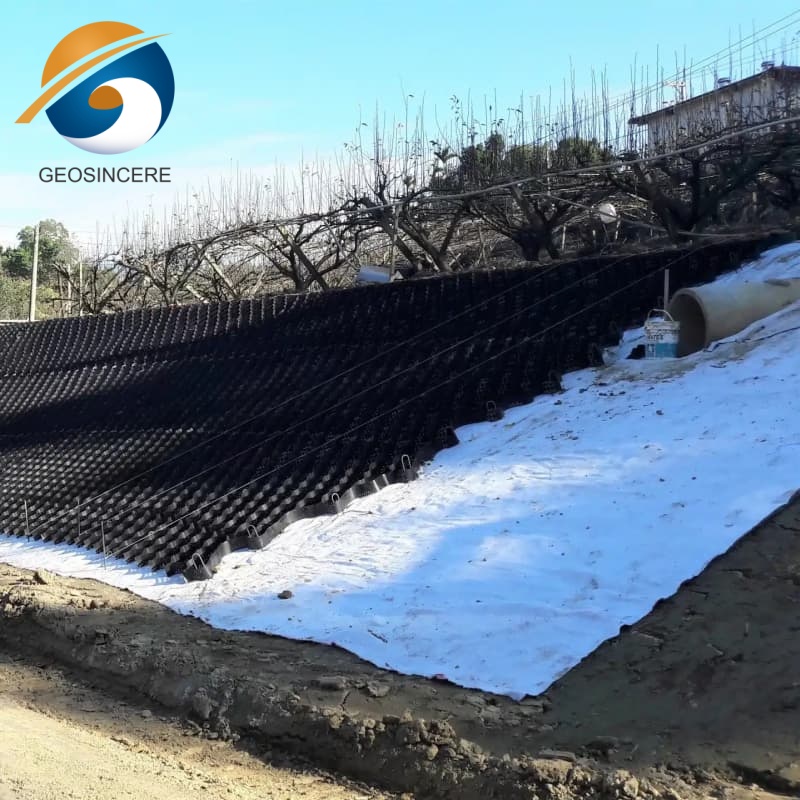
In this hybrid configuration, the geotextile functions as a foundational separation and filtration layer, while the 3D expanded honeycomb structure of the geocell provides lateral soil confinement. The geocell holds infill material—such as topsoil, gravel, or vegetated aggregate—in place, drastically boosting shear strength.
This combination prevents down-slope mass sliding and enables long-term erosion control on steep slopes with inclines reaching up to 1:1 ($45^\circ$). The geotextile backing permits groundwater to drain out freely while retaining fine soil particles beneath the cellular mat.
7.2 Geotextile + Geogrid (Structural Tensile Reinforcement)
Combining geotextiles with geogrids addresses both macroscopic structural stability and fine-grained soil retention. The high-modulus geogrid supplies high tensile strength to absorb lateral earth pressures, reinforcing steep embankment slopes and mechanically stabilized earth (MSE) retaining walls.
Simultaneously, the nonwoven or woven geotextile acts as an integrated filter interface. It blocks soil fines from washing through the open apertures of the geogrid matrix, preventing internal piping and maintaining structural integrity over time.
7.3 Geotextile + Geomembrane (Composite Cushion & Barrier Protection)
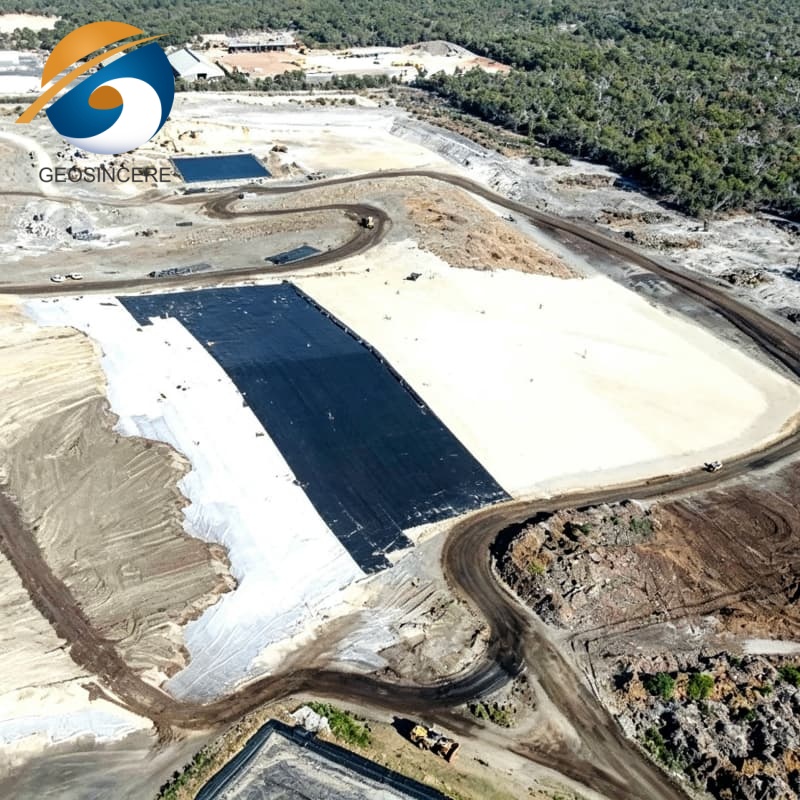
This multi-layer system pairs an impermeable geomembrane liner with a heavy-duty nonwoven geotextile cushion layer. In critical containment applications—such as dam linings, tailing ponds, reservoirs, and landfills—the geomembrane provides a leak-proof liquid barrier.
The high-GSM geotextile is deployed directly above, below, or on both sides of the membrane to absorb extreme point-load stresses. It protects the sensitive polymer sheet from puncture, tearing, and abrasion caused by sharp subgrade rocks, coarse aggregate drainage layers, and heavy structural overburden.
7.4 Geotextile + Riprap / Rock Armor (Scour & Erosion Control Base)
Used extensively along coastal shorelines, riverbanks, and high-velocity channels, this composite layout places a heavy geotextile underlayment beneath large, angular stone armor or riprap blocks. The top rock layer absorbs high hydrodynamic energy from turbulent waves and fast-flowing currents.
Directly beneath, the geotextile acts as a stabilizing filter base. It stops subgrade fine particles from being scoured away through the void spaces between individual stones, preventing undermining and catastrophic collapse of the stone armor system.
8. Geotextile for Slope Protection Frequently Asked Questions
Q1: How do I choose between nonwoven and woven geotextile for slope protection?
A: Choose nonwoven for filtration, drainage, and erosion control. Choose woven for tensile reinforcement, high load capacity, and soil stabilization.
Q2: What is the required overlap width when installing geotextile on a slope?
A: Use a 30 cm overlap for gentle slopes (< 1:3), 45–60 cm for steep slopes (≥ 1:2), and 60–100 cm (or sewn seams) for soft soils and underwater applications.
Q3: How do you prevent geotextiles from sliding down a steep slope?
A: Anchor the top edge in a continuous crest trench (30–50 cm deep) backfilled with soil, and secure the slope face using steel U-pins or anchors driven in a grid pattern.
Q4: Is a higher GSM (mass per unit area) always better?
A: No. While higher GSM increases puncture and tensile strength, it can reduce water permeability. Match the weight to your site’s soil type, water velocity, and rock armor size.
Summary and Selection Guide
Whether you are reinforcing a steep highway embankment, stabilizing a riverbank against scour, or building a retaining wall system, selecting the right geotextile GSM, tensile strength, and roll size is essential for long-term geotechnical safety.
Tell us your slope size, slope angle, soil condition, and application. Our engineering team will calculate your hydrological flow rates, structural loading requirements, and site constraints to recommend the exact geotextile specification, mass per unit area, and optimized roll configuration tailored specifically to your project.
Partner with Shandong Geosino New Material Co., Ltd. (GEOSINCERE Geosynthetics)
As a leading global manufacturer of premium geosynthetics, GEOSINCERE Geosynthetics provides high-performance nonwoven and woven geotextiles engineered to meet rigorous international standards. From technical consultation and custom roll sizing to factory-direct delivery, we deliver cost-effective, durable slope protection solutions trusted by infrastructure contractors worldwide. Contact our engineering team today to get your custom geotextile specification and project quotation.


