

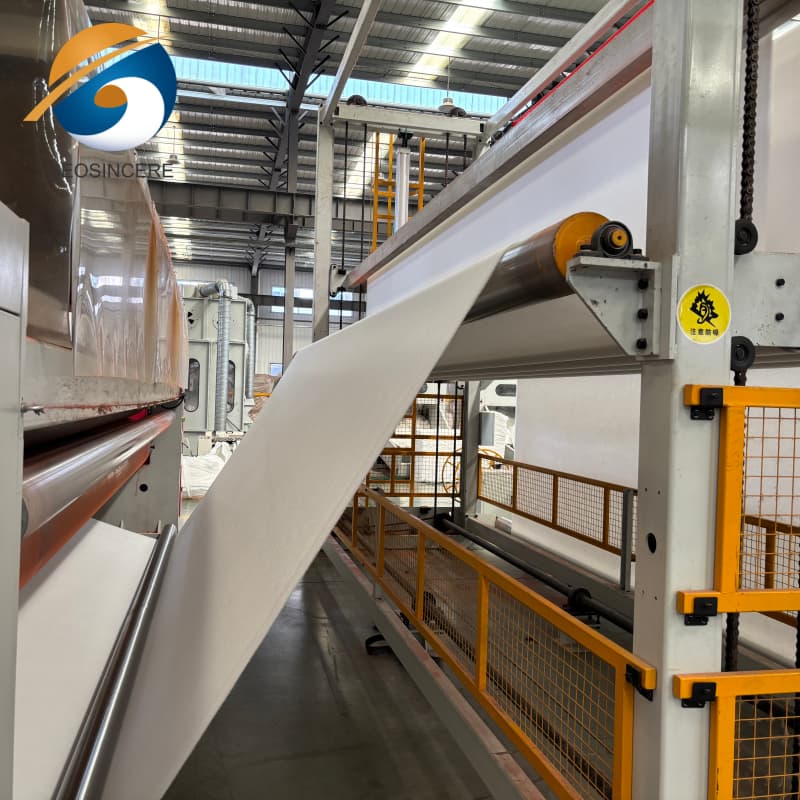
Geotextile Soil Stabilization
Geotextile Soil Stabilization is an effective geosynthetic solution designed to improve soil strength, enhance ground stability, and extend the service life of infrastructure projects. By providing separation, reinforcement, filtration, and drainage functions, geotextile fabric helps prevent soil mixing, reduce settlement, and improve load-bearing performance in weak soil conditions.
- Improve Soil Stability: Enhance ground strength and support heavy loads.
- Prevent Soil Mixing: Separate soil and aggregate layers for better performance.
- Excellent Drainage: Allow water flow while retaining soil particles.
- Reduce Settlement: Minimize deformation and improve foundation durability.
- Wide Applications: Suitable for roads, railways, slopes, embankments, and soft soil improvement projects.
- Durable Performance: Made from high-quality PP or PET materials for long-term underground use.
Geotextile soil stabilization fabric is an advanced geosynthetic material designed to improve soil performance, enhance ground stability, and extend the service life of civil engineering structures. By placing geotextiles between soil layers, aggregate layers, or weak subgrades, this engineered fabric creates a stable composite system that improves load distribution, prevents soil migration, and reduces excessive settlement.
GEOSINCERE Geosynthetics geotextile soil stabilization solutions are manufactured from high-quality polypropylene (PP) and polyester (PET) fibers, offering excellent tensile strength, filtration performance, drainage capability, and long-term durability. They are widely used in roads, highways, railways, embankments, slopes, retaining walls, soft soil foundations, and environmental engineering projects.
Geotextiles perform multiple functions including separation, reinforcement, filtration, drainage, and protection, making them an economical and reliable solution for improving challenging soil conditions.

1. What is Geotextile Soil Stabilization?
1.1 Understanding Soil Stabilization Geotextile Fabric
Geotextile soil stabilization refers to the application of permeable synthetic fabrics to improve the engineering properties of soil and create a stronger, more stable foundation.
In many construction projects, weak soils such as clay, silt, and soft organic soils cannot provide sufficient bearing capacity for heavy loads. Traditional soil replacement methods often require large amounts of excavation and imported materials, resulting in higher costs and longer construction periods.
A geotextile soil stabilization provides an efficient alternative by forming a reinforced soil structure. It separates different soil layers, improves load distribution, allows controlled water flow, and reduces soil deformation under traffic or structural loads.
1.2 The main geotextile soil stabilization functions include:
Separation between soil and aggregate layers
Reinforcement of weak ground structures
Filtration of soil particles while allowing water flow
Drainage improvement and pore water control
Protection against erosion and soil loss
These functions allow geotextiles to improve the performance and durability of roads, foundations, slopes, and other infrastructure systems.
2. How Does Geotextile Soil Stabilization Work?
2.1 Soil Separation Function
Prevent Soil Mixing and Maintain Structural Integrity
One of the most important functions of geotextile soil stabilization fabric is separation.
When aggregate materials are placed directly on weak soil, repeated loading from vehicles or structures can cause fine soil particles to migrate upward and mix with the aggregate layer. This reduces drainage performance, decreases bearing capacity, and leads to premature failure.
- Geotextile acts as a separation layer between different materials:
Prevents subgrade soil from pumping into aggregate layers
Maintains the designed thickness of base materials
Reduces material loss and construction costs
Improves long-term pavement performance
- Typical applications include:
Highway construction
Gravel roads
Parking lots
Railway foundations
Working platforms
2.2 Soil Reinforcement Function
Improve Load Distribution and Ground Strength
High-strength geotextiles provide reinforcement by interacting with surrounding soil particles.
When external loads are applied, geotextile for soil stabilization develops tensile resistance and helps distribute stress over a wider area. This reduces localized pressure on weak soils and improves overall foundation stability.
- Benefits include:
Increased bearing capacity
Reduced differential settlement
Improved shear resistance
Enhanced slope stability
Better performance under heavy traffic loads
Woven geotextile with high tensile strength are commonly selected for reinforcement applications requiring strong load support and low deformation characteristics.
2.3 Filtration Function
Allow Water Flow While Retaining Soil Particles
Water management is essential for long-term soil stability.
Geotextile filtration systems allow water to pass through while preventing fine soil particles from migrating through the fabric structure.
- The filtration function helps:
Maintain soil structure
Prevent clogging of drainage systems
Control erosion
Reduce water pressure accumulation
- This makes geotextile fabrics ideal for:
Drainage layers
Retaining walls
Riverbank protection
Coastal engineering
Slope stabilization
2.4 Drainage Function
Improve Groundwater Control and Soil Performance
Excess moisture can significantly reduce soil strength and cause instability.
Geotextiles provide effective drainage pathways by allowing water movement through the fabric while maintaining soil separation.
- Advantages:
Faster dissipation of pore water pressure
Reduced soil softening
Improved foundation stability
Lower risk of frost damage
For projects exposed to groundwater or heavy rainfall, drainage geotextiles provide additional protection and long-term reliability.
3. Types of Geotextile Soil Stabilization
3.1 Woven Geotextile Soil Stabilization
Woven geotextile fabric is manufactured by weaving polypropylene or polyester yarns into a high-strength fabric structure.
- Key Features:
High tensile strength
Low elongation
Excellent load-bearing performance
Strong soil interaction
High dimensional stability
- Recommended Applications:
Road base reinforcement
Soft soil stabilization
Heavy-duty construction platforms
Railway stabilization
Embankment reinforcement
Woven geotextiles are especially suitable where the primary requirement is reinforcement and load distribution.
3.2 Non Woven Geotextile Soil Stabilization
Non woven geotextile is produced through needle punching or thermal bonding processes, creating a flexible and permeable fabric structure.
- Key Features:
Excellent filtration performance
High permeability
Good drainage capability
Flexible installation
Strong puncture resistance
Recommended Applications:
Drainage systems
Erosion control
Landscaping
Retaining wall back drainage
Foundation protection
Nonwoven geotextile fabric is commonly used when filtration and drainage are the main project requirements.
3.3 Composite Geotextile Soil Stabilization Solutions
Composite geotextiles combine different geosynthetic functions into one engineered product.
- They provide:
Reinforcement
Filtration
Drainage
Protection
- Composite solutions are suitable for demanding projects requiring multiple performance functions, such as:
Landfills
Reservoirs
Mining projects
Large infrastructure developments
4. Key Benefits of Geotextile Soil Stabilization
4.1 Enhanced Ground Stability
Geotextile improves the mechanical performance of weak soils by creating a stable soil-fabric interaction system.
Benefits:
Higher load resistance
Reduced deformation
Improved foundation reliability
4.2 Reduced Construction Costs
Compared with traditional soil replacement methods, geotextile stabilization can reduce:
Excavation requirements
Imported aggregate usage
Construction time
Maintenance expenses
4.3 Extended Infrastructure Service Life
By preventing soil migration and improving drainage performance, geotextiles help protect structures from premature damage.
Applications benefit from:
Reduced rutting
Less settlement
Improved durability
4.4 Excellent Chemical and Biological Resistance
Manufactured from synthetic PP or PET fibers, geotextiles provide:
Resistance to acids and alkalis
Resistance to microorganisms
Long-term underground durability
Stable mechanical performance

5. Geotextile Soil Stabilization Technical Specifications
5.1 Product Parameters of Soil Stabilization Geotextile
GEOSINCERE Geosynthetics geotextile soil stabilization is available in different structures, weights, strengths, and dimensions to meet various engineering requirements. Both woven and non woven geotextiles can be customized according to project conditions, soil properties, and load requirements.
Item | Specification |
Product Type | Woven Geotextile / Non Woven Geotextile |
Material | Polypropylene (PP) / Polyester (PET) |
Weight | 100-1200 gsm |
Width | 1m-6m or Customized |
Color | Black / White / Customized |
Tensile Strength | 8-200 kN/m |
Elongation | 10%-100% |
Water Permeability | Customized According to Project Requirements |
UV Resistance | Excellent |
Service Life | 50+ Years Under Proper Installation |
6. Advanced Geotextile Soil Stabilization Material Selection for Long-Term Performance
6.1 High Quality PP and PET Raw Materials
GEOSINCERE Geosynthetics uses high-quality polypropylene and polyester fibers to manufacture geotextile stabilization products with stable physical and mechanical properties.
- Premium raw materials provide:
Consistent tensile strength
Excellent durability
Strong chemical resistance
Long-term underground performance
Reliable quality for large-scale projects
Unlike conventional fabrics, engineering-grade geotextiles are specifically designed to withstand soil pressure, construction loads, and long-term environmental conditions.
7. Applications of Geotextile Soil Stabilization
7.1 Road Construction and Pavement Stabilization
Improve Road Foundation Performance
Road construction projects often face problems caused by weak subgrade soils, including settlement, rutting, and material migration.
Geotextile soil stabilization fabric provides an effective reinforcement layer between soil and aggregate.
- Benefits:
Improves subgrade bearing capacity
Prevents aggregate contamination
Reduces rut formation
Extends pavement service life
Minimizes maintenance costs
- Common applications:
Highways
Rural roads
Gravel roads
Parking areas
Airport pavements
7.2 Soft Soil Foundation Improvement
Stabilize Weak Ground Conditions
Soft soils such as clay, mud, and saturated soils usually have low bearing capacity and poor drainage performance.
Geofabric stabilization systems improve these conditions by reinforcing the soil structure and controlling deformation.
- Applications:
Industrial foundations
Construction platforms
Land reclamation projects
Storage yards
Port and coastal construction
- Advantages:
Reduces foundation settlement
Improves construction stability
Allows faster construction progress
Reduces soil replacement requirements
7.3 Railway Engineering
Provide Stable Railway Subgrade Support
Railway systems require highly stable foundations to withstand repeated dynamic loads.
Geotextile reinforcement helps maintain separation between ballast and subgrade materials.
- Benefits:
Prevents ballast contamination
Improves track stability
Reduces maintenance frequency
Controls soil movement
- Applications:
Railway embankments
High-speed rail foundations
Track drainage systems
7.4 Slope Stabilization and Erosion Control
Improve Slope Protection Performance
Soil erosion and slope failure are common challenges in areas exposed to rainfall, water flow, and unstable soil conditions.
Geotextile filter fabric provide reinforcement and filtration functions to maintain slope integrity.
- Applications:
Highway slopes
Riverbanks
Canal protection
Hillside stabilization
Mining areas
- Advantages:
Prevents soil erosion
Controls particle loss
Improves slope strength
Supports vegetation growth
7.5 Landfill and Environmental Engineering
Reliable Geotextile Protection Layer
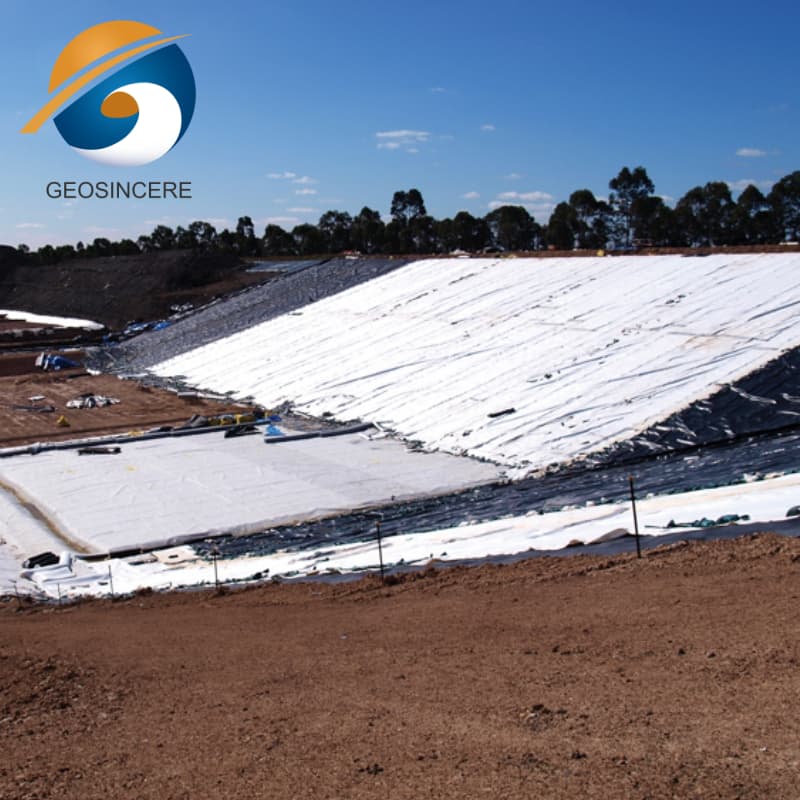
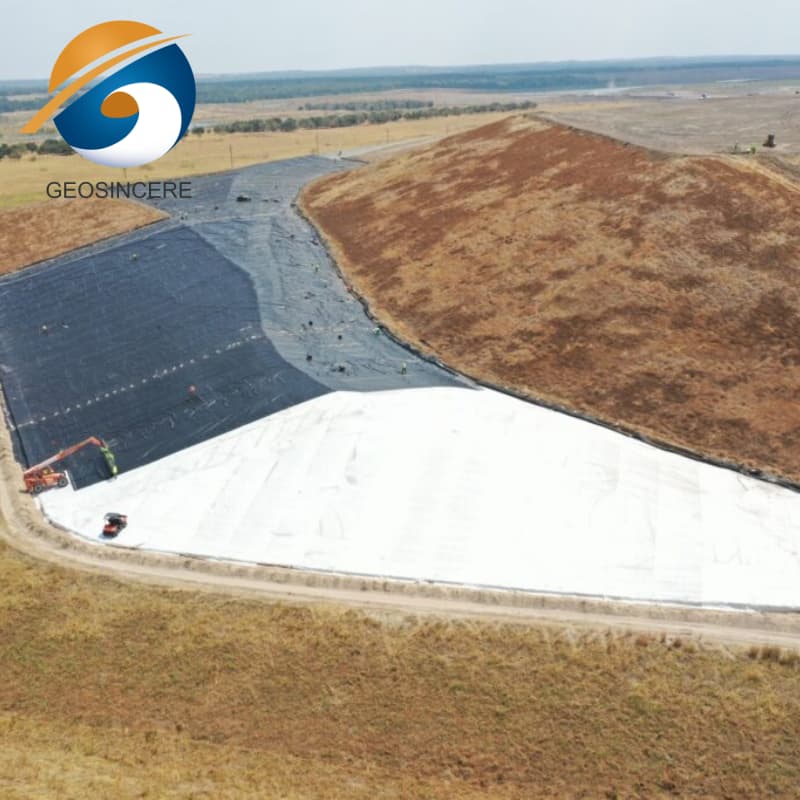
In landfill and environmental projects, geo fabric material is used to protect drainage systems and separation layers.
- Applications:
Landfill liners
Leachate drainage systems
Waste containment facilities
Environmental protection projects
- Functions:
Protect geomembrane liners
Improve drainage efficiency
Prevent soil migration
Enhance system durability
7.6 Hydraulic and Water Management Projects
Improve Stability in Water-Related Applications
Non woven filter fabric provide filtration and erosion protection in hydraulic engineering.
- Applications:
Reservoirs
Dams
Canals
Coastal protection
River engineering
- Functions:
Prevent underwater soil erosion
Maintain drainage performance
Protect foundation structures

8. Geotextile Soil Stabilization Installation Guide
Step 1: Ground Preparation
Before installation, the construction area should be properly prepared.
Recommended procedures:
Remove sharp stones and debris
Level uneven ground
Compact loose soil if required
Ensure the foundation surface is stable
Proper preparation helps prevent damage during installation.
Step 2: Geotextile Placement
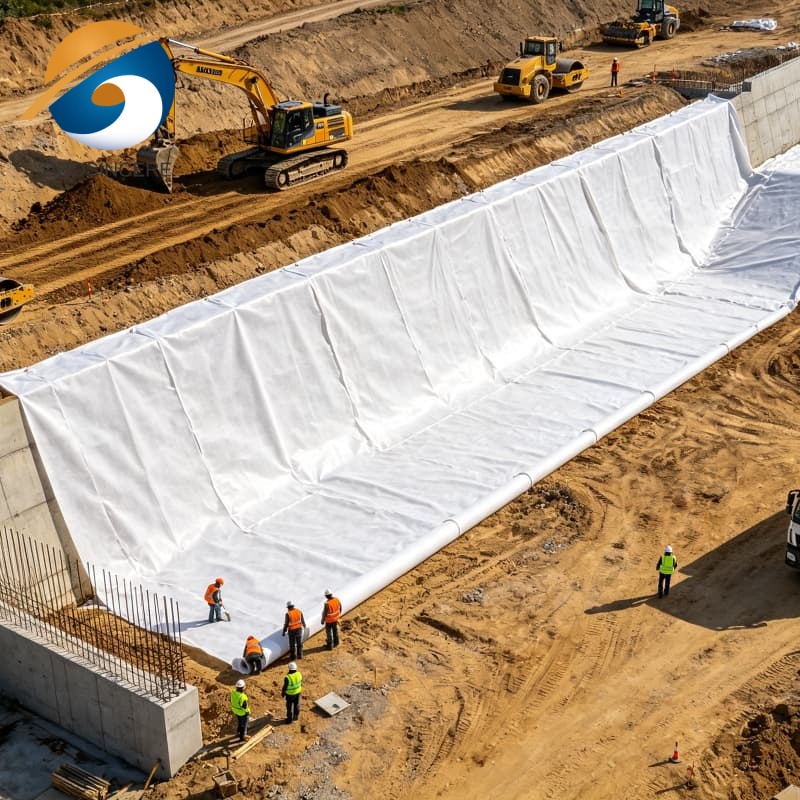
The geotextile roll should be installed according to engineering drawings.
Installation requirements:
Place fabric smoothly without excessive wrinkles
Maintain proper overlap between adjacent rolls
Avoid unnecessary stretching
Prevent mechanical damage during placement
Step 3: Overlapping and Connection
Correct connection methods ensure continuous stabilization performance.
Common methods:
Overlapping
Sewing
Welding (for special composite products)
Overlap distance depends on:
Soil conditions
Project loading
Installation environment
Step 4: Aggregate Placement
After installation, cover the geotextile with suitable fill materials.
Important considerations:
Avoid direct damage from heavy equipment
Place aggregate carefully
Compact materials according to design requirements
A properly installed geotextile system provides long-term soil stabilization performance.
9. Why Choose GEOSINCERE Geosynthetics Geotextile Soil Stabilization Solutions?
9.1 Professional Geosynthetics Manufacturer
With more than 20 years of experience in geosynthetic manufacturing, GEOSINCERE Geosynthetics provides engineered geotextile solutions for global infrastructure projects.
- Our advantages include:
Professional production technology
Advanced manufacturing equipment
Experienced technical team
Global project experience
9.2 High Performance Manufacturing Capability
GEOSINCERE Geosynthetics operates modern production facilities equipped with advanced geosynthetic manufacturing lines.
- Production advantages:
Stable product quality
Large-scale production capacity
Customized specifications available
Consistent delivery performance
- Products are supplied for projects in:
Transportation infrastructure
Mining
Water management
Environmental engineering
Construction industries
9.3 Strict Quality Control System
9.3.1 Reliable Geotextile Testing and Inspection
Each batch of geotextile products is inspected according to international quality standards.
Testing includes:
- Tensile Strength Test
Ensures the fabric meets required reinforcement performance.
- Weight and Thickness Test
Controls product consistency.
- Puncture Resistance Test
Evaluates durability during construction.
- Permeability Test
Confirms drainage and filtration performance.
- UV Resistance Test
Ensures long-term outdoor storage and installation reliability.
9.4 Customized Geotextile Solutions
Meet Different Engineering Requirements
GEOSINCERE Geosynthetics provides customized soil stabilization geotextile solutions based on project needs.
- Customization options:
Different GSM weights
Various tensile strengths
Customized roll widths
Woven or non woven structures
OEM production service
- Our engineering team can recommend suitable geotextile types according to:
Soil conditions
Load requirements
Drainage requirements
Construction environment
10. Frequently Asked Questions About Geotextile Soil Stabilization
Q1: How do I choose the right geotextile soil stabilization for my project?
A: Choosing the right geotextile requires evaluating soil conditions, load requirements, drainage needs, installation environment, and project lifespan. Professional geosynthetic manufacturers can provide suitable recommendations based on engineering requirements and application conditions.
Q2: What GSM geotextile is suitable for soil stabilization?
A: The suitable GSM depends on the application. Lightweight geotextiles are generally used for separation and filtration, medium-weight geotextiles are suitable for general stabilization projects, and heavy-duty geotextiles are recommended for high-load reinforcement and erosion control applications.
Q3: What is the difference between geotextile and geogrid for soil stabilization?
A: Geotextiles provide multiple functions including separation, filtration, drainage, and reinforcement, while geogrids are mainly designed for soil reinforcement. Geotextiles are commonly used for foundation stabilization and drainage applications, whereas geogrids are often selected for high-load reinforcement projects.
Get Professional Geotextile Soil Stabilization Solutions
GEOSINCERE Geosynthetics provides high-quality geotextile soil stabilization fabrics designed for ground reinforcement, soil improvement, and infrastructure protection.
Whether you need woven geotextile for heavy-duty reinforcement or non woven geotextile for filtration and drainage, our engineering team can provide customized solutions for your project.
Contact Shandong Geosino New Material Co., Ltd. (GEOSINCERE Geosynthetics) today for reliable geotextile soil stabilization products and professional technical support.


