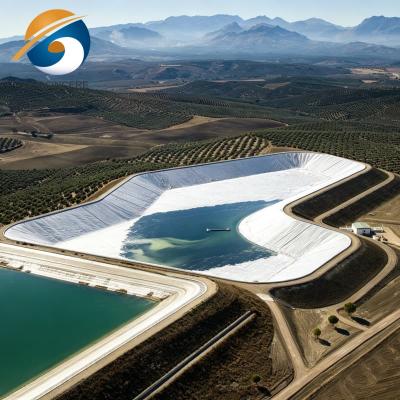
PVC Geomembrane Liner
PVC Geomembrane Liner is a flexible and impermeable waterproof membrane manufactured from high-quality polyvinyl chloride (PVC) resin. It is widely used for containment, waterproofing, and environmental protection applications due to its excellent flexibility, durability, and long-term performance.
Excellent Waterproofing – Prevents water and liquid seepage effectively.
High Flexibility – Easily conforms to complex terrain and irregular surfaces.
Strong Durability – Resistant to punctures, tears, and weathering.
Easy Installation – Lightweight material with efficient welding performance.
Cost-Effective Solution – Reduces maintenance costs and extends service life.
Wide Range of Applications – Suitable for aquaculture, water storage, environmental protection, landscaping, and construction projects.
1. Understanding PVC Geomembrane Liner
A PVC Geomembrane Liner is a very flexible waterproof membrane made from high-quality polyvinyl chloride (PVC). It is intended to stop water, chemicals, and other liquid from leaking in containment and waterproofing applications. Slightly bending to changes of flexibility, being resistant and easy to install are some of the excellent features of the PVC geomembrane liners that have made them one of the most highly adapted solutions for aquaculture, reservoirs, landscaping, environmental protection, and construction.
Compared to the old-fashioned concrete or clay barriers, PVC geomembrane liners offer a cheaper and more effective waterproofing option with the added benefits of lowering maintenance costs and shortening construction time.

2. Reasons and Advantages of Choosing PVC Geomembrane Liner
Typically, project owners, when choosing a containment material, emphasize durability, water tightness, quick installation, and obviously, long-term savings. With these factors in mind, PVC geomembrane liners can be used almost in every other situation.
2.1 Outstanding Flexibility
Among various other benefits that PVC geo membranes liners bring, flexibility is the one that is often highlighted.
The liner material is so flexible that it can be fitted to rough surfaces, sharp slopes, and even corners and complicated terrain conditions. Due to this flexibility, the liner will closely fit the subgrade, eliminating voids and resulting in overall waterproofing effectiveness.
In comparison to firm containment materials, PVC membranes can still be bent with varying temperatures and, therefore, are appropriate for almost all climatic conditions.
2.2 Excellent Waterproof Performance
PVC geomembrane liner is capable of sealing one solid barrier that will prevent the leakage of the substances.
They help:
- Water loss control
- Groundwater preservation
- Soil contamination prevention
- Water storage efficiency enhancement
Having mechanisms that support the environment, by preventing water contamination, is what makes these materials indispensable for projects that require a high level of containment.
2.3 High Strength and Long Service Life
Today, PVC geomembrane sheet continue to be made with the ability to endure harsh environmental conditions.
Some of the leading features of these liners are:
- Highly resistant to stretching
- Stretching capabilities
- Resistance to puncture
- Ability to withstand being torn
- UV resistance
- Weather resistance
Thanks to these properties, the finished product will deliver satisfaction for a long time and, meanwhile, save you from having to spend for its maintenance.
2.4 Easy Installation
The distribution of PVC geomembranes on the project sites is super lightweight and easy.
Advantages are:
- Shortens construction time
- Lowers workforce costs
- Making transportation easier
- Welding methods become simplified
- Reduced waste of materials
Additionally, the feature of being pliable allows the installer to execute the seams better, especially in areas with complex shape and contour.
3. Common Applications of PVC Geomembrane Liner
3.1 Aquaculture Projects
Due to their superior waterproofing and flexibility, PVC liners are extensively employed worldwide in aquaculture facilities. They form a clean, controlled environment that improves water quality while reducing water losses through seepage.
Typical applications:
- Fish farming ponds
- Shrimp cultivation farms
- Aquaculture holding tanks
- Hatcheries
- Water storage ponds
Mechanical barriers provided by PVC liner help aquaculturists to enhance their output efficiency and reduce their operating expenses by preventing water leakage and contaminating the pond with the surrounding soil.
3.2 Water Conservation Projects
The purpose of water conservation projects is to have a dependable containment system so that water storage can be maximized and, at the same time, wastage can be minimized. PVC geo membrane sheet will be the best option if you want to supply a water-impermeable barrier that can prevent water loss or seepage.
You will find them commonly used in:
- Storage reservoirs for irrigation
- Ponds for crop irrigation
- Water storage tanks
- Systems for rainwater harvesting
Facilities for water containment in case of emergencies
They have become an economical choice solution for managing agricultural water and municipal water because of their long life and the simplicity in their installation.
3.3 Landscaping and Decorative Water Features
PVC membrane liners are highly suitable for landscaping projects because of their flexibility and aesthetic adaptability. They can easily conform to irregular shapes and complex designs.
Popular applications include:
- Artificial lakes
- Landscape ponds
- Water gardens
- Fountains
- Golf course ponds
The liner's ability to fit curves, corners, and decorative structures helps create attractive and durable water features with minimal maintenance requirements.
3.4 Environmental Protection Projects
Environmental containment systems require dependable waterproof barriers to prevent pollutants from entering the surrounding environment. PVC impermeable geomembrane provide reliable protection and long-term performance.
Typical applications include:
- Wastewater treatment ponds
- Leachate collection systems
- Environmental remediation projects
- Secondary containment facilities
- Industrial wastewater lagoons
These applications help protect soil and groundwater resources while ensuring compliance with environmental regulations.
3.5 Construction and Waterproofing Projects
PVC impermeable geomembrane liner is also widely used in construction and infrastructure projects where effective waterproofing is essential. Their flexibility allows easy installation in complex building structures.
Common applications include:
- Basement waterproofing
- Roof waterproofing
- Foundation protection
- Underground structures
- Tunnel waterproofing systems
By creating a durable moisture barrier, PVC liners help extend the service life of structures and reduce long-term maintenance expenses.

4. Choose a Right PVC Geomembrane Liner
Selecting the right PVC geomembrane liner is essential for achieving optimal waterproofing performance, durability, and cost efficiency. Several factors should be carefully evaluated before making a purchasing decision.
4.1 Determine the Project Application
The first step is to identify the specific application requirements. Different projects may require different liner specifications.
- Common applications include:
Aquaculture ponds
Irrigation reservoirs
Decorative lakes
Wastewater treatment ponds
Landfill containment systems
Building waterproofing projects
Understanding the project's operating conditions helps ensure the liner performs effectively throughout its service life.
4.2 Select the Appropriate Thickness
PVC geomembrane liners are available in various thicknesses to meet different engineering requirements.
- General recommendations include:
0.5mm–0.75mm: Landscape ponds and decorative water features
0.75mm–1.0mm: Fish ponds and aquaculture applications
1.0mm–1.5mm: Reservoirs and agricultural water storage
1.5mm–2.0mm: Industrial and environmental containment projects
Thicker liners generally provide greater puncture resistance and durability under demanding conditions.
4.3 Evaluate Site Conditions
Site conditions play a critical role in liner selection.
- Factors to consider include:
Soil type
Presence of sharp rocks
Slope gradients
Ground settlement potential
Groundwater conditions
Projects with rough subgrades or higher mechanical stress may require thicker and stronger geomembrane liners.
4.4 Consider Environmental Exposure
Environmental conditions can significantly affect liner performance.
- Important considerations include:
UV radiation levels
Temperature fluctuations
Rainfall intensity
Wind exposure
Freeze-thaw cycles
Selecting a geomembrane material with suitable weather and UV resistance helps ensure long-term reliability.
4.5 Assess Mechanical Performance Requirements
Different projects impose different mechanical stresses on the geomembrane.
- Key properties to evaluate include:
Tensile strength
Elongation at break
Tear resistance
Puncture resistance
Seam strength
These performance characteristics directly impact the liner's ability to withstand installation and operational conditions.
4.6 Verify Chemical Compatibility
For industrial and environmental applications, chemical resistance is an important consideration.
The liner should be compatible with:
Wastewater
Fertilizers
Industrial chemicals
Agricultural runoff
Leachate solutions
Proper material selection helps prevent degradation and extends service life.
4.7 Review Manufacturing Quality Standards
High-quality geomembranes are produced under strict quality control procedures and tested according to recognized industry standards.
Look for manufacturers that provide:
Certified raw materials
Laboratory testing reports
Quality assurance documentation
International standard compliance
Traceable production records
Reliable product quality reduces project risks and long-term maintenance costs.
4.8 Choose an Experienced Supplier
Working with an experienced geomembrane manufacturer can provide significant advantages.
An established supplier can offer:
Professional technical support
Customized specifications
Installation guidance
Quality certification
Global project experience
Selecting a trusted supplier ensures that the geomembrane liner meets both project requirements and long-term performance expectations.
5. GEOSINCERE Geosynthetics PVC Geomembrane Liner Advantages
5.1 Premium Raw Materials
GEOSINCERE uses carefully selected PVC resin and high-quality additives to ensure consistent product performance and durability.
5.2 Advanced Manufacturing Technology
Modern production equipment and strict quality control procedures ensure:
Uniform thickness
Smooth surface finish
Consistent mechanical properties
Reliable waterproof performance
5.3 Comprehensive Quality Testing
Every batch undergoes rigorous testing, including:
Tensile strength testing
Elongation testing
Puncture resistance testing
Tear resistance testing
Seam performance testing
Aging resistance testing
5.4 Custom Manufacturing Services
Customized solutions are available, including:
Thickness customization
Width customization
Length customization
Color customization
Surface texture options

6. PVC Geomembrane Liner Installation Recommendations
To achieve optimal performance, the following installation practices are recommended:
Prepare a smooth and clean subgrade
Remove sharp stones and debris
Ensure proper overlap width
Use professional welding equipment
Conduct seam testing after installation
Follow project-specific engineering guidelines
Proper installation significantly improves liner performance and service life.
7. PVC Geomembrane Liner FAQ
Q1: Can PVC geomembrane liners be customized?
A1: Yes. GEOSINCERE Geosynthetics manufacturers offer customization options, including:
Thickness
Width
Roll length
Color
Surface texture
Customized products can be designed to meet specific project requirements.
Q2: How do I maintain a PVC geomembrane liner?
A2: Routine maintenance includes:
Regular visual inspections
Checking welded seams
Removing debris from exposed surfaces
Repairing punctures promptly
Monitoring water levels and containment performance
Proper maintenance helps maximize service life and performance.
Q3: Can PVC geomembrane liners be repaired if damaged?
A3: Yes. Small punctures, tears, or installation damage can usually be repaired using PVC patches and professional welding equipment. Timely repairs help maintain the integrity of the containment system and prevent leakage.
Q4: Can PVC geomembrane liners be exposed to sunlight?
A4: Yes. UV-resistant PVC geomembrane liners are specifically designed for exposed applications such as reservoirs, ponds, canals, and decorative lakes.
For maximum service life, the appropriate UV-stabilized formulation should be selected based on project conditions.
Q5: What subgrade preparation is required before installation?
A5: Proper subgrade preparation should include:
Removing sharp rocks and debris
Leveling uneven surfaces
Compacting loose soil
Eliminating potential puncture hazards
A well-prepared subgrade significantly improves liner performance and longevity.
Q6: Can PVC geomembrane liners be used in secondary containment systems?
A6: Yes. PVC geomembrane liners are commonly used in secondary containment systems for tanks, fuel storage areas, and industrial facilities.
They help prevent accidental spills from contaminating surrounding soil and groundwater.
Q7: How do welded seams affect liner performance?
A7: Welded seams are critical to the overall integrity of a geomembrane system. Properly welded seams can achieve strength comparable to the parent material and provide a continuous impermeable barrier.
Professional welding and seam testing are strongly recommended.
Conclusion
PVC Geomembrane Liner is a versatile waterproofing and containment solution that combines flexibility, durability, and excellent impermeability. Its ability to adapt to complex terrain, simplify installation, and provide long-term protection makes it an ideal choice for aquaculture, water conservation, landscaping, environmental protection, and construction projects.
Shandong GEOSINO New Material Co.,Ltd (GEOSINCERE Geosynthetics) supplies high-quality PVC Geomembrane Liners with customized specifications, strict quality control, and professional technical support to meet the requirements of projects worldwide.