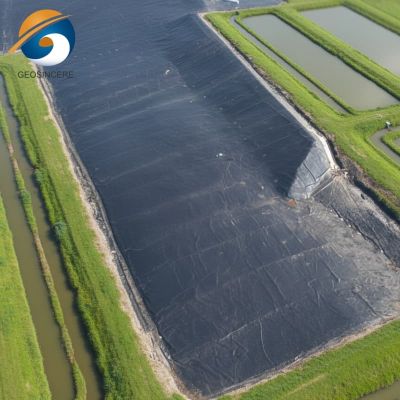
Dam Lining
Dam lining is a proven impermeable solution designed to control seepage and enhance the structural safety of dams and reservoirs. By forming a continuous waterproof barrier, dam lining systems prevent water loss, reduce internal erosion, and improve long-term hydraulic performance under varying water levels and environmental conditions.
- Excellent impermeability for effective seepage control
- High tensile strength and puncture resistance
- Stable performance under continuous water pressure
- UV, chemical, and weather resistance for outdoor exposure
- Adaptability to slopes and irregular dam surfaces
- Long service life with minimal maintenance
Dam lining offers a reliable, cost-effective, and environmentally safe solution for modern dam construction and rehabilitation projects.
Dam Lining is a critical impermeable system engineered to ensure the safety, stability, and long-term performance of dams and reservoirs. Manufactured from high-quality polyethylene geomembrane materials, dam lining provides an effective barrier against water seepage, internal erosion, and structural degradation. By minimizing leakage and protecting the dam body and foundation, it plays a vital role in water conservation, flood control, and environmental protection, making it an essential solution for modern hydraulic and civil engineering projects.

1. Functions of Dam Lining
1.1 Seepage Control
Dam lining completely stops the seepage of water through the dam bodies and the foundation, thus it continuously forms an impermeable and very reliable barrier that readily prevents water. This greatly alleviates the hazards of seepage and assures steady hydraulic performance throughout the lifetime of the dam.
1.2 Structural Protection
Separation between water and dam structures is ensured and thus the internal erosion and piping risks are significantly lowered. The damp lining reduces water contact with structural materials which is one of the major reasons for the weakening of dams and thus increases the safety and durability of the dams in general.
1.3 Water Conservation
By the pond dam liner, water loss from the reservoir is significantly avoided hence the water storage becomes more efficient and the operation of the dam is more reliable, to a great extent, thus water resource utilization is sustainable and the maintenance cost of the dam is also less in the long run.
1.4 Environmental Protection
Dams lining is a system of preventing the contamination of soil and groundwater by stopping the movement of water and the passage of harmful substances. It is a lining system that helps the surrounding ecosystems to be protected and at the same time the dam meets the requirements of environmental protection.
2. Dam Lining Material Characteristics
Dam lining geomembranes are typically produced from 100% virgin polyethylene resin with carbon black and antioxidant additives, providing excellent durability, stability, and long-term impermeability. The carefully controlled formulation ensures consistent quality and reliable performance in demanding dam engineering applications.
2.1 High Tensile Strength and Elongation
The dam on liner material offers high tensile strength combined with excellent elongation properties, allowing it to withstand significant mechanical stress. This flexibility enables the dam lining to adapt to ground settlement and structural movement without cracking or rupture.
2.2 Excellent Puncture and Tear Resistance
Dam lining geomembranes are designed to resist puncture and tearing caused by sharp aggregates, subgrade irregularities, or construction activities. This enhances installation safety and ensures the long-term integrity of the lining system.
2.3 Outstanding UV and Weather Resistance
The addition of carbon black provides effective protection against ultraviolet radiation and prolonged sun exposure. As a result, the geomembrane maintains its physical properties and performance even under harsh weather conditions.
2.4 Strong Chemical and Aging Resistance
The hdpe dam liners material exhibits strong resistance to a wide range of chemicals commonly found in soil and water environments. It also resists oxidation and aging, ensuring stable performance throughout its designed service life.
2.5 Stable Performance in Extreme Temperatures
Dam lining material geomembranes maintain flexibility and mechanical strength in both high and low temperature conditions. This ensures reliable performance in regions with extreme climates and significant temperature variations.

3. Technical specification of Dam Lining
3.1 Thickness: 0.5mm – 3.0mm
Lining a pond geomembrane is offered in a range of thicknesses from 0.5mm to 3.0mm to meet different hydraulic and structural needs. The thicker liners have more resistance to puncture and they can bear higher tensile forces making them suitable for bigger dams and those which have to withstand very high pressures.
3.2 Width: Up to 8.0m
Extra-wide geomembrane rolls not exceeding 8.0 meters in width can greatly lower the amount of field seams necessary. Thus, fewer seams lead to a higher overall lining integrity and a lesser chance of leakage at the welded joints.
3.3 Length: Customized per Project Requirements
The length of the line a pond rolls can be adjusted in line with the project layout, slope geometry, and installation conditions. This tailor-making enables a reduction in material waste and increases the efficiency of installation at the site.
3.4 Surface Type: Smooth / Textured (Single or Double)
Generally, a smooth surface geomembrane is used for flat and water containment areas. Textured surfaces that can be single or double sides are used to increase the friction of the interface which, in turn, enhances the stability of the slopes of dams.
3.5 Color: Black (Custom Colors Available)
Black is a color chosen for a geomembrane that will have outdoor exposure for a long time and it also resists UV rays. Upon request, pond with liner is possible to provide different colors so as to satisfy particular environmental needs, for identification purposes, or even the aesthetic requirements.
4. Dam Lining Installation Method
4.1 Subgrade Preparation
One of the measures taken during lining installation on the dam is installing it on a well-prepared subgrade which should be of a smooth, clean, and well-compacted surface. Without this preparation, it would be difficult to prevent puncture damage and that is why there would be uniform support for the geomembrane liner.
4.2 Welding and Seaming
Depending on the requirements of a particular project, the panels of geomembrane can be welded using hot wedge welding machines or using extrusion welding equipment. Both these welding methods produce very strong and continuous seams that are capable of staying impervious to water in the long term.
4.3 Seam Testing and Quality Inspection
Vacuum testing, air pressure testing, or spark testing are some of the ways that can be used to test all the welded seams for their quality. Leak-proof performance and compliance with construction standards are ensured by these quality control measures.
4.4 Use of Geotextile Protection Layers
Geotextile mat can be placed on either the upper or the lower side of the geomembrane for the reason of offering an extra layer of protection from puncture and abrasion. Such a combined system greatly magnifies the barrier material's resistance to damage and is capable of giving the dam lining its service life extension.
5. Dam Lining Advantages
5.1 Long Service Life (Up to 30–50 Years)
Ponds with liners geomembranes are designed for long-term performance, with a service life of up to 30–50 years under normal operating conditions. Their resistance to UV radiation, aging, and environmental stress ensures reliable protection throughout the dam’s lifespan.
5.2 Low Maintenance Cost
Once properly installed, dam lining systems require minimal maintenance during operation. This significantly reduces long-term operational costs and lowers the overall lifecycle cost of dam projects.
5.3 Fast Installation and Reduced Construction Time
Lightweight materials and large roll sizes enable rapid installation and efficient field welding. This shortens construction schedules and helps projects meet tight deadlines.
5.4 Adaptable to Complex Terrain and Slopes
The flexibility of the geomembrane allows it to conform easily to irregular foundations and steep slopes. Textured surface options further enhance stability in challenging terrain conditions.
5.5 Compliance with International Standards
High density polyethylene pond liner geomembranes are manufactured in accordance with international standards such as ASTM, ISO, and GRI GM13. This ensures consistent quality, reliable performance, and acceptance in global engineering projects.

6. Dam Lining Typical Applications
6.1 Water Storage Dams and Reservoirs
HDPE liner pond is widely used in water storage dams and reservoirs to prevent seepage and water loss. It ensures stable water retention and improves the long-term safety and efficiency of storage systems.
6.2 Irrigation and Hydroelectric Dams
In irrigation and hydroelectric projects, dam lining helps maintain controlled water flow and consistent water levels. Its reliable impermeability supports efficient energy generation and agricultural water distribution.
6.3 Tailings Dams and Mining Projects
Best pond liner geomembranes are essential in tailings dams to prevent leakage of hazardous liquids and contaminants. They provide strong chemical resistance and environmental protection in demanding mining conditions.
6.4 Flood Control and Embankment Protection
Dam lining systems are applied in flood control structures to reinforce embankments and reduce erosion caused by water flow. This enhances slope stability and protects surrounding areas from flood damage.
6.5 Canal and Spillway Lining Systems
Geomembrane pond liner is also used for canals and spillways to minimize seepage and structural erosion. It improves hydraulic efficiency and reduces maintenance requirements in water conveyance systems.
7. Dam Lining – Frequently Asked Questions (FAQ)
Q1: What is the service life of dam lining geomembranes?
Under normal operating conditions, dam lining geomembranes can last 30–50 years. Proper installation, seam quality, and protection layers can further extend their service life.
Q2: Is dam lining suitable for steep slopes?
Yes, dam lining is suitable for steep slopes when textured geomembranes and proper anchoring systems are used. Textured surfaces increase friction and improve slope stability.
Q3: How are welded seams tested?
Seams are tested using vacuum testing, air pressure testing, or spark testing methods. These tests ensure seam integrity and compliance with quality standards.
Q4: Can dam lining be used together with geotextiles?
Yes, geotextiles are commonly used above or below the geomembrane as protective layers. This combination enhances puncture resistance and overall system durability.
Q5: Does dam lining meet international standards?
High-quality dam lining geomembranes are manufactured in accordance with ASTM, ISO, and GRI GM13 standards. This ensures consistent quality and global project acceptance.

Conclusion
Shandong Geosino New Material Co., Ltd. (GEOSINCERE Geosynthetics) Dam lining geomembranes provide a reliable, cost-effective, and durable solution for modern dam engineering projects. With excellent impermeability, mechanical strength, and environmental resistance, they are the preferred choice for long-term water containment and dam safety improvement.