

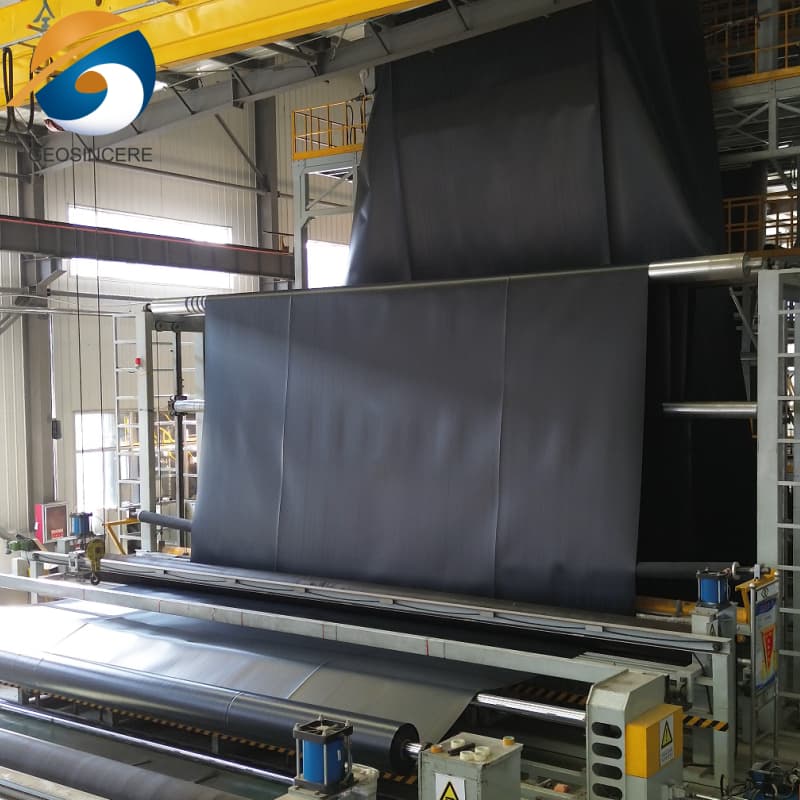
Polypropylene Geomembrane
Polypropylene Geomembrane is a flexible, low-permeability lining material designed for waterproofing and fluid containment applications. Made from polypropylene-based polymer, it provides good flexibility, dimensional stability, and resistance to environmental exposure.
- Flexible Performance: Adapts well to irregular surfaces, curves, slopes, and moderate ground movement.
- Low Permeability: Forms an effective barrier to help control water and liquid migration.
- Good Environmental Stability: Designed for applications involving outdoor exposure and changing service conditions.
- Multiple Surface Options: Available in smooth, single-sided textured, and double-sided textured configurations.
- Custom Specifications: Thickness, roll width, roll length, color, panel size, and packaging can be customized.
- Wide Applications: Suitable for reservoirs, agricultural ponds, artificial lakes, aquaculture, wastewater containment, and industrial liquid storage.
Polypropylene (PP) Geomembrane is a flexible synthetic liner engineered for containment applications requiring excellent puncture resistance, multiaxial elongation, and high flexibility. Manufactured from quality polypropylene resin and targeted additives, it maintains physical integrity under dynamic ground movement, continuous low-temperature exposure, and complex site geometries where traditional rigid liners may fail.
Key Questions Answered for Procurement & Engineering Teams
What is PP Geomembrane?
A highly flexible, seamable thermoplastic membrane designed to contain liquids, prevent subgrade contamination, and isolate environmental hazards.
Why choose PP over HDPE or PVC?
PP offers low thermal expansion, high multiaxial elongation (conforming to irregular terrain without bridging), and freedom from plasticizer migration over long service periods.
Where does PP perform best?
Irregular pond basins, pre-fabricated baffle systems, cold-climate liquid containment, decorative lagoons, and projects requiring extensive factory or field fabrication.

1. Polypropylene Geomembrane Overview
1.1 Product Definition
Polypropylene (PP) Geomembrane is a low-permeability synthetic membrane manufactured from high-molecular-weight polypropylene polymers, compounded with carbon black, antioxidants, and thermal stabilizers. Unlike conventional plastic sheeting or woven tarpaulins, PP geo membranes are engineered specifically for geotechnical and hydraulic containment applications requiring high-seam strength, consistent thickness, and resistance to environmental stress cracking.
1.2 Core Environmental Containment Functions
- Seepage Prevention: Establishes a low-hydraulic-conductivity barrier to prevent water, wastewater, or industrial liquids from migrating into underlying aquifers.
- Fluid Isolation: Protects surrounding soil structures from corrosive liquids, agricultural runoff, and chemical byproducts.
- Subgrade Settlement Adaptation: Elongates under differential subgrade settlement without localized thinning or stress-induced cracking.
2. Key Advantages of Polypropylene Geomembrane
2.1 Flexibility for Complex Structures
Standard High-Density Polyethylene (HDPE) membranes feature high yield strength but can experience stiff response at angles, corners, and irregular slope transitions. PP geomembranes display a low flexural modulus, allowing the material to lie flat against uneven subgrades, sharp slopes, and pipe penetrations without severe bridging or structural tension.
2.2 Environmental Exposure & Low-Temperature Performance
Polypropylene formulations retain flexibility across broad thermal spans. In cold climates where alternative materials stiffen or become brittle, PP geomembrane liner remain workable and resistant to impact damage during cold-weather handling and installation.
2.3 Field and Factory Fabrication Efficiency
Because PP is an unplasticized, heat-weldable polymer, panels can be factory-preassembled into large custom sheets prior to shipping. Pre-assembling panels under controlled factory conditions reduces total field-seam linear footage, lowering jobsite labor costs and reducing seam-inspection overhead on site.
2.4 Customization Options
- Thickness: 0.5 mm to 3.0 mm (20 mil to 120 mil)
- Roll Width: Standard widths available, with custom widths up to 10 m
- Roll Length: 50 m to 200 m, customized based on project requirements, roll weight, and transportation conditions
- Surface Topography: Smooth, Single-Sided Textured, Double-Sided Textured
- Color Options: Standard Black, with Green, Tan, and other custom colors available for project-specific requirements
- Panel Size: Custom prefabricated panels available according to project dimensions and installation requirements
3. Geomembrane Comparative Material Analysis: PP vs. HDPE vs. PVC vs. EPDM
Selecting the appropriate geosynthetic barrier depends on chemical composition, mechanical demands, subgrade conditions, and operational temperature profiles.
Performance Attribute | PP (Polypropylene) | HDPE (High-Density Polyethylene) | PVC (Polyvinyl Chloride) | EPDM (Ethylene Propylene Diene Monomer) |
Flexibility / Conformability | Very High | Moderate / Stiff | High | Very High |
Environmental Stress Crack Resistance (ESCR) | Exceptional | Moderate to High | N/A | Exceptional |
Thermal Expansion Coefficient | Low | High | Moderate | Low |
Plasticizer Migration Risk | None (Unplasticized) | None | Present (Can stiffen over time) | None |
Seam Welding Method | Hot Wedge / Extrusion | Hot Wedge / Extrusion | Chemical / Hot Air | Adhesive Tapes / Primers |
Pre-Fabrication Potential | High | Low (Rigid) | High | High |

4. Polypropylene Geomembrane Surface Topography Options
4.1 Detailed Applications and Operational Environments
4.1.1 Basal Containment & Flat Basins (Smooth PP):
Tailored for bottom liners in hydraulic applications with slopes under 10%, including wastewater lagoons, agricultural storage reservoirs, and potable water containment. The smooth, non-porous surface provides negligible hydraulic resistance, allowing mechanical scrapers, squeegees, or high-pressure water jets to clear accumulated sediment without damaging the membrane.
4.1.2 Steep Slope & High-Friction Infrastructure (Textured PP):
Engineered for containment facilities with side slopes exceeding 10%, such as municipal solid waste landfill caps, heap leach pads, secondary containment dikes, and tailing ponds. The textured surface generates high interfacial shear strength with subgrades and adjacent geotextiles, preventing catastrophic catastrophic slope movement, liner slippage, and veneer sliding failures under heavy soil surcharge or fluid pressures.
4.1.3 Specialized Enclosures & Prefabricated Baffles (Single-Sided Textured PP):
Highly effective in custom containment vessels, prefabricated baffle tanks, and concrete protective liners. The textured side anchors securely against concrete or native subgrade soils, while the smooth inner side maintains optimal fluid flow and prevents bio-fouling or sludge build-up within the tank chamber.
4.2 Physical Properties and Interfacial Performance Comparison
Metric / Characteristic | Smooth PP Geomembrane | Single-Sided Textured PP | Double-Sided Textured PP |
Interface Friction Angle (δ) | Low (10°–15°) | Moderate to High (22°–30° on textured face) | Very High (26°–35°+ on both faces) |
Maintenance & Cleanout Drag | Very Low (smooth surface allows simple washdowns) | Moderate (depends on whether smooth side faces fluid) | High (rough asperities trap fine particles and sludge) |
Tensile Yield Behavior | High localized strain capacity (≈12%–15% yield) | Micro-asperities act as minor localized stress concentrators | Micro-asperities act as minor localized stress concentrators |
Primary Contact Substrate | Compacted subgrades, smooth geotextiles | Steep soil slopes (textured face down, smooth face up) | Geotextiles, geocomposites, or soils on both sides |
Field Handling & Deployment | Easy (low friction allows effortless panel positioning) | Moderate (requires verification of correct orientation) | Higher effort (high friction drags against adjacent layers) |
4.3 Critical Engineering and Design Considerations
4.3.1 Interface Shear Testing:
Site-specific direct shear testing (ASTM D5321) using local project soils, geotextiles, or geocomposites is essential for steep slope designs to confirm that the interface friction angle achieves the required Factor of Safety (FS ≥ 1.5).
4.3.2 Stress Concentrations and Multiaxial Strain:
Surface texturing introduces surface irregularities that can create localized stress concentrations under high tensile loads. Designers should consider the potential impact on multiaxial strain capacity when assessing performance in areas prone to differential settlement.
4.3.3 Seaming Margin & Weld Preparation:
Thermal fusion seaming requires a clean, homogeneous welding surface. Double-sided textured membranes typically require untextured margins along panel edges or suitable surface preparation to remove asperities before extrusion or hot-wedge welding, helping ensure consistent weld integrity.
5. Polypropylene Geomembrane Primary Application Sectors
Polypropylene geomembrane provides a flexible and durable barrier for projects that require reliable fluid containment and seepage control. Its combination of flexibility, tensile performance, low permeability, and customizable thickness and surface options makes it suitable for a range of water, environmental, agricultural, and industrial applications.
5.1 Reservoir and Water Storage
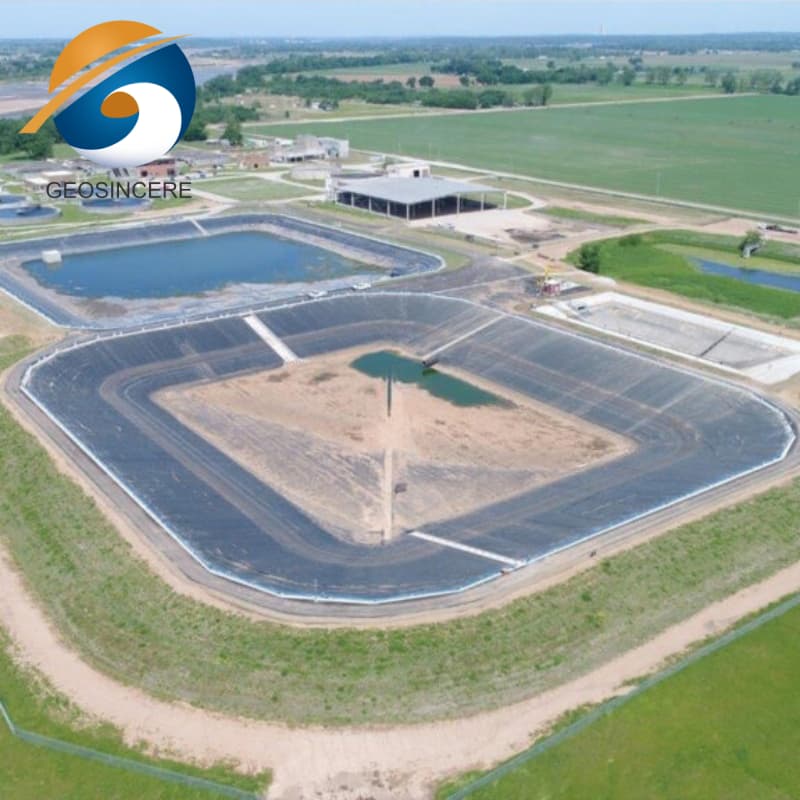
Polypropylene geomembrane can be used as a waterproof lining for reservoirs, storage basins, and water containment structures. It helps reduce seepage through soil and provides a continuous barrier between stored water and the surrounding ground. Custom roll widths and panel dimensions can also help simplify installation across large lining areas.
5.2 Agricultural and Irrigation Ponds
For farms and irrigation systems, water loss through permeable soil can reduce the efficiency of stored water. PP geomembrane creates a low-permeability lining for agricultural ponds, irrigation reservoirs, and farm water storage facilities. The geomembrane sheet can be selected according to pond geometry, subgrade conditions, and required service performance.
5.3 Artificial Lakes and Landscape Ponds
Artificial lakes, decorative ponds, and landscape water features often require a flexible waterproofing layer that can follow irregular contours. Polypropylene geo membrane sheet can be fabricated into different panel sizes and installed over prepared substrates to help control water leakage while supporting customized project designs.
5.4 Aquaculture and Fish Farming
Aquaculture ponds require effective water retention and a liner that can separate stored water from the underlying soil. PP membrane liners can be used to line fish ponds, shrimp ponds, hatchery facilities, and other aquaculture structures. Proper substrate preparation and protective layers should be considered to reduce the risk of puncture during installation and operation.
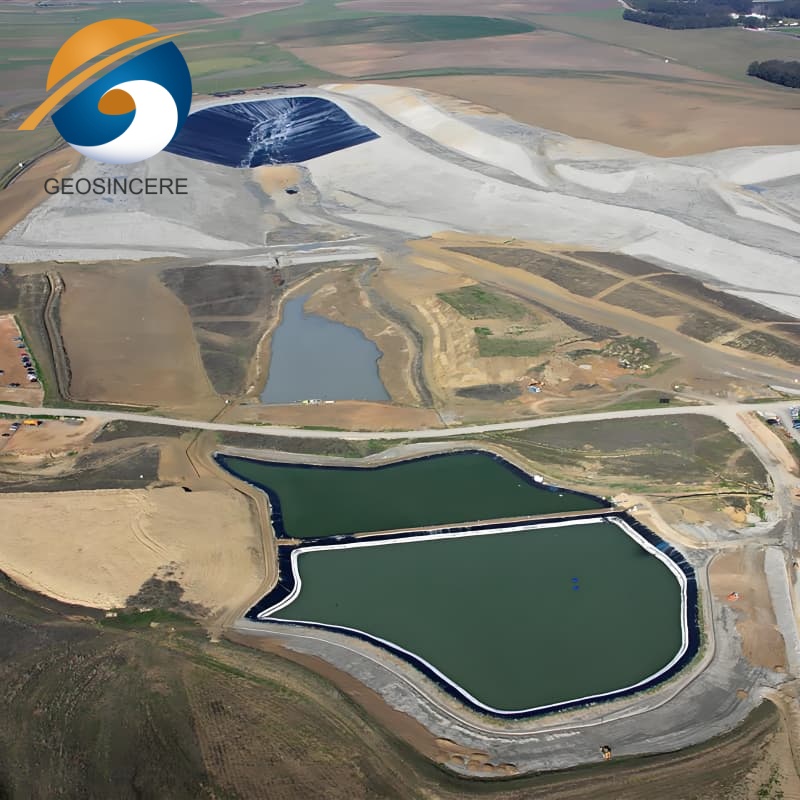
5.5 Wastewater Treatment and Containment
Wastewater ponds and containment areas require a barrier to limit liquid migration into surrounding soil. Polypropylene impermeable geomembrane can serve as a lining layer in wastewater treatment and containment systems where low permeability and resistance to the project environment are required. Material selection should be based on the wastewater composition, operating conditions, and applicable project specifications.
5.6 Industrial Liquid Containment
Industrial facilities may need lined areas for storing or containing process liquids, wastewater, or other fluids. PP geomembrane can provide a continuous containment barrier beneath or around these facilities. The appropriate membrane thickness and configuration should be determined according to the liquid type, loading conditions, substrate, and required containment level.
5.7 Landfill and Leachate Containment
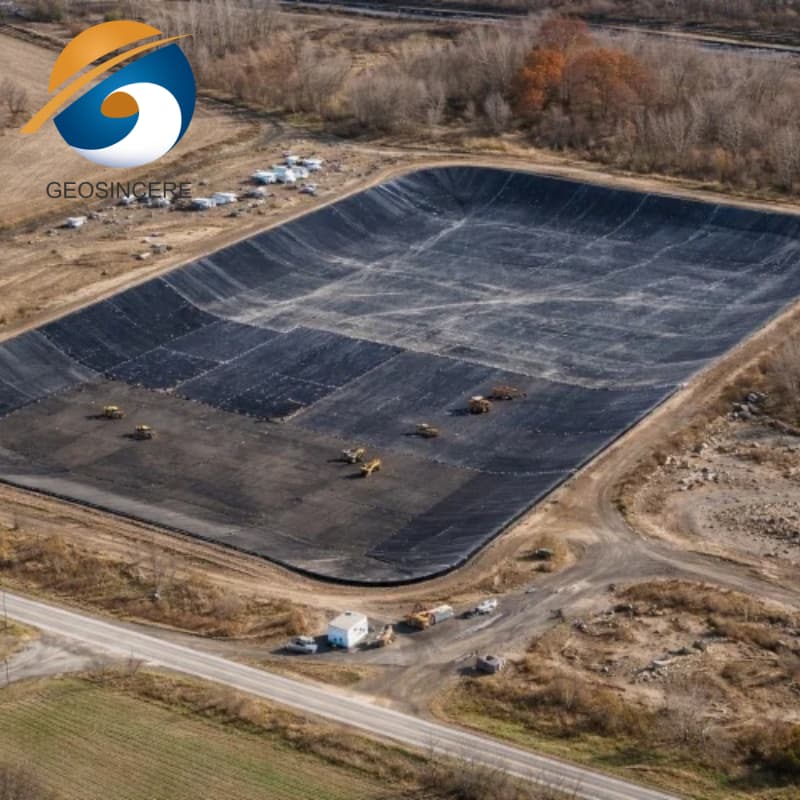
Landfill systems require engineered lining structures to control the movement of leachate and protect surrounding soil and groundwater. Geomembranes can be incorporated into composite liner systems together with geotextiles, drainage layers, and other geosynthetics. For landfill applications, membrane selection should follow the project's design requirements and relevant engineering standards.
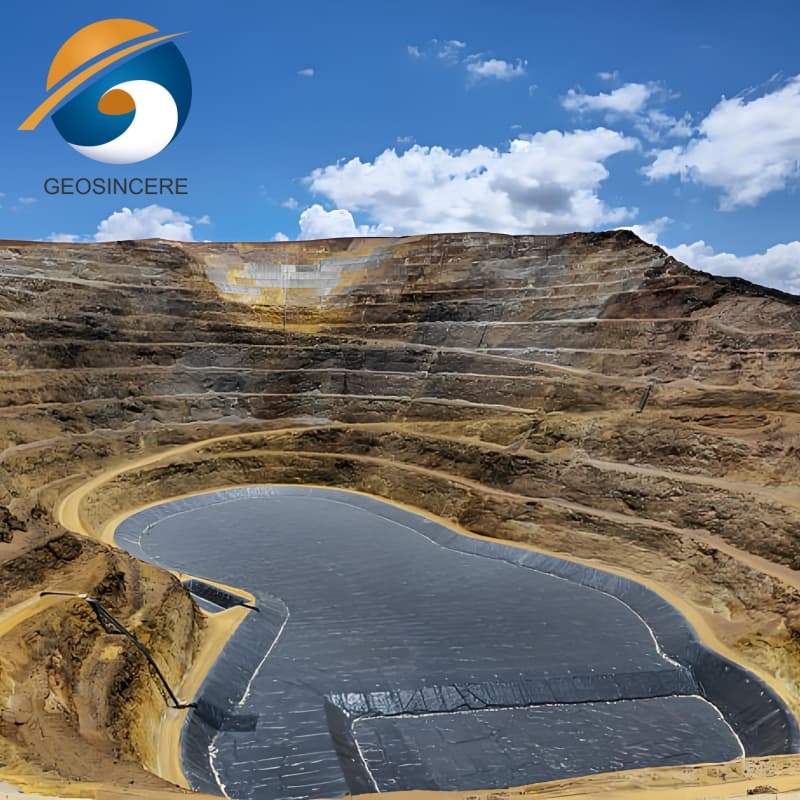
5.8 Mining and Process Water Management
Mining operations may use lined ponds and containment structures for process water, runoff, or other liquids. Polypropylene impermeable geomembrane liner can be considered for applications where a flexible, low-permeability barrier is required. Thickness, surface configuration, chemical compatibility, and interface conditions should be evaluated according to the specific mining environment.
5.9 Dam and Canal Seepage Control
Dam reservoirs, irrigation canals, and water conveyance structures can experience water loss through permeable soil and cracks or defects in existing surfaces. PP geo membrane can be installed as part of a designed lining system to reduce seepage and improve water-retention performance. Textured surfaces may be considered where increased interface friction is required on slopes.
5.10 Secondary Containment and Spill Protection
Secondary containment systems are designed to limit the spread of liquids if a primary storage or handling system leaks. Polypropylene geomembrane can be used to line containment areas, collection zones, and bunded structures, providing an additional low-permeability barrier. The liner configuration should be selected based on the stored material, containment geometry, and applicable safety requirements.

6. Composite Protection Systems: PP Geomembrane + Geotextile
For sites with angular gravel subgrades, rocky backfill, or high puncture risks, combine PP Geomembrane with non-woven needle-punched geotextiles to form a dual-layer composite system.
- Cushion Function: Geotextiles distribute point-load stresses from overlying ballast or rocky soils, preventing subgrade puncture.
- Friction & Drainage: Nonwoven geotextiles increase interface friction while providing planar gas or liquid venting beneath the primary liner.
7. Manufacturer Capabilities: GEOSINCERE Geosynthetics
GEOSINCERE Geosynthetics manufactures engineering-grade geosynthetics with global supply chain capabilities for large-scale infrastructure projects.
- Production Capacity: 52,000 m² modern manufacturing facility equipped with 12 automated extrusion lines.
- Technical Quality Standards: Products meet or exceed ASTM, GRI, and ISO global engineering benchmarks.
- Integrated Geosynthetic Solutions: One-stop supply including PP/HDPE Geomembranes, Non-Woven Geotextiles, Geocells, Geogrids, and Drainage Composites.
8. Polypropylene Geomembrane Frequently Asked Questions (FAQ)
Q1: Can PP Geomembrane be welded using standard hot wedge equipment?
Yes. PP geomembranes weld efficiently using standard dual-track hot wedge and extrusion welding equipment, operating at material-specific temperature and speed settings.
Q2: Is Polypropylene Geomembrane resistant to UV exposure?
Yes. High-grade carbon black (2.0-3.0%) and hindred-amine light stabilizers (HALS) are incorporated into the formulation to protect the polymer matrix against photo-oxidation from solar UV radiation.
Q3: What is the primary operational difference between PP and HDPE geomembranes?
PP offers significantly higher flexibility, lower thermal expansion coefficient, and superior multiaxial elongation compared to HDPE, making PP more adaptable to irregular ground settlement and pre-fabricated panel assembly.
Q4: Is an underlying geotextile cushion mandatory for PP liners?
While PP geomembranes feature high inherent puncture resistance, placing a non-woven geotextile cushion underneath is recommended whenever the subgrade contains angular aggregate (>6 mm) or sharp rock fragments.
9. Summary & Manufacturer Recommendation
For projects requiring reliable flexibility, low-temperature performance, thermal stability, and long-term fluid containment, Polypropylene (PP) Geomembrane provides a practical lining solution for demanding engineering applications. Shandong Geosino New Material Co., Ltd. (GEOSINCERE Geosynthetics) supplies customized PP geomembrane solutions designed around project specifications, installation conditions, and international market requirements.
- Advanced Manufacturing: Supported by a 52,000 m² production facility, 150+ skilled employees, and 12 automated production lines, with quality control covering raw materials, production, testing, and final inspection.
- Versatile Surface Options: Available in smooth, single-sided textured, and double-sided textured configurations to accommodate different interface friction and installation requirements.
- Customized Specifications: Thickness, roll width, roll length, surface configuration, color, and packaging can be customized according to project requirements.
- Quality & Certification Support: GEOSINCERE Geosynthetics provides technical documentation, test reports, and applicable certifications to support international civil engineering, water management, environmental containment, and infrastructure projects.
- Integrated Geosynthetic Supply: PP geomembrane can be supplied together with geotextile, GCL, geogrid, geocell, drainage products, and other geosynthetic materials for coordinated project procurement.


