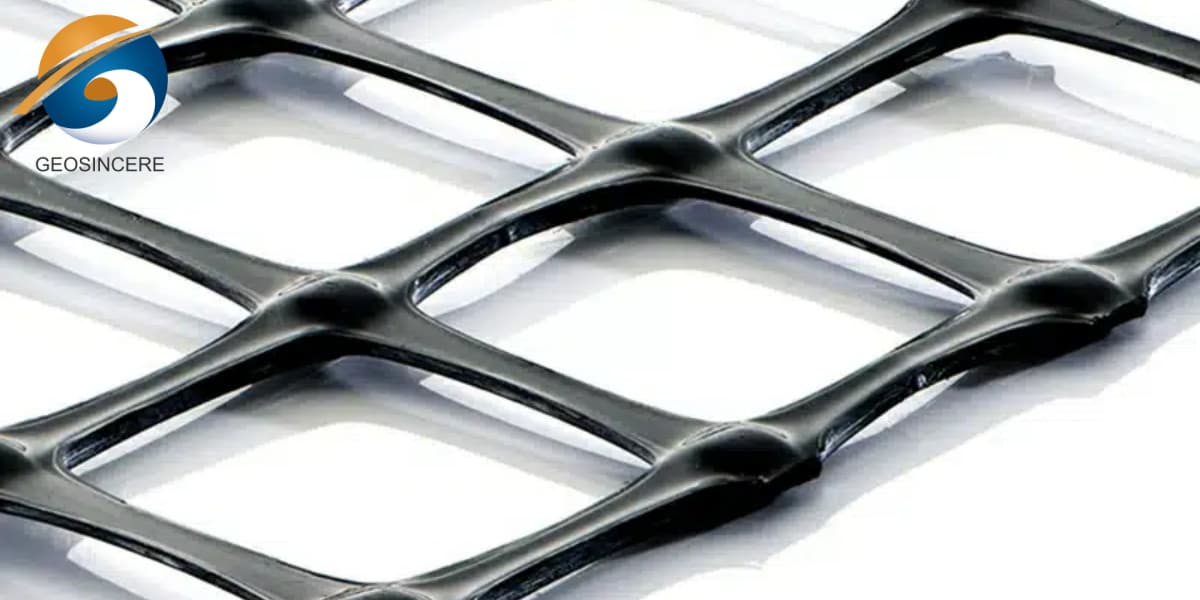
A Comprehensive Guide to Geo Grid Cost
In the world of civil engineering and infrastructure development, the bottom line is king. When budgets are strained and timelines are tight, the line items for materials like geogrids—those polymer grids used to reinforce soil—are often scrutinized for immediate cost savings. However, a growing body of research and real-world project data suggests that focusing solely on the upfront "geo grid cost" per square yard is a fiscally shortsighted approach. The true value of geogrids lies in their ability to drive down the lifecycle cost of a project, offering savings in material, installation, maintenance, and long-term rehabilitation that dwarf the initial investment.
This article delves deep into the economics of ground reinforcement. We will explore the factors that influence the initial pricing of geogrid, analyze case studies demonstrating significant cost savings, and make the case for why lifecycle cost analysis (LCCA) should be the standard for evaluating these critical construction materials.
Section 1: Deconstructing the Initial Geo Grid Cost
When procurement officers and project managers first look at geo grid, they see a line item that ranges anywhere from $0.45 to over $6.30 per square yard -9. But this wide range is not arbitrary; it is a function of engineering requirements. Understanding these variables is the first step in appreciating the material's value proposition.
1.1 Type and Strength Dictate Price
The configuration of the geogrid is the primary cost driver.
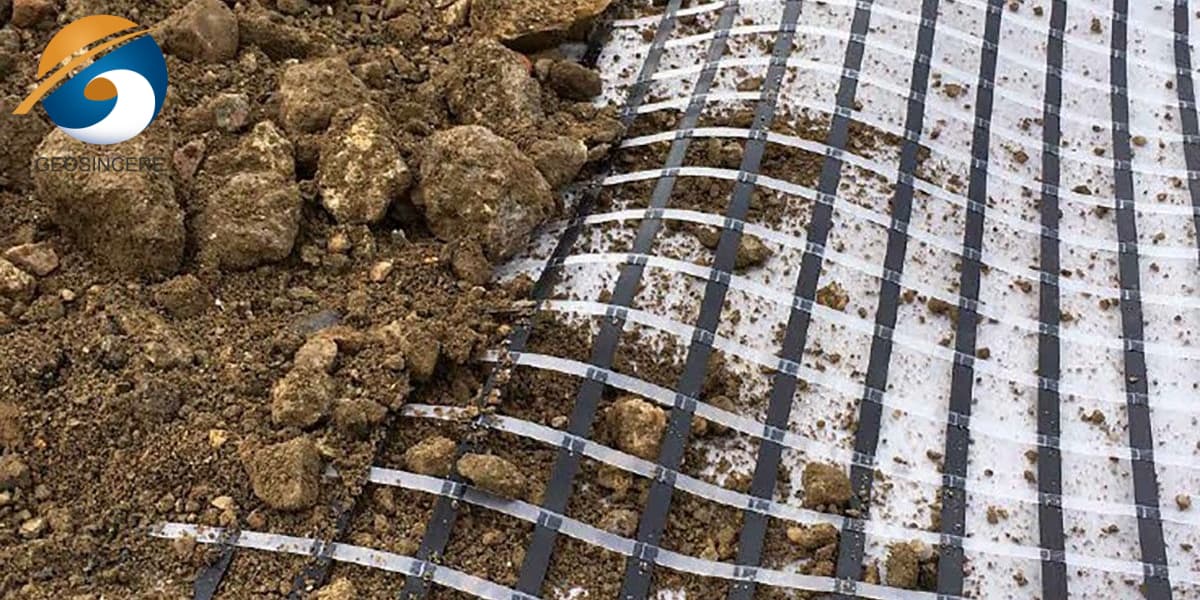
- Uniaxial Geogrid, designed to handle high tensile stress in a single direction (ideal for retaining walls), represent the entry-level cost, typically ranging from $0.45 to $2.25 per square yard.
- Biaxial Geogrid, which distribute loads in two directions for applications like road base stabilization, fall in the mid-range, costing between $0.72 and $3.15 per square yard.
- Triaxial Geogrid, with their multi-directional strength for heavy-duty roads and soft soil reinforcement, command a premium, often between $1.35 and $4.50 per square yard.
1.2 Material Science and Manufacturing
The raw polymer used also plays a significant role. High-density polyethylene (HDPE) holds about 50% of the market share due to its durability and cost-effectiveness, while polyester (PET) offers higher tensile strength at a higher price point. Advanced manufacturing techniques, such as weaving for high-strength PET or welding for composite products, add to the cost compared to standard extrusion methods . Furthermore, geogrids certified to rigorous standards like ASTM D6637 can cost 10-15% more, but this premium is an insurance policy against material failure and costly project delays.
1.3 The Installation Variable
The initial material cost is only half the equation. Installation—covering site preparation ($0.09–$0.45/sq yd), labor ($0.45–$1.80/sq yd), and equipment ($0.18–$0.72/sq yd)—can nearly double the initial outlay. However, as we will explore, the very design of geogrid mesh often simplifies and accelerates this process, offsetting these costs.
Section 2: The Real Economics - Lifecycle Geo Grid Cost Analysis (LCCA)
To move beyond the sticker shock, engineers and agencies are increasingly turning to Lifecycle Cost Analysis. LCCA evaluates the total cost of a project over its entire lifespan, including initial construction, maintenance, user delays, and eventual rehabilitation. When viewed through this lens, the cost-benefit ratio of geo grid mesh becomes overwhelmingly positive.
A pivotal 2025 study published in Springer titled "Life Cycle Cost Analysis and Performance Evaluation of Flexible Pavements Using Geogrid in Soil Subgrade" provides quantifiable evidence. Researchers found that reinforcing soil with geogrid improved its strength—measured by the California Bearing Ratio (CBR)—by nearly 40%. This mechanical improvement allowed engineers to reduce the thickness of pavement layers. Specifically, the Wet Mix Macadam layer was reduced by 20%.
2.1 The Financial Result?
While the geo grid ground grid added an upfront cost, the reduction in aggregate material, hauling, and compaction led to a conventional pavement section that was 5% more expensive over its lifecycle than the geogrid-reinforced section -4. This proves that a small investment in reinforcement pays for itself multiple times over by reducing the need for expensive virgin materials.
Section 3: Geo Grid Cost Quantifying the Savings - The "40% Rule" and Beyond
The savings identified in academic studies are being replicated in the field. Perhaps the most compelling data comes from a 2024 study by the University of Illinois, published in Transportation Geotechnics. After decades of research, they quantified the "Geogrid Effect" with stunning clarity:
3.1 Thinner Pavements
Geo ground grid allow for a 20-40% reduction in the thickness of aggregate base courses without sacrificing performance. For a highway project, reducing the base layer from 18 inches to 10 inches represents hundreds of thousands of dollars saved per mile in aggregate, hauling, and labor costs.
3.2 Extended Lifespan
The study measured a Traffic Benefit Ratio (TBR) of 2.0 to 3.0, meaning the road lasts 2 to 3 times longer than an unreinforced section. This delays major rehabilitation projects by decades, a massive saving in future capital outlay.
3.3 Enhanced Performance
Reinforced sections showed a 50-200% increase in base-course stiffness and a 50% reduction in rutting under heavy loads. This translates to lower maintenance costs and fewer traffic disruptions over the road's life.
A real-world example of this is the RN-39 highway in Honduras. A 45.6 km segment stabilized with multi-axial geogrid was compared to a 30.7 km conventionally built segment. Post-construction monitoring revealed that the geogrid-stabilized section maintained a superior International Roughness Index (IRI)—a measure of road surface smoothness—over time. This smoother ride translates directly into lower vehicle operating costs for users, a significant yet often overlooked component of total lifecycle cost.
Section 4: Case Studies in Geo Grid Cost-Efficiency
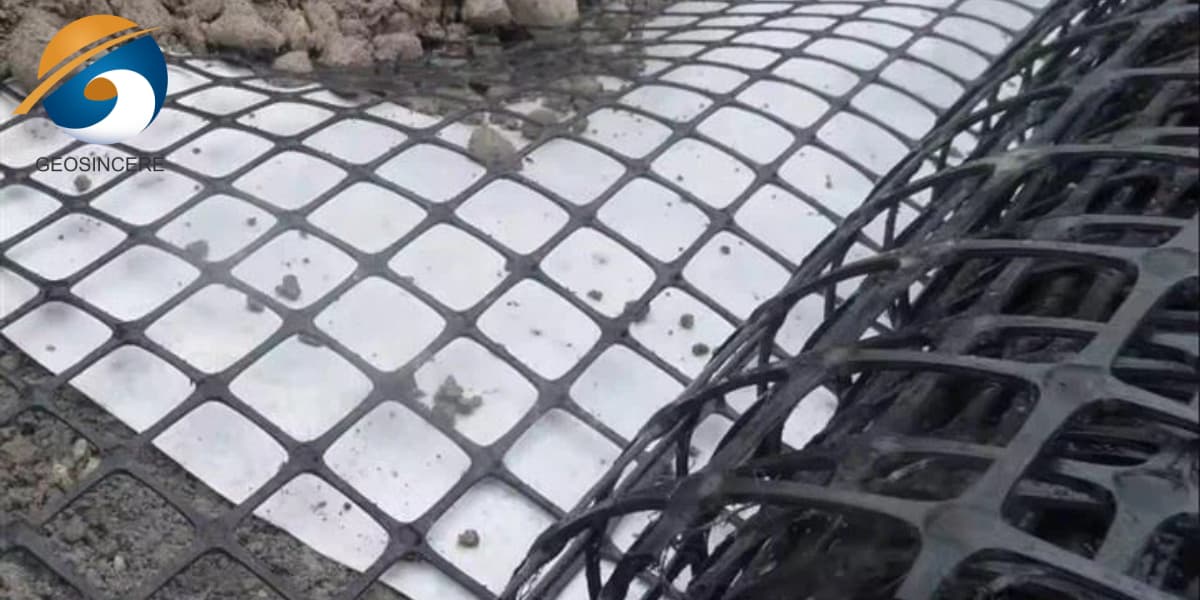
Moving from theory to practice, numerous projects demonstrate how geogrids solve budget-busting challenges.
4.1 Solar Farm Access Roads:Saving $1 Million in Aggregate
The Golden Triangle Solar Farm in Artesia, Mississippi, faced a logistical nightmare. The site's clay soils became impassable during rainy seasons, threatening construction schedules and budgets. The traditional solution—building a thick, expensive aggregate road capable of supporting heavy construction traffic—was cost-prohibitive.
By utilizing Tensar InterAx geogrid, engineers were able to design a road with only a 6-inch aggregate base over the weak clay. The geogrid confined the aggregate, creating a stiffened platform that distributed loads and prevented rutting. The result was an estimated $1 million in aggregate cost savings compared to the non-reinforced design, keeping the project on schedule and on budget.
4.2 Commercial Development:Beating Chemical Alternatives
When a construction site in Lenox, Iowa, saw its fabric-stabilized access road fail after heavy rains, the owner faced a choice: use expensive chemical stabilization or dig out and replace the failed material. The Tensar design offered a third way: installing a layer of InterAx NX850 geogrid. This solution saved the owner $30,000 compared to the chemical alternative and eliminated weather-related delays, as the geogrid could be installed even in damp conditions.
4.3 UK Car Park: Solving the "Weak Spot" Problem
During the construction of a new car park for New College Durham, contractors encountered a localized area of exceptionally weak soil with low CBR values due to buried vegetation. Simply placing aggregate over this "soft spot" would have led to differential settlement and failure. The solution was a targeted application of ABG's Abgrid 30/30 geogrid placed directly over the weak zone. This spot-treatment approach was far more cost-effective than excavating the entire area or over-designing the whole car park base, proving that geogrids offer precision engineering for complex ground conditions.
Section 5: Strategic Advantages in a Volatile World
Beyond the direct material and maintenance savings, geogrids offer strategic financial advantages in an era of economic and climatic uncertainty.
5.1 Mitigating Weather Risk
Unpredictable weather is a leading cause of budget overruns. Wet weather can turn a construction site into a quagmire, halting work and idling expensive labor and equipment. Geogrid material provide a "weather proofing" strategy. By stabilizing the working platform, they allow crews to continue working through wet conditions, protecting the schedule and avoiding the crippling costs of delay.
5.2 Sustainability and Carbon Costs
As governments and corporations implement carbon taxes and ESG (Environmental, Social, and Governance) reporting requirements, the embodied carbon of construction materials is becoming a financial liability. The use of geogrids directly addresses this. By reducing aggregate thickness by up to 40%, projects significantly cut the number of dump truck trips, lowering fuel consumption, emissions, and road wear. Furthermore, the development of geogrids from recycled polymers offers an even greener alternative, often at a competitive price point of $0.40 to $2.00 per square yard. This positions geogrid for gravel driveway not just as a cost-saver, but as a key tool for sustainable construction.
5.3 Navigating Economic Fluctuations
The global geogrid market, valued at approximately $1.5 billion in 2024, is sensitive to the volatile prices of its raw polymers, which are derived from the oil and gas industry. However, the cost savings geogrids enable—specifically the massive reduction in the use of diesel for hauling and processing aggregate—insulate the overall project budget from fluctuations in energy prices. By using less of everything, the project's financial risk is diversified.
Section 6: Calculating Your Return on Investment
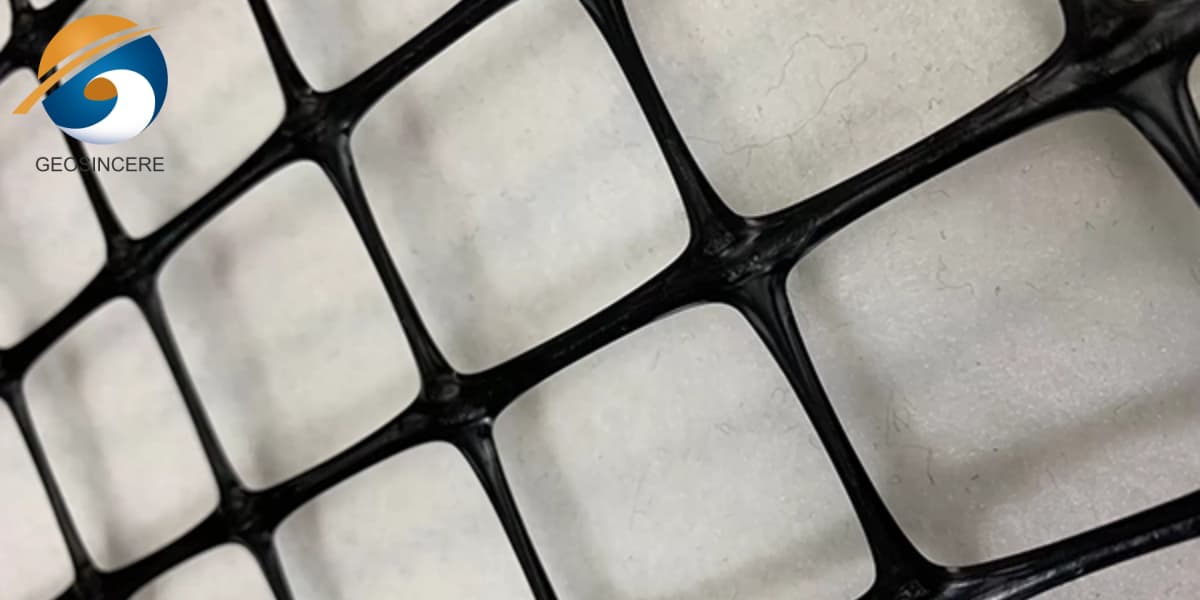
For an engineer or project owner looking to harness these savings, the process is straightforward. The days of guesswork are over. Advanced design software, such as Tensar+, allows designers to input soil conditions and load requirements and immediately compare the cost of a conventional section against a geogrid-stabilized section.
6.1 A Simplified Budgeting Approach:
- Define the Problem: What are the soil's CBR values and the required traffic loads?
- Model Alternatives: Use software to design a traditional thick aggregate section and a thinner, geogrid-reinforced section.
- Calculate Material Costs: Factor in the cost of the geogrid (e.g., $0.90/sq yd for biaxial) versus the cost of hundreds of tons of additional aggregate.
- Factor in Installation: While geogrid adds an installation step, the reduction in aggregate volume often means faster installation with less compaction equipment.
- Apply LCCA: Extend the analysis over 20, 30, or 50 years. Include maintenance schedules. A pavement with a TBR of 3.0 will require maintenance far less often, a saving that dwarfs the initial $5,000 or $50,000 spent on geogrid.
- Consider User Costs: For public projects, smoother roads mean lower vehicle repair costs for the public, a powerful argument for funding approval.
Conclusion: The Smart Economics of Reinforcement
The question is no longer whether we can afford to use geogrids, but whether we can afford not to. The data is in from laboratories in Illinois, test tracks in India, and highways in Honduras: geogrids are one of the most cost-effective investments in modern construction -2-4-6.
While the initial "geo grid cost" is a tangible number on an invoice, it is an misleadingly small piece of the financial puzzle. The true cost of a project is written in the thickness of its aggregate layers, the frequency of its maintenance cycles, and the date of its first major failure. By reinforcing the ground beneath us, geogrids allow us to build thinner, faster, and stronger. They are not just a construction material; they are a financial tool for building infrastructure that lasts—saving millions in taxpayer and investor dollars over the long haul. As the global construction industry seeks resilience and sustainability, the economic argument for geogrids has become irrefutable.
Choose a Reliable Geo Grid Supplier to Quote Price for You :
Shandong Geosino New Material Co., Ltd. (GEOSINCERE Geosynthetics) has been keeping on investing in technological innovation, manufacturing facilities improvement and turnkey engineering abilities. We have invested 10 million dollars into our manufacturing factory which is equipped with state-of-the-art automatic production lines to manufacture high quality HDPE geomembranes and other geosynthetics with optimized processes. Our extensive lines of geosynthetics products are well known for their ensured quality, high performance, excellent durability and best cost effectiveness.
GEOSINCERE Geosynthetics brand geogird and other geosynthetics products and solutions can meet your requirements by our solid technologies, innovative engineering solutions and excellent customer services. GEOSINCERE Geosynthetics always tries our best to solve the most complex civil, mining and environmental challenges with our innovative and high performance geosynthetic products. Quality assurance, factory price and fast delivery time are our competitive advantages.