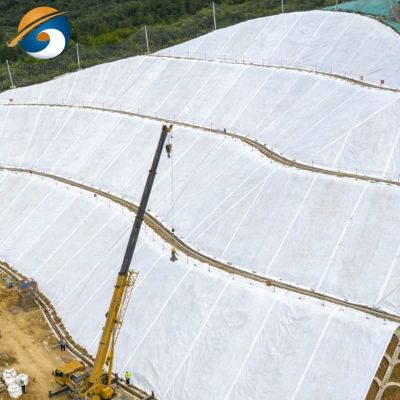
How to repair damaged geomembrane liner
How to repair damaged geomembrane liner refers to the engineering process used to restore impermeable geomembrane systems that have been punctured, torn, or degraded during construction or service. Repair methods typically include patch welding, extrusion welding, or replacement sections to maintain the integrity of containment systems in landfills, mining ponds, reservoirs, and environmental protection projects.
Technical Parameters and Engineering Specifications
Before performing geomembrane repair operations, engineers must verify technical specifications of the existing liner system to ensure compatibility between repair materials and the original geomembrane.
| Parameter | Typical Range | Engineering Significance |
|---|---|---|
| Material Type | HDPE / LLDPE / PVC | Determines welding method |
| Thickness | 0.5 mm – 2.5 mm | Impacts welding temperature and pressure |
| Tensile Strength | ≥16 MPa (HDPE typical) | Ensures structural integrity |
| Puncture Resistance | ≥400 N | Prevents further damage |
| Carbon Black Content | 2% – 3% | Improves UV resistance |
| Welding Temperature | 220°C – 350°C | Required for thermal fusion repair |
Matching repair materials with these parameters is critical when determining how to repair damaged geomembrane liner effectively in engineering environments.
Structure and Material Composition
Understanding the structure of geomembrane liners helps technicians select appropriate repair techniques.
Polymer Layer – main waterproof barrier typically made of HDPE or LLDPE
Carbon Black Additive – protects the liner from ultraviolet degradation
Stabilizers and Antioxidants – enhance long-term chemical stability
Surface Texture Layer – optional textured surface for slope stability
Backing Interface – interacts with soil, geotextile, or concrete base
Damage usually occurs on exposed surfaces due to mechanical impact, installation errors, or environmental stresses.
Manufacturing Process of Geomembrane Liners
1. Raw Material Preparation
High-density polyethylene resin, carbon black, and stabilizers are blended using high-speed mixers to achieve consistent material properties.
2. Extrusion Process
The polymer mixture is melted and extruded through flat-die extrusion lines to produce continuous geomembrane sheets.
3. Cooling and Thickness Calibration
Cooling rollers regulate sheet thickness and ensure uniform surface properties.
4. Surface Texturing (Optional)
Textured geomembranes are produced using embossing rollers to enhance slope friction performance.
5. Quality Inspection and Roll Packaging
Thickness measurement
Mechanical strength testing
Surface defect inspection
Understanding the production process assists engineers in selecting compatible materials when learning how to repair damaged geomembrane liner.
Geomembrane vs Alternative Waterproof Materials
| Material | Durability | Repair Difficulty | Typical Application |
|---|---|---|---|
| HDPE Geomembrane | Very High | Moderate | Landfills and mining ponds |
| PVC Membrane | Moderate | Low | Water reservoirs |
| Concrete Lining | High | High | Dams and channels |
| Clay Liner | Moderate | Very High | Landfill base sealing |
Application Scenarios
Understanding how to repair damaged geomembrane liner is essential for projects requiring long-term containment performance.
Municipal landfill containment systems
Mining tailings ponds
Wastewater treatment lagoons
Agricultural irrigation reservoirs
Industrial chemical storage ponds
Environmental protection engineering
Typical users include EPC contractors, environmental engineers, project consultants, and infrastructure developers.
Core Problems and Engineering Solutions
1. Punctures Caused by Construction Equipment
Heavy equipment may puncture the liner during installation.
Solution: Use HDPE patch welding with extrusion welders to seal damaged areas.
2. Seam Separation or Welding Failure
Improper welding may create weak joints.
Solution: Re-weld seams using hot wedge welding equipment.
3. UV Degradation Over Time
Exposure to sunlight can weaken geomembrane materials.
Solution: Apply protective soil cover or replace degraded sections.
4. Stress Cracking on Slopes
Slope movement may cause localized tearing.
Solution: reinforce damaged areas using larger patch panels.
Risk Warnings and Prevention Strategies
Inspect geomembrane surfaces before covering with soil
Avoid sharp rocks or debris on subgrade surfaces
Use geotextile protection layers
Train installation personnel on welding procedures
Conduct regular inspection during service life
These preventive measures reduce future repair frequency and extend liner lifespan.
Procurement and Repair Material Selection Guide
Identify geomembrane material type and thickness
Select compatible repair patches or welding rods
Evaluate welding equipment availability
Request technical data sheets from suppliers
Test repair samples before field application
Confirm compliance with environmental engineering standards
Ensure availability of trained welding technicians
Following these steps improves reliability when determining how to repair damaged geomembrane liner in field conditions.
Engineering Case Study
A mining operation operating a tailings storage facility covering 12 hectares experienced localized geomembrane damage due to equipment movement during maintenance operations.
Inspection teams identified several punctures ranging from 5 mm to 40 mm in diameter. Engineers implemented HDPE patch welding using extrusion welders and 2.0 mm repair panels.
After repair, vacuum testing and spark testing confirmed seam integrity. The repair process restored containment performance without requiring full liner replacement.
FAQ – How to Repair Damaged Geomembrane Liner
1. What causes geomembrane liner damage?
Common causes include punctures, improper installation, and UV exposure.
2. Can small punctures be repaired?
Yes, small punctures can be repaired using welded patches.
3. What welding methods are commonly used?
Hot wedge welding and extrusion welding are widely used.
4. Is repair possible underwater?
Typically repairs must be performed in dry conditions.
5. What thickness patch should be used?
The patch should match or exceed the liner thickness.
6. How large should a repair patch be?
Patches typically extend at least 100 mm beyond the damaged area.
7. How is seam quality tested?
Vacuum box testing and spark testing are commonly used.
8. Can damaged liners always be repaired?
Severely degraded liners may require replacement sections.
9. How long do repaired liners last?
Properly repaired liners can perform for many years.
10. Who should perform geomembrane repairs?
Certified geomembrane welding technicians.
Request Technical Documentation or Engineering Support
Contractors and project managers responsible for containment systems may request the following support from suppliers:
Geomembrane repair technical manuals
Welding procedure specifications
Material compatibility reports
Engineering repair samples
Bulk geomembrane supply quotations
Contact technical specialists to obtain engineering guidance for geomembrane repair and containment system maintenance.
Author Expertise and Industry Authority
This technical guide was prepared by professionals with extensive experience in geomembrane manufacturing, environmental containment engineering, and infrastructure construction projects. The information reflects practical engineering standards used by EPC contractors, environmental consultants, and geosynthetic material suppliers worldwide.