


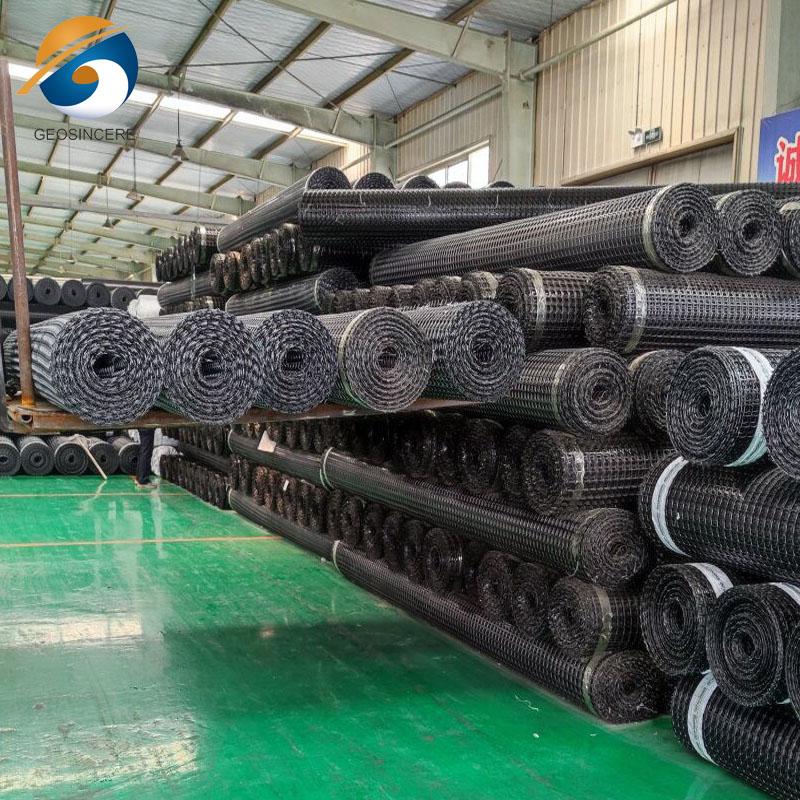
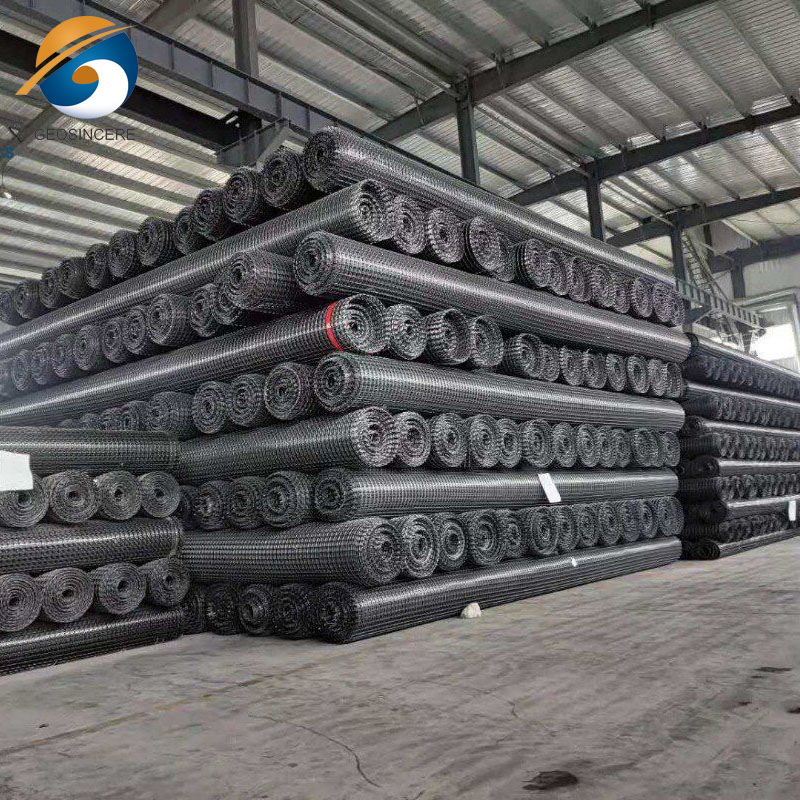
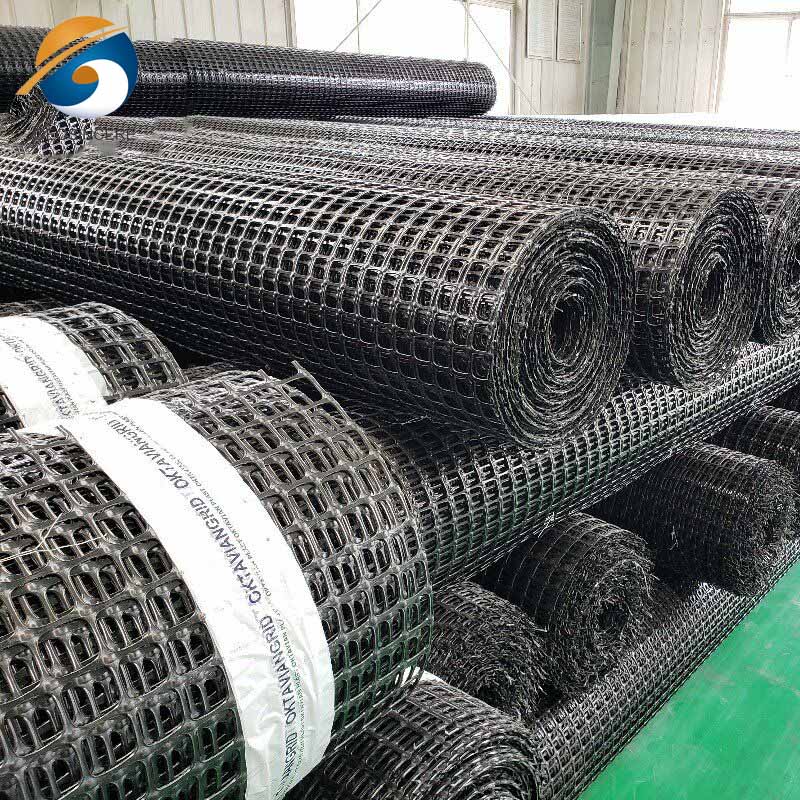
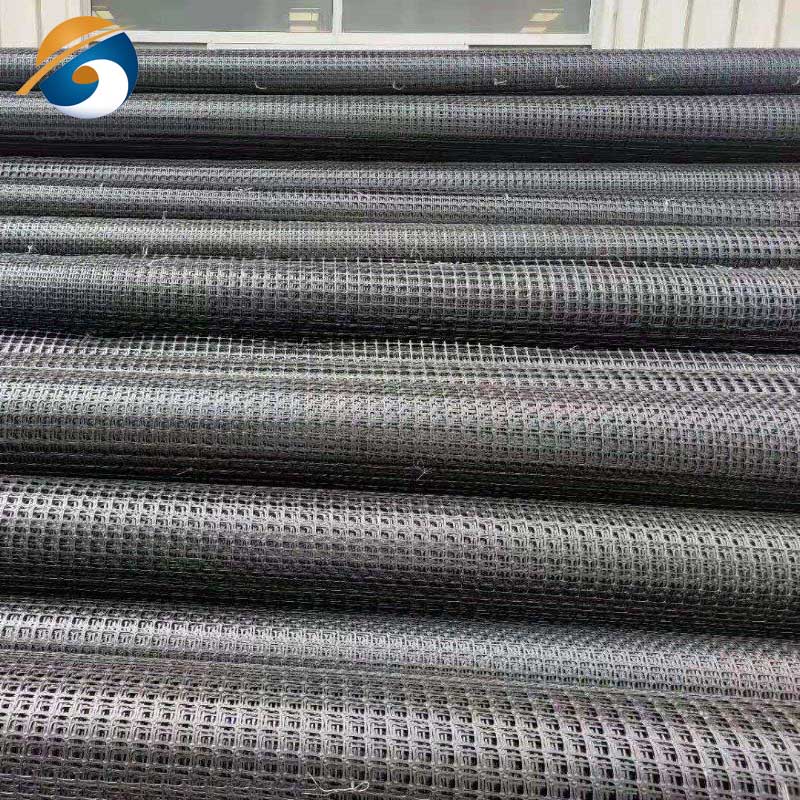
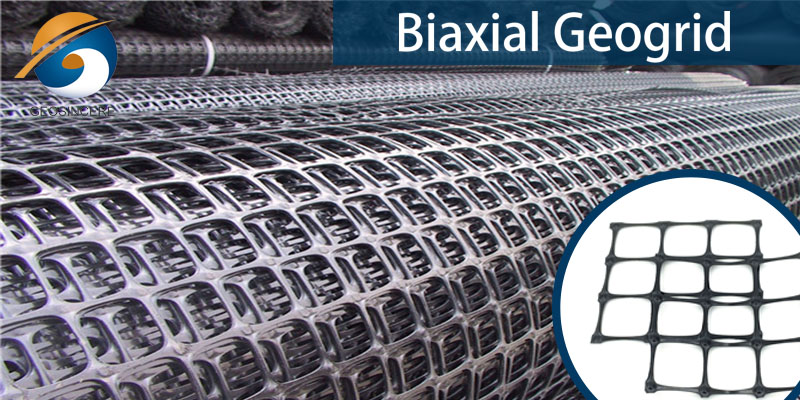
Polypropylene Plastic Biaxial Geotextile Geogrid
Balanced biaxial tensile strength, uniform load distribution in MD & TD directions
Strong soil interlocking aperture, improves soil shear strength & reduces differential settlement
Virgin polypropylene raw material, excellent acid‑alkali & anti‑corrosion performance
High‑strength welded junctions, stable grid aperture under heavy load
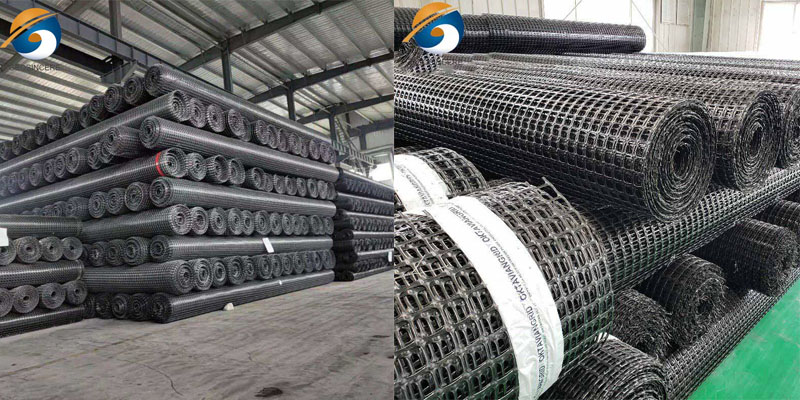
Light‑weight, easy transportation & on‑site laying, saves labor cost
Reduces required sub‑base thickness, effectively cuts overall project investmen
Biaxial geogrid commonly comes from high‑density polyethylene (HDPE) or other engineered polymer materials. HDPE raw material delivers outstanding durability, reliable chemical resistance and solid tolerance against complex field environmental conditions, making it a preferred choice for long‑term soil reinforcement projects.
Featuring intersecting reinforcing ribs and uniform apertures, biaxial geogrid forms a stable grid‑shaped structure. This special grid layout delivers consistent high tensile strength along both longitudinal and transverse axes. As a result, the biaxial geogrid can spread applied loads across wider zones and resist unwanted soil deformation under working stress.
The core design purpose of biaxial geogrid is bidirectional tensile reinforcement for soil structures. Balanced two‑direction strength restricts soil displacement and boosts overall ground load‑bearing capacity. Intersection junctions between ribs maintain firm, stable connections, enabling the biaxial geogrid to operate as one integrated reinforcement system for smooth and efficient load transfer.
Parameter
| ltem | TGSG 15-15 | TGSG 20-20 | TGSG 25-25 | TGSG 30-30 | TGSG 35-35 | TGSG 40-40 | |
| Tensile Strength (kN/m) | Longitudinal | ≥15 | ≥20 | ≥25 | ≥30 | ≥35 | ≥40 |
| Transverse | ≥15 | ≥20 | ≥25 | ≥30 | ≥35 | ≥40 | |
| Elongation Rate (%) | Longitudinal | ≤13 | ≤13 | ≤13 | ≤13 | ≤13 | ≤13 |
| Transverse | ≤16 | ≤16 | ≤16 | ≤16 | ≤16 | ≤16 | |
| Strength at 2% elongation (KN/m) | Longitudinal | ≥5 | ≥8 | ≥8 | ≥11 | ≥12 | ≥13 |
| Transverse | ≥7 | ≥10 | ≥11 | ≥13 | ≥14 | ≥15 | |
| Strength at 5% elongation (>KN/m) | Longitudinal | ≤8 | ≤10 | ≤11 | ≤15 | ≤15 | ≤16 |
| Transverse | ≤10 | ≤13 | ≤13 | ≤15 | ≤18 | ≤20 | |
Features
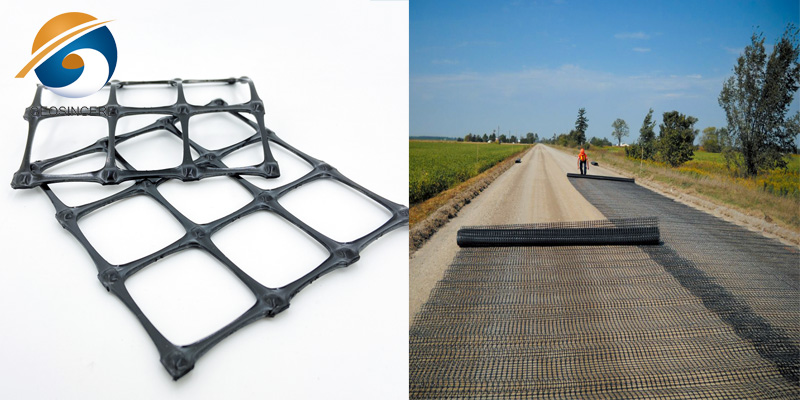
Mitigates pavement cracking, rutting and subsidence, extending overall road service life
Stabilizes backfill behind retaining walls and steep embankment slopes
Resists degradation in acidic, alkaline and saline soil environments
Consistent mesh geometry avoids performance drop during construction compaction
Easy‑to‑handle rolls eliminate requirement for heavy installation machinery
Allows thinner sub‑base layers, helping contractors control total project expenditure
Main Applications
Soil Stabilization: Biaxial geogrids are commonly used for soil stabilization applications. They can be placed within the soil mass to reinforce and stabilize embankments, slopes, and retaining walls. By improving the tensile strength of the soil, they help prevent soil movement, erosion, and slope failures.
Road and Pavement Construction: Biaxial geogrids are extensively used in road and pavement construction. They are often incorporated into the base and subbase layers to enhance the load-bearing capacity and reduce the potential for rutting. This helps increase the lifespan and performance of the pavement.
Retaining Walls: Biaxial geogrids can be used in the construction of retaining walls to provide reinforcement and increase stability. They are typically placed between layers of backfill soil to prevent soil movement and sliding, enhancing the overall strength of the wall.
Landfills and Mining Applications: Biaxial geogrids are utilized in landfill liner systems and mining applications to enhance stability and containment. They provide reinforcement to the soil or waste material, preventing soil movement and reducing the risk of leakage or environmental contamination.
Erosion Control: Biaxial geogrids can be employed in erosion control measures, such as slope protection and shoreline stabilization. By reinforcing the soil and preventing erosion, they help maintain the integrity of slopes and protect vulnerable areas from the effects of water flow.
Biaxial geogrids play a crucial role in various geotechnical and civil engineering applications, providing reinforcement, stabilization, and improved performance to soil structures.
Quality Assurance
Raw material inspection: Every batch of PP resin is tested before production
Online real‑time monitoring to guarantee uniform grid size and tensile index
Offline lab sampling for tensile, elongation and junction strength testing
Full test reports available for tender and project acceptance
ISO9001 quality management system running through all production stages
Third‑party SGS/ASTM testing support upon client request
FAQ
Q1: Biaxial or uniaxial geogrid for road base?
A: Select biaxial PP geogrid for road sub‑base, it delivers two‑way soil reinforcement.
Q2: Is geotextile mandatory under PP biaxial geogrid?
A: Not mandatory for regular projects. Lay geotextile if subgrade contains sharp rock fragments.
Q3: How long can PP geogrid stay exposed at construction site?
A: Finish backfilling within 7 days. Long‑term UV exposure shortens service life.
Q4: What overlap should be kept between adjacent geogrid rolls?
A: 15‑20 cm overlap, secure with U‑nails to avoid displacement.
Q5: Can you supply free geogrid samples for testing?
A: Free small‑size samples available, buyer only covers courier freight.
Q6: Which strength grade for heavy‑truck logistics yards?
A: TGSG35‑35 or TGSG40‑40 are recommended for heavy‑traffic yards.
Q7: What is the buried service life of PP biaxial geogrid?
A: 30‑50 years under full soil burial without UV exposure.
Q8: What is your MOQ for biaxial polypropylene geogrid?
A: Normal MOQ is 1000㎡. Small trial orders can be negotiated.
Q9: Can you provide inspection reports for tender documents?
A: Yes, ISO, SGS and batch test reports can be offered for project acceptance.
Q10: Can you customize roll width and roll length?
A: Custom roll dimensions are supported according to your project requirements.

Hope to be your partner!


