


HDPE Uniaxial Plastic Geogrid for Road Construction
HDPE uniaxial plastic geogrid is a geosynthetic material widely used for road construction. This geogrid boosts pavement performance and durability via reinforcement and better load distribution.
As core function, the uniaxial plastic geogrid reinforces pavement structures. It spreads traffic loads, cuts layer stress and reduces deformation, rutting and cracking.
The geogrid features unidirectional strength to take longitudinal tensile forces.
This uniaxial plastic geogrid expands load coverage, eases local stress and improves pavement bearing capacity for long‑term service.
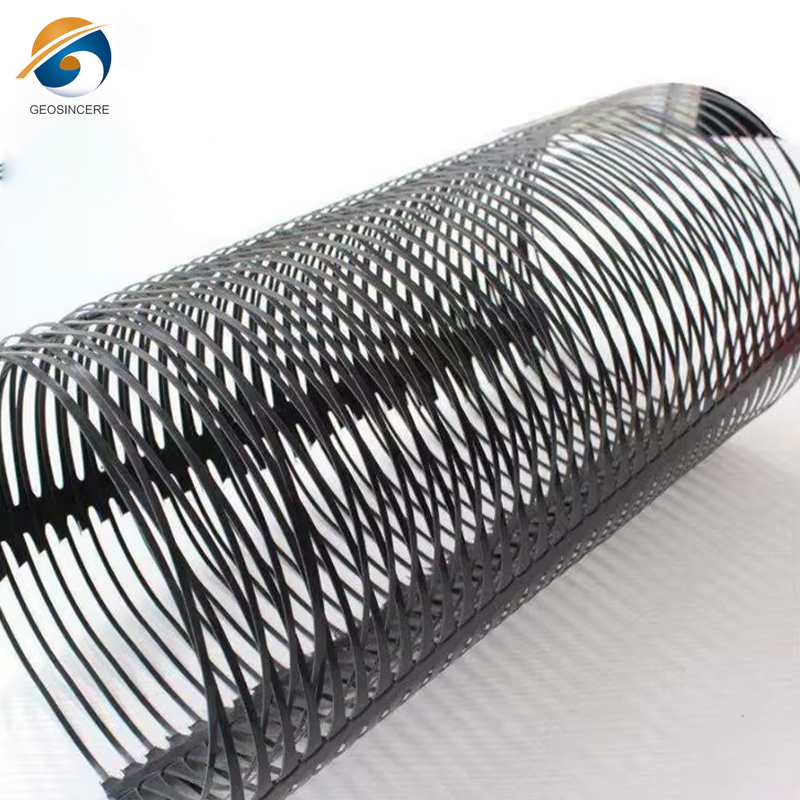
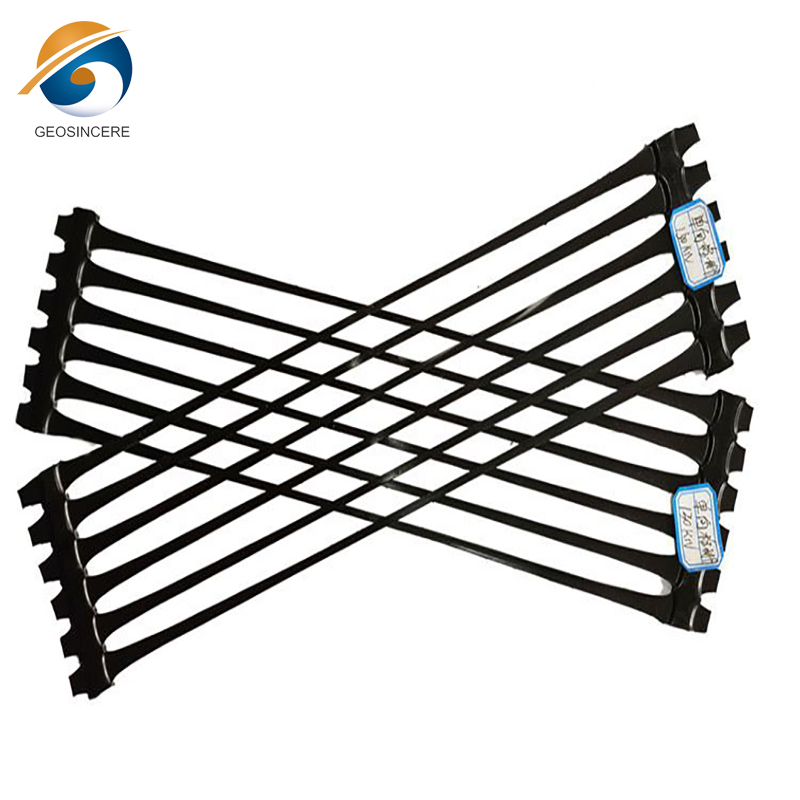
HDPE uniaxial plastic geogrid is a high-performance geosynthetic material specially engineered for road construction and civil engineering projects. Made of premium high-density polyethylene (HDPE), this uniaxial plastic geogrid features outstanding tensile strength, rigid stiffness, excellent chemical resistance and long-term structural durability, fully adapting to complex and harsh road foundation environments. Structurally optimized with longitudinal reinforcing ribs and transverse stabilizing bars, the geogrid provides stable unidirectional tensile performance along its longitudinal direction, ensuring reliable structural reinforcement for pavement systems.
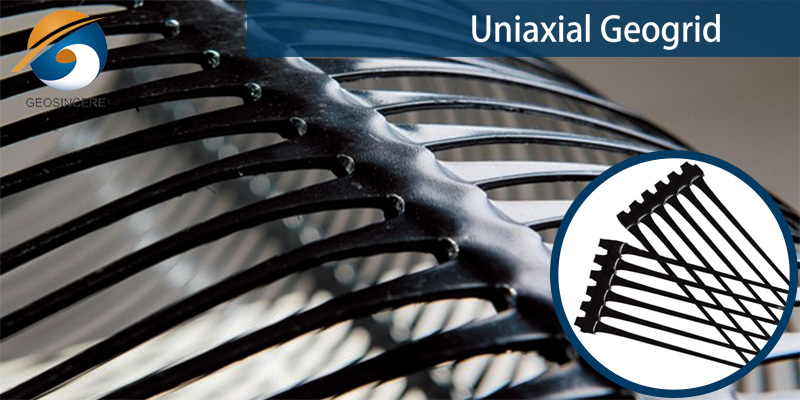
As a core pavement reinforcement material, HDPE uniaxial plastic geogrid effectively disperses vehicle traffic loads, reduces internal stress on road layers, and significantly restrains pavement deformation, rutting and cracking. The uniaxial plastic geogrid realizes uniform load transfer, eliminates local stress concentration, and greatly improves the overall bearing capacity and structural stability of road pavement. By tightly interlocking with subgrade soil and aggregate materials, this geogrid enhances shear resistance, controls differential settlement, and forms a stable soil-geogrid composite structure. In practical road engineering, HDPE uniaxial plastic geogrid effectively reduces the required thickness of road structural layers, accelerates construction progress, improves pavement service life, and lowers long-term road maintenance costs, delivering superior economic and engineering benefits for various road foundation stabilization and rehabilitation projects.
Parameter
Properties | BGUG 25 | BGUG 35 | BGUG 50 | BGUG 80 | BGUG 110 | BGUG 120 | BGUG 150 | |
Width(mm) | 1100 | |||||||
Length /roll (m) | 50 | |||||||
Yield strength ≥kN/M | HDPE | 25 | 35 | 50 | 80 | 110 | 120 | 150 |
PP | 25 | 35 | 50 | 80 | 110 | 120 | 150 | |
Elongation | HDPE (%) | 11-16 | ||||||
PP≤ (%) | 10 | |||||||
Strength at 2% elongation ≥kN/M | HDPE | 6 | 9 | 10 | 23 | 30 | 35 | 46 |
PP | 7 | 10 | 12 | 26 | 32 | 38 | 48 | |
Strength at 5% elongation ≥kN/M | HDPE | 12 | 18 | 25 | 44 | 60 | 70 | 87 |
PP | 14 | 20 | 28 | 48 | 64 | 75 | 93 | |
Core Benefits of HDPE Uniaxial Plastic Geogrid for Road
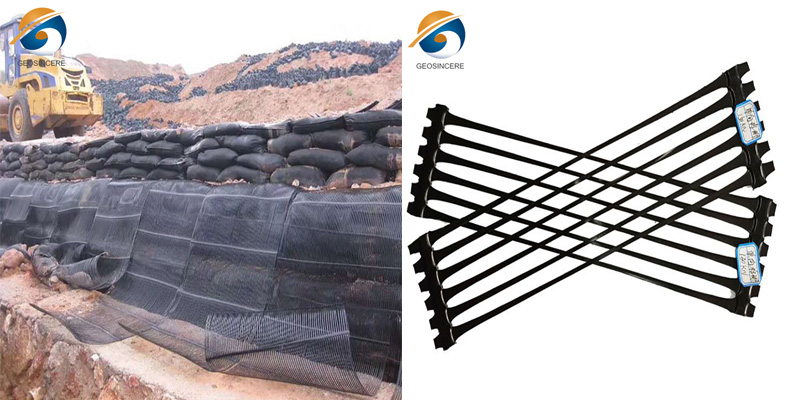
HDPE (High‑Density Polyethylene) uniaxial plastic geogrid is engineered for road construction, delivering multiple performance features to boost pavement performance and long‑term durability.
High Tensile Strength: This uniaxial plastic geogrid provides superior longitudinal tensile strength, resisting heavy traffic loads and minimizing pavement deformation and rutting.
Uniaxial Design: The geogrid is optimized for one‑direction load‑bearing along roll length, concentrating reinforcement where major soil tensile stress occurs for road, slope and retaining‑wall projects.
Enhanced Durability: Made of HDPE raw material, the uniaxial plastic geogrid features excellent chemical & corrosion resistance against acids, alkalis and complex soil environments for long‑term buried service life.
Lightweight: Light‑weight roll‑form geogrid simplifies transportation and on‑site handling without heavy‑duty lifting equipment.
Enhances Stability: The uniaxial plastic geogrid interlocks tightly with soil and aggregates, building a stable composite system to improve shear resistance and control differential settlement of road layers.
Improved Load Distribution: This geogrid spreads vehicle traffic load over a wider area, relieves local stress concentration and raises overall pavement bearing capacity.
Easy Installation: Pre‑fabricated roll‑style uniaxial plastic geogrid speeds up laying work on‑site, shortening construction cycles.
Cost‑Effectiveness: Allows reduction of road base layer thickness, cuts aggregate consumption and lowers long‑term road maintenance costsTensar
Applications
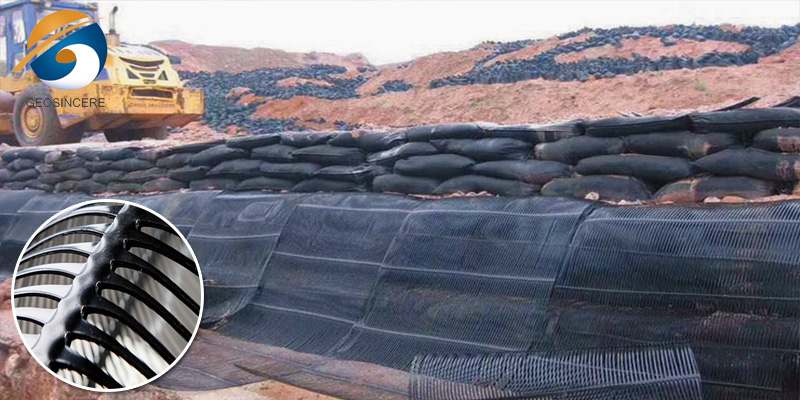
HDPE uniaxial plastic geogrids find various applications in road construction projects. They are used to enhance the performance and durability of road pavements by providing reinforcement and improving load distribution. Here are some common applications of HDPE uniaxial plastic geogrids in road construction:
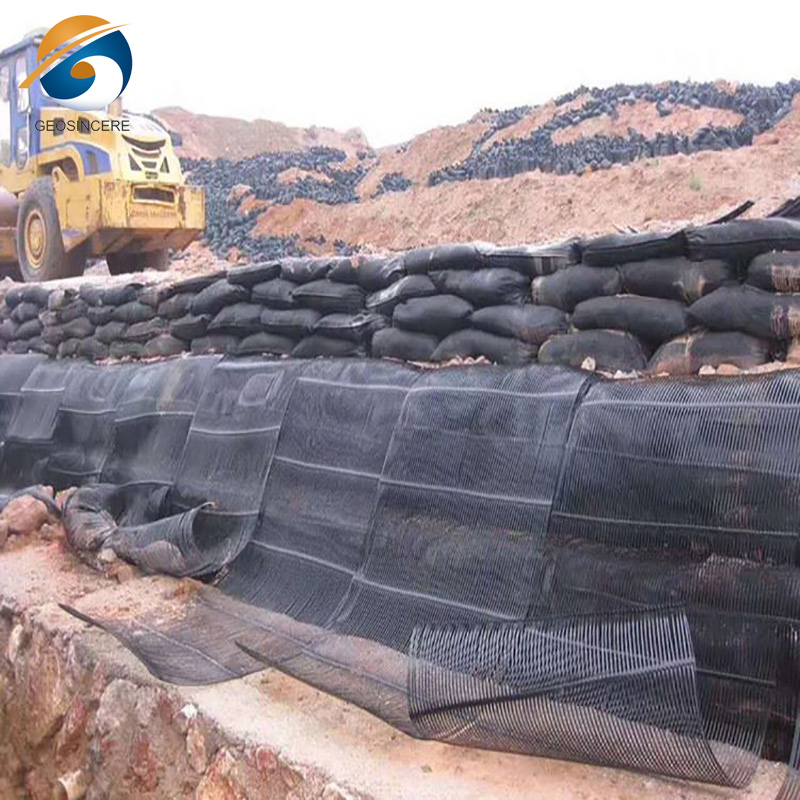
Subgrade Stabilization: HDPE uniaxial plastic geogrids are used to stabilize weak or problematic subgrade soils. They are placed between the subgrade and base course to improve the load-bearing capacity, reduce subgrade settlement, and enhance the overall stability of the pavement structure.
Base Course Reinforcement: HDPE uniaxial plastic geogrids are often incorporated within the base course layer of road pavements. They provide reinforcement by distributing loads and reducing the stresses imposed on the base course. This reinforcement helps to prevent cracking, rutting, and deformation in the pavement.
Overlay and Rehabilitation: In road rehabilitation projects, HDPE uniaxial plastic geogrids are used in overlay applications. They are placed between the existing pavement and the new asphalt overlay to improve the bond between the layers, reduce reflective cracking, and enhance the overall structural integrity of the road.
Slope Stabilization: HDPE uniaxial plastic geogrids can be utilized for slope stabilization in road construction. They are installed along slopes or embankments to reinforce the soil and prevent erosion, slope failures, and movement. The geogrids provide tensile strength and stability to the slope, improving its overall safety.
Retaining Wall Construction: HDPE uniaxial plastic geogrids are commonly used in the construction of retaining walls for road projects. They are incorporated within the backfill soil behind the wall to enhance the soil-reinforcement interaction and improve the stability and load-bearing capacity of the wall.
Load Transfer Platforms: HDPE uniaxial plastic geogrids are employed in load transfer platforms, where they are placed between pavement joints or slabs. They help to distribute loads, reduce joint movement, and prevent faulting, thereby enhancing the performance and longevity of the pavement.
Erosion Control: HDPE uniaxial plastic geogrids can be used in erosion control applications along roadways. They are installed in areas prone to erosion, such as ditches or channel linings, to stabilize the soil, prevent erosion, and maintain the integrity of the road infrastructure.
FAQ
Q: Can HDPE uniaxial plastic geogrid stay exposed outdoors?
A: No, bury it right after laying to avoid UV damage.
Q: What does BGUG number stand for?
A: It refers to the nominal tensile strength in kN/m.
Q: What overlap is needed for installation?
A: Keep 300‑500 mm overlap between adjacent rolls.
Q: Can it reduce base aggregate thickness?
A: Yes, yet it cannot fully replace aggregate fill.
Q: What standards does this geogrid follow?
A: It meets GB/T 17689 and can match ASTM D6637.
Q: Can it be used on clay subgrade?
A: Yes, granular backfill delivers better interlock performance.
Q: What are standard roll dimensions?
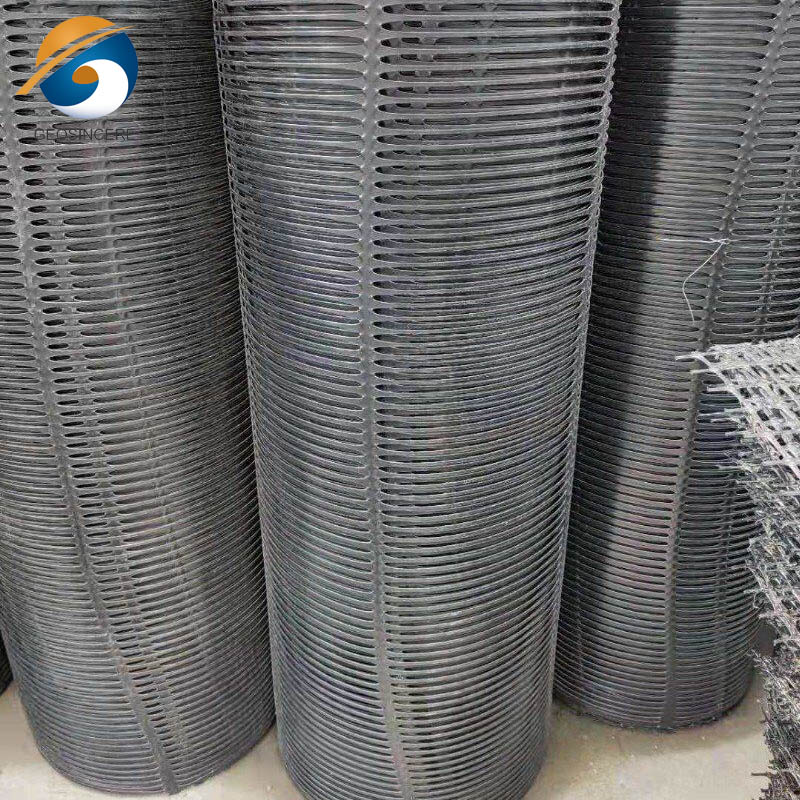
A: Standard size: 1.1 m width, 50 m length, custom sizes available.
Q: Do you supply creep‑test documents?
A: Yes, third‑party creep reports are available on request.
Q: Can I get TDS and inspection certificates?
A: Yes, contact sales for technical documents for tender use.
Q: HDPE or PP uniaxial geogrid, which to pick?
A: Choose HDPE for better creep resistance for long‑life projects.



Hope to be your partner!


