Driveway Grass Paver
Manufacturing Process
Manufacturing quality directly impacts structural performance and service life.
Raw material preparation (HDPE pellets or concrete mix)
Injection molding or high-pressure casting
Structural rib reinforcement forming
Controlled cooling or curing process
Dimensional accuracy inspection
Load-bearing and impact testing
Palletizing and batch traceability labeling
Product Definition
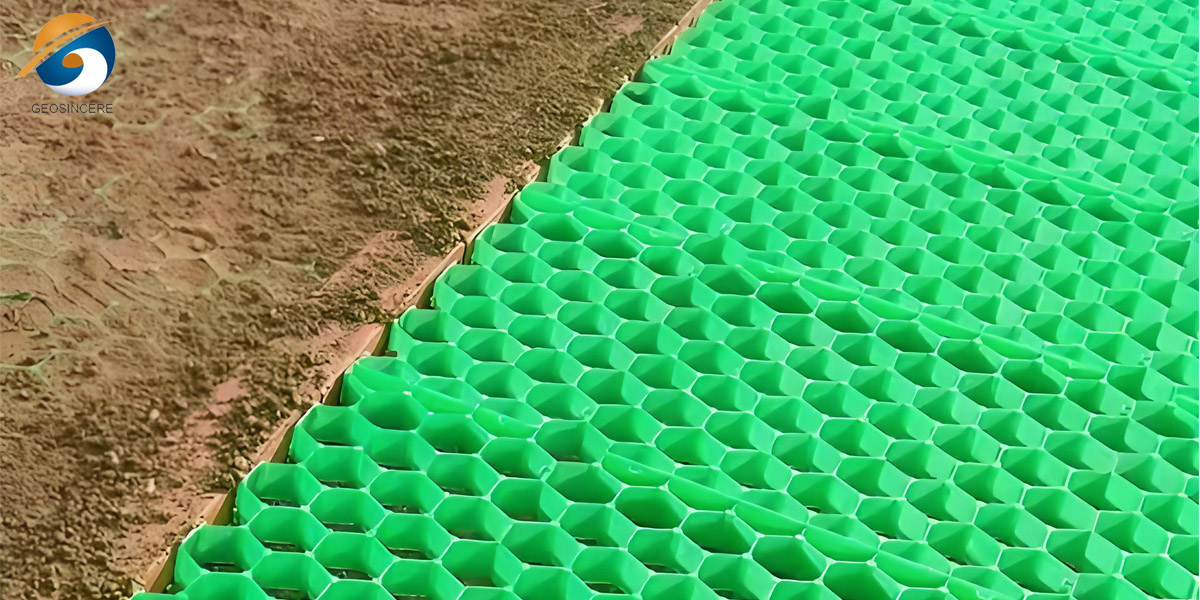
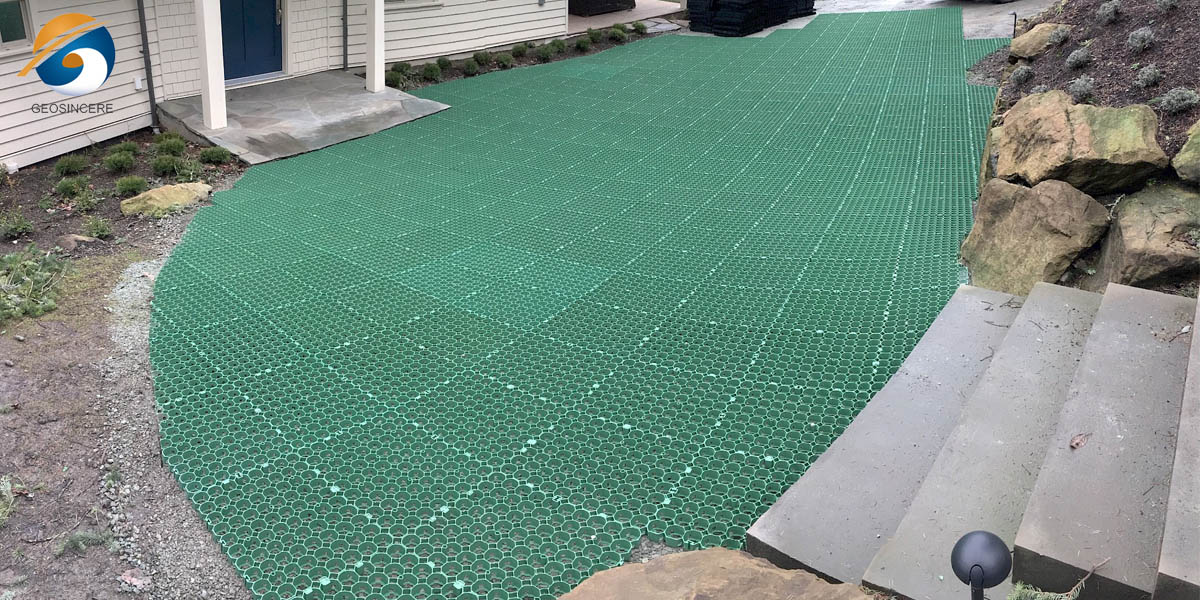
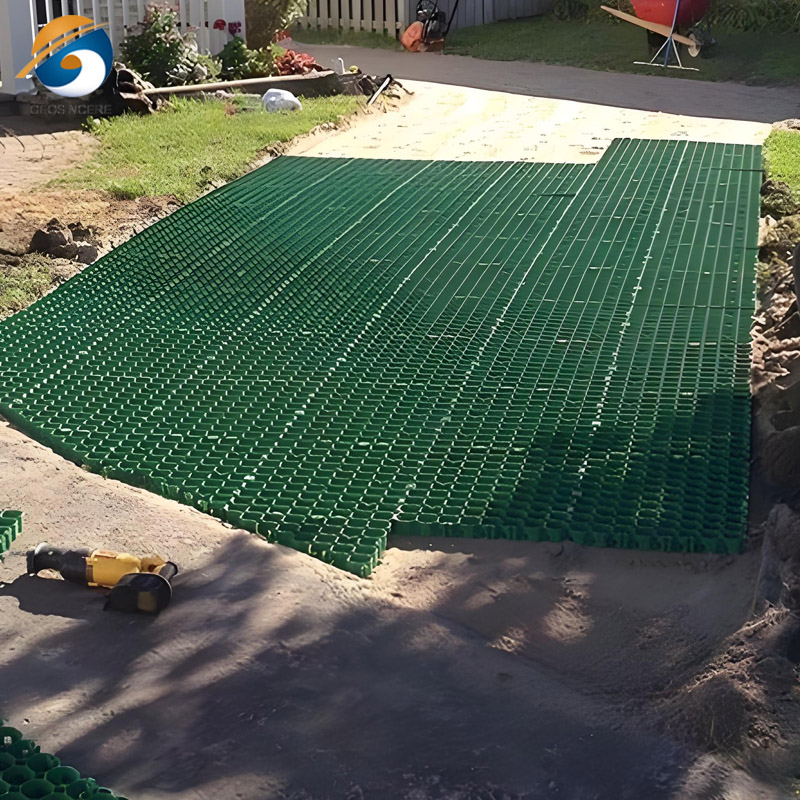
Driveway Grass Paver is a load-bearing permeable pavement system manufactured from high-strength polymer or concrete, designed to stabilize turf or gravel while supporting vehicular loads, enabling drainage, erosion control, and green infrastructure integration in driveway and access road applications.
Technical Parameters and Specifications
Engineering-grade driveway grass paver systems are specified based on load capacity, permeability, and environmental durability.
Standard module size: 400 × 400 mm / 500 × 500 mm
Thickness: 40–60 mm (polymer); 80–100 mm (concrete)
Compressive strength: ≥160 t/m² (polymer); ≥250 t/m² (concrete)
Material density (polymer): 0.95–1.05 g/cm³
Void ratio: 30%–50%
Water permeability coefficient: ≥1 × 10⁻² cm/s
Operating temperature: -30°C to +70°C
Service life: 20–25 years (polymer), 30+ years (concrete)
Structure and Material Composition
A driveway grass paver system combines structural support with vegetation accommodation.
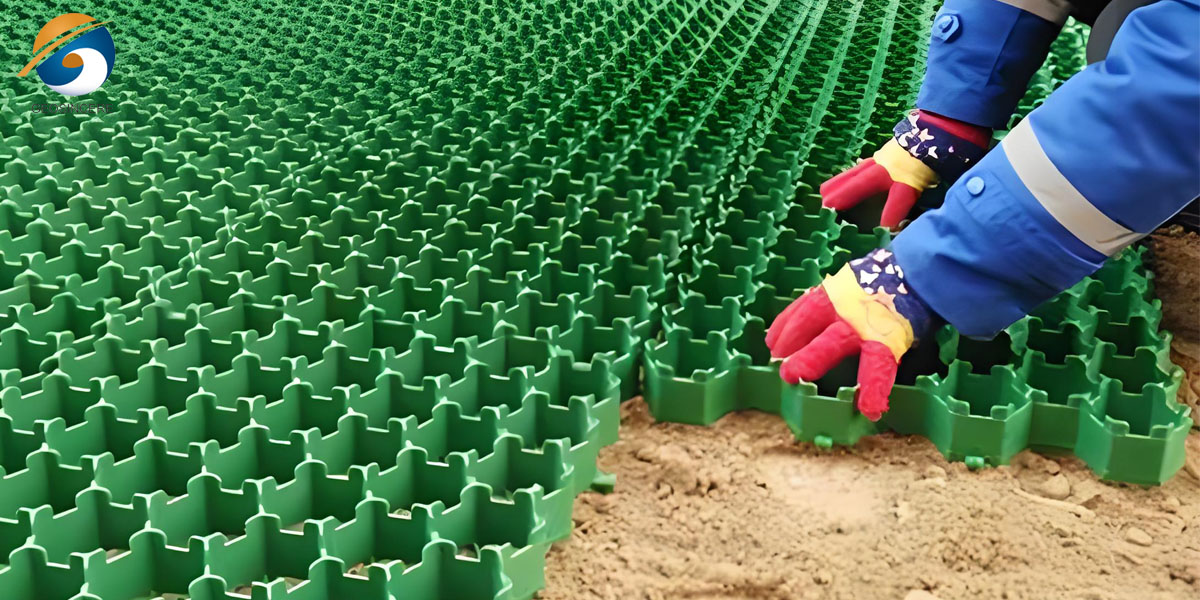
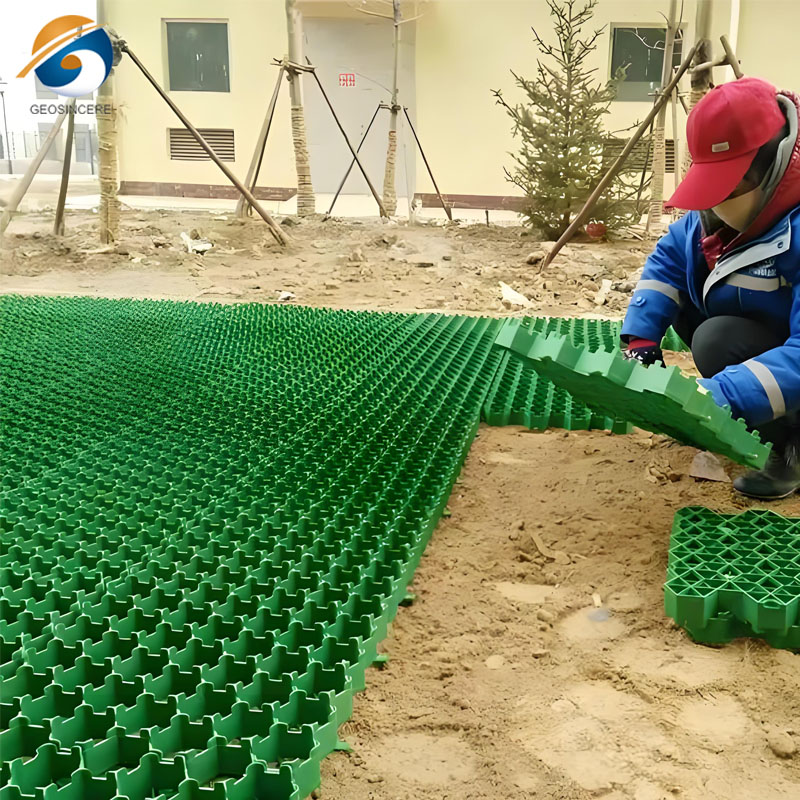
Load-bearing frame: Interlocking grid structure
Material options: Recycled HDPE or precast concrete
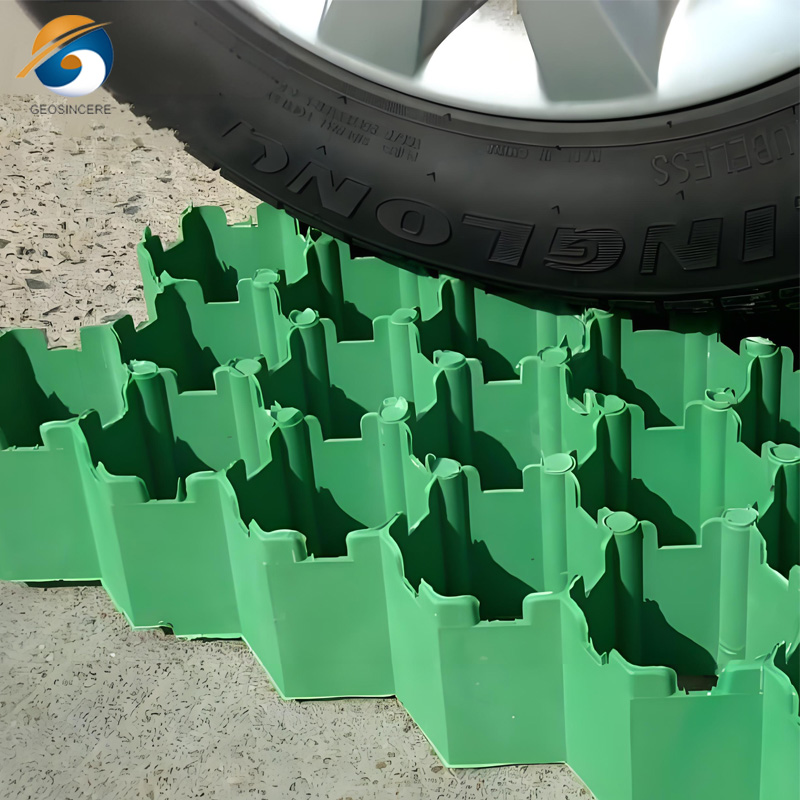
Cell walls: Reinforced ribs for load distribution
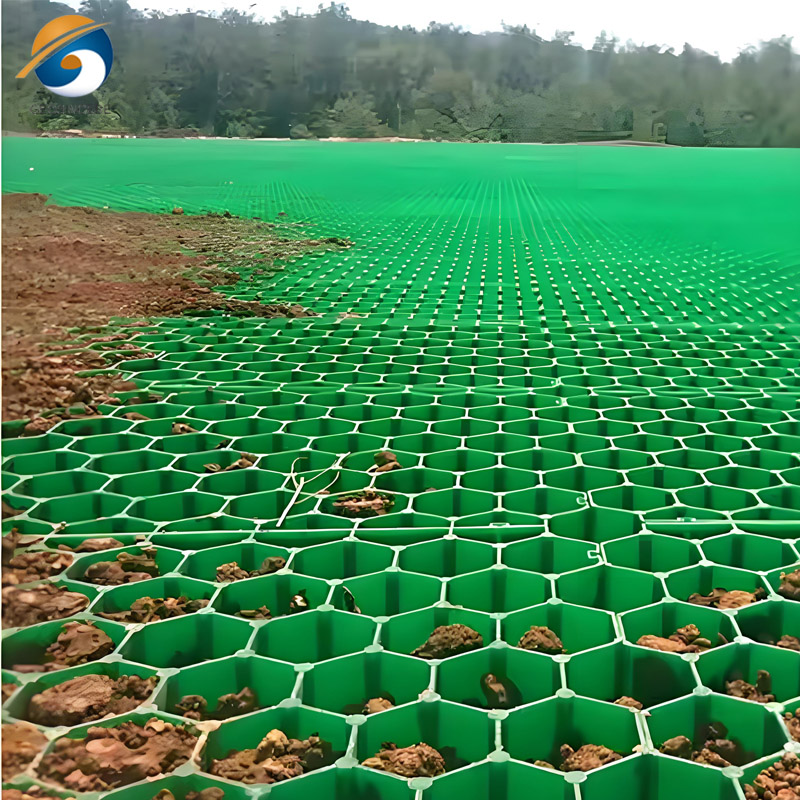
Open cells: Designed for soil, grass, or gravel infill
Edge locking system: Prevents lateral movement under traffic
Manufacturing Process
Manufacturing quality directly impacts structural performance and service life.
Raw material preparation (HDPE pellets or concrete mix)
Injection molding or high-pressure casting
Structural rib reinforcement forming
Controlled cooling or curing process
Dimensional accuracy inspection
Load-bearing and impact testing
Palletizing and batch traceability labeling
Industry Comparison
| Parameter | Driveway Grass Paver | Concrete Pavement | Asphalt Pavement | Gravel Driveway |
|---|---|---|---|---|
| Permeability | Excellent | None | Low | High |
| Load Capacity | High | Very High | High | Low–Moderate |
| Environmental Impact | Low | High | High | Low |
| Maintenance | Low | Medium | Medium | High |
| Urban Heat Effect | Minimal | High | High | Low |
Application Scenarios
Driveway grass paver systems are widely specified in projects requiring both traffic access and environmental compliance.
Distributors: Residential driveway and villa projects
EPC contractors: Commercial parking access roads
Engineering firms: Municipal permeable pavement systems
Developers: Eco-parks, resorts, and green communities
Core Pain Points and Engineering Solutions
Surface rutting: Load-distribution grid prevents soil deformation
Poor drainage: Open-cell structure ensures rapid water infiltration
Heat accumulation: Vegetated surface reduces surface temperature
Maintenance complexity: Modular replacement minimizes repair cost
Risk Warnings and Mitigation
Incorrect design or installation can compromise system performance.
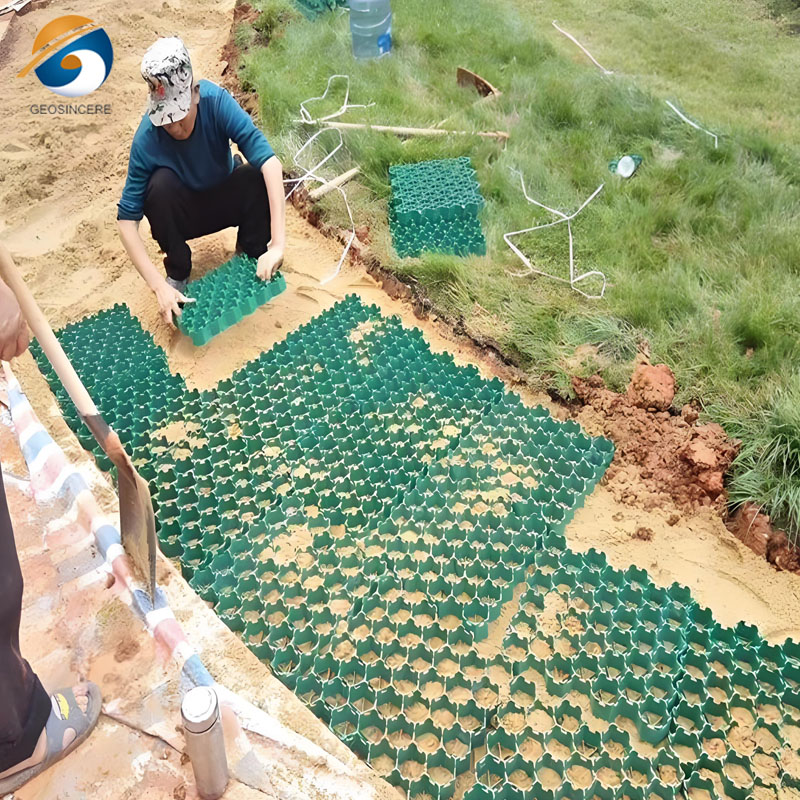
Ensure adequate sub-base compaction and thickness
Avoid underspecified paver thickness for heavy vehicles
Use suitable grass species or graded gravel infill
Prevent installation on unstable or saturated subgrades
Procurement and Selection Guide
Define vehicle load class and traffic frequency
Select material type (polymer or concrete)
Confirm permeability and void ratio requirements
Verify compressive strength test reports
Assess module interlocking performance
Review installation manuals and sub-base design
Confirm logistics, pallet size, and delivery timelines
Engineering Case Application
In a commercial office park project, a 3,200 m² driveway was constructed using polymer driveway grass paver modules over a 200 mm crushed stone sub-base. The system supported daily passenger vehicle traffic while maintaining effective stormwater infiltration and green surface coverage after four years of operation.
FAQ
Q1: Can driveway grass paver support cars? A: Yes, when properly specified.
Q2: Is it suitable for heavy trucks? A: Only with reinforced concrete models.
Q3: Does grass grow through the system? A: Yes, with proper soil infill.
Q4: What maintenance is required? A: Periodic grass trimming and inspection.
Q5: Is it frost-resistant? A: Yes, with proper sub-base drainage.
Q6: Can gravel be used instead of grass? A: Yes, for low-maintenance areas.
Q7: Typical installation time? A: Faster than poured concrete.
Q8: Does it meet permeable pavement standards? A: Yes, when designed correctly.
Q9: Can damaged modules be replaced? A: Yes, individually.
Q10: What is the design lifespan? A: 20–30 years depending on material.
Call to Action
For driveway grass paver technical datasheets, engineering samples, sub-base design recommendations, or project-specific quotations, procurement and engineering teams are invited to request detailed technical information.
E-E-A-T Author Credentials
This article is prepared by a civil and landscape engineering materials specialist with over 15 years of experience in permeable pavement systems, supporting EPC contractors, urban developers, and international B2B buyers in sustainable infrastructure projects.