HDPE Geocell Ground Grid for Driveway
Technical Parameters and Specifications
Material: High-density polyethylene (≥97.5% HDPE)
Cell Height: 50 mm / 75 mm / 100 mm / 150 mm
Weld Strength: ≥14 N/cm (ASTM D4885)
Sheet Thickness: 1.1–1.5 mm
Cell Size: 260–430 mm expanded diameter
Tensile Strength: ≥18 kN/m
Surface: Smooth or textured for friction enhancement
Chemical Resistance: Resistant to salts, oils, soil pH 2–10
Temperature Resistance: −40°C to 60°C
Service Life: 20–25 years depending on soil and UV exposure
Definition of HDPE Geocell Ground Grid for Driveway
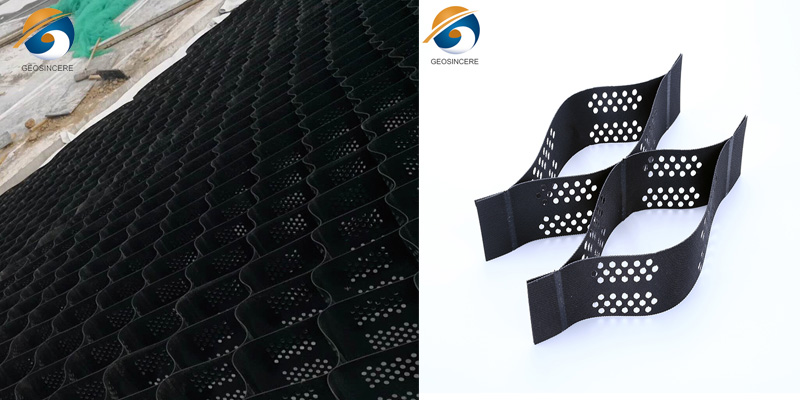
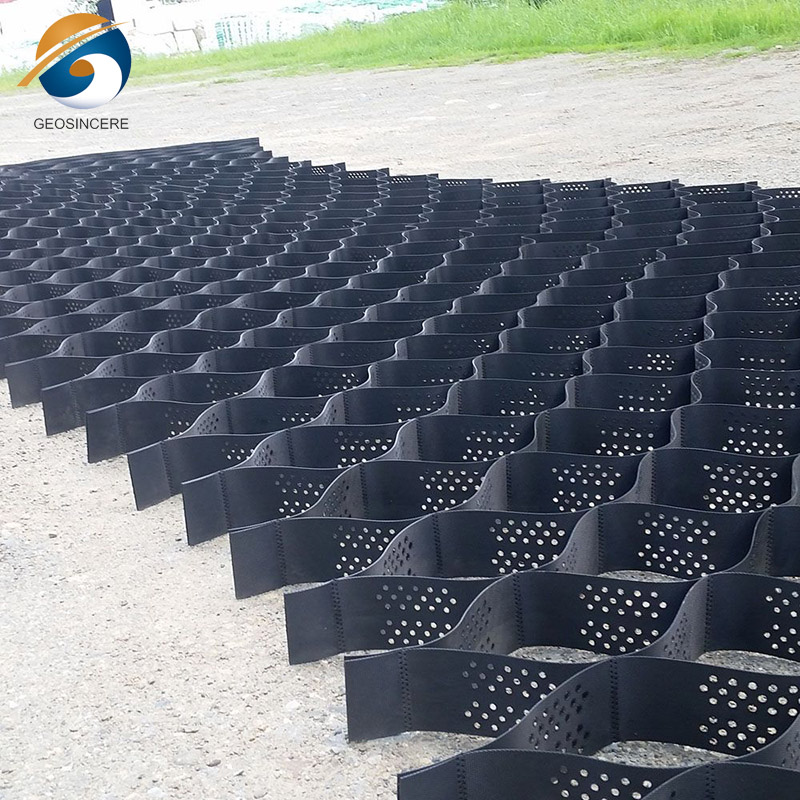
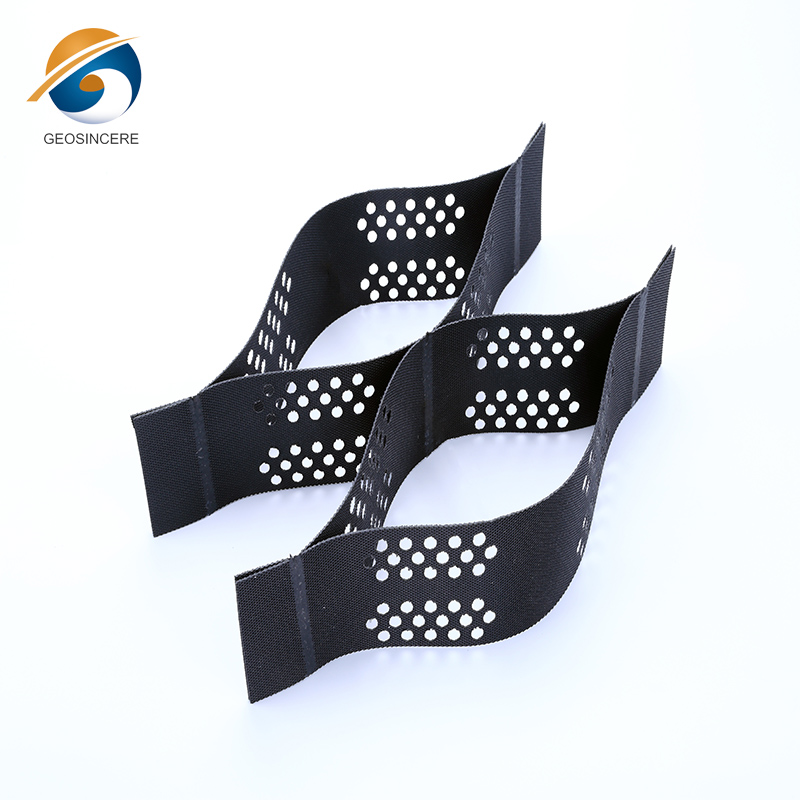
An HDPE Geocell Ground Grid for Driveway is a three-dimensional honeycomb confinement system made from high-density polyethylene strips welded by ultrasonic techniques. It improves load distribution, soil stabilization, and surface longevity for residential and commercial driveways.
Technical Parameters and Specifications
Material: High-density polyethylene (≥97.5% HDPE)
Cell Height: 50 mm / 75 mm / 100 mm / 150 mm
Weld Strength: ≥14 N/cm (ASTM D4885)
Sheet Thickness: 1.1–1.5 mm
Cell Size: 260–430 mm expanded diameter
Tensile Strength: ≥18 kN/m
Surface: Smooth or textured for friction enhancement
Chemical Resistance: Resistant to salts, oils, soil pH 2–10
Temperature Resistance: −40°C to 60°C
Service Life: 20–25 years depending on soil and UV exposure
Structure and Material Composition
HDPE Base Resin: Provides rigidity, flexibility, and long-term environmental resistance.
Ultrasonic Welds: Create joint integrity for expansion and loading.
Perforations (Optional): Improve drainage and interlocking with infill material.
Textured Walls: Enhance friction between soil and geocell walls.
Modular Panels: Folded for transport, expand into a honeycomb at installation.
Manufacturing Process
Extrusion: HDPE resin melted and extruded into smooth or textured strips with controlled thickness.
Perforation: CNC punching creates uniform drainage holes when specified.
Ultrasonic Welding: Automated welders bond strips into 3D cells at precise intervals.
Expansion and Dimensional Testing: Panels expanded to verify cell height, weld spacing, and alignment.
Quality Testing: Tensile, weld shear, and creep resistance tests performed per ASTM.
Packaging: Panels folded and strapped for compact shipping.
Industry Comparison
| Material | Load Bearing | Durability | Drainage | Cost |
|---|---|---|---|---|
| HDPE Geocell Ground Grid | Excellent | High | High with perforation | Medium |
| Gravel Only | Low | Low | Medium | Low |
| Concrete Slab | Very High | High | Low | High |
| Pavers | Medium | Medium | Low | Medium–High |
Application Scenarios
Residential and commercial driveways requiring soil stabilization
Parking areas for light- and medium-duty vehicular traffic
RV pads, access roads, and maintenance pathways
Driveways on soft soil, expansive soil, or sandy terrain
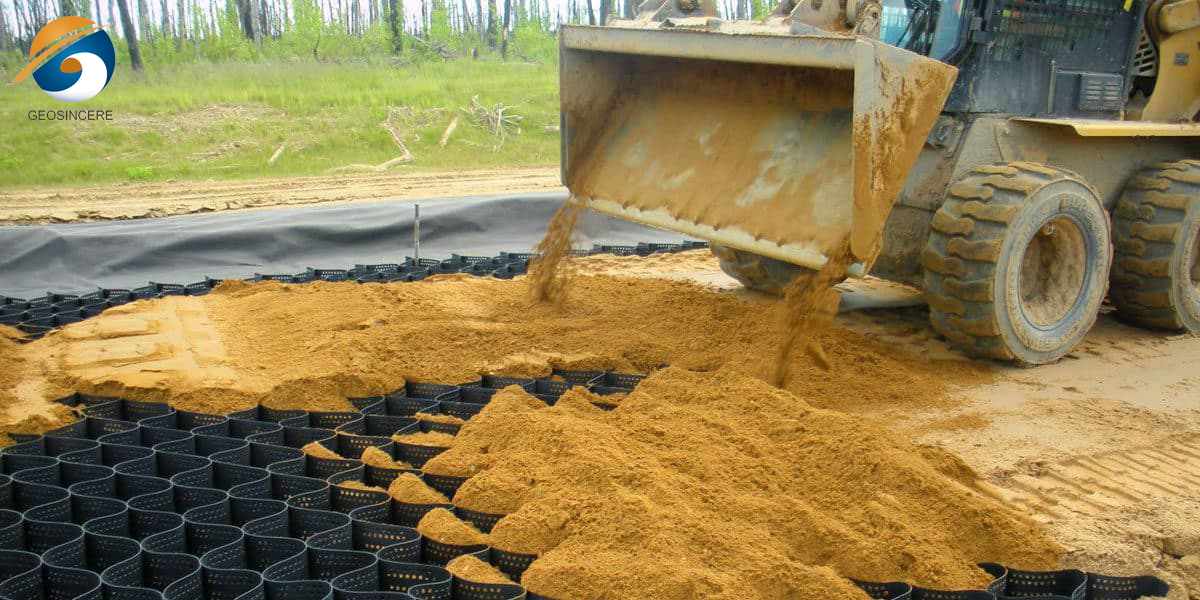
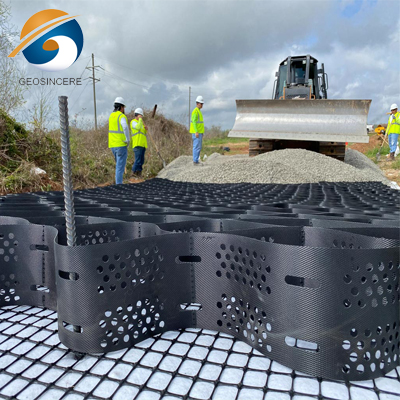
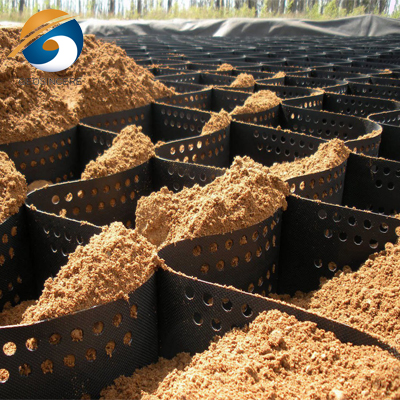
Base reinforcement under gravel, crushed stone, or sand infill
Core Pain Points & Solutions
Pain Point 1: Driveway sinking or rutting under repeated loading.
Solution: HDPE Geocell Ground Grid for Driveway redistributes vertical pressure laterally, preventing settlement.Pain Point 2: Soil erosion and runoff during heavy rainfall.
Solution: Perforated cell walls hold infill material and facilitate drainage.Pain Point 3: High maintenance cost of gravel-only driveways.
Solution: Geocell confinement reduces gravel movement, cutting replenishment frequency.Pain Point 4: Poor load capacity on soft clay or organic soil.
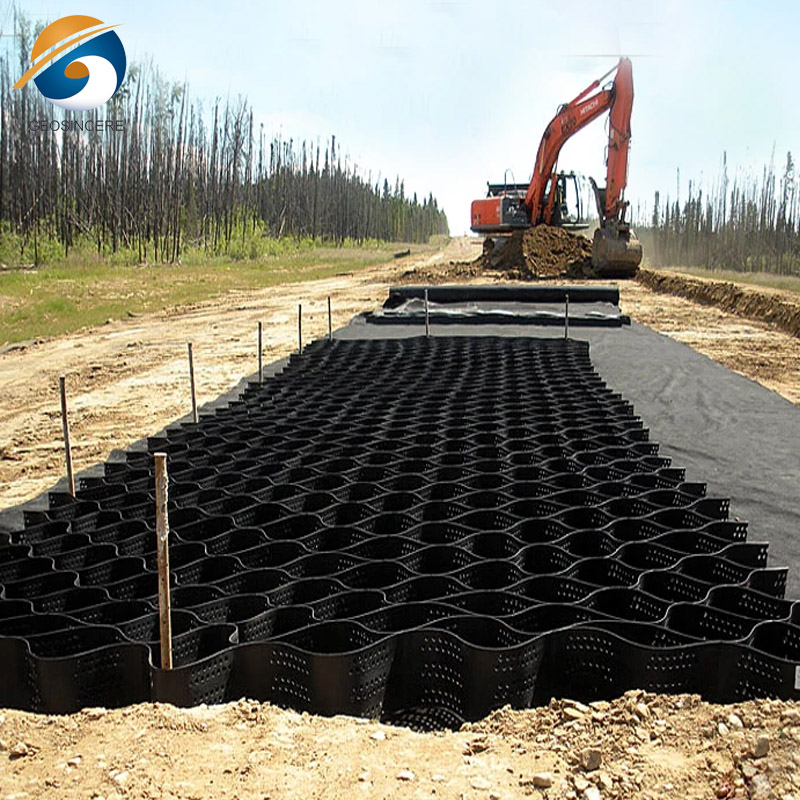
Solution: Use geotextile separation + geocell reinforcement to create a stable base layer.
Risk Warnings & Avoidance Recommendations
Avoid installing on uncompacted subgrade; minimum 95% Proctor compaction recommended.
Ensure correct cell height selection—insufficient height reduces load distribution performance.
Do not over-expand cells; maintain manufacturer-specified dimensions during installation.
Avoid infill with oversized rocks that may damage the geocell walls.
Procurement & Selection Guide
Confirm driveway loading type: passenger vehicles, pickups, or light trucks.
Select appropriate cell height—100 mm generally suits most driveway projects.
Check HDPE resin quality and whether the supplier uses virgin material.
Review ASTM-compliant weld strength reports.
Confirm panel dimensions to reduce on-site cutting.
Assess optional features—textured walls, perforations, or geotextile underlayment.
Engineering Case Study
In a North American residential project, 1800 m² of driveway built on clay soil required reinforcement. A 100 mm HDPE Geocell Ground Grid for Driveway was installed over a nonwoven geotextile. After infill with 20–40 mm crushed stone and mechanical compaction, rutting depth reduced by 85% compared to gravel-only sections. The system sustained continuous vehicle movement with minimal deformation after 12 months of monitoring.
FAQ
1. What infill is recommended? Crushed stone or gravel with angular particles.
2. Can it be used under asphalt? Yes, as a sub-base reinforcement layer.
3. Does the geocell require geotextile? Recommended for soil separation on weak subgrades.
4. How long does HDPE geocell last? 20–25 years depending on UV exposure.
5. Is perforation necessary? Optional but beneficial for drainage-sensitive sites.
6. Can it withstand freeze–thaw cycles? Yes, HDPE is resilient in cold climates.
7. What tools are required for installation? Stakes, compactor, and manual expansion tools.
8. What is typical panel size? 2.5–4 m wide, expandable up to 10–12 m.
9. Can it be cut on-site? Yes, with shears or power cutters.
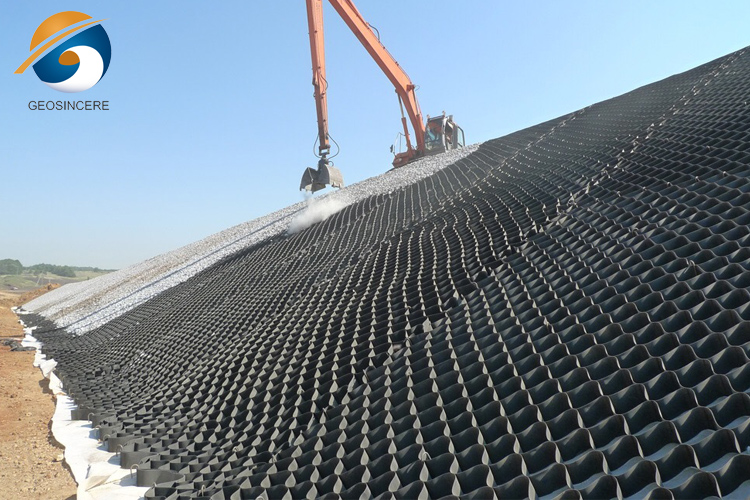
10. Is it suitable for steep driveways? Yes, textured geocells improve slope traction.
Request Technical Data / Quotation / Engineering Samples
For datasheets, engineering drawings, or pricing for HDPE Geocell Ground Grid for Driveway projects, please contact our technical sales team. Support includes design recommendations, load analysis, and sample evaluation for contractor bidding.
E-E-A-T Author Credentials
This document is prepared by a geosynthetics application engineer with over 10 years of field experience in geocell ground stabilization, road reinforcement, and driveway engineering projects across North America, Europe, and the Asia-Pacific region.