Continuous Filament Polyester Nonwoven Geotextile
Manufacturing Process
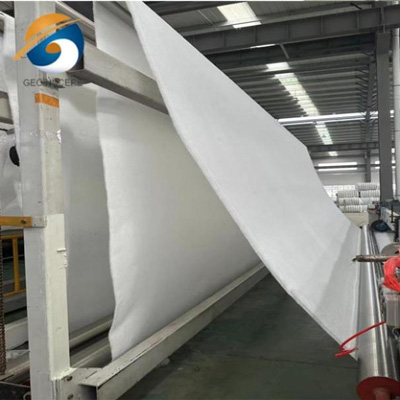
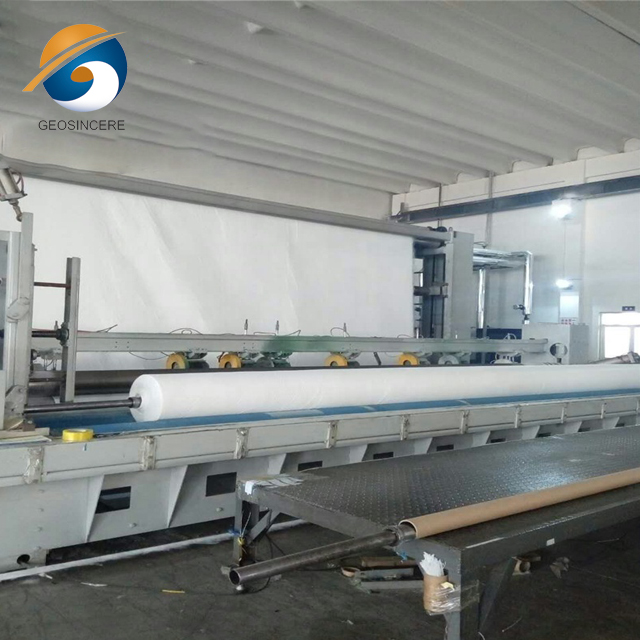
The manufacturing of Continuous Filament Polyester Nonwoven Geotextile is an integrated and highly controlled industrial process.
Engineering Production Steps
Polyester polymer melting and extrusion into continuous filaments
Filament cooling and stretching for strength development
Web formation through random filament laying
Needle punching to mechanically bond the fiber web
Heat setting for dimensional stability
Roll cutting, inspection, and batch identification
Key Manufacturing Equipment
Polyester filament spinning lines
Web forming and laying units
High-density needle punching machines
Online weight and thickness monitoring systems
Product Definition
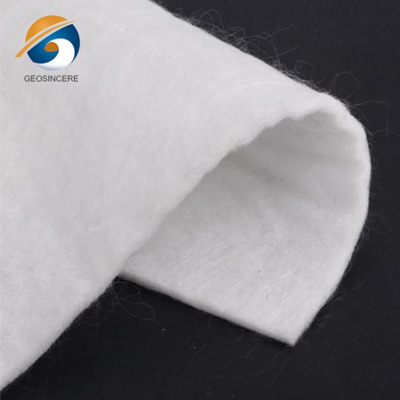
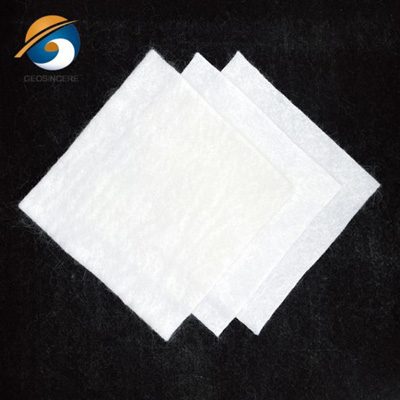
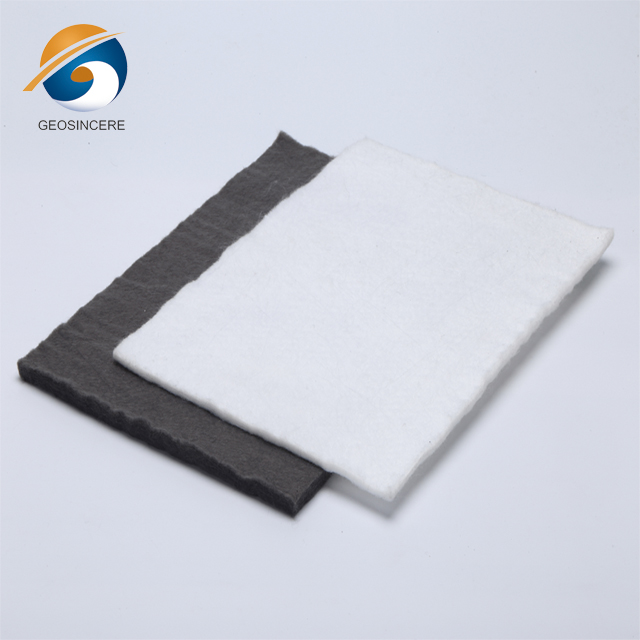
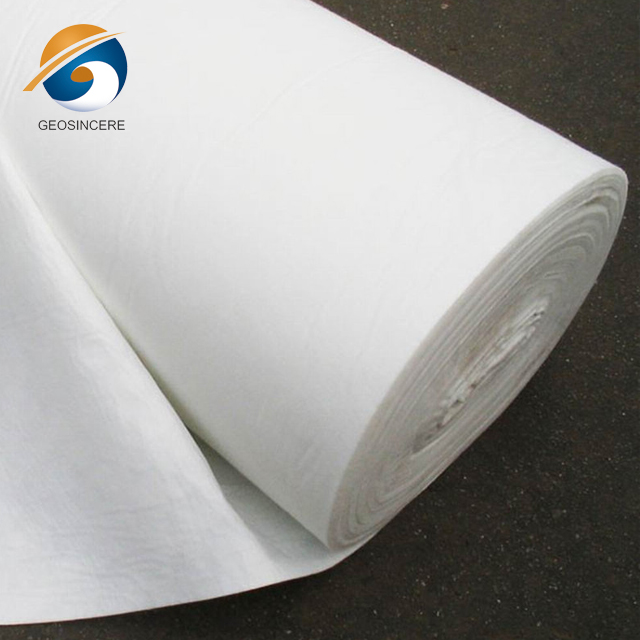
Continuous Filament Polyester Nonwoven Geotextile is a mechanically bonded geosynthetic fabric manufactured from continuous polyester filaments, designed to provide filtration, separation, drainage, and reinforcement functions in civil, transportation, and environmental engineering applications.
Technical Parameters and Specifications
The following parameters represent commonly specified ranges for Continuous Filament Polyester Nonwoven Geotextile used in infrastructure and geotechnical engineering projects.
| Property | Typical Range | Test Standard |
|---|---|---|
| Mass per Unit Area | 100 – 800 g/m² | ASTM D5261 |
| Tensile Strength (MD/CD) | 8 – 30 kN/m | ASTM D4595 |
| Elongation at Break | 40 – 80% | ASTM D4595 |
| CBR Puncture Strength | 1.5 – 6.0 kN | ASTM D6241 |
| Permittivity | 1.0 – 3.0 s⁻¹ | ASTM D4491 |
| Apparent Opening Size (AOS) | 0.07 – 0.20 mm | ASTM D4751 |
Structure and Material Composition
Continuous Filament Polyester Nonwoven Geotextile features a uniform three-dimensional structure that enhances filtration and mechanical stability.
Polyester Continuous Filaments: Long, uninterrupted fibers for consistent strength
Needle-Punched Bonding: Mechanical interlocking without chemical binders
Isotropic Fiber Orientation: Balanced strength in machine and cross directions
High Porosity Matrix: Enables efficient water flow while retaining soil particles
Manufacturing Process
The manufacturing of Continuous Filament Polyester Nonwoven Geotextile is an integrated and highly controlled industrial process.
Engineering Production Steps
Polyester polymer melting and extrusion into continuous filaments
Filament cooling and stretching for strength development
Web formation through random filament laying
Needle punching to mechanically bond the fiber web
Heat setting for dimensional stability
Roll cutting, inspection, and batch identification
Key Manufacturing Equipment
Polyester filament spinning lines
Web forming and laying units
High-density needle punching machines
Online weight and thickness monitoring systems
Industry Comparison
| Material Type | Strength Consistency | Filtration Stability | Durability | Typical Applications |
|---|---|---|---|---|
| Continuous Filament Polyester Nonwoven Geotextile | Very High | Excellent | High | Roads, railways, drainage systems |
| Staple Fiber Nonwoven Geotextile | Moderate | Good | Moderate | General separation |
| Woven Geotextile | High | Limited | High | Reinforcement-focused projects |
Application Scenarios
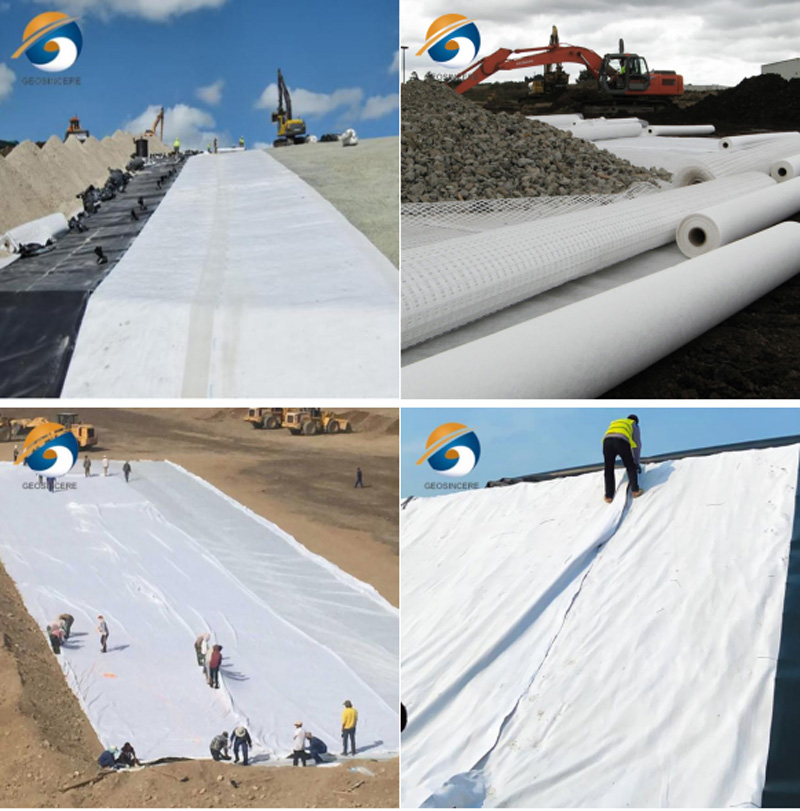
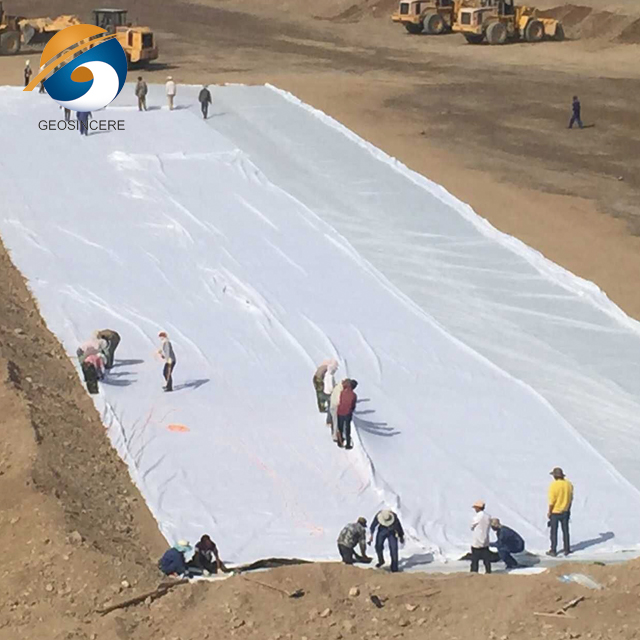
Continuous Filament Polyester Nonwoven Geotextile is widely specified by EPC contractors, infrastructure developers, and consulting engineers for:
Road and highway subgrade separation
Railway ballast protection layers
Drainage systems and trench filtration
Landfill leachate collection layers
Embankment and slope stabilization
Coastal and riverbank protection works
Core Engineering Pain Points and Solutions
Soil Migration: Controlled pore structure prevents fine particle loss
Clogging Risk: High porosity improves long-term filtration performance
Uneven Load Distribution: Uniform filament network spreads stresses
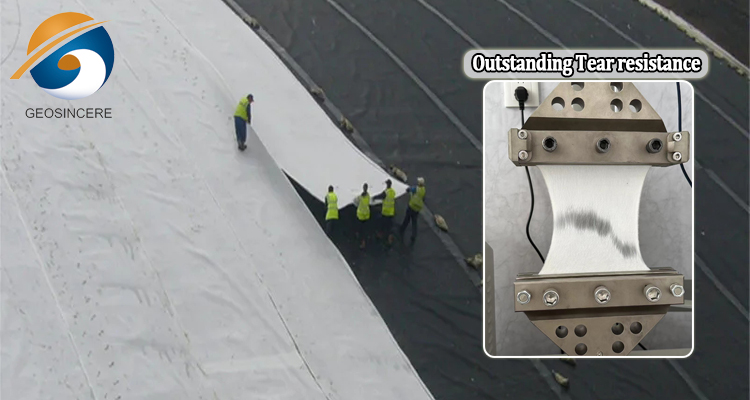
Installation Damage: High puncture resistance reduces construction risk
Risk Warnings and Mitigation Measures
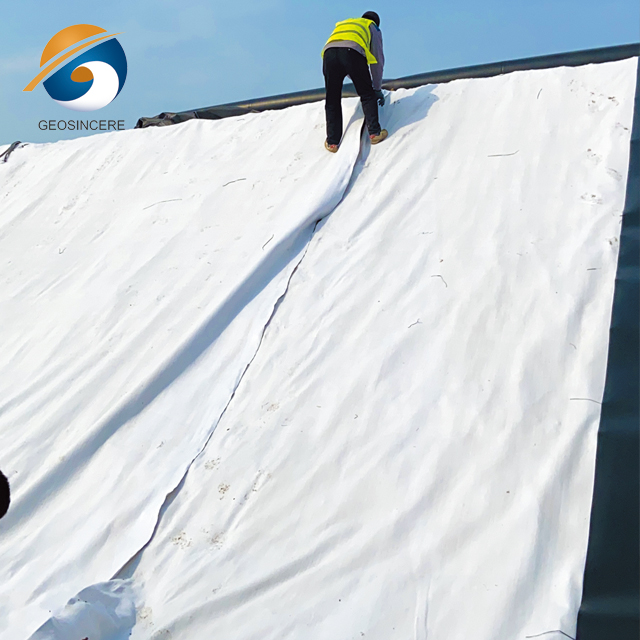
Improper overlap width → follow design overlap requirements
Exposure to prolonged UV → minimize storage time before installation
Incorrect grade selection → verify soil gradation and flow needs
Mechanical damage during backfilling → control fill material size
Procurement and Selection Guide
Identify functional requirement (separation, filtration, drainage)
Analyze soil particle size distribution
Select appropriate mass per unit area
Confirm tensile and puncture strength requirements
Verify compliance with project specifications
Review manufacturer quality management system
Plan installation method and site handling
Engineering Case Example
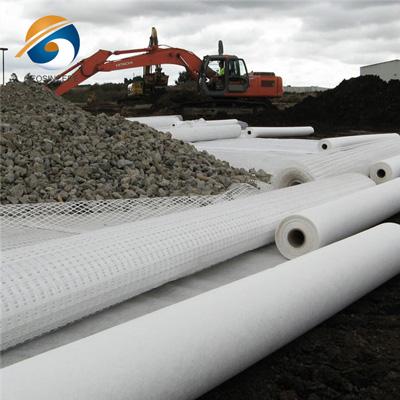
In a highway reconstruction project, Continuous Filament Polyester Nonwoven Geotextile with a mass of 300 g/m² was installed between the soft subgrade and aggregate base. The geotextile improved load distribution, prevented subgrade contamination, and enhanced long-term pavement performance under heavy traffic loads.
FAQ
Q1: What distinguishes continuous filament from staple fiber geotextiles?
A: Continuous filaments provide higher strength consistency.Q2: Is polyester suitable for wet environments?
A: Yes, polyester has excellent hydrolysis resistance.Q3: Can it be used under asphalt roads?
A: Commonly used as separation and filtration layers.Q4: Does it provide reinforcement?
A: Limited reinforcement, primarily separation and filtration.Q5: What roll widths are available?
A: Typically 4–6 meters.Q6: Is it resistant to biological degradation?
A: Yes, polyester is biologically inert.Q7: How long is the service life?
A: Often exceeds the design life of infrastructure projects.Q8: Can it be used with geogrids?
A: Yes, commonly combined in layered systems.Q9: Is on-site cutting allowed?
A: Yes, with standard cutting tools.Q10: Does it require special maintenance?
A: No, once properly installed.
Call to Action
For technical datasheets, project-specific quotations, or material samples of Continuous Filament Polyester Nonwoven Geotextile, please provide your application details, soil conditions, and required specifications for professional support.
E-E-A-T Author Credentials
This content is prepared by geotechnical engineers and geosynthetics specialists with extensive experience in transportation infrastructure, environmental engineering, and large-scale civil works, supporting informed procurement and design decisions.