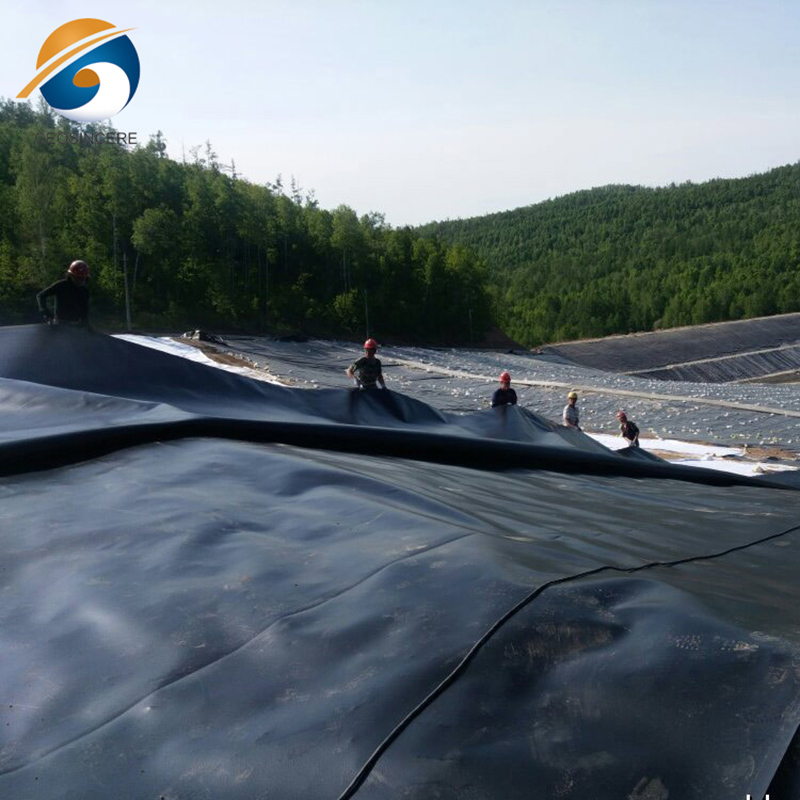

Commercial Large Pond Liner Impermeable HDPE Geomembrane
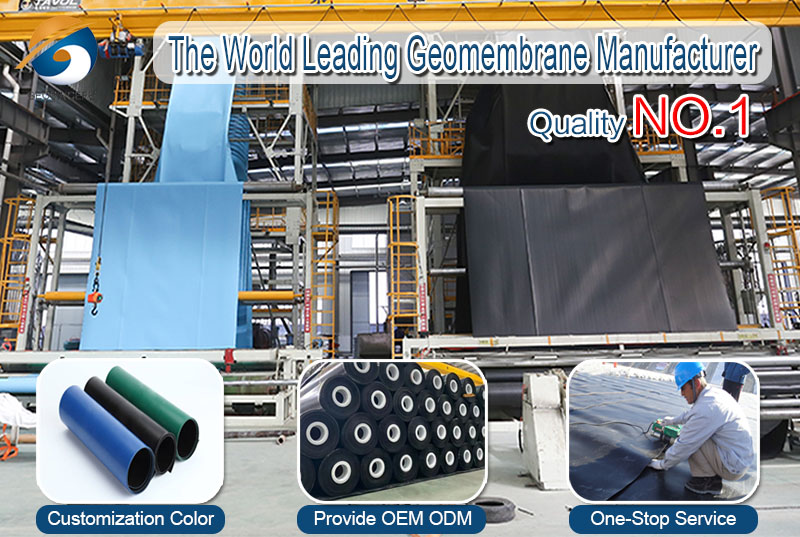
Manufacturing Process
Engineering Production Steps
Selection of virgin HDPE resin with certified melt flow index
Precise dosing of carbon black and antioxidant additives
High-temperature extrusion using flat-die or blown-film lines
Calendering to achieve uniform thickness control
Online inspection for pinholes, gels, and thickness deviation
Controlled cooling and roll winding
Batch sampling for mechanical and aging tests
Critical Process Controls
Stable extrusion temperature to prevent polymer degradation
Uniform resin dispersion to avoid weak points
Continuous quality monitoring in accordance with ASTM and ISO standards
What Is Commercial Large Pond Liner Impermeable HDPE Geomembrane
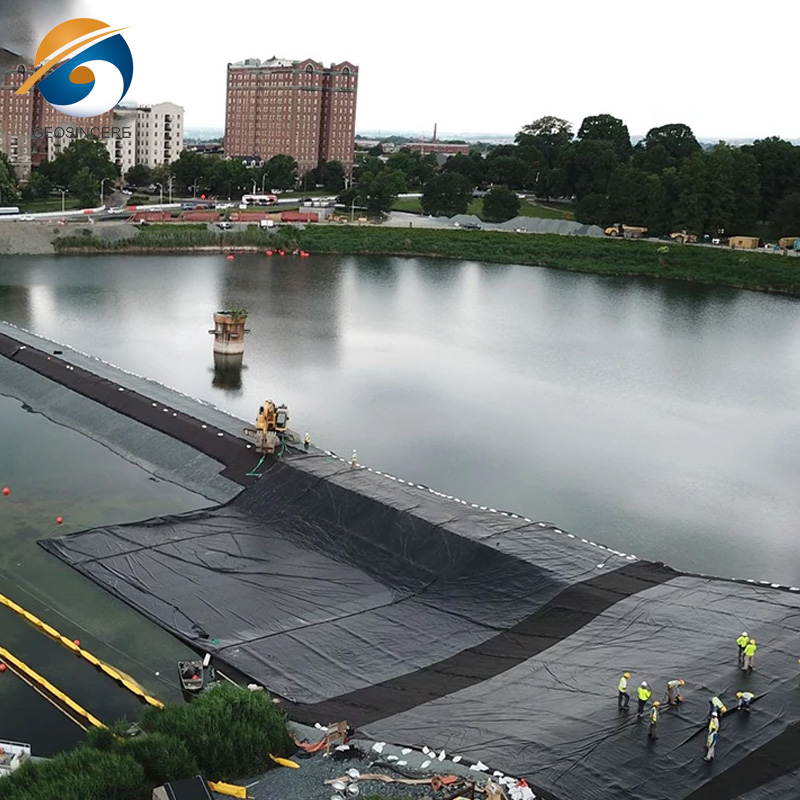
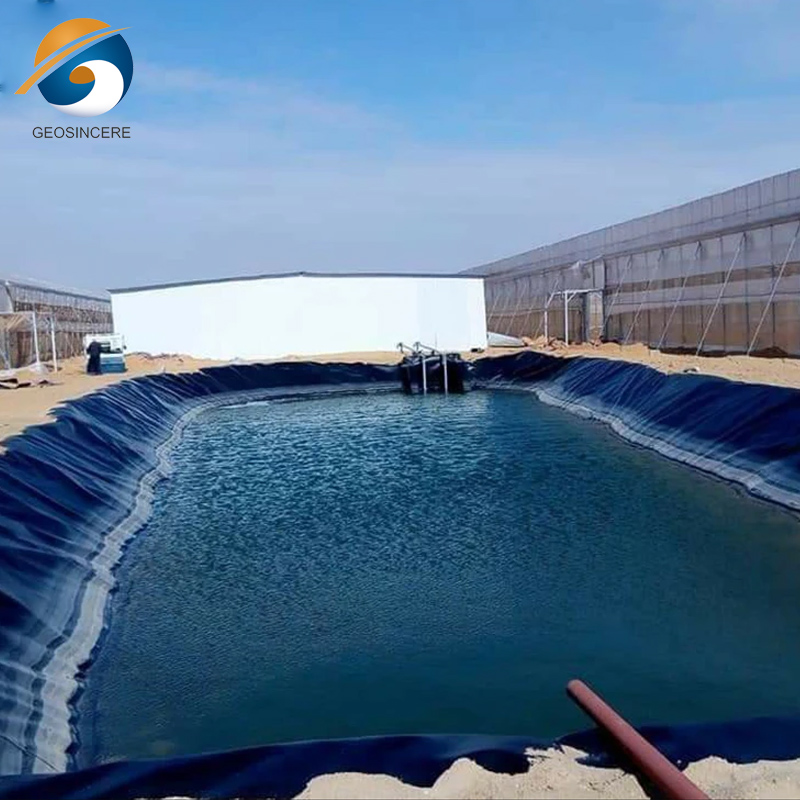
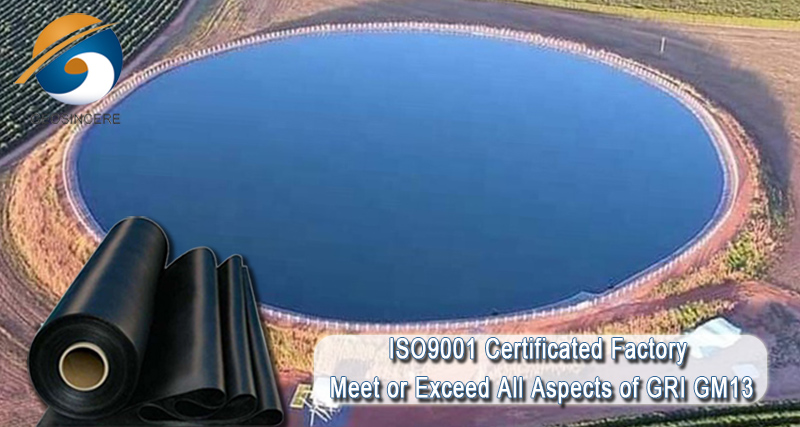
Commercial Large Pond Liner Impermeable HDPE Geomembrane is a high-density polyethylene synthetic liner engineered for large-scale water containment projects. It provides long-term impermeability, chemical resistance, and structural stability for commercial ponds, reservoirs, aquaculture farms, and industrial water management systems.
Technical Parameters and Specifications
The following specifications are widely adopted in commercial and EPC pond liner projects and align with international geomembrane engineering practices.
Material: High-Density Polyethylene (HDPE)
Thickness Range: 0.5 mm – 3.0 mm
Density: ≥ 0.94 g/cm³
Tensile Strength at Yield: ≥ 15 MPa
Elongation at Break: ≥ 700%
Puncture Resistance: ≥ 640 N
Carbon Black Content: 2.0–3.0%
UV Resistance: ≥ 50% retained after 1600 hours
Service Temperature: -40°C to +80°C
Design Service Life: 20–30 years under covered conditions
Structure and Material Composition
Commercial HDPE geomembranes are typically produced as homogeneous or co-extruded structures to meet different engineering requirements.
Surface Layer: UV-stabilized HDPE with carbon black for sunlight protection
Core Layer: High-purity polyethylene resin providing mechanical strength
Optional Textured Layer: Improves friction on slopes and embankments
Interface Layer: Designed for compatibility with geotextiles or soil subgrades
Manufacturing Process
Engineering Production Steps
Selection of virgin HDPE resin with certified melt flow index
Precise dosing of carbon black and antioxidant additives
High-temperature extrusion using flat-die or blown-film lines
Calendering to achieve uniform thickness control
Online inspection for pinholes, gels, and thickness deviation
Controlled cooling and roll winding
Batch sampling for mechanical and aging tests
Critical Process Controls
Stable extrusion temperature to prevent polymer degradation
Uniform resin dispersion to avoid weak points
Continuous quality monitoring in accordance with ASTM and ISO standards
Industry Comparison
| Material | HDPE Geomembrane | LLDPE Geomembrane | PP Geomembrane | EPDM Rubber |
|---|---|---|---|---|
| Impermeability | Excellent | Excellent | Excellent | Good |
| Mechanical Strength | Very High | High | Medium | Medium |
| UV Resistance | Very High | High | High | Medium |
| Installation Cost | Medium | Medium | Medium | High |
| Large Pond Suitability | Excellent | Good | Good | Limited |
Application Scenarios
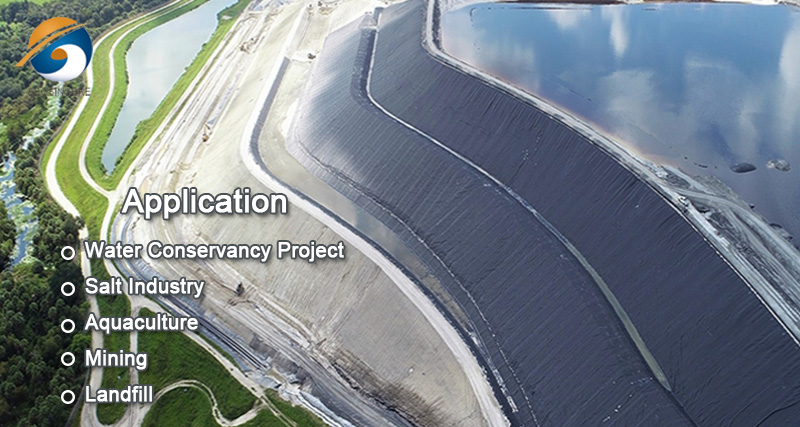
Large-scale aquaculture ponds and shrimp farms
Industrial water storage and wastewater lagoons
Commercial irrigation reservoirs
Mining and tailings containment ponds
Municipal and EPC water infrastructure projects
Core Pain Points and Engineering Solutions
Seepage Loss: Use thicker HDPE liners with certified welding quality
Subgrade Damage: Install protective geotextile underlay
UV Aging: Specify carbon black–stabilized HDPE formulations
Slope Instability: Apply textured geomembranes on embankments
Risk Warnings and Mitigation Strategies
Avoid sharp stones or debris during subgrade preparation
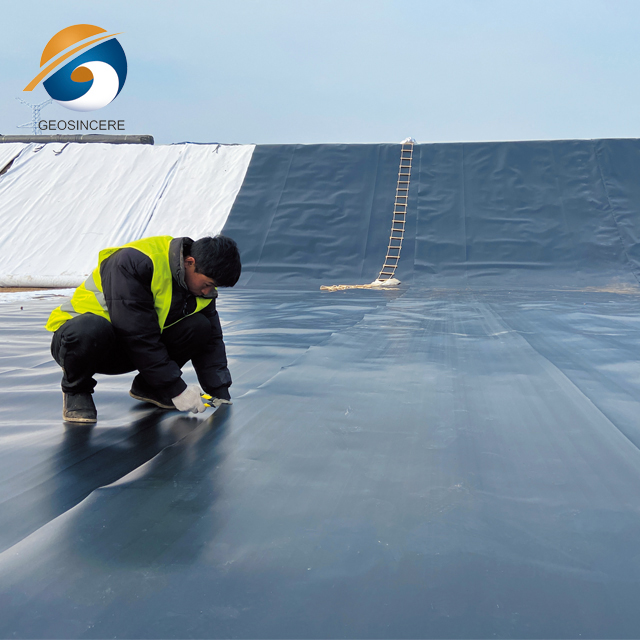
Ensure qualified hot-wedge or extrusion welding teams
Allow for thermal expansion during installation
Conduct non-destructive seam testing after welding
Procurement and Selection Guide
Define pond dimensions, depth, and hydraulic pressure
Select liner thickness based on load and service life
Determine smooth or textured surface requirements
Verify compliance with international geomembrane standards
Review laboratory test reports and quality certifications
Assess supplier manufacturing capacity and project experience
Confirm availability of installation guidance and after-sales support
Engineering Case Example
In a Middle East commercial aquaculture project, a 2.0 mm HDPE geomembrane was installed across a 60,000 m² large pond system. The liner was welded using automated hot-wedge machines and protected with geotextile layers, achieving zero leakage and stable operation under high-temperature conditions for over three years.
Frequently Asked Questions
Is HDPE suitable for large ponds? Yes, HDPE offers high strength and durability.
What thickness is recommended? 1.0–2.5 mm for most commercial ponds.
Can HDPE liners be exposed? Yes, with proper UV stabilization.
How are seams joined? By hot-wedge or extrusion welding.
What is the expected lifespan? Up to 30 years under proper conditions.
Is geotextile mandatory? Strongly recommended for protection.
Can HDPE resist chemicals? Excellent resistance to most acids and salts.
Are textured liners necessary? Recommended for slopes above 3:1.
What temperatures can HDPE handle? -40°C to +80°C.
Can liners be repaired? Yes, by localized welding patches.
CTA – Commercial Inquiry
For project quotations, technical datasheets, or engineering samples of Commercial Large Pond Liner Impermeable HDPE Geomembrane, please submit your project specifications to receive professional technical and commercial support.
E-E-A-T Author Credentials
This content is developed by an engineering team with over 15 years of experience in geomembrane materials and large-scale water containment systems, supporting EPC contractors, infrastructure developers, and international procurement managers across industrial and commercial projects.
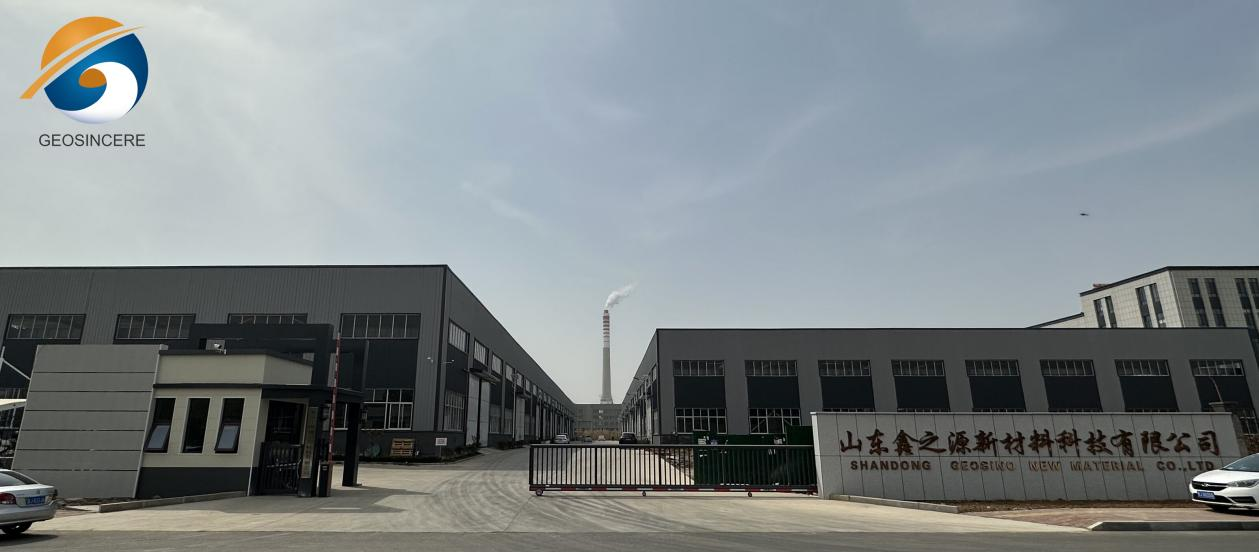
Company Profile