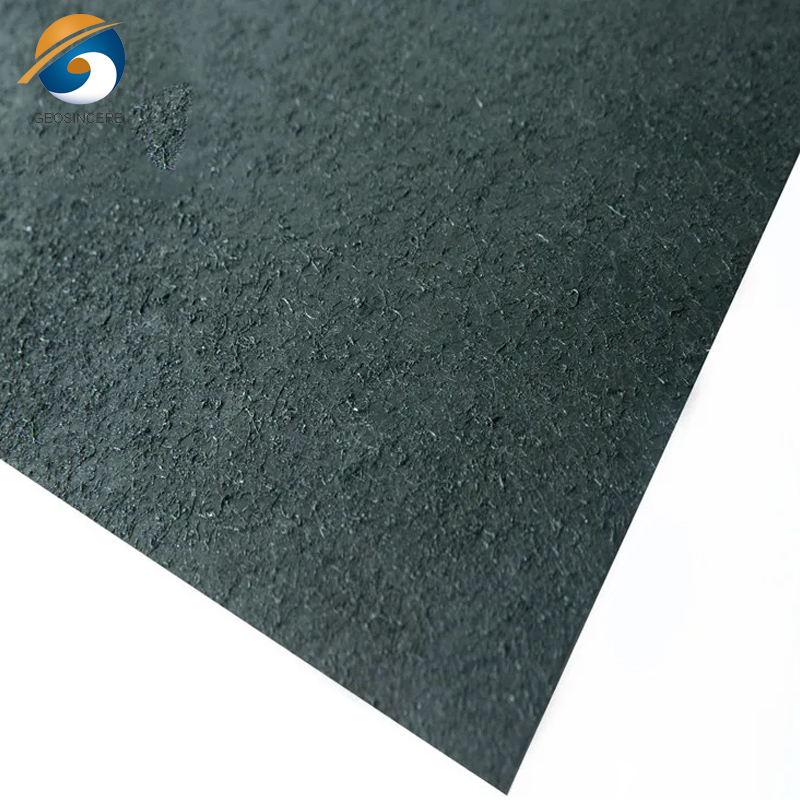
Heavy Duty Pond Liner Textured Geomembrane
Manufacturing Process
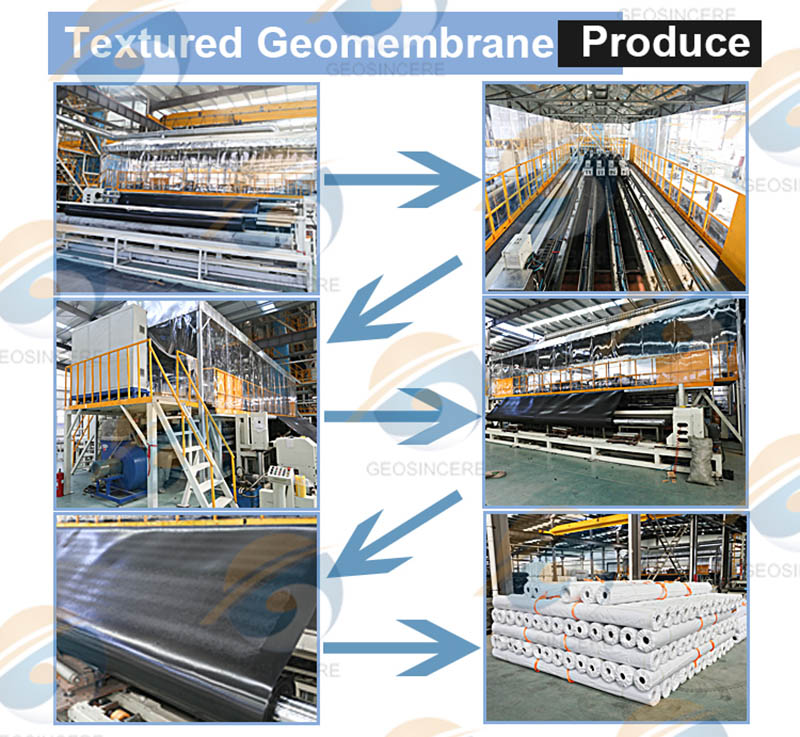
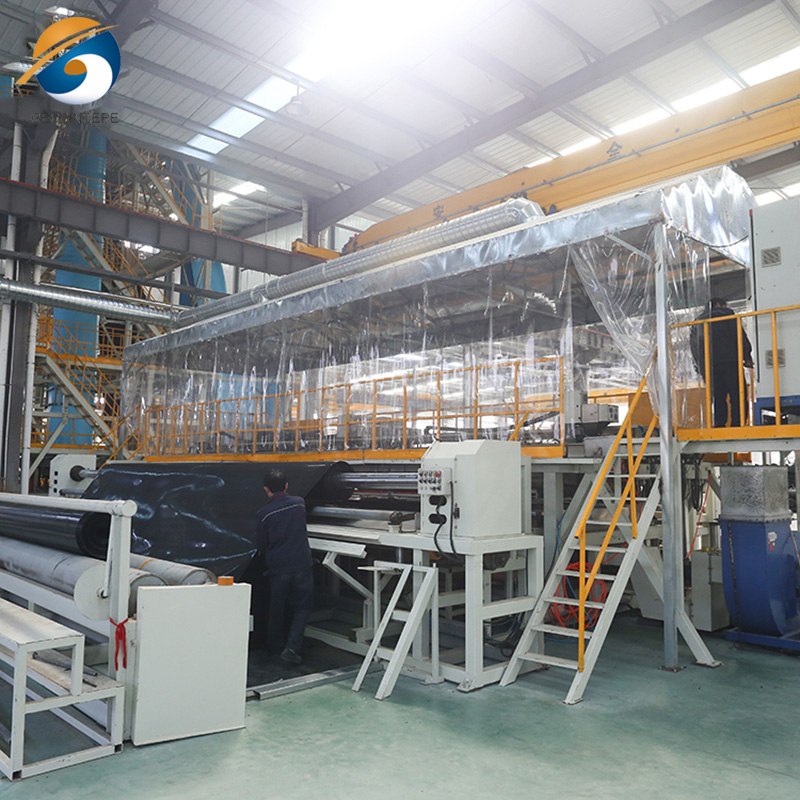
The production of Heavy Duty Pond Liner Textured Geomembrane follows an industrial extrusion-based workflow:
Resin drying and gravimetric batching
Flat-die or blown-film extrusion under controlled temperature profiles
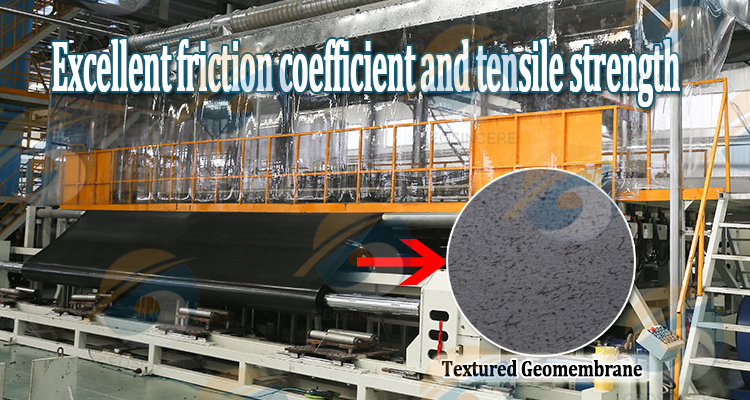
Inline texturing using nitrogen injection or embossing rollers
Calendering and thickness calibration
Controlled cooling and stress relaxation
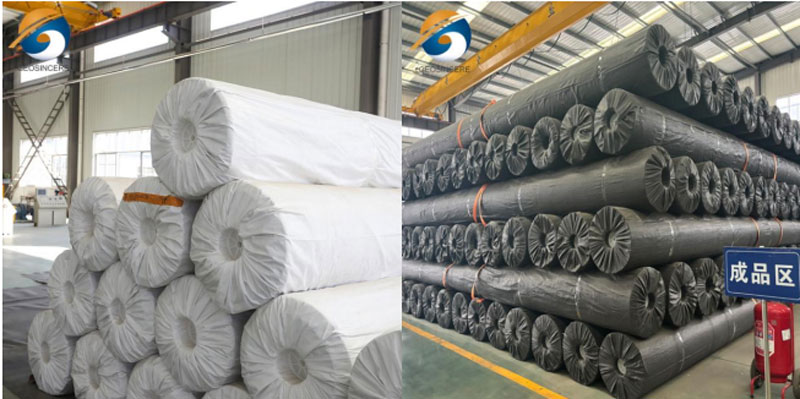
Automated winding and dimensional inspection
Laboratory testing (tensile, OIT, density, friction)
Key process controls include melt temperature stability, texture uniformity, and carbon black dispersion consistency.
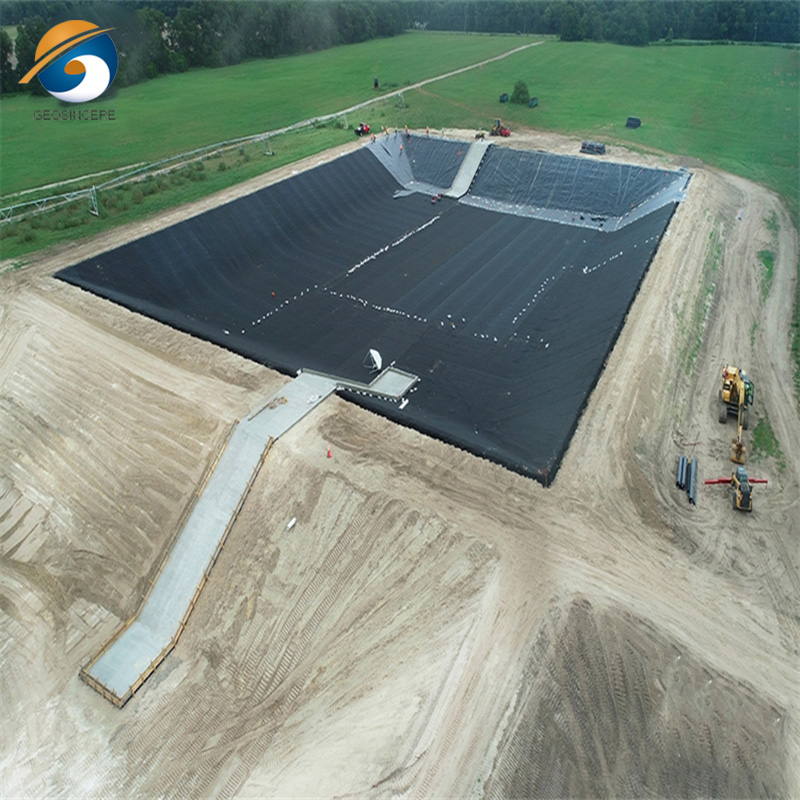
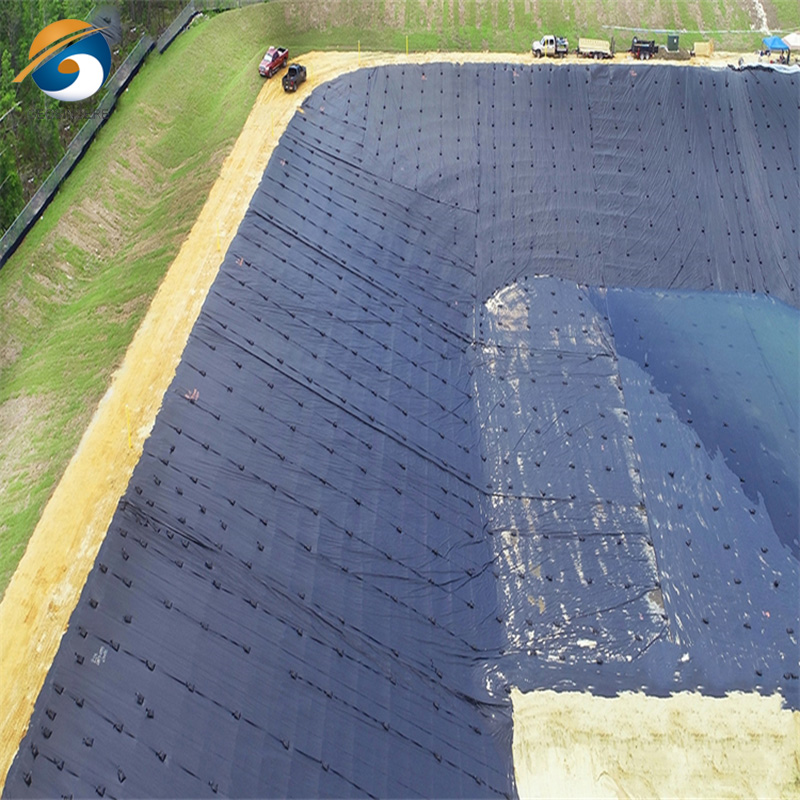
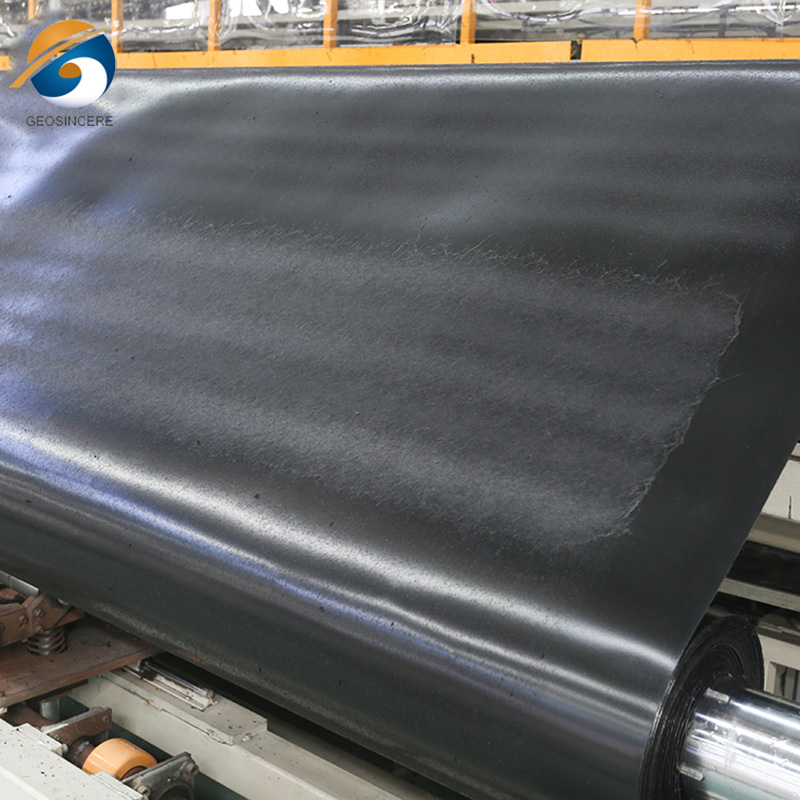
Heavy Duty Pond Liner Textured Geomembrane is a high-strength polymeric impermeable liner with engineered surface texturing, designed to provide long-term seepage control and enhanced interface friction in ponds, reservoirs, and water containment systems under demanding engineering conditions.
Technical Parameters and Specifications
The following parameters represent commonly accepted industrial ranges for heavy-duty textured geomembranes used in engineered pond lining systems:
Raw Material: HDPE or LLDPE resin (virgin or controlled blend)
Nominal Thickness: 1.0 mm / 1.5 mm / 2.0 mm / 2.5 mm
Density: ≥ 0.94 g/cm³ (HDPE)
Tensile Strength at Yield: ≥ 15 MPa
Elongation at Break: ≥ 700%
Interface Friction Angle: 22°–30° (textured-to-soil)
Carbon Black Content: 2.0–3.0%
Oxidative Induction Time (OIT): ≥ 100 min (Std OIT)
Service Temperature Range: -40°C to +60°C
Structure and Material Composition
Heavy Duty Pond Liner Textured Geomembrane typically adopts a monolithic structure with engineered surface profiling:
Base Polymer Layer: High-density polyethylene matrix providing impermeability
Textured Surface: Single-side or double-side asperities for friction enhancement
Carbon Black Dispersion: UV resistance and long-term durability
Thermal Stabilizers: Resistance to oxidative aging
Manufacturing Process
The production of Heavy Duty Pond Liner Textured Geomembrane follows an industrial extrusion-based workflow:
Resin drying and gravimetric batching
Flat-die or blown-film extrusion under controlled temperature profiles
Inline texturing using nitrogen injection or embossing rollers
Calendering and thickness calibration
Controlled cooling and stress relaxation
Automated winding and dimensional inspection
Laboratory testing (tensile, OIT, density, friction)
Key process controls include melt temperature stability, texture uniformity, and carbon black dispersion consistency.
Industry Comparison
| Material Type | Friction Performance | Durability | Installation Risk | Typical Use |
|---|---|---|---|---|
| Textured Geomembrane | High | Very High | Low (slopes) | Engineered ponds, steep slopes |
| Smooth Geomembrane | Low | Very High | High (slippage) | Flat-bottom reservoirs |
| EPDM Rubber Liner | Medium | Medium | Medium | Decorative ponds |
| PVC Liner | Low | Low | Medium | Temporary containment |
Application Scenarios
Heavy Duty Pond Liner Textured Geomembrane is widely specified by:
Distributors: Stocking standardized rolls for infrastructure projects
EPC Contractors: Design-build water and environmental systems
Engineering Firms: Slope stability–critical containment designs
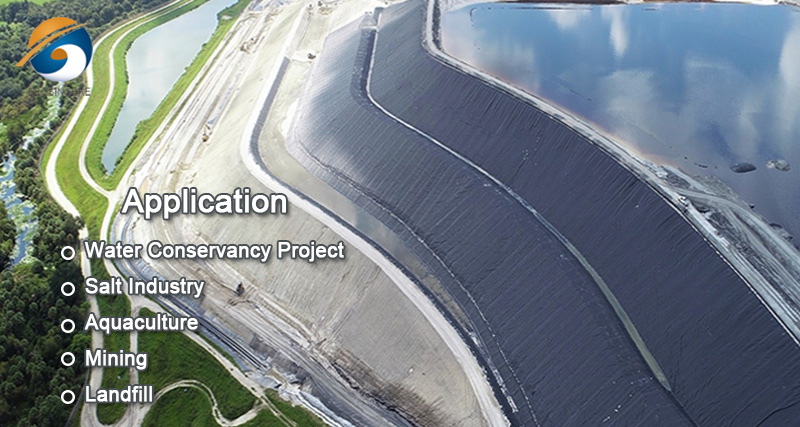
Typical applications include irrigation reservoirs, aquaculture ponds, stormwater retention basins, leachate ponds, and industrial water containment.
Core Pain Points and Engineering Solutions
Slope Instability: Textured surfaces increase interface friction
Long-Term Leakage: High-density polymer ensures impermeability
UV Degradation: Carbon black stabilization extends service life
Thermal Cracking: Controlled resin formulation reduces stress cracking
Risk Warnings and Mitigation Recommendations
Improper use of Heavy Duty Pond Liner Textured Geomembrane may introduce risks:
Over-texturing may complicate welding quality
Incorrect thickness selection can lead to puncture risk
Poor subgrade preparation increases stress concentration
Mitigation includes certified welding technicians, subgrade smoothing, and project-specific thickness calculations.
Procurement and Selection Guide
Define pond geometry and maximum slope angle
Confirm chemical exposure and temperature range
Select appropriate thickness based on load analysis
Specify single or double textured surface
Request compliance test reports (ASTM / ISO)
Evaluate roll dimensions and logistics efficiency
Assess supplier quality control and traceability
Engineering Case Application
In a 50,000 m² agricultural reservoir project, Heavy Duty Pond Liner Textured Geomembrane (1.5 mm, double-sided) was installed on 3H:1V slopes. Interface shear testing confirmed a friction angle exceeding 26°, enabling stable lining without anchor trench enlargement. Post-installation leak detection reported zero defects after commissioning.
Frequently Asked Questions
Q1: Is textured geomembrane weldable?
A: Yes, with calibrated hot-wedge or extrusion welding.Q2: Single or double texture?
A: Depends on slope and interface requirements.Q3: Typical service life?
A: 20–30 years under standard exposure.Q4: Suitable for potable water?
A: Yes, when compliant with relevant standards.Q5: Minimum slope recommendation?
A: Commonly ≥ 2.5H:1V.Q6: UV exposure limits?
A: Designed for continuous outdoor exposure.Q7: Can it be repaired on-site?
A: Yes, via extrusion patch welding.Q8: Required subgrade?
A: Smooth, compacted, free of sharp objects.Q9: Roll width options?
A: Typically 5–8 m depending on equipment.Q10: Third-party testing available?
A: Commonly provided upon request.
Call to Action
For project-specific pricing, detailed technical datasheets, or engineering samples of Heavy Duty Pond Liner Textured Geomembrane, procurement teams and consultants are encouraged to request formal quotations and supporting documentation.
E-E-A-T Author Credentials
This article is prepared by a technical engineering team with over 15 years of experience in geomembrane manufacturing, quality assurance, and field application support across water containment, environmental, and infrastructure projects worldwide.