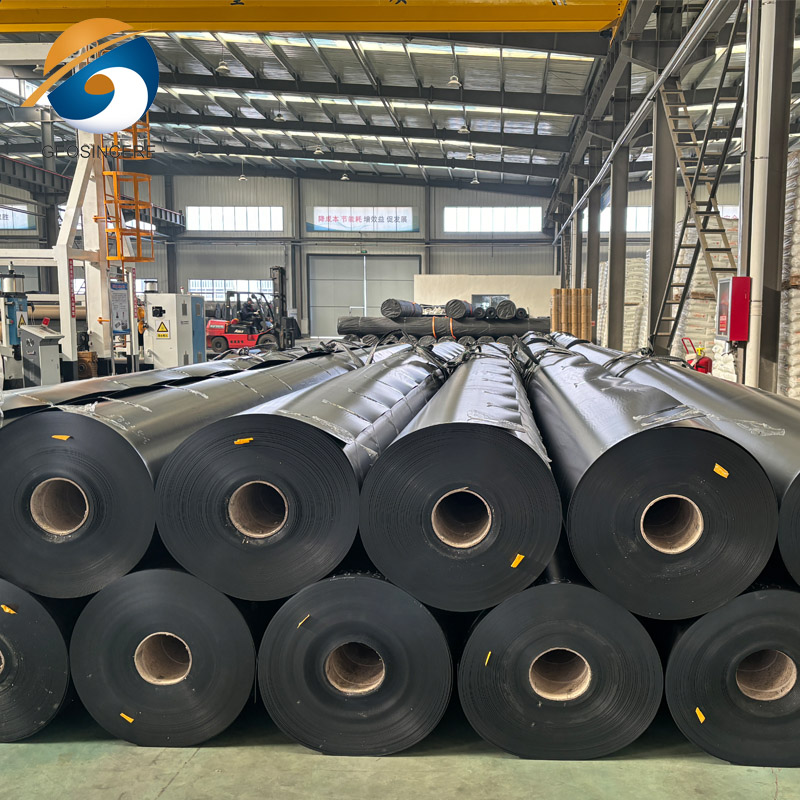
Geomembrana in HDPE
Manufacturing Process
The performance consistency of geomembrana in HDPE is directly related to its controlled manufacturing process.
Raw material batching and mixing of HDPE resin and additives
Extrusion through flat die or blown film system
Sheet calendering and thickness control
Surface texturing (if required)
Cooling, trimming, and winding
Inline thickness, density, and surface inspection
Finished roll packaging and batch identification
Product Definition
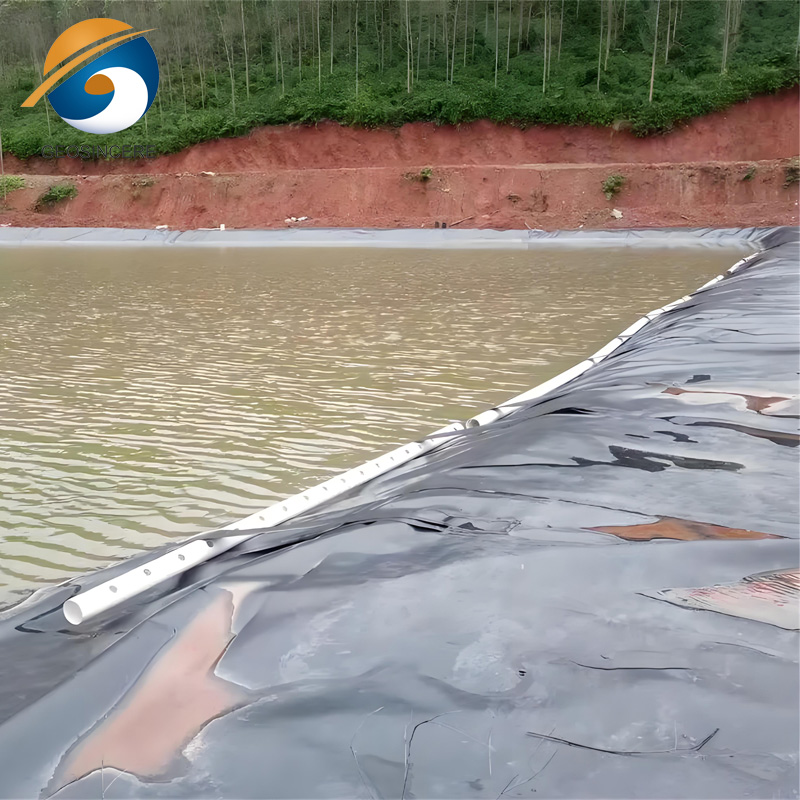
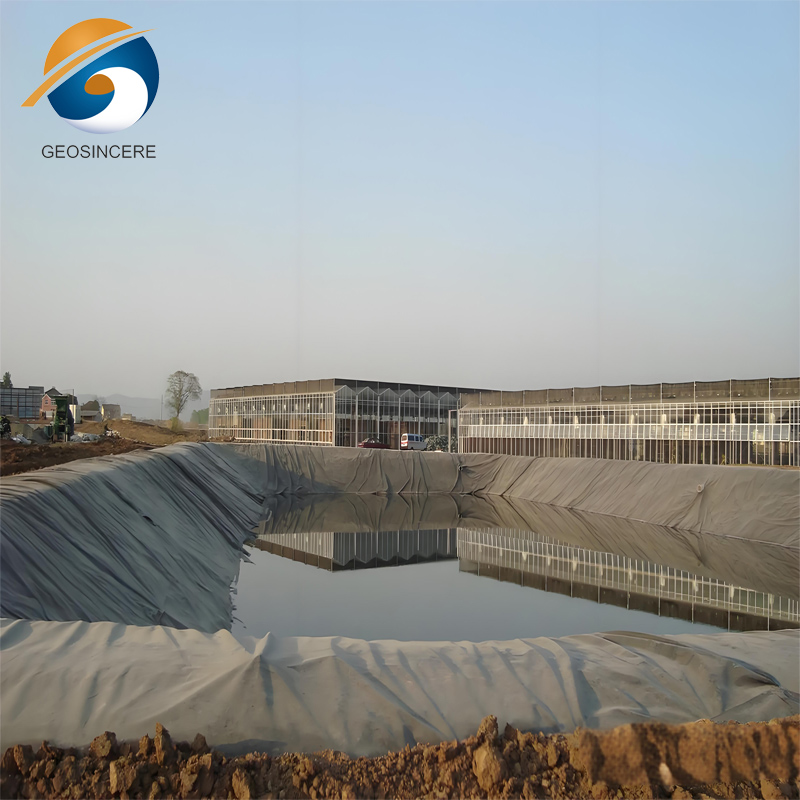
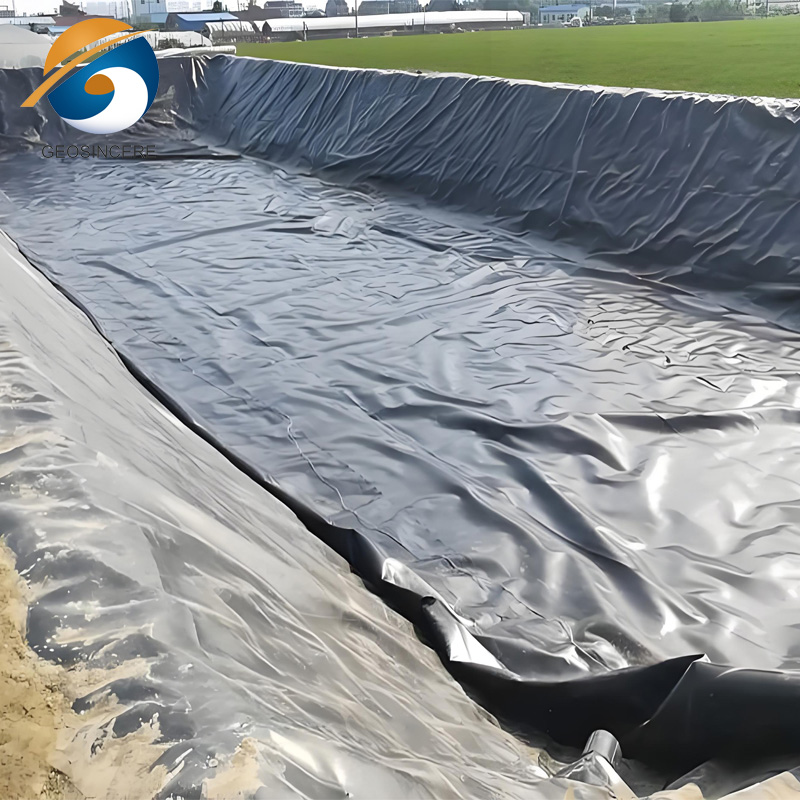
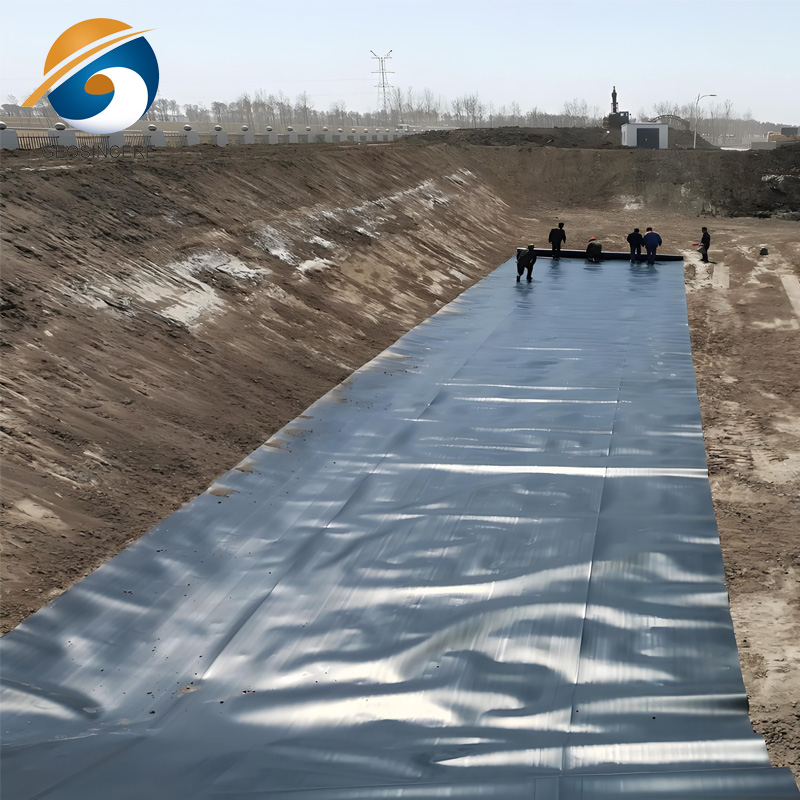
Geomembrana in HDPE is a high-density polyethylene impermeable liner engineered for containment, separation, and environmental protection in civil, mining, water, and waste management projects, offering long-term chemical resistance, structural stability, and controlled permeability under demanding engineering conditions.
Technical Parameters and Specifications
For professional engineering applications, geomembrana in HDPE must comply with standardized, verifiable technical parameters.
Thickness range: 0.5 mm / 0.75 mm / 1.0 mm / 1.5 mm / 2.0 mm / 2.5 mm
Density: ≥0.94 g/cm³
Tensile strength at yield: ≥15 MPa
Tensile elongation at break: ≥700%
Puncture resistance: ≥500 N (CBR method)
Carbon black content: 2.0–3.0%
Carbon black dispersion: Grade 1–2
Oxidative induction time (OIT): ≥100 min (standard)
Permeability coefficient: ≤1.0 × 10⁻¹³ cm/s
Structure and Material Composition
Geomembrana in HDPE is a homogeneous polymeric sheet designed for impermeability and durability.
Base Polymer: High-density polyethylene resin
Stabilizer System: Carbon black for UV resistance
Antioxidants: Thermal and oxidative aging control
Surface Options:
Smooth surface for general containment
Textured or double-textured surface for slope stability
Manufacturing Process
The performance consistency of geomembrana in HDPE is directly related to its controlled manufacturing process.
Raw material batching and mixing of HDPE resin and additives
Extrusion through flat die or blown film system
Sheet calendering and thickness control
Surface texturing (if required)
Cooling, trimming, and winding
Inline thickness, density, and surface inspection
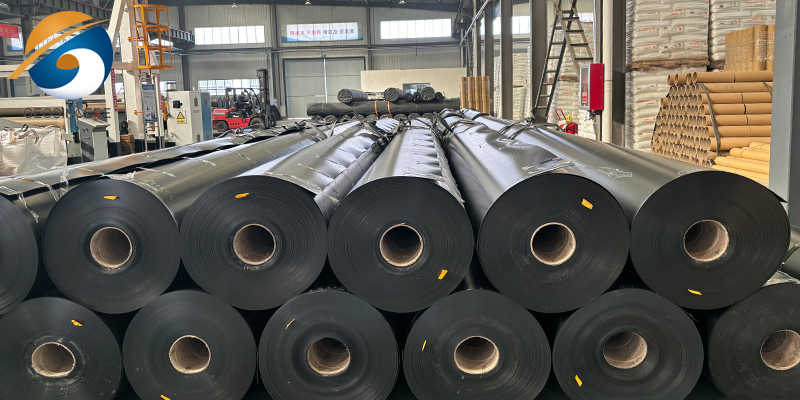
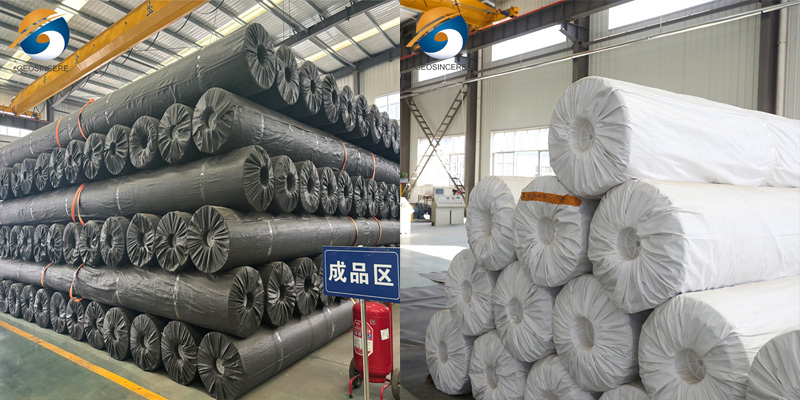
Finished roll packaging and batch identification
Industry Comparison
| Property | HDPE Geomembrane | LLDPE Geomembrane | EPDM Rubber Liner | PVC Geomembrane |
|---|---|---|---|---|
| Chemical Resistance | Excellent | Good | Moderate | Moderate |
| UV Resistance | Excellent | Good | Good | Moderate |
| Flexibility | Moderate | High | Very High | High |
| Service Life | 30–50 years | 20–30 years | 20–25 years | 15–20 years |
Application Scenarios
Geomembrana in HDPE is widely used across infrastructure and environmental engineering sectors.
Distributors: Standard rolls for water and waste containment markets
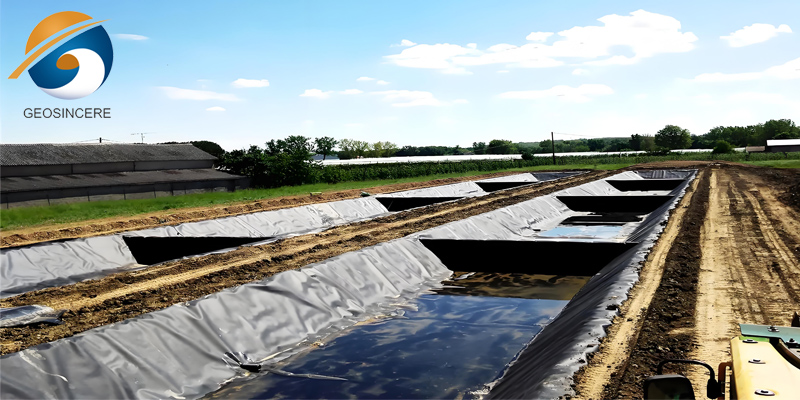
EPC contractors: Landfills, tailings dams, and industrial ponds
Engineering consultants: Environmental barrier design
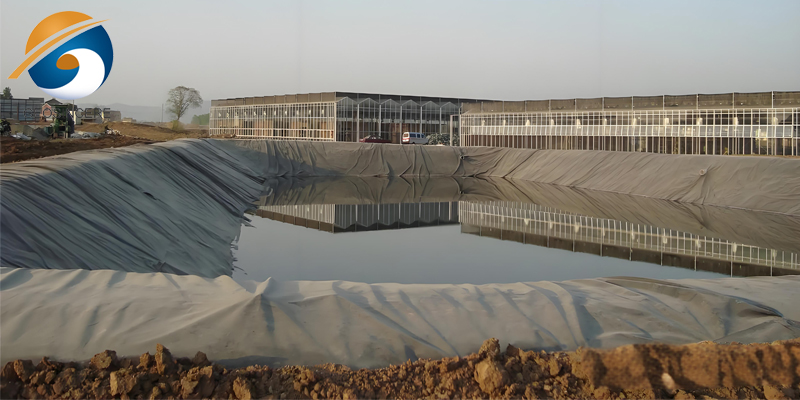
Government projects: Water reservoirs and canal lining systems
Core Pain Points and Engineering Solutions
Leakage risk: Solved by double-liner systems and quality welding
Slope instability: Addressed using textured geomembrana in HDPE
UV degradation: Controlled through carbon black stabilization
Installation damage: Reduced via protective geotextile layers
Risk Warnings and Mitigation
Improper specification or installation of geomembrana in HDPE can compromise system integrity.
Avoid installing over sharp or poorly compacted subgrades
Do not weld under rain, dust, or extreme wind conditions
Ensure qualified technicians perform seam welding
Verify roll traceability and batch test reports
Procurement and Selection Guide
Define containment type and chemical exposure
Select thickness based on load and puncture risk
Determine surface type (smooth or textured)
Verify compliance with ASTM or GRI standards
Review manufacturing capacity and quality control
Request welding guidelines and installation manuals
Conduct pre-installation material testing
Engineering Case Application
In a municipal solid waste landfill project, a 2.0 mm double-textured geomembrana in HDPE was installed over a compacted clay liner and protective geotextile. The system covered 45,000 m² and achieved leak detection performance compliant with environmental regulations after five years of monitored operation.
FAQ
Q1: What thickness is typical for landfills? A: Usually 1.5–2.0 mm.
Q2: Is HDPE geomembrane UV resistant? A: Yes, with proper carbon black content.
Q3: Can it resist chemicals? A: Yes, including acids and alkalis.
Q4: What welding method is used? A: Hot wedge or extrusion welding.
Q5: Is textured HDPE necessary on slopes? A: Recommended for stability.
Q6: What is the service life? A: Up to 50 years in buried conditions.
Q7: Can it be used in potable water? A: Yes, with certified grades.
Q8: How is seam quality tested? A: Air pressure or vacuum box testing.
Q9: Is HDPE recyclable? A: Yes, under controlled conditions.
Q10: What standards apply? A: ASTM D5885, GRI GM13.
Call to Action
For detailed technical datasheets, engineering samples, welding guidelines, or project-based quotations related to geomembrana in HDPE, procurement and engineering teams are invited to request comprehensive technical documentation.
E-E-A-T Author Credentials
This article is prepared by a geosynthetics engineering specialist with over 15 years of experience in environmental containment systems, civil infrastructure projects, and international B2B procurement and specification support.