40 mil HDPE Liner Reinforced Polypropylene Geomembrane
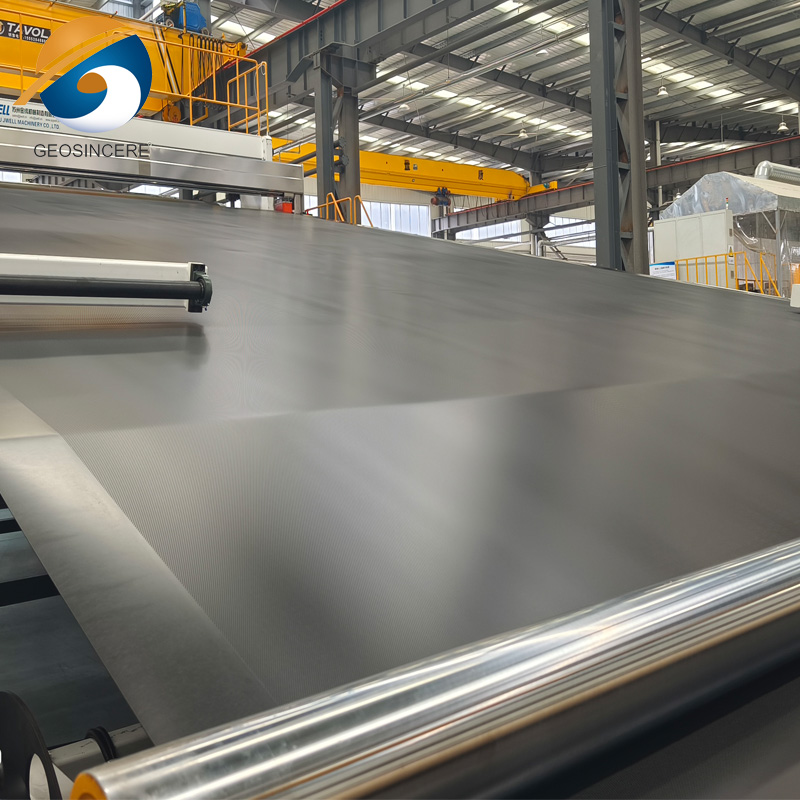
Manufacturing Process
Raw Material Preparation: Virgin HDPE pellets dried and blended with carbon black and stabilizers.
Co-extrusion: Dual HDPE layers extruded simultaneously for uniform density and melt strength.
Reinforcement Lamination: PP scrim fabric bonded under controlled temperature to enhance tensile performance.
Calendering: Thickness leveling to ensure 1.0 mm accuracy across full roll width.
Cooling & Shaping: Rollers stabilize sheet geometry and eliminate internal stress.
Edge Trimming: CNC trimming improves weld quality and alignment.
Quality Testing: Tensile, tear, puncture, carbon black dispersion, and oxidation resistance tests.
Final Packaging: Heavy-duty roll wrapping for export handling and installation safety.
Product Definition
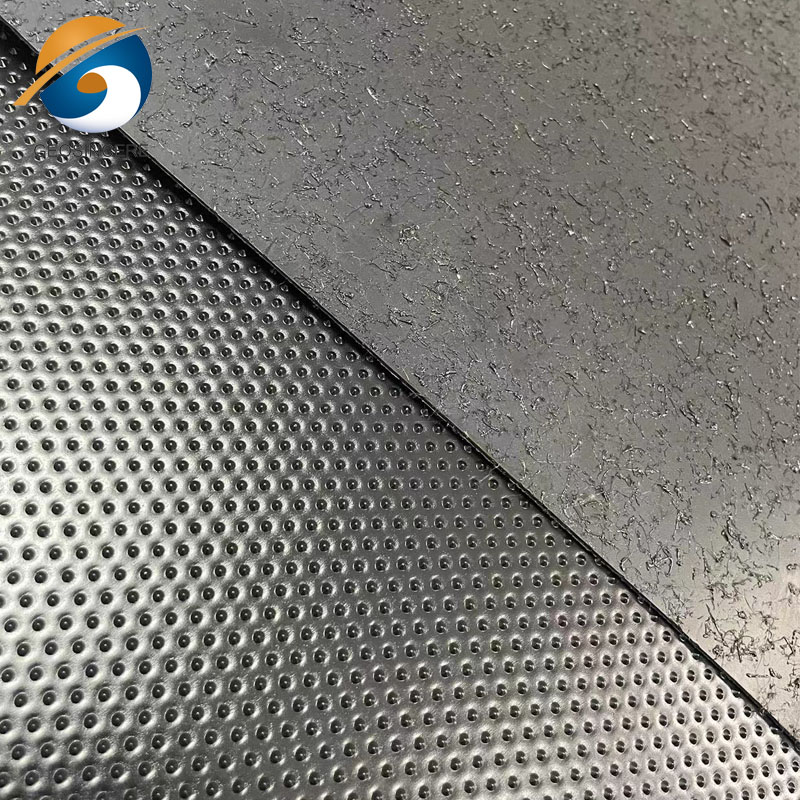
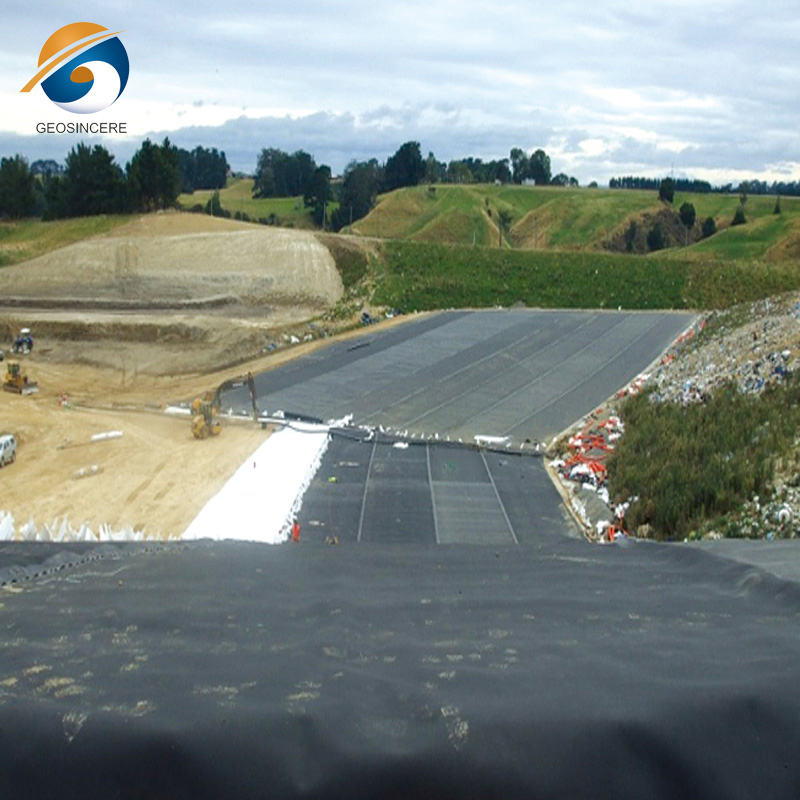
40 mil HDPE liner reinforced polypropylene geomembrane is a multi-layer geosynthetic barrier engineered for environmental containment, wastewater treatment, mining pads, and industrial ponds. It integrates HDPE’s chemical resistance with reinforced PP fabric strength to deliver long-term durability under mechanical and UV stress.
Technical Parameters and Specifications
| Thickness | 40 mil (1.0 mm) |
| Base Material | High-Density Polyethylene + Reinforced Polypropylene (RPP) |
| Tensile Strength (ASTM D6693) | 25–30 kN/m |
| Elongation at Break | ≥ 450% |
| Tear Resistance (ASTM D1004) | 170–210 N |
| Puncture Resistance (ASTM D4833) | 550–700 N |
| Hydrostatic Resistance | ≥ 1200 kPa |
| Chemical Resistance | High, suitable for acids, bases, salts |
| UV Resistance | ≥ 8,000 hours (ASTM G154) |
| Roll Width | 5–8 m |
| Standard Length | 50–200 m |
Structure and Material Composition
Upper HDPE Layer: Provides chemical resistance, anti-seepage performance, and UV durability.
Reinforced PP Core: Woven or scrim polypropylene fabric delivering dimensional stability and high tensile strength.
Lower HDPE Layer: Enhances puncture resistance and bonding strength, stabilizing substrate contact.
Optional Additives: UV stabilizers, carbon black, antioxidants for extended service life.
Manufacturing Process
Raw Material Preparation: Virgin HDPE pellets dried and blended with carbon black and stabilizers.
Co-extrusion: Dual HDPE layers extruded simultaneously for uniform density and melt strength.
Reinforcement Lamination: PP scrim fabric bonded under controlled temperature to enhance tensile performance.
Calendering: Thickness leveling to ensure 1.0 mm accuracy across full roll width.
Cooling & Shaping: Rollers stabilize sheet geometry and eliminate internal stress.
Edge Trimming: CNC trimming improves weld quality and alignment.
Quality Testing: Tensile, tear, puncture, carbon black dispersion, and oxidation resistance tests.
Final Packaging: Heavy-duty roll wrapping for export handling and installation safety.
Industry Comparison
| Material | 40 mil HDPE + RPP | Standard HDPE (1.0 mm) | LLDPE (1.0 mm) |
|---|---|---|---|
| Puncture Resistance | High | Medium | Medium |
| Flexibility | Medium | Low | High |
| Chemical Resistance | High | High | Medium |
| Tensile Strength | Very High | High | Medium |
| UV Resistance | High | High | Medium |
| Best Use Case | Reinforced industrial containment | General ponds/landfills | Contours & curved surfaces |
Application Scenarios
Mining pads, heap leach ponds, and chemical retention areas.
Municipal wastewater lagoons requiring high puncture resistance.
Industrial containment tanks and secondary liners for chemical plants.
EPC contractor projects involving large-area environmental barriers.
Reservoirs, canals, and irrigation systems needing long-term anti-seepage.
Core Pain Points and Solutions
Puncture failure from aggregates. Solution: Reinforced PP core increases puncture resistance by 30–40% compared with plain HDPE.
Tensile tearing during installation. Solution: Woven PP scrim fabric enhances tear strength, preventing propagation under load.
UV degradation in long-term exposed areas. Solution: 2–3% carbon black and UV stabilizers extend outdoor service life.
Welding inconsistencies on-site. Solution: Co-extruded HDPE surfaces provide stable thermal weldability for fusion welders.
Risk Warnings and Mitigation
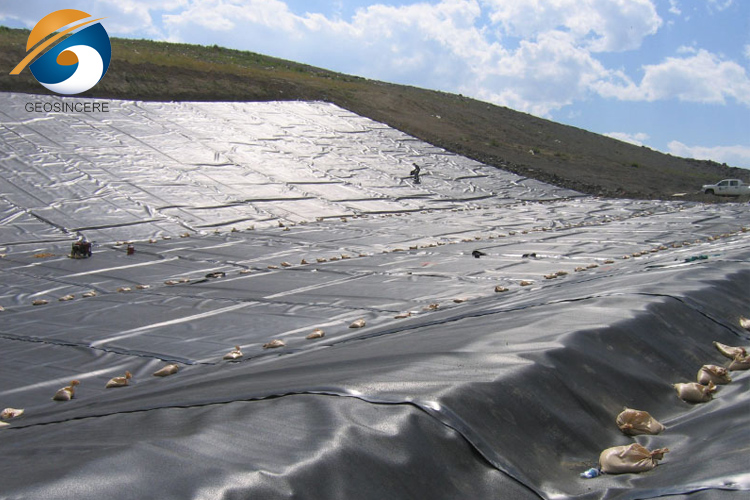
Do not install on sharp debris; always use geotextile cushioning.
Avoid installation in wind speeds > 25 km/h to prevent liner tension damage.
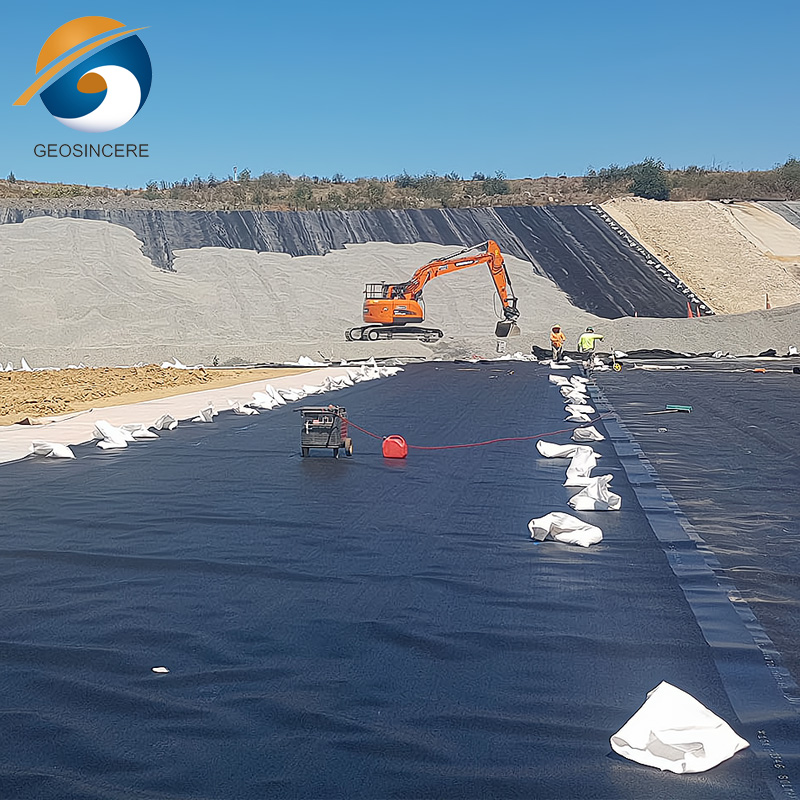
Ensure proper welding temperature (350–450°C depending on machine). Incorrect heat causes seam failure.
Conduct spark testing or vacuum box testing for all seams in critical containment areas.
Procurement and Selection Guide
Request ASTM test reports (D6693, D4833, D1004) for each production batch.
Confirm reinforcement fabric type (woven, knitted, or scrim PP) based on tensile requirements.
Check carbon black content (2–3%) to validate UV resistance.
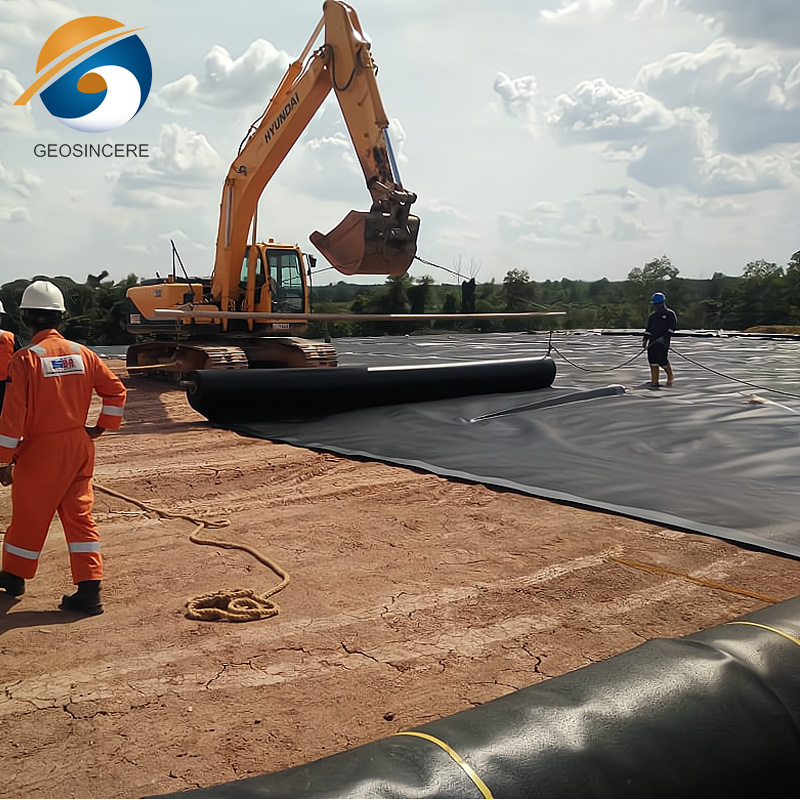
Evaluate roll size according to project installation equipment and labor capacity.
Verify weldability via small sample welding before bulk order confirmation.
Assess supplier’s QC capability: oxidation induction time, extrusion control, and melt index testing.
Engineering Case Study
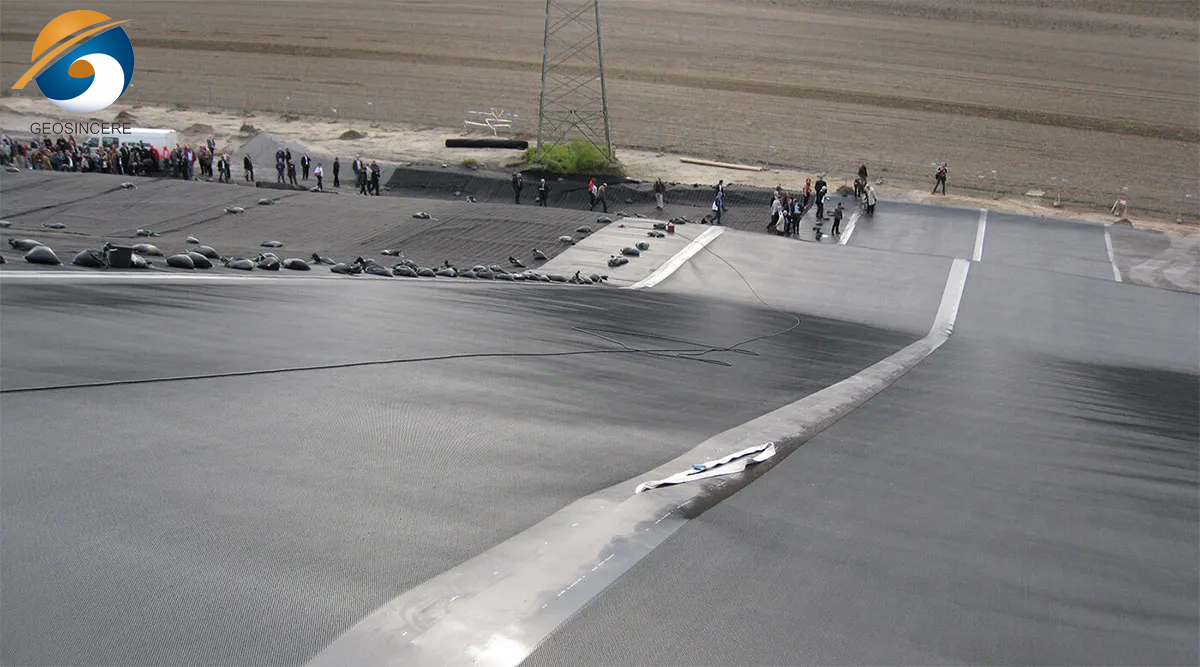
A 65,000 m² mining heap leach project in South America deployed 40 mil HDPE reinforced polypropylene geomembrane as the primary liner. The reinforced structure reduced installation damage by 27% compared to standard HDPE. Fusion weld seams exceeded 95% weld strength consistency, verified by field peel tests. The project demonstrated stable mechanical performance under abrasive ore loading and continuous chemical exposure.
FAQ
1. What is the thickness of a 40 mil liner? — Approximately 1.0 mm.
2. Is reinforced PP geomembrane stronger than HDPE? — Yes, significantly higher tensile and tear strength.
3. Can it resist acids and alkalis? — Yes, excellent chemical resistance.
4. Can it be used in mining applications? — Yes, commonly used in heap leach pads.
5. Is welding easy on-site? — Yes, compatible with hot wedge and extrusion welders.
6. Does reinforcement affect flexibility? — Slightly, but improves stability under stress.
7. What is the typical service life? — 15–25 years depending on UV exposure.
8. Can it be used underwater? — Yes, suitable for submerged and buried applications.
9. What are standard roll widths? — 5–8 meters.
10. Does it require cushioning? — Yes, geotextile recommended for rocky subgrades.
Request for Quotation / Technical Files / Samples
Contact our engineering support team for detailed technical data sheets, weldability samples, or a project-based quotation for 40 mil HDPE liner reinforced polypropylene geomembrane. Provide project size, containment type, and installation conditions for an accurate proposal.
E-E-A-T Author Credentials
Prepared by a geosynthetics application engineer with over 15 years of field experience in HDPE liners, reinforced geomembranes, landfill engineering, and mining environmental containment systems across North America, Asia, and the Middle East.