

The Ultimate Guide to Geocell HDPE for Modern Construction
Currently, the construction and infrastructure sector is undergoing a drastic change due to environmental, economic, and technical pressures. Projects not only need to meet performance standards but also have to manage materials usage, construction time, and environmental impact. Besides, many of the projects are possibly located on weak subgrades, areas with variable soils, or environmentally sensitive zones.
Such is the case with traditional methods of constructing which include thick granular layers or rigid concrete structures, these methods often require a large volume of materials and extensive earthwork. Although these methods do well, they are not necessarily very efficient or flexible to changes in the ground conditions.
Therefore, geosynthetics have become a crucial part of the civil engineering sector nowadays. Out of all of them, Geocell HDPE is the one which has been most widely accepted as a very handy and dependable method for soil stabilization, load support, and erosion control.
At GEOSINCERE Geosynthetics, we have been in contact with international contractors, distributors, and project owners for a long time. Based on this experience, I can say that Geocell HDPE is very rarely considered the alternative solution nowadays, but rather as one of the essential components in modern construction.
1. What is Geocell HDPE?
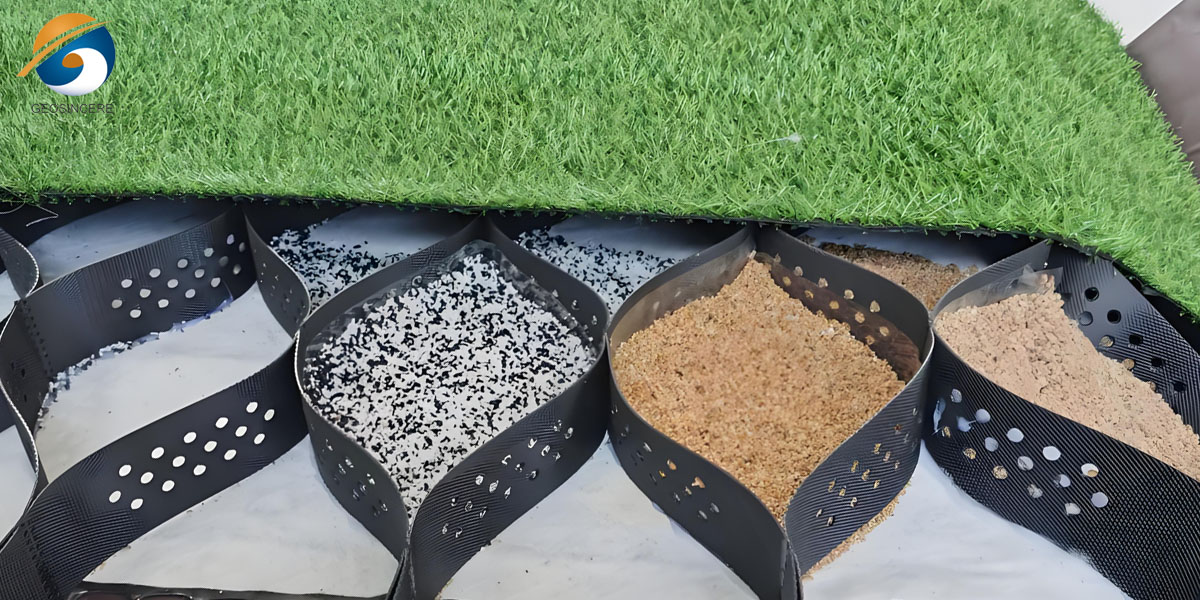
HDPE Geocell is a 3-dimensional cellular confinement system made out of sheets of high-density polyethylene. These geocell erosion control is joined by welding at specific points to create the network of cells. The cellular confinement panels come folded and then are stretched out during installation to the designed size.
Once retracted, filled with mix materials such as soil, sand, gravel, or concrete, the geocell acts as a strong layer that enhances the mechanical properties of the filling material.
In contrast to geosynthetics that are flat such as geotextiles or geogrids, geocells offer 3-dimensional confinement, thus they can more effectively control the lateral movements of the fill material. The confinement mechanism is the main basis for geocell performance in stabilization and load-bearing applications.
2. Why HDPE is the Preferred Material for Geocell HDPE?
2.1 Mechanical characteristics
High-density polyethylene is very good at offering a great balance between tensile strength and flexibility. As it can flex without cracking, this is very important in case of applications where traffic loading is repeated and the ground undergoes minor movements.
2.2 Chemical resistance
HDPE can resist the chemicals found in the soil, groundwater, and industrial environment. Therefore, HDPE geocells can be used in industrial areas, mining projects, coastal regions, and other chemically aggressive environments.
2.3 Durability and Weather Protection
If the product is formulated correctly, HDPE geocell may be able to perform consistently even after an extended period of time in the presence of moisture, temperature fluctuations, and sunlight. This endurance makes them a great option for long-life infrastructure projects.
2.4 Environmental friendliness
HDPE is chemically inert and it cannot by itself pollute the environment with hazardous substances. Hence, its usage goes well with the idea of green construction, particularly if materials sourced locally are used to fill geocell slope protection, which along with the vegetation, they form part of the natural ecosystem.
3. Working Principle of HDPE Geocell Systems
The basis of HDPE geocells efficiency is cellular confinement.
When vertical loads are applied to the surface:
- The material filling tends to spread laterally
- The walls of the geocell prevent the filling material from moving laterally
- Within the confined material internal stresses develop
- The system's stiffness and shear strength increase
Consequently, the loads are shared over a larger surface lessening the pressure on the subgrade. This action contributes to reducing rutting, settling, and uneven deformation, in particular on the weak or compressible soils.
This confinement effect is the reason why geocells can improve the performance even if good-quality aggregates are not available.
4. Application of Geocell HDPE in the Latest Construction
4.1 Road and Pavement Construction
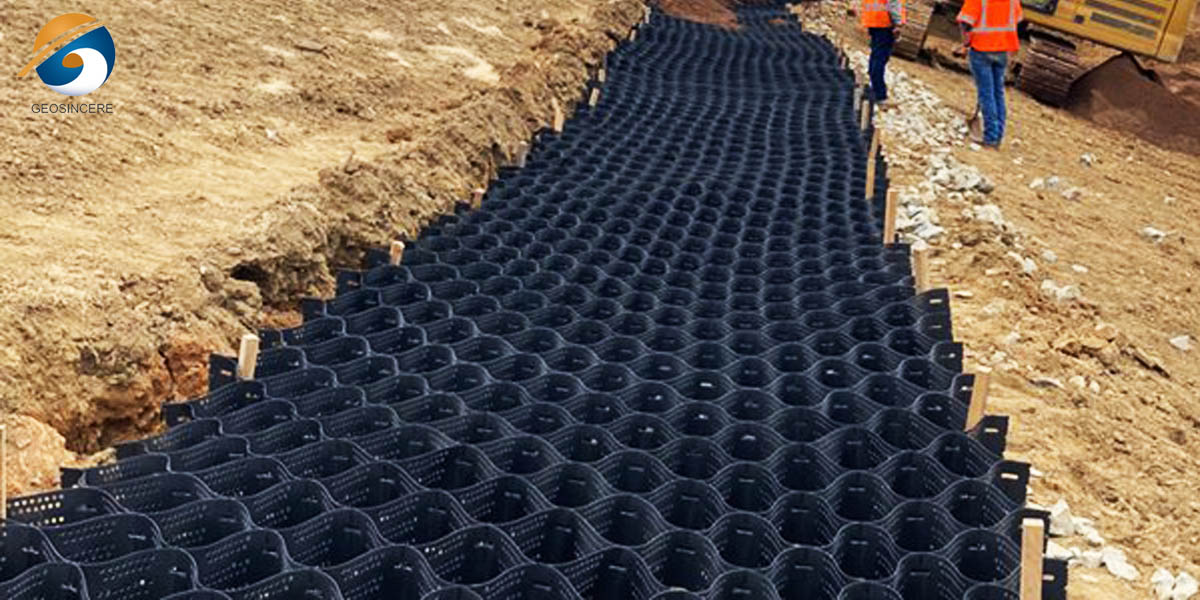
Geocell driveway find their main uses in subgrade reinforcement, base stabilization, and access roads. Driveway geocell assist in better distribution of the loads and also reduce surface deformation, thus, making pavements last longer.
4.2 Slope Protection and Embankments
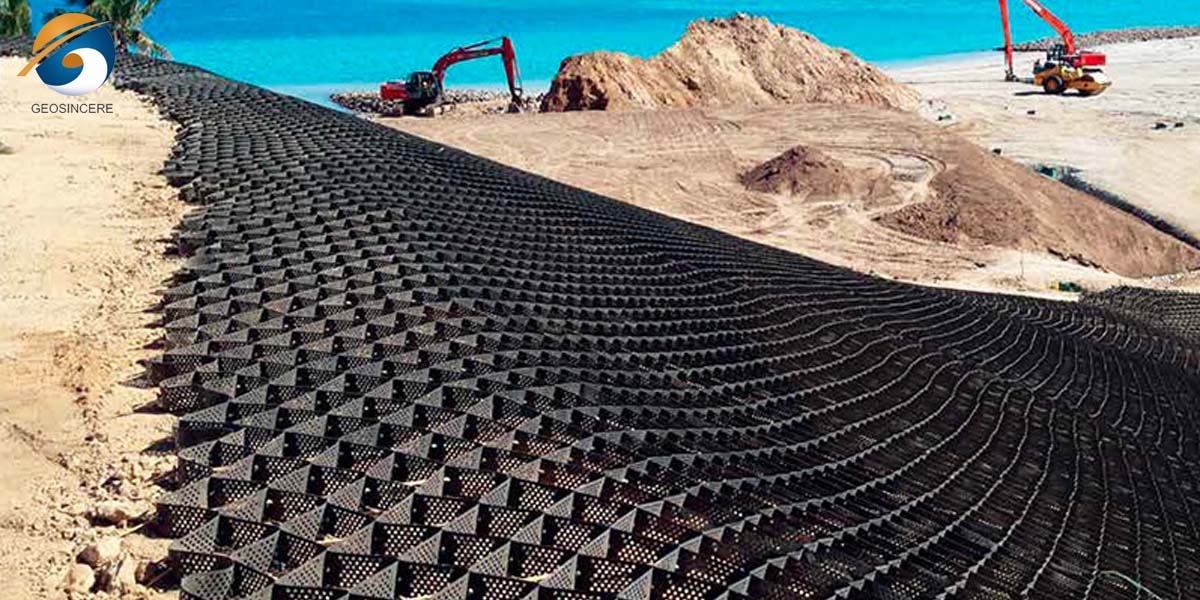
Geocell for slope protection offer surface stabilization and control of erosion on the slopes. The vegetation is grown with a filling of soil inside them, which, in turn, helps with the stabilization of the slope in the long run and is environmentally friendly.
4.3 Load Support Platforms
The construction of solid work platforms is the use of geocells in places with heavy static or dynamic loading e.g. container yards, ports, and construction sites.
4.4 Retaining and Reinforced Structures
Geocells filled with aggregate or concrete provide flexible reinforcing solutions that can move slightly with the ground and are therefore more durable than rigid systems.
4.5 Hydraulic and Environmental Engineering
In these cases, the running of a water current, drainage systems, and flood control works require resistance to erosion and the structural integrity of the materials used.
5. Typical Geocell HDPE Specifications
Geocell HDPE come in various designs to match different needs.
Some of the main parameters include:
- Cell Height: Most frequently 50 mm, 100 mm, 150 mm, and 200 mm
- Cell Size: Determined by the distance between welds
- Sheet Thickness: The main factor affecting the sheet's tensile strength and the quality of the weld
- Surface Type: Either smooth or textured
- Perforation: Is an option if drainage or growth of vegetation is desired
In most cases, textured geocells are used for slopes and places which require higher loads because the friction at the interface is better.
6. Geocell HDPE Installation Considerations and Best Practices
6.1 Subgrade Preparation
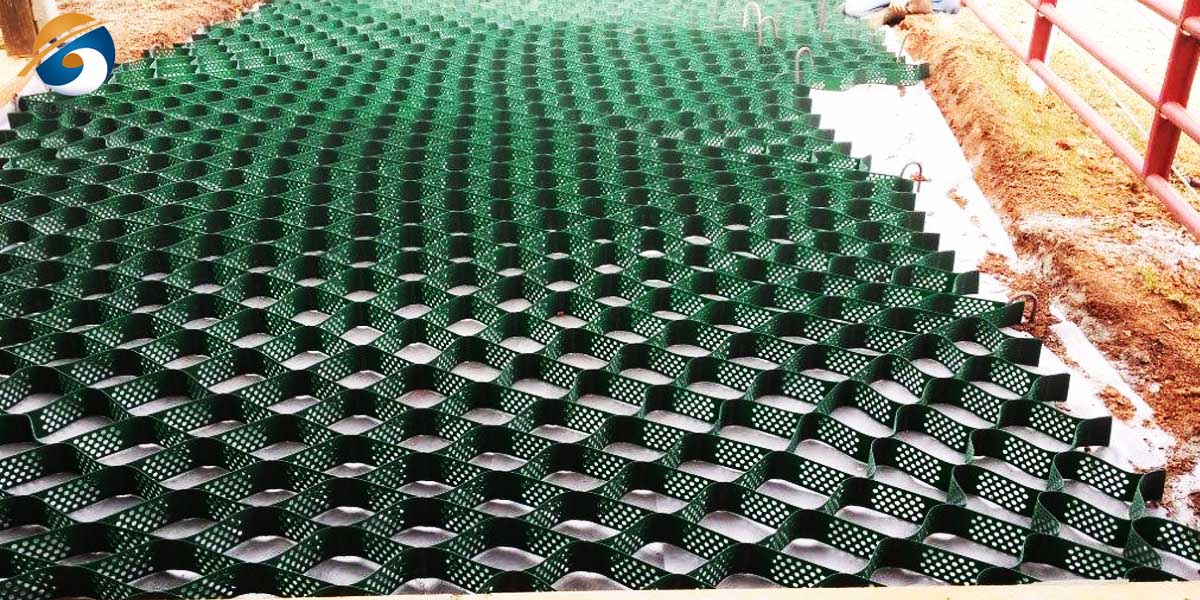
Grading and compaction of the subgrade should be in accordance with the design requirements. If there is a risk of soil contamination, then a geotextile for separation can be used.
6.2 Expansion and Anchoring
Geocell material is unfolded to their full size and fastened to keep the shape while being filled.
6.3 Infill Placement
Only by the most careful way can the infill be placed so as to prevent damage to the cell walls. The decision regarding the infill is made based on structural and environmental criteria.
6.4 Compaction
Plastic geocell is necessary to lay the compaction level gradually up to the desired density with the least effort and best results.
7. Economic Advantages of Geocell HDPE Systems
Using HDPE geocells can be economically beneficial in terms of construction and purchase by:
- Reducing the demand for imported quantity of high-quality aggregates
- Excavation and haulage volumes can be minimized
- The construction time can be shortened
- Lower maintenance requirements over the long-term
This is a bunch of pluses that make the greatest sense in the case of isolated places or those that have a limited material availability.
8. Geocell HDPE Quality Standards and Manufacturing Control
The production of HDPE geocells typically follows the internationally recognized test methods, such as the ASTM and ISO standards for properties-treatment tensile strength, weld integrity, and durability.
At GEOSINCERE Geosynthetics, the quality control is executed based on:
- Consistency of raw materials
- Welding quality
- Dimensional accuracy
- Product traceability
Consistent manufacturing processes are key to the reliable performance of the product under real use conditions.
9. Geocell HDPE Sustainability and Environmental Considerations
HDPE geocell systems are environmentally friendly construction solutions as they help minimize negative impacts on nature through different ways.
9.1 Reduced Use of Natural Aggregates
By confining infill materials, geocells improve their performance. In this way, the projects can use local soil or lower quality aggregate. Hence, there is less extraction of natural stone and its transportation over long distances.
9.2 Lower Carbon Footprint in Construction
Geocell systems contribute to lowering the carbon footprint in construction works. They do this mainly by reducing the need for deep excavation and thick aggregate layers, which results in lower fuel consumption for material production, transport, and placing.
9.3 Support for Vegetation and Ecological Integration
Geocells filled with soil offer a solid, stable base for plants to grow on slopes and embankments. In this way, they help with natural surface protection and the visual aspect is more harmonious with the surrounding environment.
9.4 Effective Erosion Control
The cellular configuration restricts soil movement and surface water flow, so it helps with erosion control due to rain, flowing water, or wind in bare areas.
9.5 Reduced Land Disturbance
Geocell installation usually needs less earthwork compared to traditional methods, thus the ground condition remains unchanged and the environmental impact is minimal.
9.6 Material Durability and Long Service Life
Geocells made of HDPE are highly durable since they are resistant to the deteriorative effect of chemicals and micro-organisms. Hence, they won't require frequent maintenance or replacement, which is a great sustainable feature of long-lasting infrastructure.
10. Selecting the Right Geocell HDPE Supplier
Here are some criteria for selecting a geocell supplier:
- Experience in manufacturing and production capabilities
- Quality and control of the material
- Adherence to standards and regulations
- Technical assistance and expertise
- Knowledge in export and logistics
A dependable supplier should be more of a technical partner than a mere product vendor.
Conclusion
Geocell HDPE has come to play a key role in the construction of infrastructures especially for its geotechnical reinforcement in soil stabilization, reduction of materials consumption and flexibility in the implementations of constructions at difficult site conditions.
Familiarizing themselves with the concept, operation, and installation procedures of geocell systems, allow stakeholders of the project to gradually achieve a goal of heroically lasting, environmentally friendly, and high performing infrastructures.
Shandong Geosino New Material Co., Ltd. (GEOSINCERE Geosynthetics) is committed to the idea that fundamentally correct and reliable engineering on one side and continuous strict quality control in manufacturing on the other form the basis of long-term project success.


