What Are the Advantages of Geogrid?
Product Definition
Geogrid is a polymer-based geosynthetic material engineered with an open grid structure to reinforce soil and aggregate systems. It improves load distribution, enhances shear resistance, and increases long-term stability in civil, transportation, and environmental engineering projects.
Technical Parameters and Specifications
Geogrid performance is defined by mechanical strength, aperture geometry, and long-term durability. Typical engineering parameters include:
Raw Material: Polypropylene (PP), High-Density Polyethylene (HDPE), Polyester (PET)
Structure Type: Uniaxial, Biaxial, Triaxial
Tensile Strength: 20–200 kN/m (direction-dependent)
Elongation at Maximum Load: ≤ 10%
Aperture Size: 25 × 25 mm to 65 × 65 mm
Creep Reduction Factor: ≥ 1.5
Design Life: ≥ 50 years (soil-buried condition)
UV Resistance Retained Strength: ≥ 70% after 500 hours
Structure and Material Composition
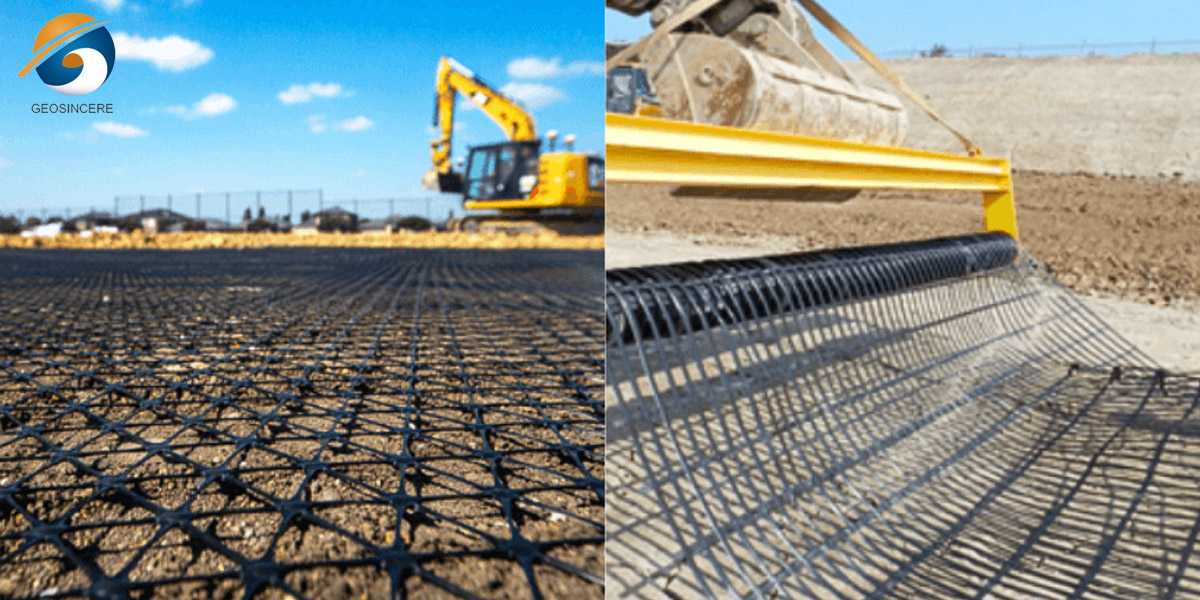
Geogrid is designed with an engineered grid geometry to interlock with soil and aggregates. Its structure consists of:
Load-Bearing Ribs: Primary tensile members transferring stress
Nodes or Junctions: High-strength intersections ensuring load continuity
Apertures: Openings enabling mechanical interlock with fill material
Polymer Matrix: Provides chemical resistance and long-term stability
Manufacturing Process
Engineering Production Steps
Polymer resin selection and blending
Sheet extrusion or yarn coating (depending on type)
Punching or weaving to form grid pattern
Stretching (uniaxial or biaxial orientation)
Heat setting to lock molecular orientation
Quality inspection and roll packaging
Core Equipment and Process Control
High-precision extrusion lines
Automatic stretching and orientation systems
Tensile strength and junction efficiency testers
Dimensional tolerance monitoring equipment
Industry Comparison
| Material | Primary Function | Load Capacity | Typical Use |
|---|---|---|---|
| Geogrid | Reinforcement | High | Roads, retaining walls, slopes |
| Geotextile | Separation & Filtration | Low–Medium | Drainage layers |
| Geocell | Confinement | Medium | Slopes, erosion control |
Application Scenarios
Understanding what are the advantages of geogrid is essential for engineering decision-makers. Typical users include:
Road and highway EPC contractors
Railway and airport infrastructure developers
Retaining wall and slope stabilization engineers
Distributors and importers of geosynthetics
Core Advantages and Engineering Solutions
Improved Load Distribution: Reduces rutting and differential settlement
Enhanced Soil Reinforcement: Increases shear strength of weak subgrades
Material Cost Reduction: Minimizes aggregate thickness requirements
Extended Service Life: Controls deformation under cyclic loading
Risk Warnings and Mitigation Measures
Incorrect orientation → Ensure correct tensile direction placement
Incompatible fill material → Match aperture size to aggregate gradation
UV exposure before burial → Limit on-site exposure time
Under-designed strength → Verify project-specific load calculations
Procurement and Selection Guide
Define structural function (reinforcement or stabilization)
Select geogrid type (uniaxial, biaxial, triaxial)
Confirm required tensile strength
Evaluate soil and aggregate compatibility
Verify long-term creep performance
Check compliance with ASTM / ISO standards
Assess supplier technical support capability
Engineering Case Example
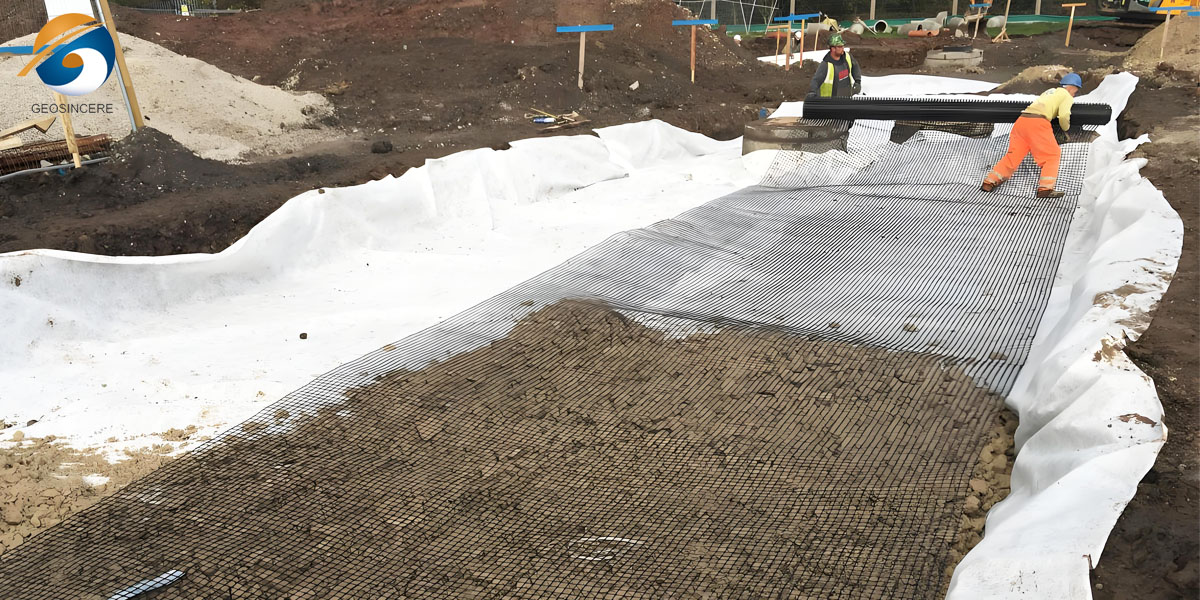
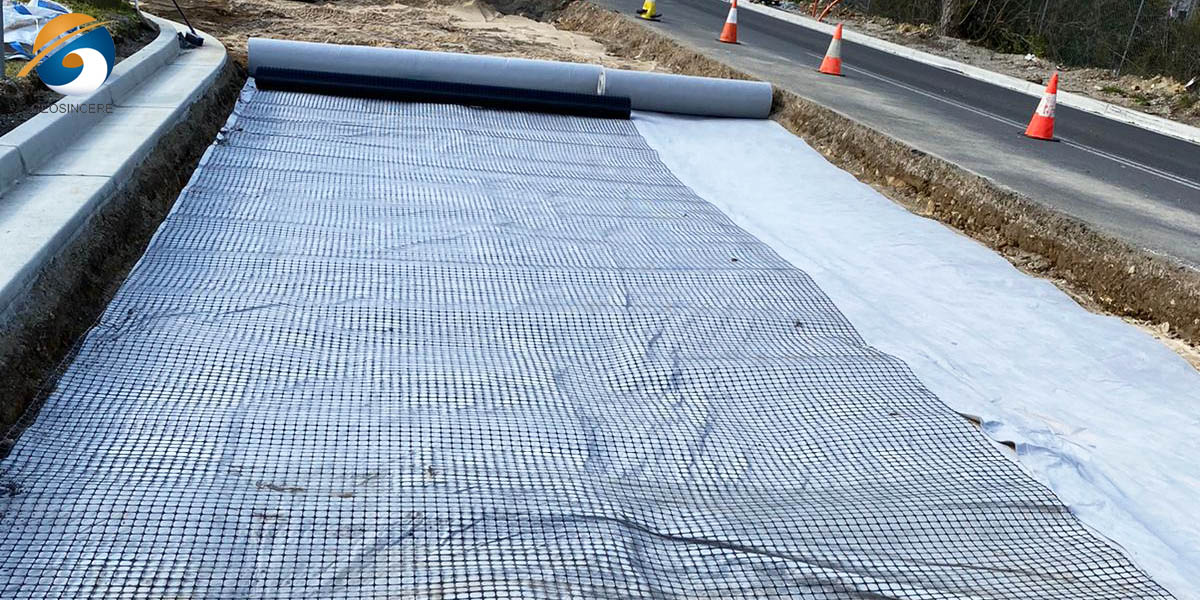
In a highway subgrade improvement project, biaxial geogrid with a tensile strength of 40 kN/m was installed between weak clay subgrade and crushed aggregate. Plate load tests confirmed a 30% reduction in deformation and extended pavement service life under heavy traffic loading.
Frequently Asked Questions (FAQ)
Q1: What are the main advantages of geogrid?
A: Load distribution, reinforcement, and cost efficiency.Q2: Is geogrid suitable for soft soil?
A: Yes, especially for subgrade stabilization.Q3: How long does geogrid last underground?
A: Typically over 50 years.Q4: Can geogrid replace traditional base layers?
A: It can reduce but not fully replace them.Q5: What is the difference between uniaxial and biaxial geogrid?
A: Tensile strength directionality.Q6: Does geogrid resist chemicals?
A: Yes, polymers offer high chemical resistance.Q7: Is geogrid difficult to install?
A: No, standard site crews can install it.Q8: Can geogrid be used on slopes?
A: Yes, particularly uniaxial geogrids.Q9: Does aperture size matter?
A: Yes, it affects interlock performance.Q10: Is testing required before installation?
A: Project-specific verification is recommended.
Call to Action
For detailed technical datasheets, engineering calculations, or project-specific quotations, please submit a formal inquiry to obtain geogrid samples and specification support.
E-E-A-T Author Credentials
This content is prepared by civil engineering professionals with more than 15 years of experience in geosynthetic material design, infrastructure reinforcement projects, and international EPC technical consulting, ensuring accuracy and practical relevance.