

Complete Guide to Geomembrana in HDPE
In the field of geotechnical and environmental engineering, synthetic liners are crucial for containment, isolation, and protection, among other things. Geomembranes, which are waterproof plastic sheets, have been one of the most important synthetic liners. Specifically, a number of major advancements in geomembranes have been made by using High-Density Polyethylene (HDPE) as the raw material. The keyword “geomembrana in HDPE” (HDPE geomembrane) directly points to that very important product. This piece of writing is aimed at educating you about the composition, manufacturing, characteristics, uses, distribution, and future trend of HDPE geomembranes giving you the highlights of why this material has been constantly selected as the best one for very demanding containment projects all over the world.
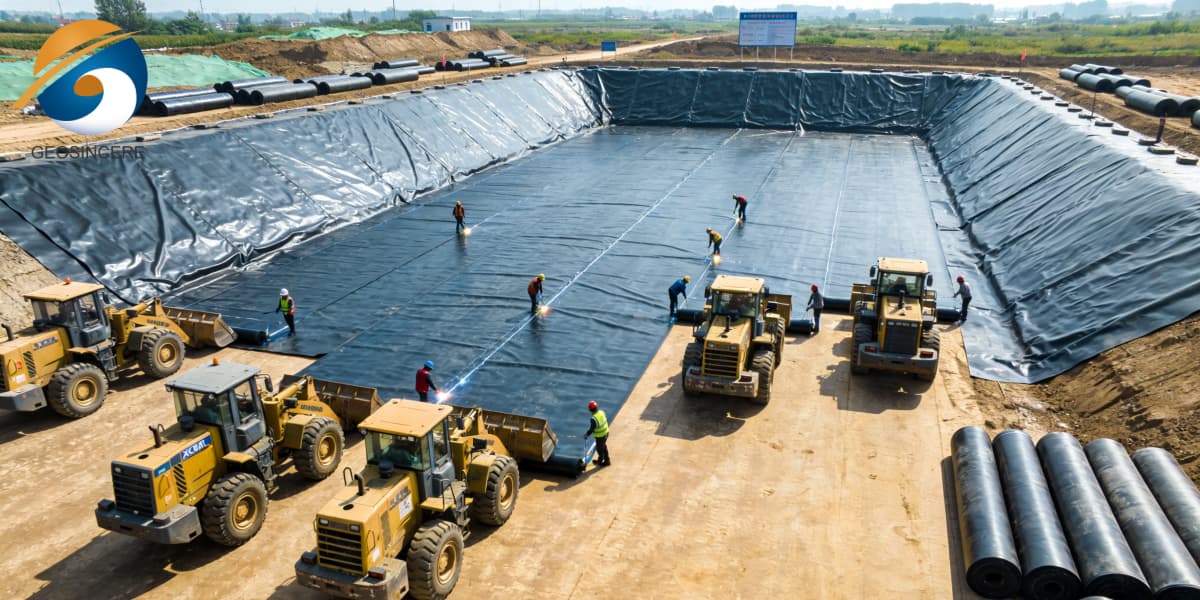
1. Composition and Manufacturing of Geomembrana in HDPE
Geomembranes in HDPE are formed from high-density polyethylene resin, a type of thermoplastic polymer sourced from petroleum. "High density" signifies a linear molecular structure with little or no branching, which naturally yields a material characterized by high tensile strength and resistance to chemicals. Apart from the base resin, other essential additives are also introduced to increase the performance and durability of the final product:
1.1 Carbon Black (2-3%)
Geomembrane in hdpe is the main material responsible for UV resistance, thus the prevention of polymer degradation due to solar radiation.
1.2 Antioxidants
During the production process by high temperature (processing stabilizers) and the long-term service life of the polymer (long-term thermal stabilizers), the antioxidants act as the polymer stabilizers.
1.3 UV Stabilizers
To fight the photo-oxidative degradation, carbon black and UV stabilizers are combined.
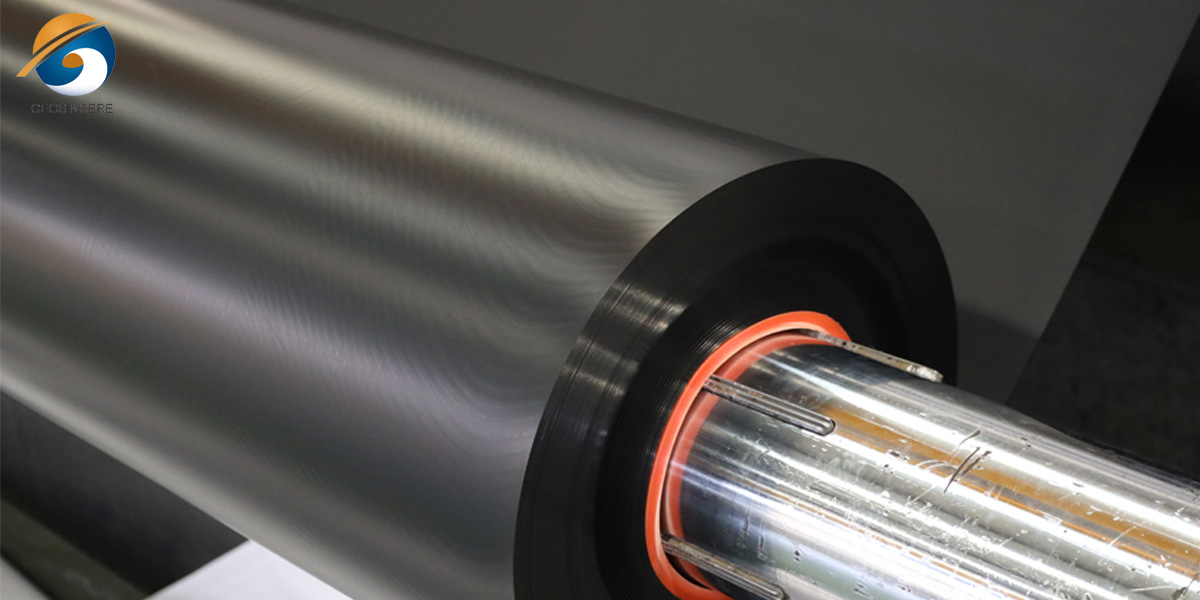
In extrusion, the geo membranes material is heated to melting, mixed with some additives, and then forced through a mold (die) which shapes it to a continuous form, which is then cooled after exiting from the mold. One of the extrusion methods is known as flat die extrusion where the mold is flat and the polymer sheet is created consecutively on the rollers. Besides, blown film extrusion has also been widely used and it starts with polymer being pushed through a circular die and then a bubble is inflated to a bubble and upon cooling it turns into a seamless tube that can be slit open into a sheet. This procedure enables to make even broader sheets and there will be less need for seams in the field. The typical thickness range of HDPE geomembranes is from 0.75 mm (30 mil) to 3.0 mm (120 mil), and even thicker films are available for special purposes.
2. Geomembrana in HDPE Key Properties and Advantages
HDPE geomembrane has gained such widespread usage to possess an incredible blend of material properties:
2.1 Excellent Chemical Resistance
HDPE is a very stable and chemically resistant material that can withstand a wide array of chemicals such as those in the category of strong acids, bases, and salts. Therefore, hdpe liner is commonly used for garbage landfill (leachate containment), industrial waste lagoons, and chemical storage tanks.
2.2 High Tensile Strength and Durability
The geomembranes of HDPE have such high yield strength and breaking strength that they are very resistant to being punctured and to cracking due to stress (if properly designed, manufactured, and installed) The material is also so durable that it can be used for a very long time.
2.3 Low Permeability
The major purpose of any hdpe geomembrane is to act as a barrier. HDPE features an extremely low water vapor transmission level thus it can be used as a top hydraulic barrier.
2.4 Cost-Effectiveness
When compared to other types of liners such as PVC or EPDM, HDPE can usually offer a lower price per unit area for primary containment applications, particularly in huge projects.
2.5 UV and Weather Resistance
Carbon black and stabilizers are both present in HDPE which makes it very resistant to UV rays and other natural elements but only when the exposure time is limited (It is not recommended to be directly exposed permanently without any kind of protection).
3. Geomembrana in HDPE Primary Applications in Environmental and Geotechnical Engineering
The “geomembrana in HDPE” has been a reliable solution across a diverse group of sectors:
3.1 Waste Management:
3.3.1 Landfills (Municipal Solid Waste, Hazardous Waste)
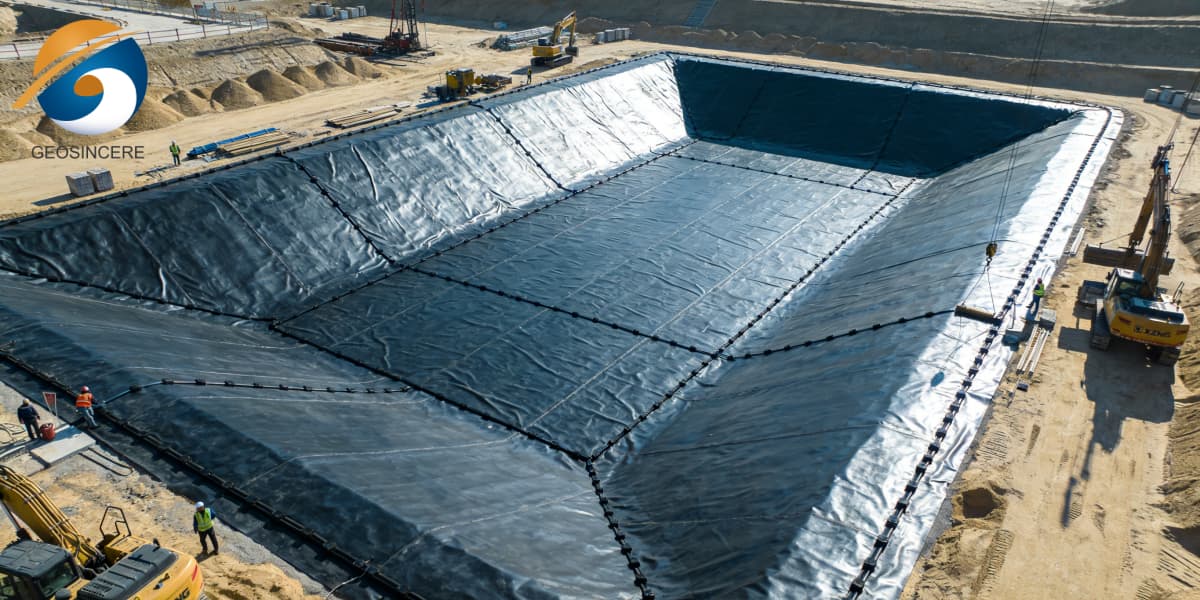
HDPE liners serve as the primary and secondary components in the composite liner systems at the bottom and sides of landfills to stop the infiltration of leachate into groundwater. Additionally, hdpe geomembrana is employed for final capping to reduce infiltration.
3.3.2 Leachate Ponds and Lagoons
Any pond in which landfill leachate is temporarily stored and treated is, without exception, lined with HDPE.
3.2 Water and Fluid Containment:
3.2.1 Potable Water Reservoirs
HDPE has been approved for use in the lining of reservoirs, thereby safeguarding drinking water from contamination and decreasing seepage loss.
3.2.2 Wastewater Treatment Ponds
Treatment plants use HDPE linings for various facilities such as aeration basins, anaerobic digesters, and storage ponds.
3.2.3 Agricultural and Aquaculture Ponds
These are used for irrigation canals, decorative ponds, and fish/shrimp farming ponds in order to effectively retain water.
3.3 Mining and Industrial:
3.3.1 Heap Leach Pads
In the extraction of metals, the pads on which cyanide or acid solutions are applied to ores for the recovery of gold, copper, and other metals are lined with HDPE, which acts as a barrier against the highly corrosive pregnant solutions.
3.3.2 Tailings Impoundments
Mining by-products disposal structures are equipped with high density polyethylene geomembrane for their environmentally safe operation.
3.3.3 Secondary Containment
Fuel tank spill containment, chemical plant areas, and industrial facilities for soil and groundwater pollution prevention.
3.3.4 Civil Engineering
In the construction of tunnels and roads as well as the lining of canals to prevent water loss, moisture barriers made of HDPE are used.
4. Geomembrana in HDPE Installation, Seaming, and Quality Assurance
Installation is arguably as important for an HDPE geomembrane's performance as its manufacture.
4.1 Subgrade Preparation
The soil below (subgrade) should be very carefully prepared: it should be compacted, smooth; there should be no points from sharp rocks or debris; no vegetation, all these to reduce the chances for a puncture and to also provide uniform support.
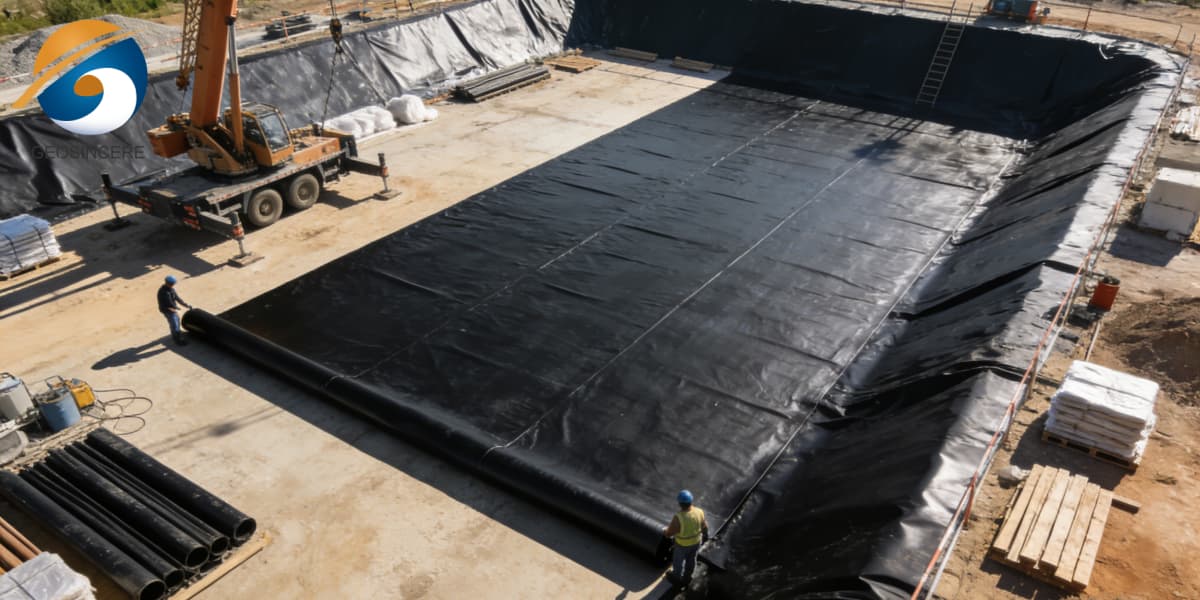
4.2 Panel Deployment
Geomembrane rolls are spread out on the subgrade that has been made ready and, if necessary, fastened in an anchor trench at the top of slopes.
4.3 Seaming
It is by far the most important and demanding component of an installation that it physically connects two panels with the exterior of the panel being continuous and impermeable . The main techniques are:
4.4 Fusion Wedge Welding
Two overlapped sheets' surfaces are each molten by a hot wedge, and one immediately pressed to the other by rollers. This completes a dual-track seam. A nondestructive test is enabled by an air channel between the tracks.
4.5 Extrusion Welding
A layer of molten polymer is extruded along the edge of two overlapped sheets or into a lap configuration, bonding the two. This method is very adaptable and is frequently used for details, patches, and tricky shapes.
4.6 Quality Control (QC) and Quality Assurance (QA) A comprehensive QA/QC program should definitely not be compromised. It covers:
- Destructive Testing: Testing in laboratories for shear and peel on field-seamed-coupon samples.
- Nondestructive Testing (NDT):Pressure testing of the air is done on wedge seams with double tracks to verify that the air channel has no leaks. Spark Testing (for conductive liners) and Vacuum Box Testing are used for extrusion fillet seams and patches.
4.7 Third-Party Monitoring
Many times, independent QA specialists take care of material certification, and final inspection and oversee the whole process.
5. Geomembrane in HDPE Limitations and Considerations
HDPE geomembranes, although very effective, still have a few limitations that can only be resolved at the design stage:
5.1 Stress Cracking Resistance (SCR)
Highly stress cracking resistant materials, as determined by ASTM D5397, are required in specific areas but some grades of HDPE under long-term tensile stress and at the presence of certain chemicals may develop brittle cracking.
5.2 Thermal Expansion/Contraction
Due to HDPE's large coefficient of thermal expansion, the design needs to allow for the dimensional variations present during the day as well as those that occur throughout the seasons by providing slack at the time of installation and Retailed a suitable holding method.
5.3 Seaming Sensitivity
Not only do perfect, continuous seams need highly trained welders to be created but they also require favorable weather conditions since factors like wind, moisture and temperature may affect the seam quality.
5.4 Puncture Vulnerability:
The liner can still be punctured by sharp objects in the subgrade or by overlying materials (such as drainage gravel) even though it is a strong one. Two common solutions are proper subgrade preparation and the use of protective geotextiles.
6. The Future and Innovation
Developments of “geomembrana in HDPE” have never stopped:
6.1 Better Resins:
Innovative bimodal and multimodal HDPE resins are developed for superior SCR, tensile properties, and enhanced flexibility even at low temperatures.
6.2 Textured Surfaces:
Textured (structured) HDPE geomembranes have surfaces co-extruded to provide increased friction. The use of textured Geomembranes has become a standard practice for steep slope applications like landfill walls since the interface shear strength with soils and geosynthetics is improved.
6.3 Sustainability:
Following the idea of a circular economy, researchers are increasingly focusing on recycling post-industrial and post-consumer HDPE geomembrane materials although an intrinsically service life of several decades makes these products a green containment material.
6.4 Smart Liners:
An advanced development area is the incorporation of monitoring devices, for instance, electrically conductive grids to leak detection.
Conclusion
“Geomembrana in HDPE” is certainly not just a plastic sheet. It is one of the most highly engineered and quality-controlled geosynthetic products, which, on a grand scale, silently and strongly forms the barrier that protects our environment. HDPE geomembrane’s successful track record of performance is largely due to the synergy of material science, manufacturing excellence, and precision in installation. They have the capability to prevent groundwater contamination underneath the biggest landfills, help mining activities to recover minerals, and secure water supplies for the entire world. Being knowledgeable about its characteristics, uses as well as strictly following critical installation procedures is highly important for engineers, project owners and environmental authorities. With technologies constantly evolving to overcome the present constraints and extend the product functionalities, Shandong Geosino New Material Co., Ltd. (GEOSINCERE Geosynthetics) geomembrana in HDPE is set to continue leading the field of containment solutions, thereby, becoming a fundamental support of global infrastructure and environmental preservation for many years to come.
Choose a reliable supplier to quote price for you :
Shandong Geosino New Material Co., Ltd. (GEOSINCERE Geosynthetics) has been keeping on investing in technological innovation, manufacturing facilities improvement and turnkey engineering abilities. We have invested 10 million dollars into our manufacturing factory which is equipped with state-of-the-art automatic production lines to manufacture high quality HDPE geomembranes and other geosynthetics with optimized processes. Our extensive lines of geosynthetics products are well known for their ensured quality, high performance, excellent durability and best cost effectiveness.
GEOSINCERE brand HDPE geomembranes and other geosynthetics products and solutions can meet your requirements by our solid technologies, innovative engineering solutions and excellent customer services. GEOSINCERE always tries our best to solve the most complex civil, mining and environmental challenges with our innovative and high performance geosynthetic products. Quality assurance, factory price and fast delivery time are our competitive advantages.
GEOSINCERE has been keeping on investing in technological innovation, manufacturing facilities improvement and turnkey engineering abilities. We have invested 10 million dollars into our manufacturing factory which is equipped with state-of-the-art automatic production lines to manufacture high quality Geosynthetic clay liners and other geosynthetics with optimized processes. Our extensive lines of geosynthetics products are well known for their ensured quality, high performance, excellent durability and best cost effectiveness.


