

Comprehensive Guide to Geocell for Slope Protection
The stability of slopes is a key issue that impacts civil engineering, environmental management, and construction projects all over the globe. No matter if it is the steep sides of a newly built road, the unstable banks of a river, or the planted slopes of a city’s growth, the problem remains the same: how to stop soil erosion and guarantee stability for a long time. Conventional ways such as concrete retaining walls or riprap are still available options, but these methods have their downsides: they might be expensive, not very adaptable, and can harm the environment. In such a situation, the rise of geosynthetics has changed the game, and among these pioneering solutions, the geocell for slope protection is the one to a large extent, a robust and versatile technology, which has got people talking the most. The following points talk about the principles, advantages, uses and the installation stages of the geocell system and thereby, they demonstrate the reasons why it has been widely accepted as the first choice in the field of contemporary, eco-friendly hillside stabilization.
1. Understanding Geocell for Slope Protection Technology
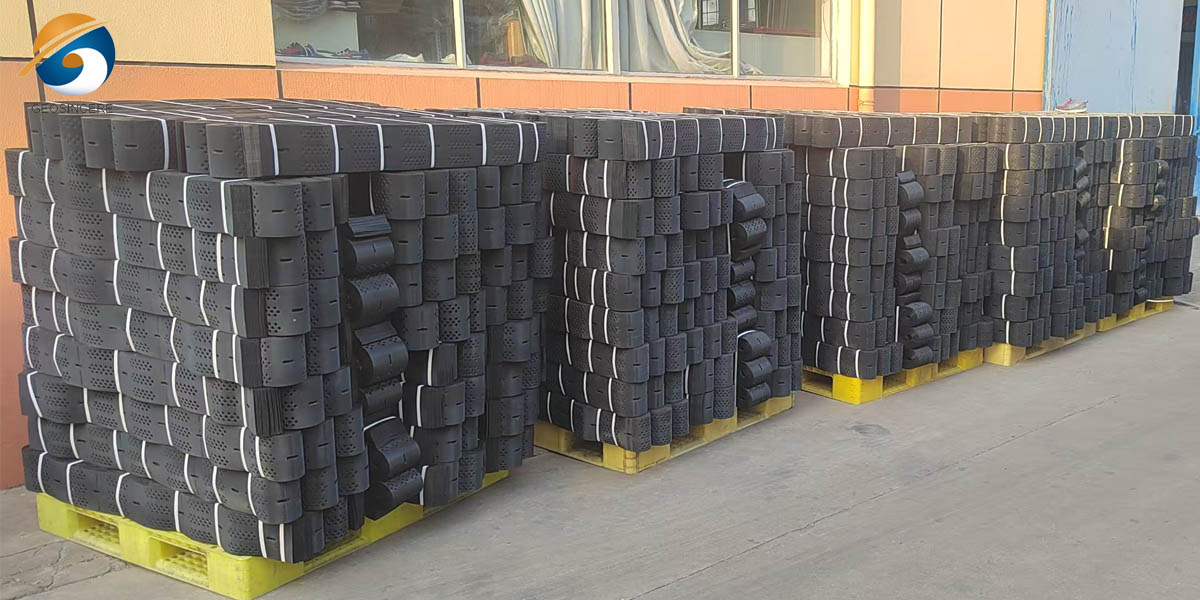
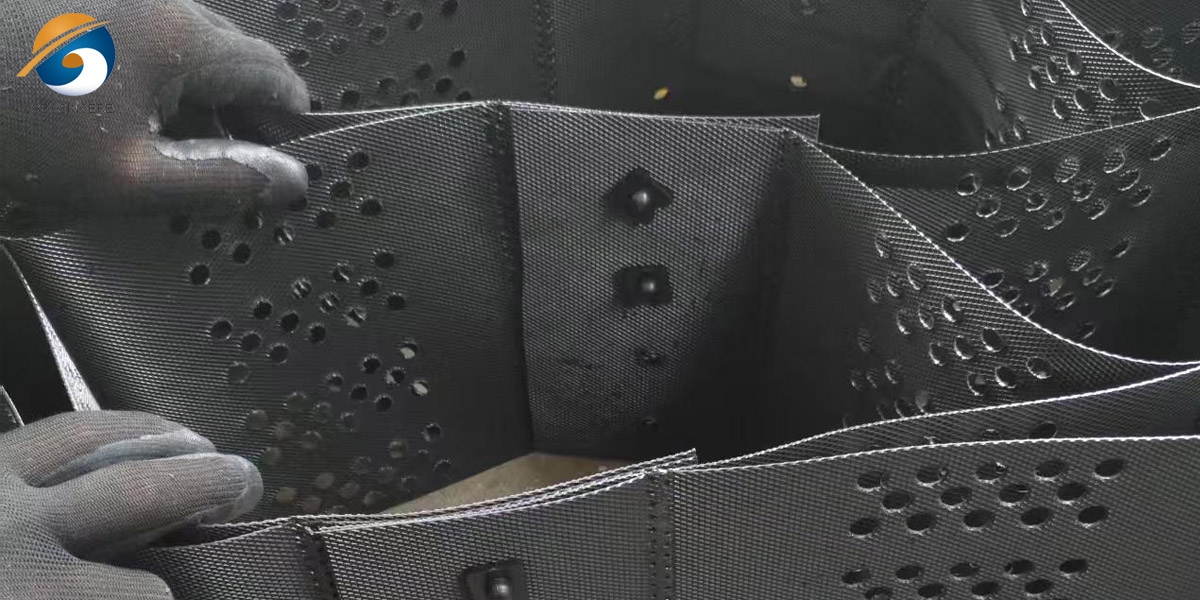
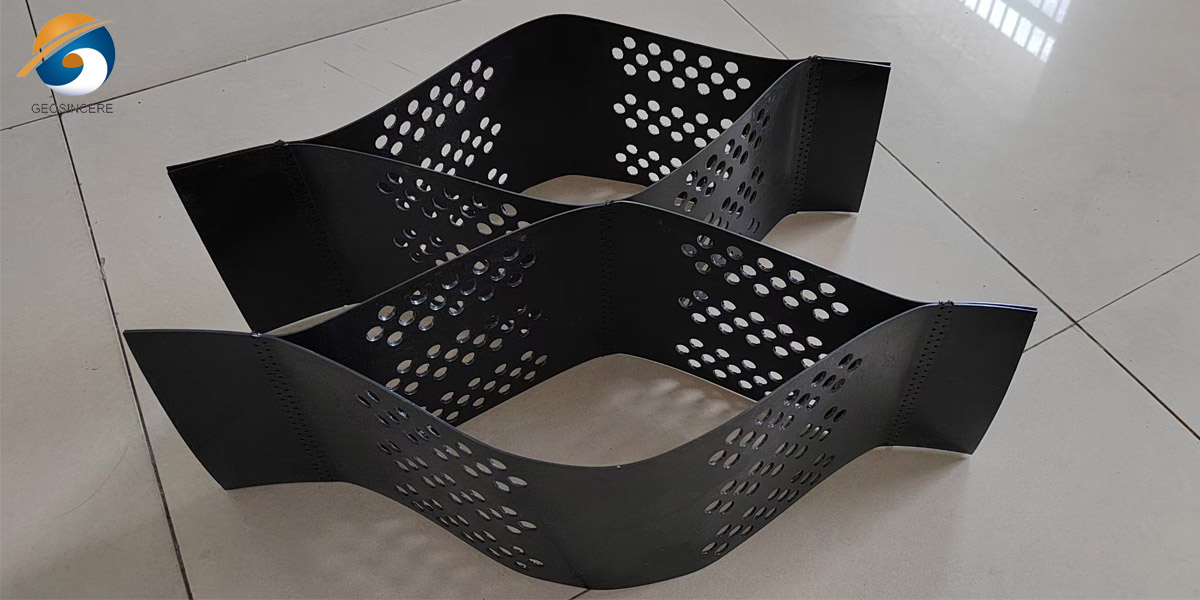
A geocell is a 3-dimensional, honeycomb-like framework that is made of the strips of polymer materials—usually high-density polyethylene (HDPE) or novel polymeric alloys (NPA)—which are welded together in a series of cells. When the geocell slope protection is expanded at the location, they form a permeable, flexible mattress that can be stuffed with the soil, sand, gravel, or concrete that is locally available.
The underlying concept of a geocell for slope protection lies in the idea of confinement. If the infill made of loose materials is placed in the cellular pockets of the geocell slope stabilization, theoretically, not only the shear strength but also the stiffness of the resulting material (which is now a composite one) will be increased significantly. The confinement achieved in this way restricts the lateral movement of the infill under load thus the creation of a mat which is at the same time rigid and flexible and capable of distributing loads over a larger area is in fact this mat. This method works mostly for slope protection as it does so by opposing the forces of gravity that pull down the slope and those of water that have an erosive effect and in this way it stops the occurrence of surface sloughing, shallow slips and rill formation.
2. The Critical Need for Slope Protection
Protection of the slopes against failure is not only an engineering problem with negative consequences, but failure also significantly endangers the safety of humans, their built environment, and the natural environment. The fundamental causes of instability in slopes are:
2.1 Water Erosion
Firstly, the rainfall and surface runoff eat into the soil particles which results in the creation of tiny furrows: rills and gullies that can grow very quickly, thus a thorough slope structure becomes eroded from below.
The worse the erosion gets, the more irregular the slope surface becomes and consequently the rainfall velocity also increases and so does the soil displacement.
2.2 Gravitational Forces
Not only that weight of the mass of soil is the source of the driving downward force but it should also be noted that this force has to be counteracted by soil's shear strength on steep slopes, the equilibrium is very unstable.
The moment when the forces that drive the phenomena overwhelm the forces that resist, even by a very small margin, a slope can undergo quick and extensive deformation or can fall down.
2.3 Saturation
It is when the pores of the soil become filled with water that the pore water pressure rises and the soil loses its cohesive strength thereby causing slips and landslides.
The drop in shear strength that goes hand in hand with this is especially risky during long-lasting storms when the continuous wetting of slopes drives them over their stability limit.
2.4 Vegetation Loss
The roots of the plants are natural binders that hold the soil together. At the same time, deforestation and fire can take away this natural reinforcement thus making slopes more vulnerable.
When the biological anchoring is gone the soil surface becomes exposed and delicate which in turn causes both the speeding up of erosion as well as the chances of slope failure.
Traditional solutions often only treat these problems after they have happened and sometimes even use brute force to do so. Nevertheless, geocell slope introduce a very different approach altogether, one that is proactive and smarter and that actually works along with soil mechanics to satisfy the increasing demand for a long-lasting and stable solution - they not only reinforce the slope structure but also reduce erosion and improve stability in the long run.
3. Key Advantages of Using Geocell for Slope Protection
There are a wide range of benefits that lead to the widespread use of slope protection geocell as a replacement product for more traditional one:
3.1 Superior Erosion Control
One of the main components of the cellular structure is that it splits the water flow over the erosion surface so its velocity and, therefore, also energy of erosion decreases. Besides that, the vegetated surface that is usually developed in the geocell grid for slope protection (when topped with soil and seeded) plays even more important role in erosion resistance through root reinforcements and canopy protection.
3.2 Exceptional Load Distribution
Geocell erosion control change loose, unconfined, granular infill into one coherent, semi-rigid platform. This composite layer, thus, is able to distribute both vertical and lateral loads very well, and this is the main reason why such a layer is perfect to be used for the stabilization of slopes under roads, railways, and buildings.
3.3 Flexibility and Durability
On top of that, hdpe geocell is made of long-lasting polymers that are also free from the risk of chemical and biological attacks. They are not fragile, which is why they are able to resist differential settlement and cyclic loading (e.g., traffic or freeze-thaw cycles) without destruction, which is a major problem of stiff concrete systems.
3.4 Cost-Effectiveness
Most of the cost savings on materials are due to the fact that infill can be used on-site or can be taken from the local area, thus, the need for the transport of high-quality aggregates is very much reduced. Moreover, the use of lighter machines and the faster work at the site then leads to cheaper labor and machinery costs.
3.5 Environmental Sustainability
Besides that, geocell material is free from the risk of environmental degradation and they also promote nature restoration and biodiversity. It is a permeable product that is very friendly to the groundwater flow, and its use also leads to the decrease of carbon emissions that are generated by the process of quarrying, transport of rock, and production of concrete.
3.6 Rapid Installation
The process to install plastic geocell does not require a lot of time and is very simple. After the panels are transported to the location, all that needs to be done is expansion, anchorage, and filling. The present installation speed not only shortens the project periods but also lessens the impact on the surroundings.
4. Applications of Geocell for Slope Protection
The versatility of the geo geocell for slope protection is evident in its wide range of applications:
4.1 Highway and Railway Embankments:
The geocell system is used to stabilize steep, artificial slopes thus preventing them from sliding and guaranteeing the safety of the transportation corridor.
Geocells in road construction do more than that; Geocell road also spread out the pressure uniformly over the slope surface, thus, lessening the differential settlement and providing maintaining structural integrity in the long-term.
4.2 Channel and Riverbank Protection:
The application of geocell hdpe is lining the banks of rivers and channels in order to prevent the scouring and erosions caused by the flowing water that might have a negative impact on the infrastructures and land adjacent to the waterway.
Best geocell confinement not only strengthens soil retention but it also makes it possible for the establishment of vegetation, which in turn, becomes even more resistant to hydraulic forces.
4.3 Landfill Capping Systems:
Landfill final cover slopes are stabilized by the use of geocells thus preventing erosion and waste materials containment.
Geocell slope erosion control work toward the stability of the capping system by decreasing surface runoff speed and fixing protective soil layers that are already there.
4.4 Coastal and Shoreline Protection:
Powerful waves and storm surges are prevented to affect the dunes and bluffs through the use of Armor.
Cells constituting their structure can absorb the force of both the preceding wind and waves, thus, geocell solutions are a flexible but durable barrier that helps nature’s movement of the coast.
4.5 Mine Reclamation and Landscaping:
Re-greening and stabilizing slopes at mining sites or in urban landscaping projects, creating stable and aesthetically pleasing gradients.
Geocells for erosion control support the establishment of vegetation on harsh or loose soil profiles, enabling long-term ecological restoration and erosion control.
5. Geocell for Slope Protection Installation Methodology: A Step-by-Step Process
The successful implementation of a geocell for slope protection project hinges on a systematic installation process:
5.1 Site Preparation
The slope surface must be graded to the desired profile. All vegetation, debris, and loose material should be removed to create a firm, stable subgrade.
5.2 Geocell Placement and Expansion
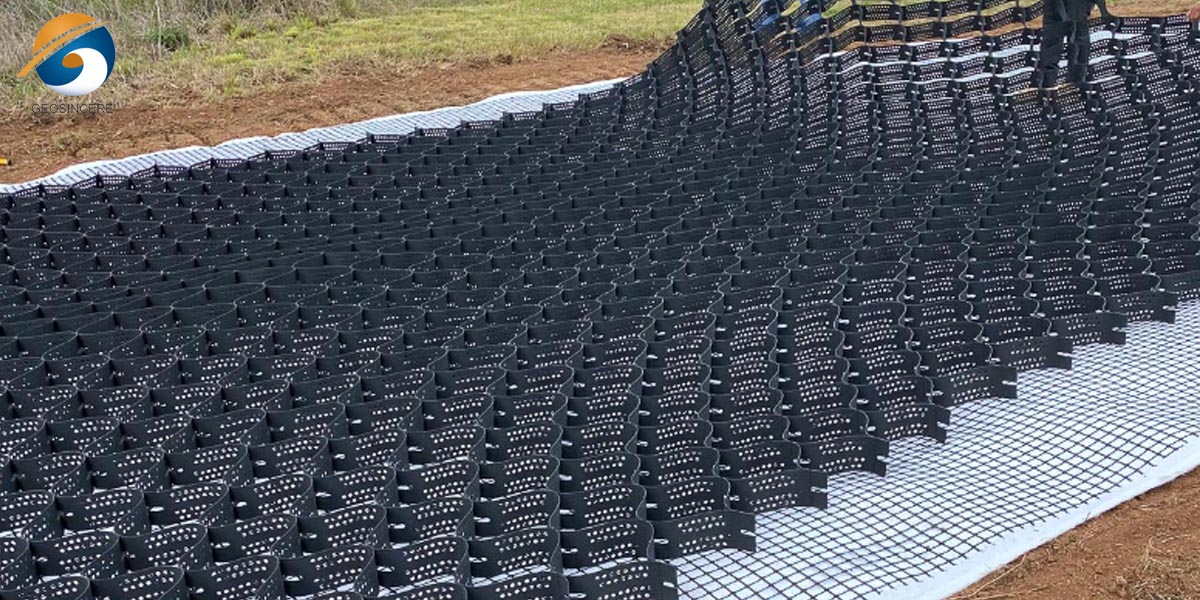
The collapsed geocell panels are transported to the site and laid out perpendicular to the slope's direction. They are then expanded and stretched to their full cellular configuration.
5.3 Anchoring
The expanded geocell mattress is securely anchored to the slope using J-shaped or U-shaped anchor pins. This prevents the system from shifting during the filling process and under service loads.
5.4 Filling the Cells
The cells are filled with the specified infill material—typically using a lightweight excavator or a conveyor system. The filling process should be done from the top down to ensure stability. It is crucial to overfill the cells slightly and then compact the infill to achieve optimal confinement and density.
5.5 Surface Finishing and Revegetation
Once filled, the surface can be leveled. If the design calls for it, a layer of topsoil can be added, and the slope can be hydroseeded or planted to establish a protective vegetative cover.
Conclusion
In the ongoing quest to build a safer and more resilient infrastructure while minimizing environmental impact, the geocell for slope protection stands out as a paradigm of geotechnical innovation. It moves beyond the limitations of rigid, monolithic structures, offering a solution that is at once strong, flexible, economical, and eco-friendly. By harnessing the principle of cellular confinement, it empowers engineers to transform weak, unstable soils into robust, engineered structures capable of withstanding the tests of time and nature. The system's ability to utilize local materials, promote vegetation, and adapt to challenging site conditions makes it uniquely suited for the sustainable development goals of the 21st century. As our understanding of soil mechanics deepens and the demand for sustainable practices grows, the role of the geocell will undoubtedly continue to expand, solidifying its position as an indispensable tool in the modern engineer's arsenal for mastering the challenges of slope stability and erosion control.
Firstly, Pick a Dependable Geocell for Slope Protection Vendor to Give you a Price Quote:
GEOSINCERE Geosynthetics is a company that keeps on improving its technology, factories, and overall engineering main-to-turn capability. We have put 10 million dollars into our production plant which is outfitted with ultra-modern fully automated production lines to produce top-quality HDPE geomembranes and other geosynthetics with efficient processes. Our wide range of geosynthetics products are famous for guaranteed quality, high-performance, long service life, and excellent cost effectiveness.
GEOSINCERE brand HDPE geomembranes and other geosynthetics products and solutions will be able to satisfy your needs through our strong technologies, creative engineering solutions, and perfect customer services. GEOSINCERE is always willing to provide innovative and high-performance geosynthetic products to solve the most complex challenges in civil, mining, and environmental fields. Good quality at a reasonable from the factory price and quick delivery time are the features that distinguish us from our competitors.
Shandong Geosino New Material Co., Ltd.(GEOSINCERE Geosynthetics)keeps on supporting research and development in the field of geomembrane, manufacturing, and installation services. We are able to provide the customers with the most complete lines of HDPE liners and geotextiles that can be used in projects such as civil engineering, Gold mining, Copper Mining, Road Construction, Landfill, Agriculture, and aquaculture engineering applications.


