8 oz Non Woven Geotextile Landscape Fabric
Manufacturing Process and Engineering Control
Standard Manufacturing Workflow
Polypropylene resin melting and fiber extrusion
Fiber cutting and carding to form web layers
Multi-layer web stacking for target mass control
Needle punching for mechanical bonding
Thermal stabilization (optional, application-dependent)
Rolling, inspection, and packaging
Key Manufacturing Equipment
PP fiber extrusion lines
Carding and cross-lapping machines
High-density needle punching looms
Heat setting ovens
Quality control testing systems
Product Definition: 8 oz Non Woven Geotextile Landscape Fabric
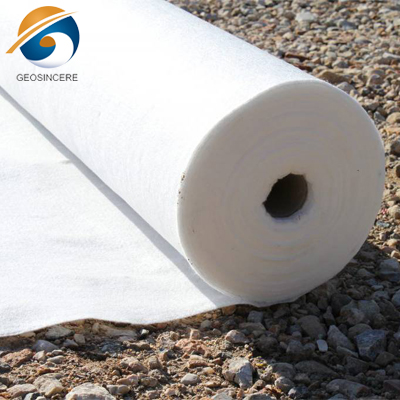
8 oz non woven geotextile landscape fabric is a needle-punched polypropylene geosynthetic with a nominal mass of 8 ounces per square yard. It is designed for filtration, separation, drainage, and soil stabilization in landscaping and light civil engineering applications, balancing permeability with mechanical durability.
Technical Parameters and Specifications
The following parameters represent commonly accepted engineering ranges for 8 oz non woven geotextile landscape fabric used in commercial and infrastructure projects.
| Property | Typical Value | Test Standard |
|---|---|---|
| Mass per Unit Area | 270–285 g/m² (8 oz/yd²) | ASTM D5261 |
| Thickness | 1.6–2.0 mm | ASTM D5199 |
| Tensile Strength (MD/CD) | ≥ 500 / 400 N | ASTM D4632 |
| Elongation at Break | 50–80% | ASTM D4632 |
| CBR Puncture Strength | ≥ 1,200 N | ASTM D6241 |
| Permittivity | 1.5–2.0 sec⁻¹ | ASTM D4491 |
| Apparent Opening Size (AOS) | 0.15–0.30 mm | ASTM D4751 |
| Material | 100% Polypropylene | - |
Structure and Material Composition
The performance of 8 oz non woven geotextile landscape fabric is derived from its fiber structure and bonding method.
Polypropylene Staple Fibers: Chemically inert and resistant to biological degradation
Needle-Punched Matrix: Creates a three-dimensional pore network for filtration and drainage
Isotropic Fiber Orientation: Ensures uniform strength in both machine and cross directions
Thermally Stabilized Surface: Improves dimensional stability during installation
Manufacturing Process and Engineering Control
Standard Manufacturing Workflow
Polypropylene resin melting and fiber extrusion
Fiber cutting and carding to form web layers
Multi-layer web stacking for target mass control
Needle punching for mechanical bonding
Thermal stabilization (optional, application-dependent)
Rolling, inspection, and packaging
Key Manufacturing Equipment
PP fiber extrusion lines
Carding and cross-lapping machines
High-density needle punching looms
Heat setting ovens
Quality control testing systems
Industry Comparison
8 oz non woven geotextile landscape fabric is often compared with woven geotextiles and lighter non woven grades.
| Criteria | 8 oz Non Woven | Woven Geotextile | 4–6 oz Non Woven |
|---|---|---|---|
| Primary Function | Filtration & separation | Reinforcement | Weed control |
| Permeability | High | Medium | Very high |
| Puncture Resistance | Medium-High | High | Low |
| Installation Tolerance | Good | Moderate | Limited |
| Typical Applications | Landscaping, drainage | Road reinforcement | Decorative landscaping |
Application Scenarios
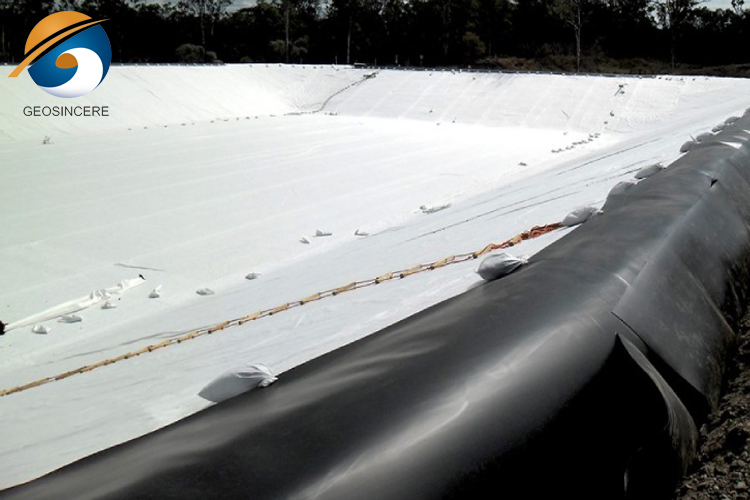
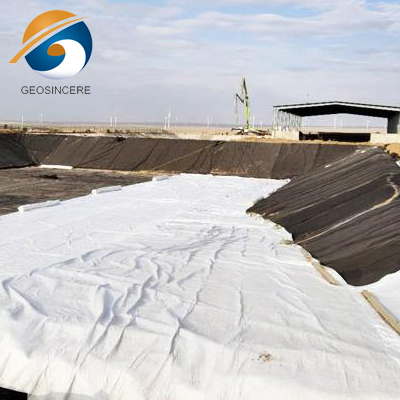
8 oz non woven geotextile landscape fabric is widely used by distributors, EPC contractors, and landscaping engineers.
Landscape bed separation and weed suppression
Drainage trenches and French drains
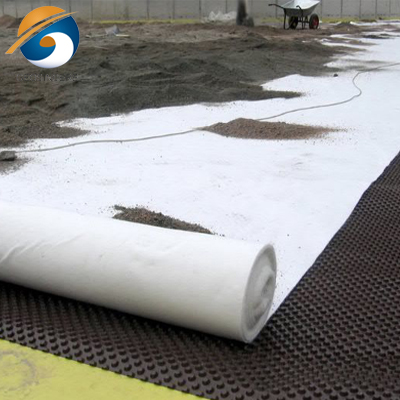
Hardscape base separation under pavers
Retaining wall backfill filtration
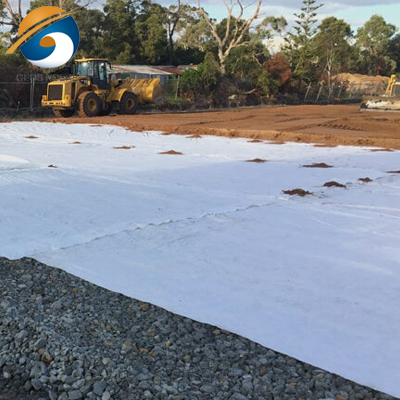
Light road and pathway subgrade separation
Erosion control under riprap
Core Engineering Pain Points and Solutions
Soil migration into aggregates: Controlled pore size prevents fines loss
Drainage clogging: Needle-punched structure maintains long-term permeability
Fabric tearing during installation: Balanced tensile and elongation properties
Short service life: UV-stabilized polypropylene improves durability
Risk Warnings and Mitigation Recommendations
Extended UV exposure without cover may reduce strength
Improper overlap can compromise separation performance
Sharp aggregates may require protective bedding layers
Incorrect fabric weight selection can lead to failure
Installation must follow project-specific specifications
Procurement and Selection Guide
Define application purpose: filtration, separation, or drainage
Confirm required fabric weight and strength class
Check compliance with ASTM or EN standards
Review manufacturer test reports and certifications
Evaluate roll width, length, and packaging logistics
Request samples for site handling evaluation
Assess supplier quality consistency and production capacity
Engineering Application Case
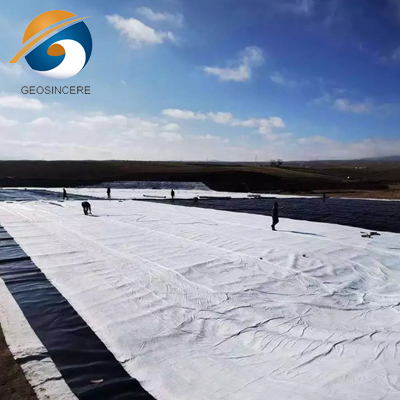
In a commercial landscape renovation project, 8 oz non woven geotextile landscape fabric was installed beneath decorative gravel pathways. The fabric effectively separated subgrade soil from aggregate, improved drainage performance, and reduced long-term maintenance caused by weed growth and surface deformation.
FAQ: 8 oz Non Woven Geotextile Landscape Fabric
What does “8 oz” refer to? Fabric weight per square yard.
Is it suitable for drainage applications? Yes, due to high permittivity.
Can it replace woven geotextile? Not for high-load reinforcement needs.
Is it UV resistant? Temporarily, but covering is recommended.
What overlap is recommended? Typically 300–450 mm depending on soil.
Can it be cut on site? Yes, using standard utility tools.
Does it allow water to pass through? Yes, while retaining soil particles.
Is it environmentally safe? Polypropylene is chemically inert.
What roll sizes are common? Widths from 1–6 m, custom lengths.
Is engineering approval required? Recommended for commercial projects.
Request Quotation or Technical Documentation
Procurement managers and engineering consultants may request pricing, detailed technical datasheets, or material samples of 8 oz non woven geotextile landscape fabric for project evaluation and specification.
E-E-A-T: Authoritative Technical Background
This article is prepared by professionals with experience in geosynthetics manufacturing, civil engineering applications, and international B2B supply, ensuring accuracy, engineering relevance, and procurement-focused insights.