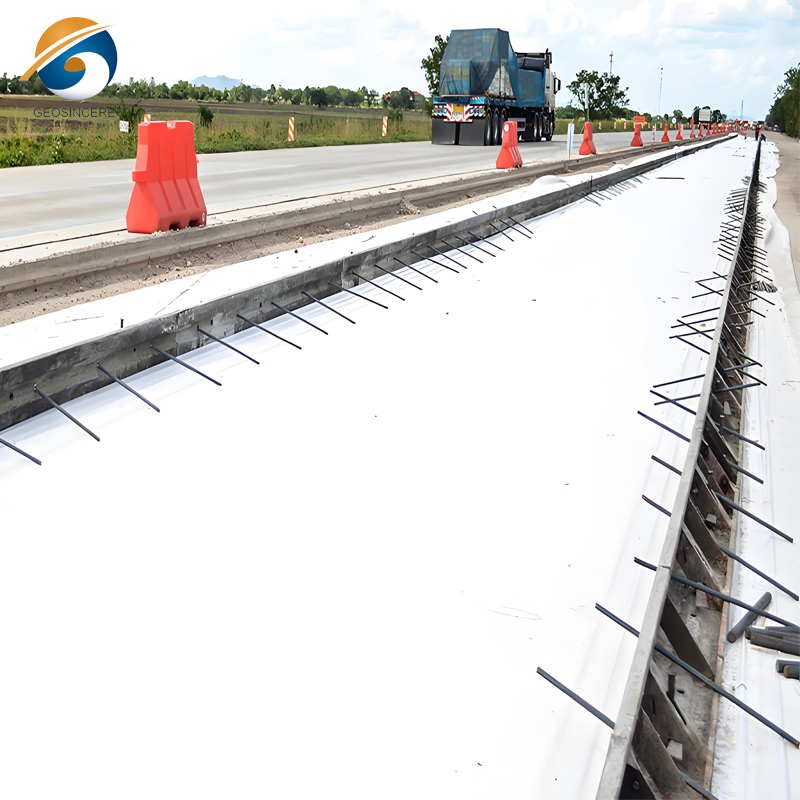
Drainage Geotextile Fabric
Structure and Material Composition
Polymer Fibers: High-tenacity PP/PET with controlled filament fineness.
Fabric Type: Needle-punched nonwoven or monofilament woven.
Fiber Orientation: Randomly oriented or structured for directional strength.
Bonding Mechanism: Mechanical entanglement through needle punching or thermal bonding.
Functional Architecture: Filtration layer + drainage transmission layer.
Product Definition
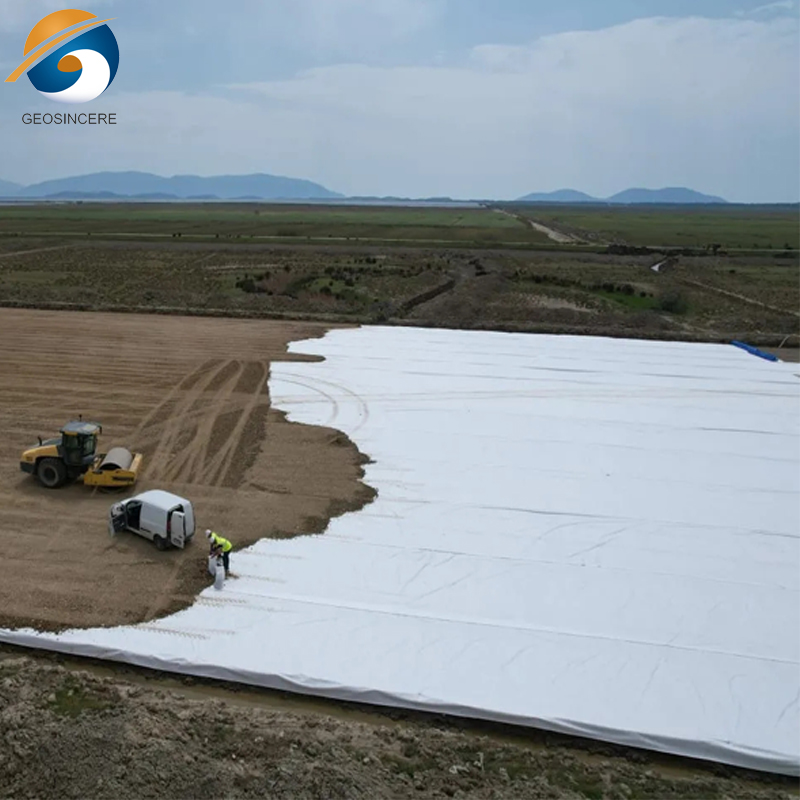
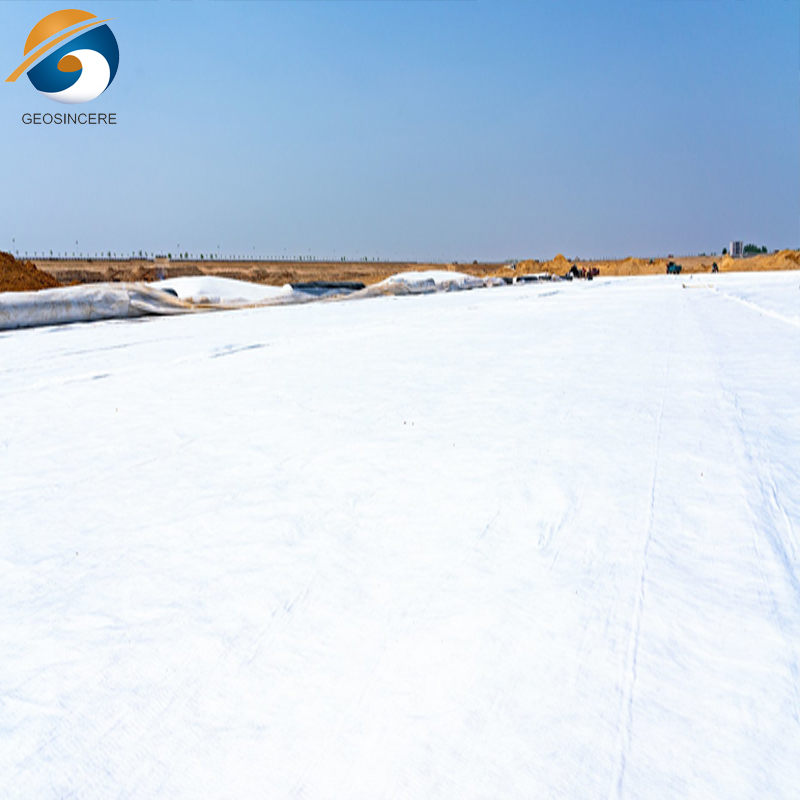
Drainage geotextile fabric is a permeable polymer textile designed to provide filtration, separation, and drainage in civil engineering works. It maintains hydraulic conductivity, prevents soil particle migration, and protects subgrade structures under long-term static and dynamic loads.
Technical Parameters and Specifications
Raw Material: Polypropylene (PP) or Polyester (PET)
Unit Weight: 100–800 g/m²
Thickness at 2 kPa: 0.8–6.5 mm
Vertical Permeability: 1×10⁻² to 1×10⁻¹ m/s
Cross-plane Water Flow Rate: 100–300 L/m²·s
Grab Tensile Strength: 8–30 kN/m
Elongation at Break: 50–80%
CBR Puncture Strength: 1.5–7.0 kN
UV Resistance: ≥70% strength retention after 500 h exposure
Standard Roll Width: 2–6 m (customizable)
Structure and Material Composition
Polymer Fibers: High-tenacity PP/PET with controlled filament fineness.
Fabric Type: Needle-punched nonwoven or monofilament woven.
Fiber Orientation: Randomly oriented or structured for directional strength.
Bonding Mechanism: Mechanical entanglement through needle punching or thermal bonding.
Functional Architecture: Filtration layer + drainage transmission layer.
Manufacturing Process
Engineering Steps
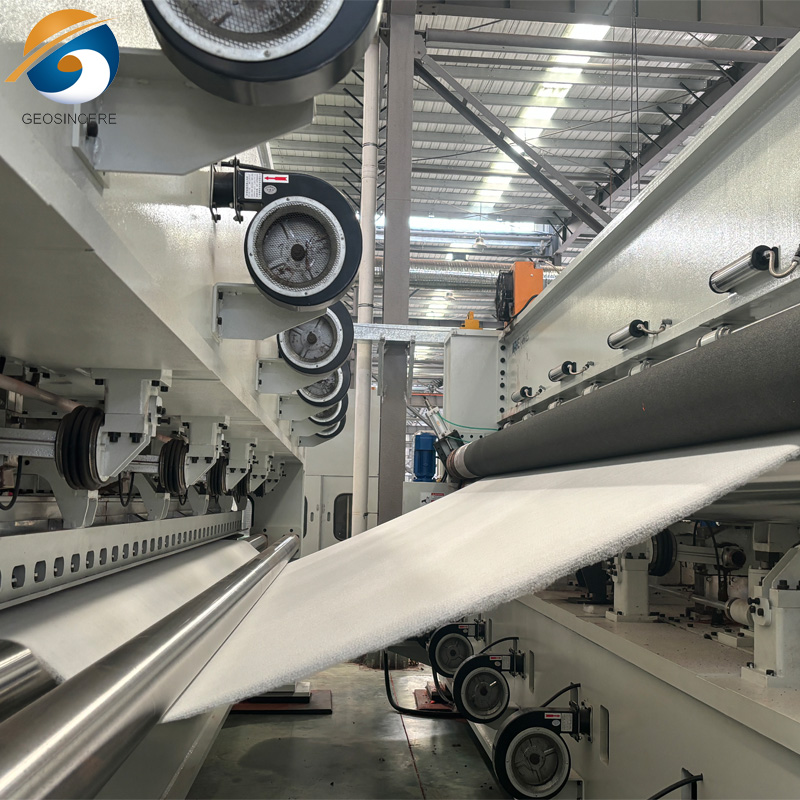
Polymer drying and melting using precision extruders.
Fiber extrusion through spinnerets to create continuous filaments.
Web formation using air-laying and cross-lapping systems.
Needle punching to achieve mechanical bonding and structural integrity.
Thermal bonding or calendering to stabilize thickness and pore-size distribution.
Edge trimming, rolling, and automated dimension inspection.
Laboratory testing for tensile strength, permeability, and pore-size conformity.
Key Production Equipment
Extrusion spinning line
Cross-lapper system
Needle-punching machine
Thermal bonding calender
Online weight/thickness inspection system
Critical Process Controls
Uniform fiber distribution to ensure stable hydraulic performance.
Needle density and penetration depth for strength optimization.
Thermal stabilization to improve creep resistance and dimensional stability.
Industry Comparison
| Material Type | Drainage Capability | Soil Retention | Cost Range | Service Life |
|---|---|---|---|---|
| Drainage Geotextile Fabric | High | High | Medium | 20–50 years |
| Geonets | Very High | Medium | High | 30–70 years |
| Sand Filters | Medium | High | High | 15–40 years |
| Gravel Drainage Layers | Medium | Medium | High | 10–30 years |
Application Scenarios
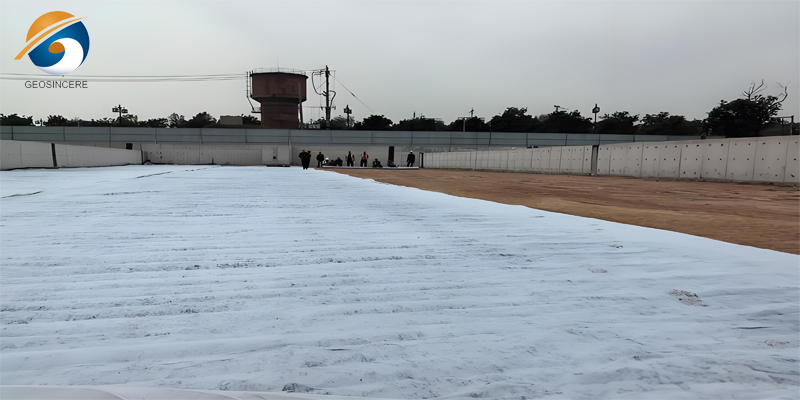
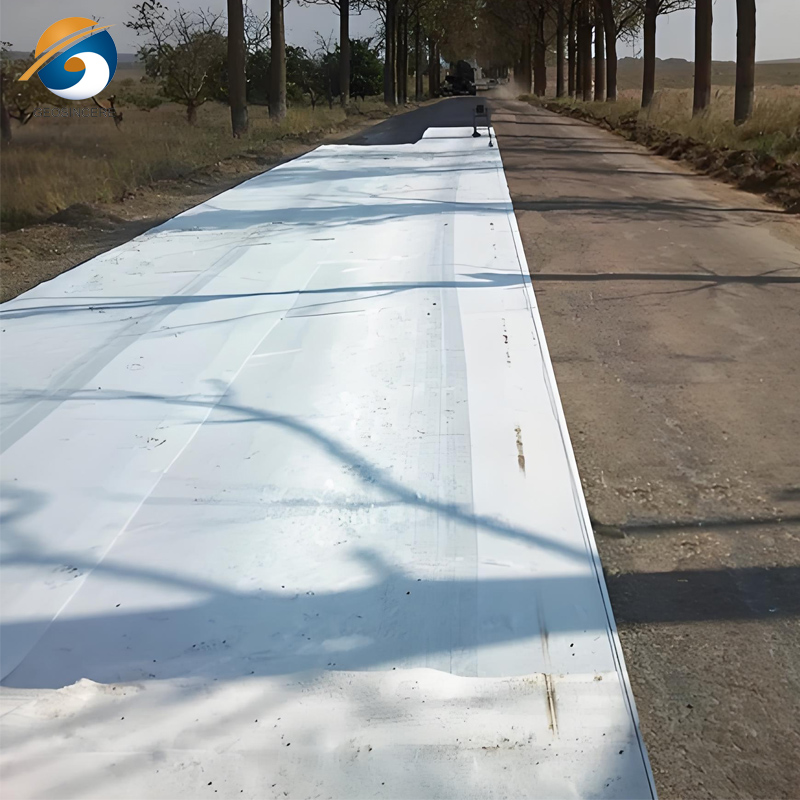
Highway and road subgrade drainage systems
Railway ballast filtration and stabilization
Retaining wall and slope drainage
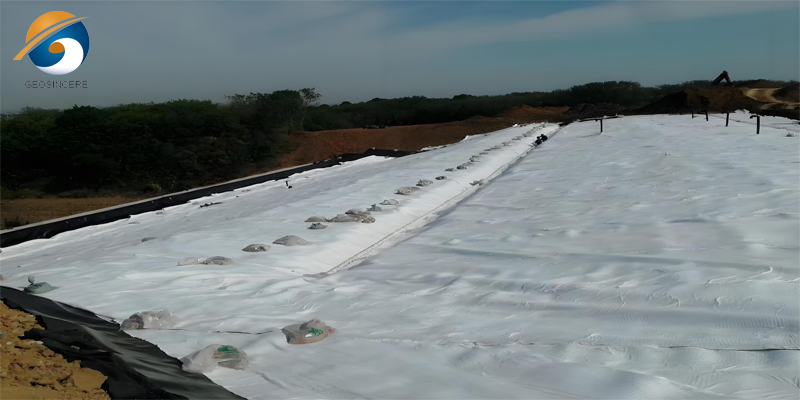
Landfill leachate collection and protection layers
Tunnel and underground structure drainage
Sports field and landscape engineering
Pipeline and foundation protection
Core Pain Points & Engineering Solutions
Soil clogging: Controlled pore-size distribution prevents long-term clogging.
Insufficient drainage rate: High transmissivity ensures uninterrupted water discharge.
Installation damage: High CBR puncture resistance reduces tearing and stress failure.
UV exposure risk: Stabilized PP/PET ensures higher tolerance during outdoor installation.
Deformation under load: High elongation absorbs settlement and reduces structural stress.
Risk Warnings & Mitigation Measures
Insufficient overlap may lead to soil intrusion—use 30–45 cm overlaps.
Avoid sharp aggregate contact; apply a 5 cm sand protection layer.
Minimize sunlight exposure; install within one week of delivery.
Select correct geotextile type to match hydraulic design.
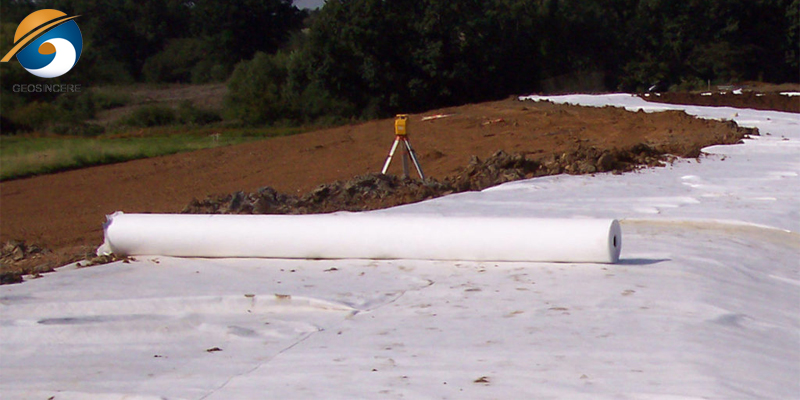
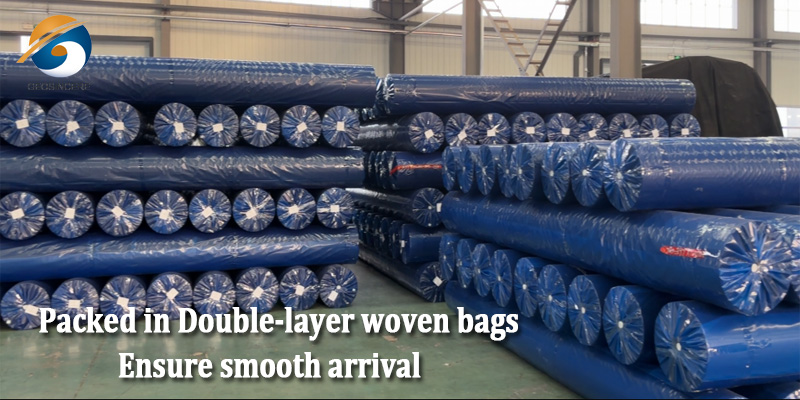
Use mechanical lifting equipment to prevent roll-edge tearing.
Procurement and Selection Guide
Define required drainage flow and hydraulic gradient.
Determine fiber type (PP or PET) based on chemical environment.
Evaluate tensile strength to withstand installation stress.
Check O95/O50 pore-size compatibility with project soil gradation.
Select roll width to reduce seams and installation labor.
Review UV stabilization requirements.
Request ASTM/ISO test reports and QA documentation.
Confirm long-term creep resistance and durability criteria.
Engineering Case Study
High-Rainfall Expressway Subgrade Drainage, Southeast Asia (2024)
A 220 km expressway experienced severe water accumulation and rutting due to 3,000 mm annual rainfall. A 350 g/m² drainage geotextile fabric was installed beneath the base course. After 12 months, water discharge increased by 42%, rutting depth decreased by 28%, and maintenance intervals were significantly reduced.
FAQ
Primary function? Drainage and filtration.
Woven vs nonwoven? Woven for strength; nonwoven for permeability.
Chemical resistance? PP/PET withstand common acids and bases.
Compatible with geomembranes? Yes, widely used as a drainage/filtration layer.
Available roll widths? 2–6 m.
Typical lifespan? 20–50 years.
Can it replace gravel filters? In many applications, yes.
Critical tests? Tensile, CBR, permeability, pore size.
Installation temperature? Recommended above –10°C.
How to reduce clogging? Select appropriate pore-size relative to soil distribution.
Request Quote or Technical Documents
Engineering teams may request product specifications, test reports, or drainage geotextile fabric samples by submitting project details including required flow rate, soil type, installation depth, and design life.
E-E-A-T Author Statement
This article is prepared by a senior geosynthetics engineering consultant with over 10 years of experience in geotextile R&D, quality assessment, and project implementation across road, landfill, mining, and drainage infrastructure projects. Familiar with ASTM and ISO geotextile standards.