Landfill Pond Liner HDPE Impermeable Membrane
Manufacturing Process and Engineering Controls
Production Flow
Resin and additive incoming inspection
Automated gravimetric batching
High-temperature blown film or flat die extrusion
Online thickness scanning
Surface texturing (if required)
Controlled cooling and stress relief
Roll winding with tension control
Factory mechanical and index testing
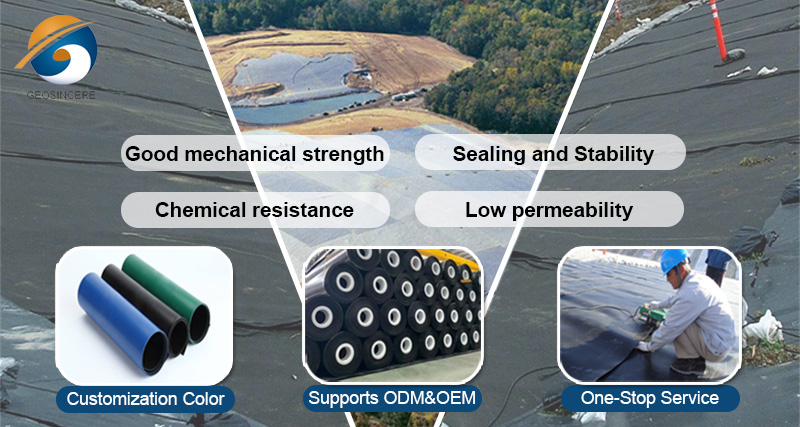
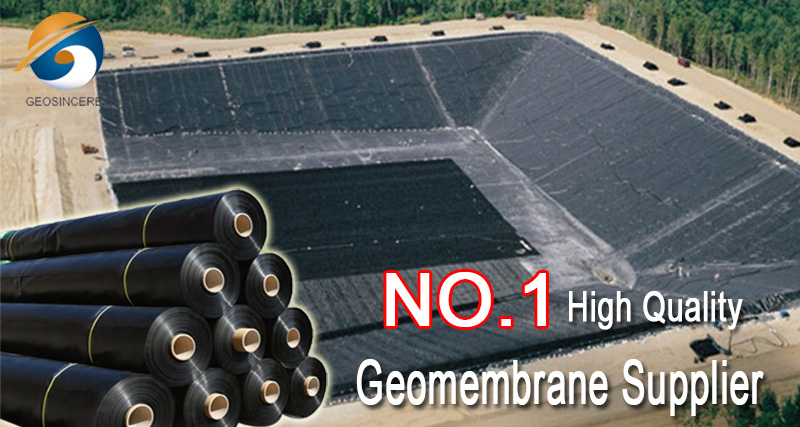
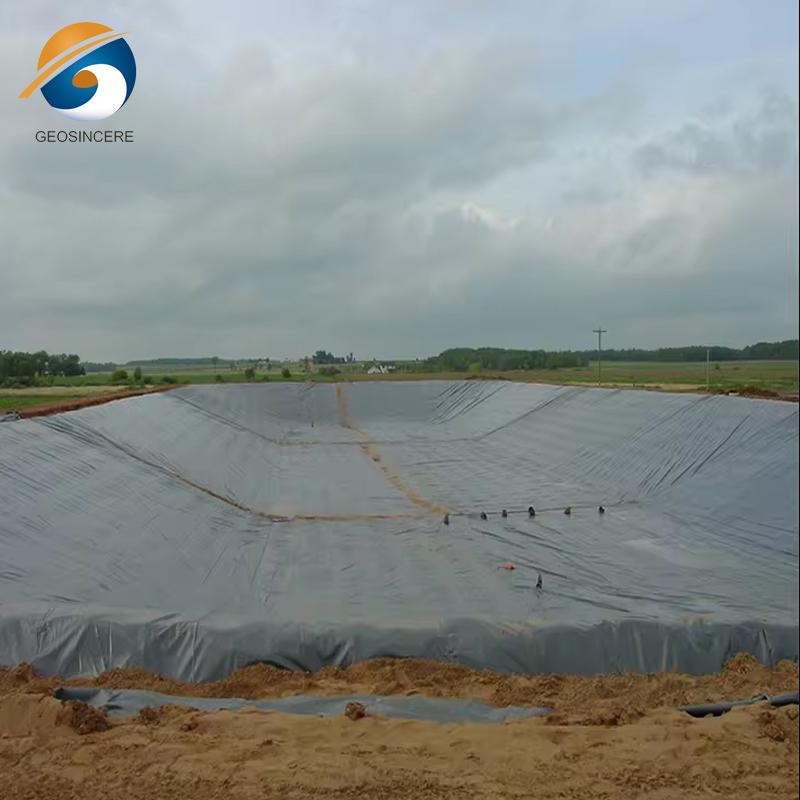
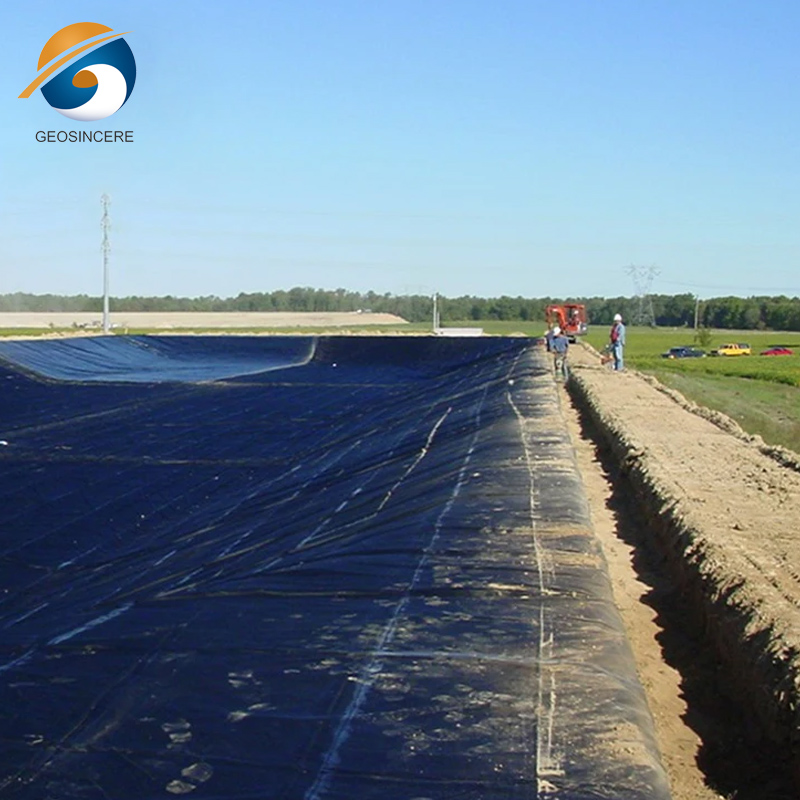
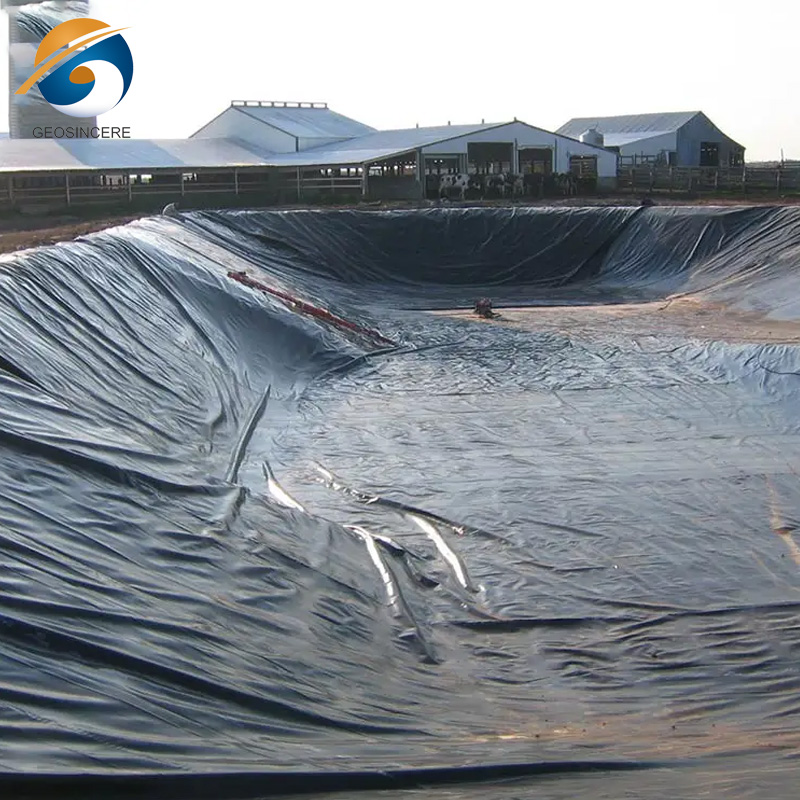
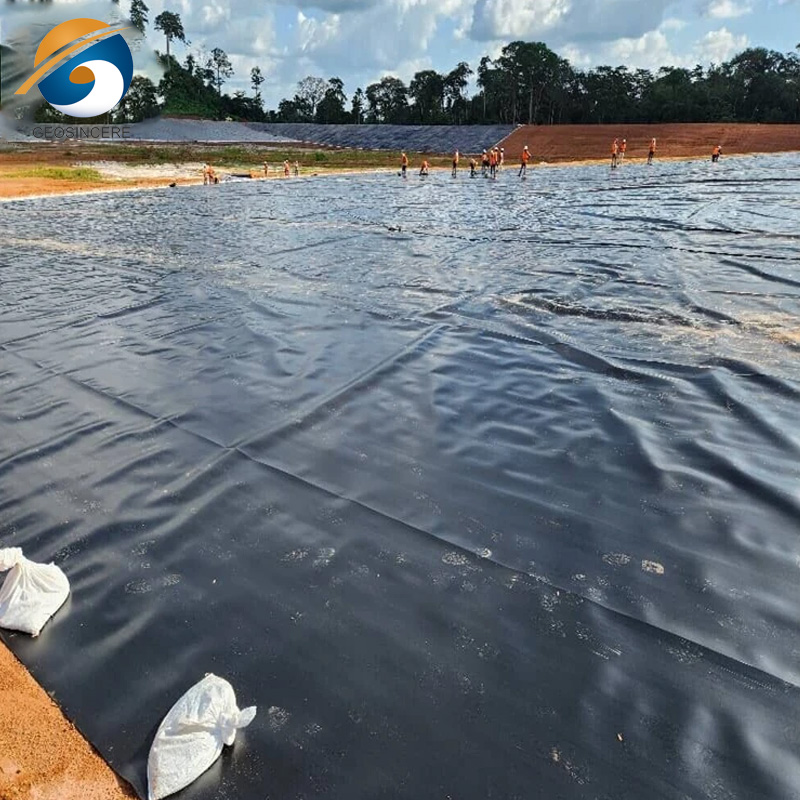
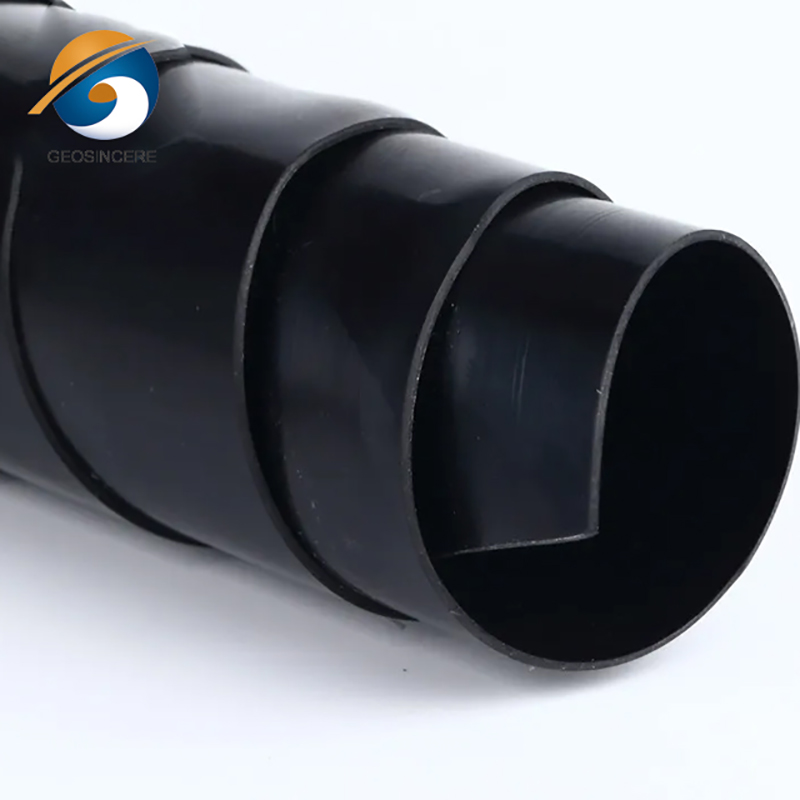
Landfill Pond Liner HDPE Impermeable Membrane is a high-density polyethylene barrier sheet engineered for landfill cells and containment ponds to prevent leachate migration and groundwater contamination under long-term load and chemical exposure.
Technical Parameters and Specifications
For engineering procurement, Landfill Pond Liner HDPE Impermeable Membrane must be specified with measurable mechanical, hydraulic, and durability properties. Values below reflect commonly accepted engineering ranges used in containment and landfill liner systems.
| Parameter | Typical Range | Test Reference |
|---|---|---|
| Thickness | 1.0 – 3.0 mm | ASTM D5199 |
| Density | ≥ 0.94 g/cm³ | ASTM D1505 |
| Tensile Strength (Yield) | ≥ 15 kN/m | ASTM D6693 |
| Elongation at Break | ≥ 700% | ASTM D6693 |
| Tear Resistance | ≥ 90 N | ASTM D1004 |
| Puncture Resistance | ≥ 320 N | ASTM D4833 |
| Carbon Black Content | 2.0 – 3.0% | ASTM D4218 |
| Permeability Coefficient | ≤ 1×10⁻¹³ cm/s | GRI method |
Engineering submittals for Landfill Pond Liner HDPE Impermeable Membrane should include full roll batch test reports and welding compatibility data.
Structure and Material Composition
The performance of Landfill Pond Liner HDPE Impermeable Membrane depends on polymer quality and additive control.
Base Polymer: Virgin high-density polyethylene resin
Carbon Black: UV stabilization and oxidation resistance
Antioxidant Package: Thermal aging control
Processing Stabilizers: Melt flow and extrusion stability
Surface Type: Smooth or textured for slope friction
Optional Layering: Co-extruded surface for improved welding
Virgin resin is typically specified for landfill and hazardous containment use of Landfill Pond Liner HDPE Impermeable Membrane to ensure long-term durability.
Manufacturing Process and Engineering Controls
Production Flow
Resin and additive incoming inspection
Automated gravimetric batching
High-temperature blown film or flat die extrusion
Online thickness scanning
Surface texturing (if required)
Controlled cooling and stress relief
Roll winding with tension control
Factory mechanical and index testing
Key Equipment
Wide-width geomembrane extrusion lines
Automatic thickness gauge systems
Carbon black dispersion testers
Tensile and puncture test machines
Oxidative induction time analyzers
Process stability directly affects weld performance of Landfill Pond Liner HDPE Impermeable Membrane in field installation.
Industry Comparison with Alternative Liners
| Liner Type | Chemical Resistance | Service Life | Weldability | Typical Use |
|---|---|---|---|---|
| HDPE Membrane | Excellent | Long | Hot wedge / extrusion | Landfill, leachate ponds |
| LLDPE Membrane | Very good | Medium–Long | Good | Flexible basins |
| PVC Liner | Moderate | Medium | Solvent weld | Decorative ponds |
| Clay Liner | Variable | Dependent | Not welded | Low-risk sites |
For regulated sites, Landfill Pond Liner HDPE Impermeable Membrane is typically preferred due to chemical stability and seam integrity.
Application Scenarios
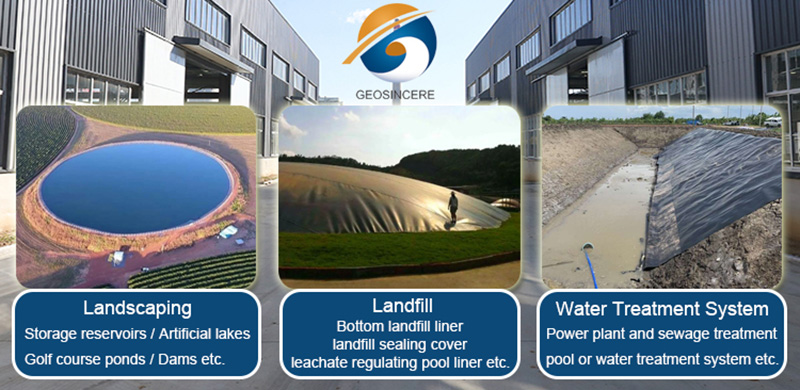
Municipal landfill bottom liners
Leachate collection ponds
Industrial waste containment
Tailings and slurry ponds
Hazardous liquid storage basins
Secondary containment systems
Distributors and EPC contractors often standardize on Landfill Pond Liner HDPE Impermeable Membrane for regulated containment projects.
Core Pain Points and Engineering Solutions
Pain Point: Seam leakage risk
Solution: Specify double-track welding and air channel testingPain Point: Stress cracking over time
Solution: Require stress crack resistance testing dataPain Point: UV degradation during storage
Solution: Check carbon black and outdoor exposure limitsPain Point: Thickness inconsistency
Solution: Demand roll-by-roll thickness scan reports
Risk Warnings and Avoidance Measures
Do not accept recycled-content liners for critical landfill cells unless approved
Verify batch test reports match roll numbers
Control on-site welding temperature and speed
Require installer welding certification
Inspect subgrade to prevent puncture damage
Improper handling can negate the barrier performance of Landfill Pond Liner HDPE Impermeable Membrane.
Procurement Selection Guide
Define liner thickness based on risk category
Specify smooth or textured surface requirement
Request full mechanical and aging test reports
Verify resin source and virgin content
Review welding method compatibility
Check roll width and transport limits
Include field QA/QC testing in contract
Require sample roll for weld trials
Engineering Case Scenario
A regional landfill expansion project installed a 2.0 mm Landfill Pond Liner HDPE Impermeable Membrane over a compacted subgrade and geotextile cushion. Double hot-wedge welds were tested with air pressure channels and vacuum boxes. Third-party inspection verified seam strength and thickness compliance. The containment cell passed leakage testing before commissioning.
FAQ — Landfill Pond Liner HDPE Impermeable Membrane
What thickness is common for landfill use?
1.5–2.5 mm is frequently specified.
Is textured surface required?
Used on slopes for friction stability.
Can recycled HDPE be used?
Usually avoided in critical cells.
How are seams tested?
Air pressure and vacuum methods.
What welding methods are typical?
Hot wedge and extrusion welding.
Does temperature affect welding?
Yes, parameters must be adjusted.
Is a cushion layer needed?
Commonly geotextile underlay is used.
How long is service life?
Often several decades when protected.
Are factory tests sufficient?
Field QA/QC is still required.
Can it resist chemicals?
HDPE shows broad chemical resistance.
Request Technical Data and Samples
For landfill and containment projects, request full Landfill Pond Liner HDPE Impermeable Membrane technical datasheets, roll test reports, welding guides, and project samples for engineering validation and contractor trials.
E-E-A-T Author Qualification Statement
This article is prepared from a geosynthetics engineering and construction procurement perspective, based on widely used geomembrane standards, field installation practices, and containment project quality control requirements.