How to Choose High Quality Geomembrane Pond Liner for Aquaculture Project?
Product Definition
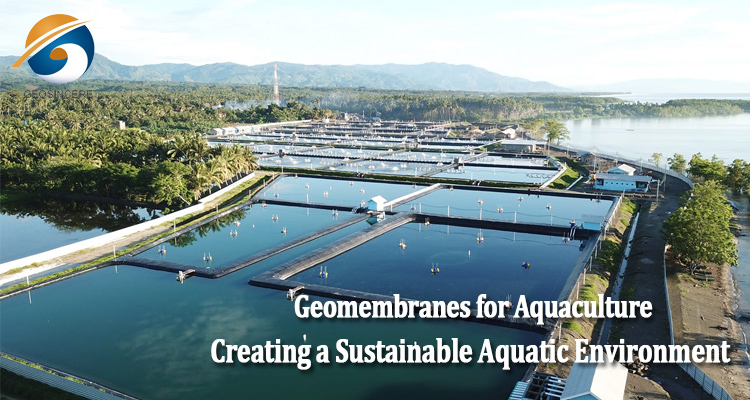
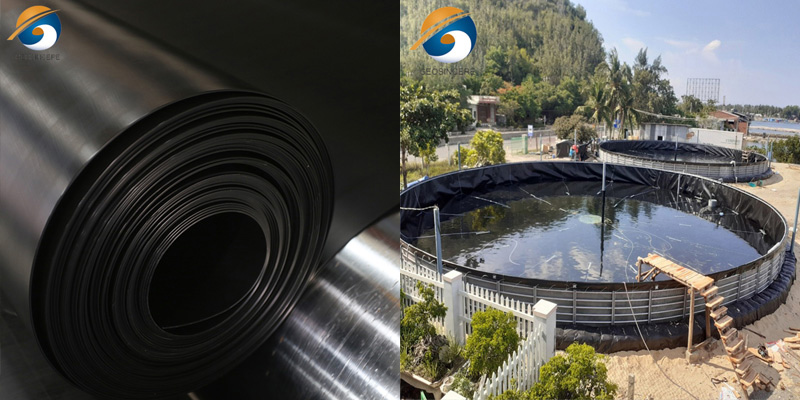
A high quality geomembrane pond liner for aquaculture is an engineered impermeable polymer sheet designed to retain water, prevent seepage, and protect pond subgrades while ensuring long-term chemical stability, mechanical strength, and environmental safety for fish and shrimp farming systems.
Technical Parameters and Specifications
Selecting a geomembrane pond liner requires evaluating measurable engineering parameters that directly affect service life and biological safety.
| Parameter | Typical Range | Test Standard |
|---|---|---|
| Material Type | HDPE / LLDPE | GRI-GM13 / GM17 |
| Thickness | 0.5 – 1.5 mm | ASTM D5199 |
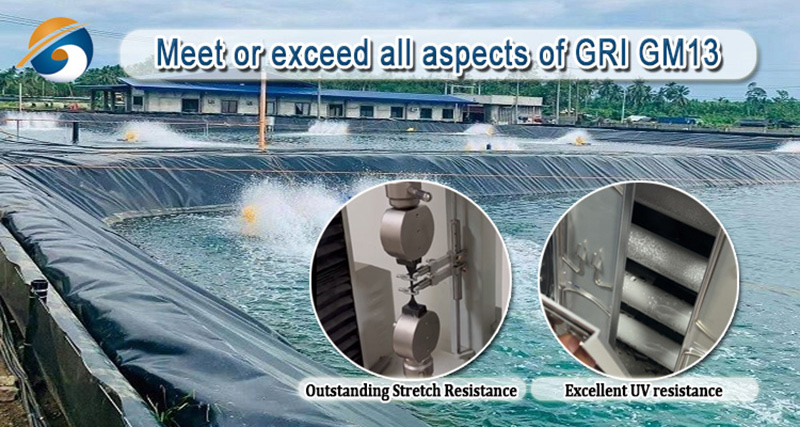
| Tensile Strength | ≥ 15 MPa | ASTM D6693 |
| Elongation at Break | ≥ 600% | ASTM D6693 |
| Hydrostatic Resistance | Impermeable | ASTM D5887 |
| UV Resistance | ≥ 90% retention | ASTM D7238 |
Structure and Material Composition
Geomembrane pond liners are manufactured as single-layer or co-extruded structures optimized for aquaculture environments.
Base Polymer: Virgin polyethylene resin for chemical inertness
Carbon Black: 2–3% for UV stabilization
Antioxidants: Thermal and oxidative aging resistance
Surface Finish: Smooth or lightly textured for slope stability
Manufacturing Process and Quality Control
Engineering Manufacturing Steps
Polymer resin blending with stabilizers
High-temperature extrusion or blown-film processing
Thickness calibration and surface finishing
Inline spark and thickness inspection
Roll winding and batch identification
Quality Assurance Focus
Raw material traceability
Mechanical and permeability testing
UV and aging performance verification
Industry Comparison: Pond Liner Materials
| Material | Durability | Environmental Safety | Typical Use |
|---|---|---|---|
| HDPE Geomembrane | Very High | Excellent | Large-scale aquaculture |
| LLDPE Geomembrane | High | Excellent | Irregular pond shapes |
| PVC Liner | Medium | Moderate | Small ponds |
| EPDM Rubber | High | Good | Decorative ponds |
Application Scenarios and Stakeholders
Geomembrane pond liners are widely specified across aquaculture project types.
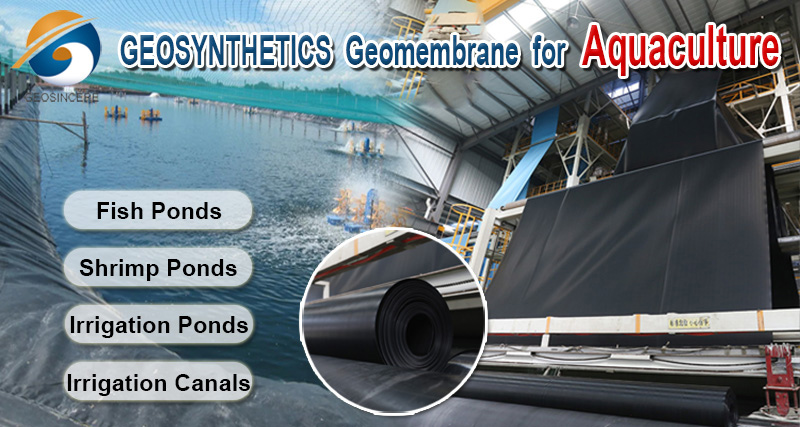
Aquaculture Farm Owners: Fish and shrimp pond lining
EPC Contractors: Turnkey aquaculture infrastructure projects
Distributors & Importers: Regional material supply
Engineering Consultants: Pond design and material selection
Core Pain Points and Engineering Solutions
Water Leakage: Solved by fully welded geomembrane systems
UV Degradation: Addressed with carbon black stabilization
Biological Safety Concerns: Use of virgin, non-toxic resins
Liner Damage: Mitigated with geotextile underlay protection
Risk Warnings and Mitigation Measures
Low-grade recycled liners may release harmful substances
Insufficient thickness increases puncture risk
Poor welding leads to seam leakage
Unprotected subgrades can cause liner abrasion
Procurement and Selection Guide
Define pond size, depth, and water pressure
Select HDPE or LLDPE based on geometry
Specify minimum thickness and tensile strength
Request full test reports and certifications
Confirm welding and installation support
Evaluate supplier experience in aquaculture projects
Engineering Application Case
A commercial shrimp farming project utilized a 1.0 mm HDPE geomembrane liner combined with 400 g/m² nonwoven geotextile underlay. The system eliminated seepage losses, improved water quality stability, and reduced pond maintenance over multiple production cycles.
Frequently Asked Questions (FAQ)
Q1: What liner thickness is recommended for aquaculture?
Typically 0.75–1.0 mm.Q2: Is HDPE safe for fish and shrimp?
Yes, when made from virgin resin.Q3: How long does a geomembrane liner last?
10–20 years or more.Q4: Can liners be exposed to sunlight?
Yes, with UV stabilization.Q5: Are welded seams necessary?
Yes, for leak prevention.Q6: Should geotextile be used under the liner?
Strongly recommended.Q7: Can liners handle saline water?
Yes, HDPE is chemically resistant.Q8: Is textured liner required?
Only for steep slopes.Q9: How is liner quality verified?
Through third-party test reports.Q10: Can samples be tested before purchase?
Yes, standard B2B practice.
Call to Action
For aquaculture projects requiring reliable water containment, request technical datasheets, engineering consultation, or material samples to support accurate liner selection and procurement.
E-E-A-T Author Credentials
This article is authored by engineering professionals with extensive experience in geomembrane manufacturing, aquaculture infrastructure, and international EPC projects, applying recognized testing standards and proven field practices.