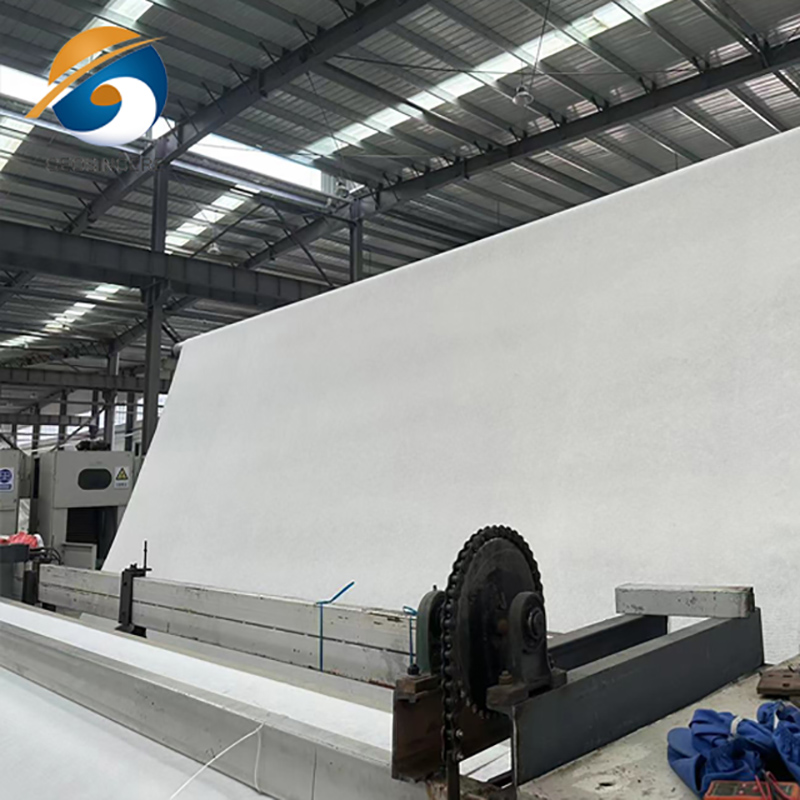
Non Woven Geotextile Drainage Fabric for Driveway
Manufacturing Process
Engineering Production Steps
Polymer chip drying and preparation
Fiber extrusion and filament formation
Web laying with controlled fiber orientation
Needle punching for mechanical bonding
Thermal setting to stabilize thickness and strength
Online inspection for mass, thickness, and uniformity
Roll cutting, labeling, and batch traceability
Key Process Controls
Consistent fiber denier for uniform permeability
Needle density control to balance strength and drainage
Strict quality testing aligned with civil engineering standards
Product Definition
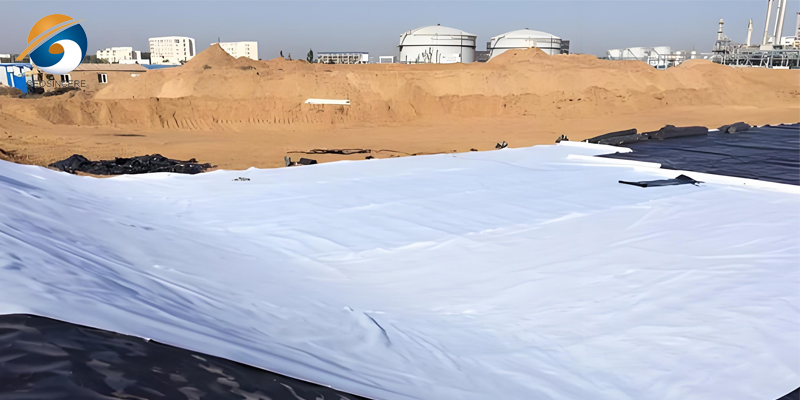
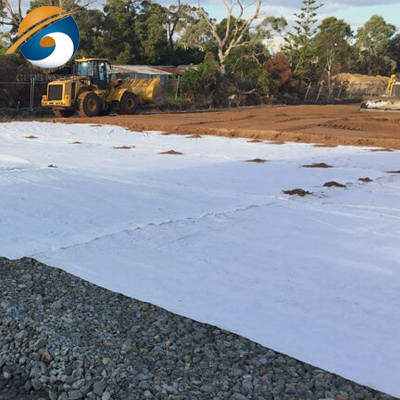
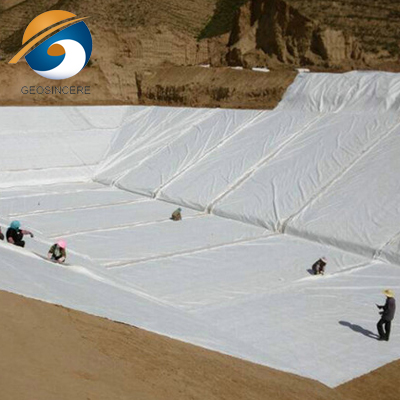
Non Woven Geotextile Drainage Fabric for Driveway is a permeable, needle-punched synthetic fabric engineered to separate soil layers, enhance drainage, and improve load distribution in driveway and access road structures. It is widely used in commercial, municipal, and infrastructure projects to extend pavement service life.
Technical Parameters and Specifications
The following parameters are commonly specified for driveway drainage and subgrade stabilization applications and are suitable for engineering design and procurement.
Raw Material: Polypropylene (PP) or Polyester (PET)
Manufacturing Method: Needle-punched non woven
Mass per Unit Area: 100–600 g/m²
Tensile Strength (MD/CD): 8–25 kN/m
Elongation at Break: 40%–80%
CBR Puncture Resistance: 1.5–6.0 kN
Water Permeability: ≥ 80 L/m²/s
Opening Size (O90): 0.08–0.20 mm
UV Resistance: ≥ 70% strength retained after 500 hours
Service Temperature: -30°C to +100°C
Structure and Material Composition
Non Woven Geotextile Drainage Fabric for Driveway is designed as a homogeneous yet highly functional structure.
Continuous Filament Fibers: Provide uniform tensile performance
Needle-Punched Matrix: Creates multidirectional drainage channels
Random Fiber Orientation: Enhances filtration and soil retention
Thermally Stabilized Surface: Improves dimensional stability during installation
Manufacturing Process
Engineering Production Steps
Polymer chip drying and preparation
Fiber extrusion and filament formation
Web laying with controlled fiber orientation
Needle punching for mechanical bonding
Thermal setting to stabilize thickness and strength
Online inspection for mass, thickness, and uniformity
Roll cutting, labeling, and batch traceability
Key Process Controls
Consistent fiber denier for uniform permeability
Needle density control to balance strength and drainage
Strict quality testing aligned with civil engineering standards
Industry Comparison
| Material Type | Non Woven Geotextile | Woven Geotextile | Gravel Only | Geogrid |
|---|---|---|---|---|
| Drainage Performance | Excellent | Moderate | Poor | Limited |
| Soil Separation | Excellent | Good | Poor | Good |
| Filtration Capability | Excellent | Limited | None | None |
| Installation Cost | Medium | Medium | Low | Medium–High |
| Driveway Suitability | Excellent | Good | Low | Supplementary |
Application Scenarios
Commercial driveway and parking access roads
Industrial facility entrances
Residential and mixed-use developments
Logistics parks and warehouse driveways
Temporary construction access roads
Core Pain Points and Solutions
Subgrade Pumping: Non woven fabric separates soil from aggregate
Water Accumulation: High permeability enables rapid drainage
Rutting and Settlement: Improved load distribution reduces deformation
Maintenance Frequency: Stabilized base extends driveway lifespan
Risk Warnings and Mitigation Recommendations
Avoid using insufficient fabric weight for heavy traffic areas
Ensure full overlap at joints (minimum 300 mm)
Prevent direct UV exposure during long storage periods
Install on properly leveled and compacted subgrade
Procurement and Selection Guide
Assess driveway traffic load and vehicle type
Determine required fabric weight and tensile strength
Evaluate soil conditions and drainage requirements
Select PP or PET based on chemical and moisture exposure
Verify laboratory test reports and compliance documents
Confirm roll dimensions and logistics compatibility
Review supplier project references and quality control system
Engineering Application Example
In a commercial logistics park project, a 300 g/m² non woven geotextile drainage fabric was installed beneath a crushed stone driveway layer over soft subgrade soil. The system significantly reduced water retention and rutting, maintaining structural integrity under continuous truck traffic for over four years.
Frequently Asked Questions
Why use non woven geotextile for driveways? It provides superior drainage and filtration.
What fabric weight is typical? 200–400 g/m² for most commercial driveways.
Can it handle heavy vehicles? Yes, when properly specified.
Is it suitable for wet soils? Yes, it performs well in saturated conditions.
Does it replace gravel? No, it works in combination with aggregate.
How long does it last? Typically 25+ years underground.
Is overlapping required? Yes, overlaps ensure continuity.
Can it be cut on site? Yes, using standard cutting tools.
Does it resist chemicals? Polypropylene offers excellent chemical resistance.
Is installation complex? No, standard civil installation methods apply.
CTA – Commercial Inquiry
For pricing, technical datasheets, or project-specific samples of Non Woven Geotextile Drainage Fabric for Driveway applications, please submit your project requirements to receive professional technical and procurement support.
E-E-A-T Author Credentials
This article is prepared by civil engineering material specialists with over 15 years of experience in geosynthetics, supporting contractors, EPC firms, and infrastructure developers in roadway and ground stabilization projects worldwide.