

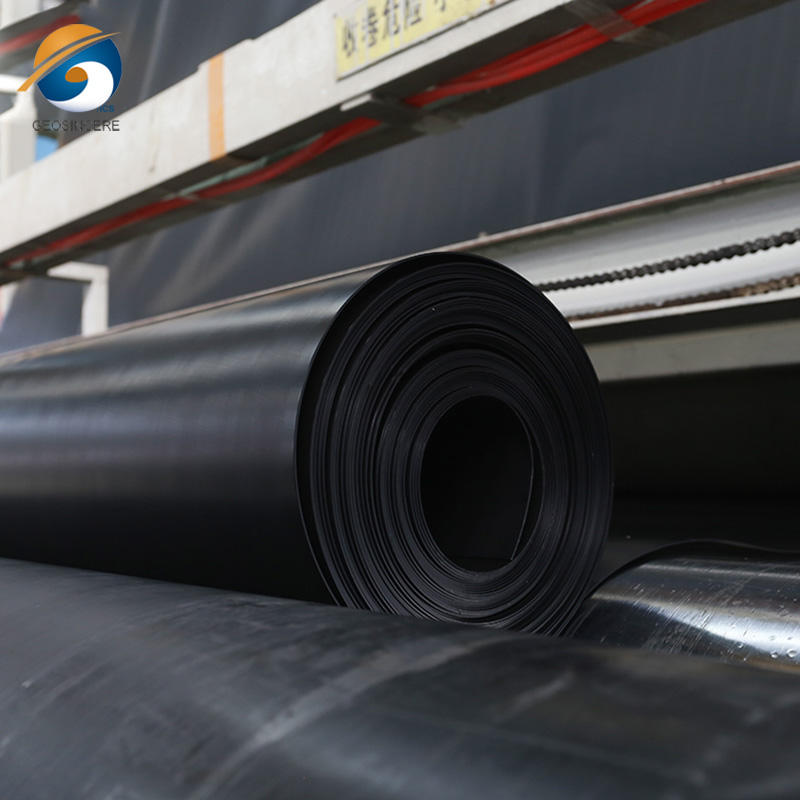
HDPE Impermeable Membrane Landfill Liner
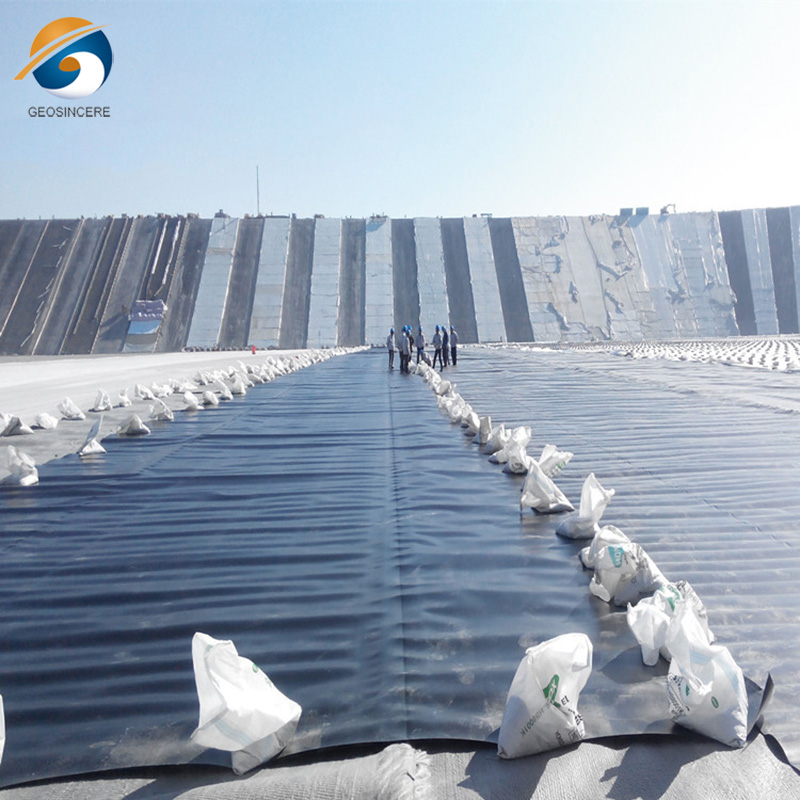
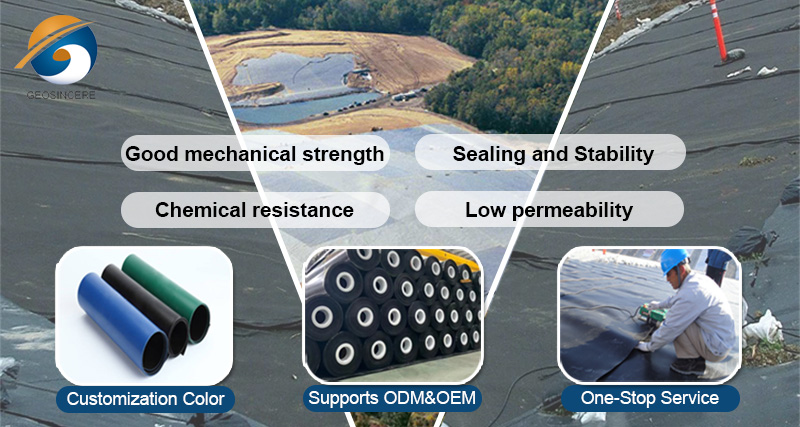
The primary function of an HDPE impermeable membrane landfill liner is to provide excellent anti-seepage performance. It acts as a barrier that prevents rainwater or other liquids from infiltrating the soil, which helps maintain the stability and mechanical properties of the soil.
The HDPE impermeable membrane landfill liner is particularly suitable for slope protection because it possesses several desirable characteristics. Firstly, it exhibits good chemical corrosion resistance, which is important in environments where the soil may contain aggressive substances that could degrade other materials. This resistance ensures the long-term durability of the liner.
Secondly, the HDPE geomembrane has excellent stress cracking ability, meaning it can resist the formation and propagation of cracks when subjected to stress or movement. This property is crucial in slope protection because the liner needs to withstand the forces exerted on it by the soil and any potential slope movements.
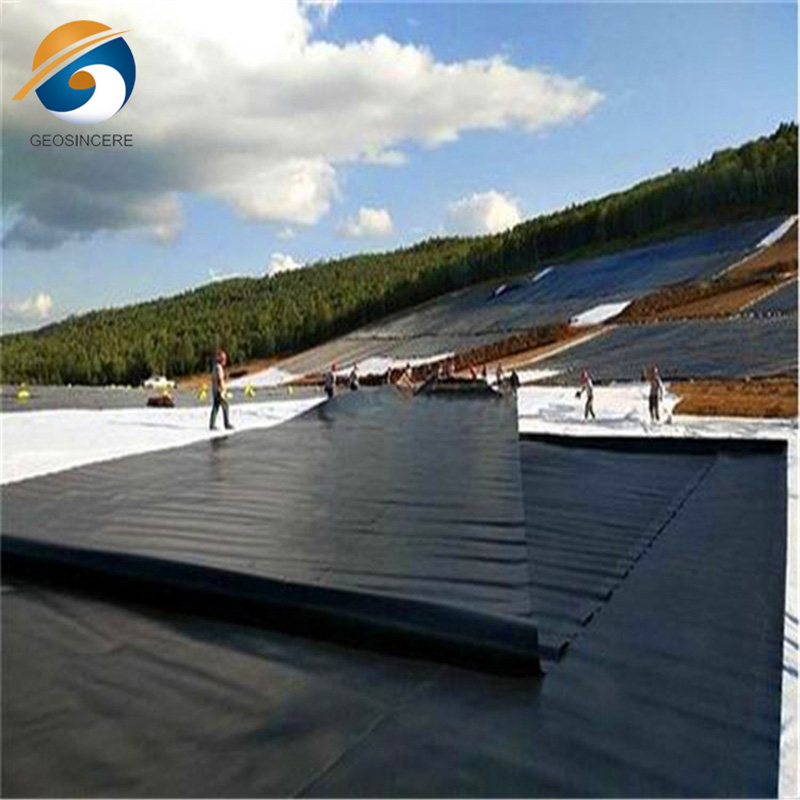
By utilizing the anti-seepage and reinforcement capabilities of the HDPE geomembrane, engineers can effectively prevent slope sliding and maintain the stability of complex broken open-air slopes, even in the presence of through cracks induced by rainwater. The liner acts as a reliable barrier that prevents water infiltration and helps preserve the integrity of the slope.
An HDPE (High-Density Polyethylene) impermeable membrane is a type of liner used in landfill construction to prevent the leaching of contaminants into the surrounding environment. It is designed to create a barrier that restricts the movement of liquids and gases, thus protecting the soil and groundwater from pollution.
HDPE is a thermoplastic polymer known for its high strength, durability, and chemical resistance. It is commonly used in various applications, including landfill liners.
HDPE liners are highly impermeable to liquids and gases, which is essential for preventing the migration of pollutants from the landfill into the soil and groundwater. The liner acts as a barrier that restricts the movement of contaminants.
Parameter
ltem | Detailed item | Unit | Standard | Test Frequency | GS075 | GS010 | GS015 | GS020 | GS030 |
Mechanical Properties | Thickness | mm | D5199 | per roll | 0.75 | 1.00 | 1.50 | 2.00 | 3.00 |
Density | D1505/D792 | 90.000kg | 0.94 | ||||||
Tensile Properties | |||||||||
Yield Strength | KN/m | D6693 Type Iv | 9.000 kg | 11 | 15 | 22 | 29 | 44 | |
Break Strength | KN/m | 20 | 27 | 40 | 53 | 80 | |||
Yield Elongation | % | 12 | 12 | 12 | 12 | 12 | |||
Break Elongation | % | 700 | 700 | 700 | 700 | 700 | |||
Tear Resistance | N | D1004 | 20.000kg | 93 | 125 | 187 | 249 | 374 | |
Puncture Resistance | N | D4883 | 20.000kg | 240 | 320 | 480 | 640 | 960 | |
Stress Crack Resistance | Hr. | D5397 | per GRl GM-10 | 300 hr. | |||||
Carbon black content | % | D4218 | 9.000kg | 2.0-3.0% | |||||
Carbon black dispersion | D5596 | 20.000kg | For 10 different views: 9 in Categories 1 or 2 and 1 in Category 3 | ||||||
Reference Properties | Oxidative Induction Time | ||||||||
Standard OlT | min | D3895 | 90.000kg | 100 min | |||||
High pressure OlT
| D5885 | 90.000kg | 400 min | ||||||
Oven Aging at 85°C retained after 90 days
| % | D5721 | per each formulation | 55% | |||||
Standard OlT | D3895 | 80% | |||||||
High pressure OlT | D5885 | 80% | |||||||
UV Resistance | |||||||||
High Pressure OlT_% retained after 1600 hrs | % | D5885 | per each formulation | 50% | |||||
Roll Size | Roll widthe | m | 7 | 7 | 7 | 7 | 7 | ||
Roll Length | m | 280 | 210 | 140 | 105 | 70 | |||
Size stability | % | 2% | |||||||
HDPE Impermeable Membrane Landfill Liner Features
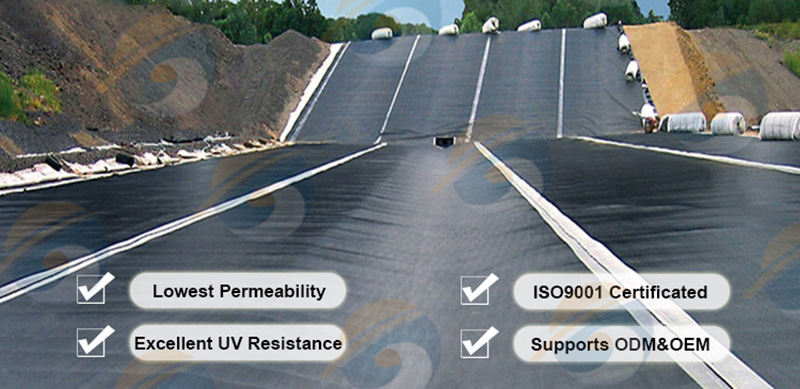
Excellent Chemical Resistance.
Outstanding Stress Crack Capacity.
Lowest Permeability.
Excellent UV Resistance.
Stable Low Temperature Embrittlement Resistance.
Proven Performance.
Fast Deployment.
Easy Transportation.
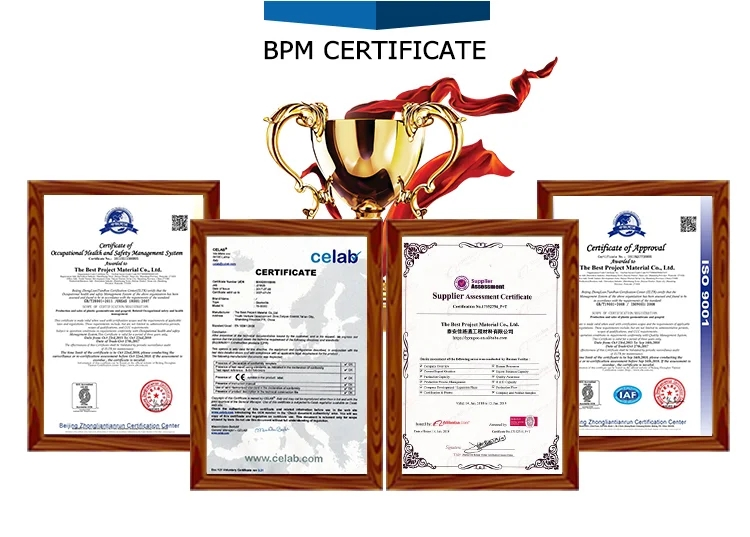
ISO9001 Certificated Geomembrane Factory.
Meet or Exceed All Aspects of GRI GM13.
Complete Width and Thickness Specifications.
Competitive Factory Price.
ODM/OEM are Available.
Applications of HDPE Impermeable Membrane Landfill Liner
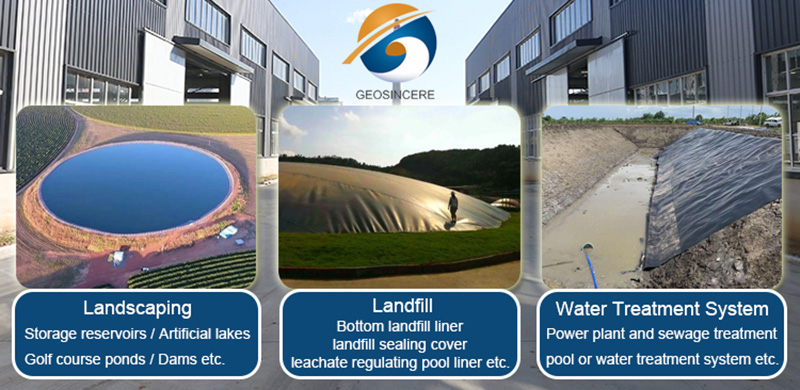
HDPE impermeable membrane landfill liners have a wide range of applications in the waste management industry. Here are some of their key applications:
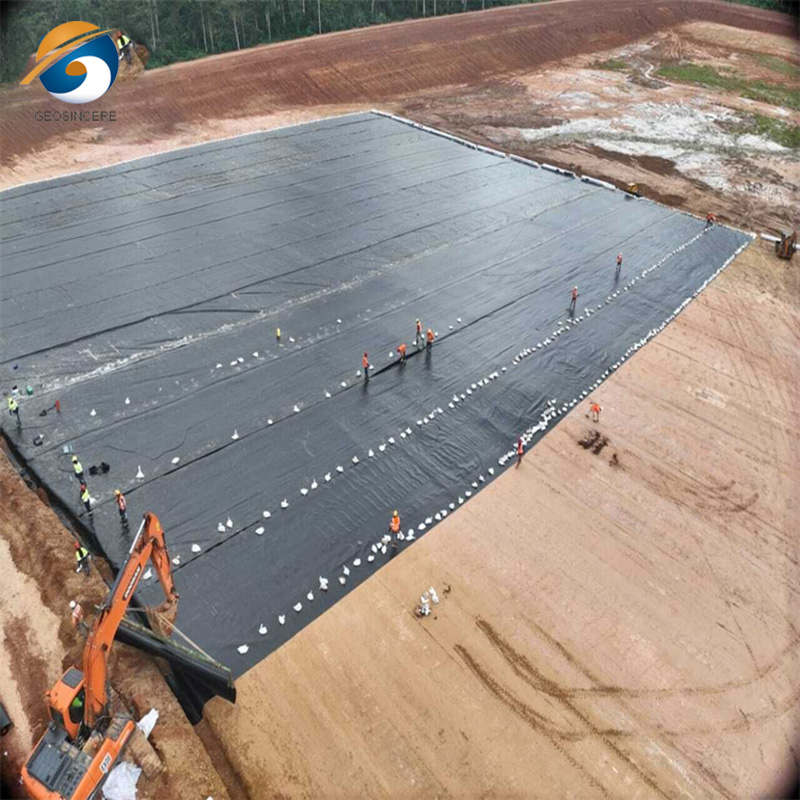
Landfills: The primary application of HDPE impermeable membranes is in the construction of landfill liners. They are used as a protective barrier to prevent the leaching of hazardous substances, such as heavy metals and organic contaminants, from the landfill into the surrounding soil and groundwater. The impermeable nature of HDPE helps to contain the waste within the landfill and minimize environmental impacts.
Containment Ponds: HDPE liners are also used in the construction of containment ponds or lagoons, which are designed to store and treat various types of liquid waste, such as industrial wastewater, leachate from landfills, and agricultural runoff. The impermeable membrane acts as a barrier, preventing the liquid waste from seeping into the underlying soil and groundwater.
Mining Applications: HDPE liners are employed in mining operations to line tailings ponds, which store the waste materials generated from the extraction and processing of minerals. The liners help to contain the potentially hazardous materials, such as heavy metals and chemicals, preventing them from contaminating the surrounding environment.
Industrial Applications: HDPE impermeable membranes find application in various industrial settings where there is a need to contain and manage liquids or chemicals. They are used as liners in secondary containment systems for chemical storage areas, fuel storage tanks, and other facilities to prevent leaks and spills from polluting the soil and groundwater.
Waste Water Treatment: HDPE liners are used in the construction of wastewater treatment facilities, such as anaerobic digesters, settling ponds, and evaporation ponds. They help to contain and manage the wastewater throughout the treatment process, preventing the release of contaminants into the environment.
Agricultural Applications: HDPE liners are used in agricultural practices for applications such as lining irrigation channels, reservoirs, and agricultural ponds. They help to prevent water seepage, conserve water resources, and protect the soil from contamination.
Overall, HDPE impermeable membrane landfill liners are widely utilized in various industries and applications where there is a need to contain and manage waste materials, liquids, or chemicals, thus minimizing the potential environmental impact.
Product Packing
Selling Packing:Customer's company Logo mark can be designed and added.
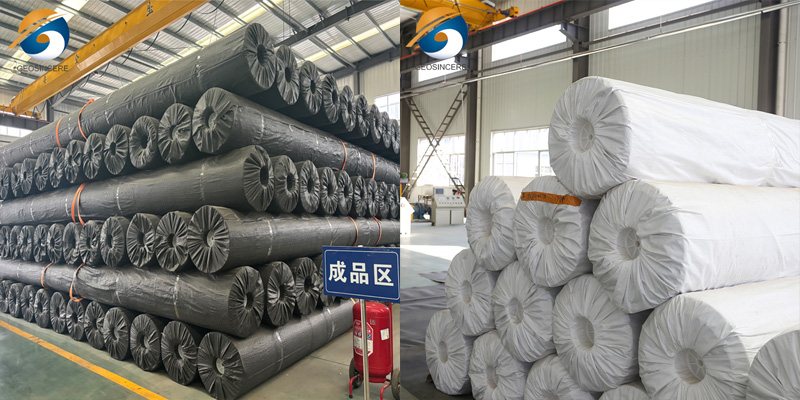
Outer Packing:Packed in Double-layer woven bags to ensure smooth arrival and avoid rough handling.
Transport Packing: Put in the container.
Company Profile
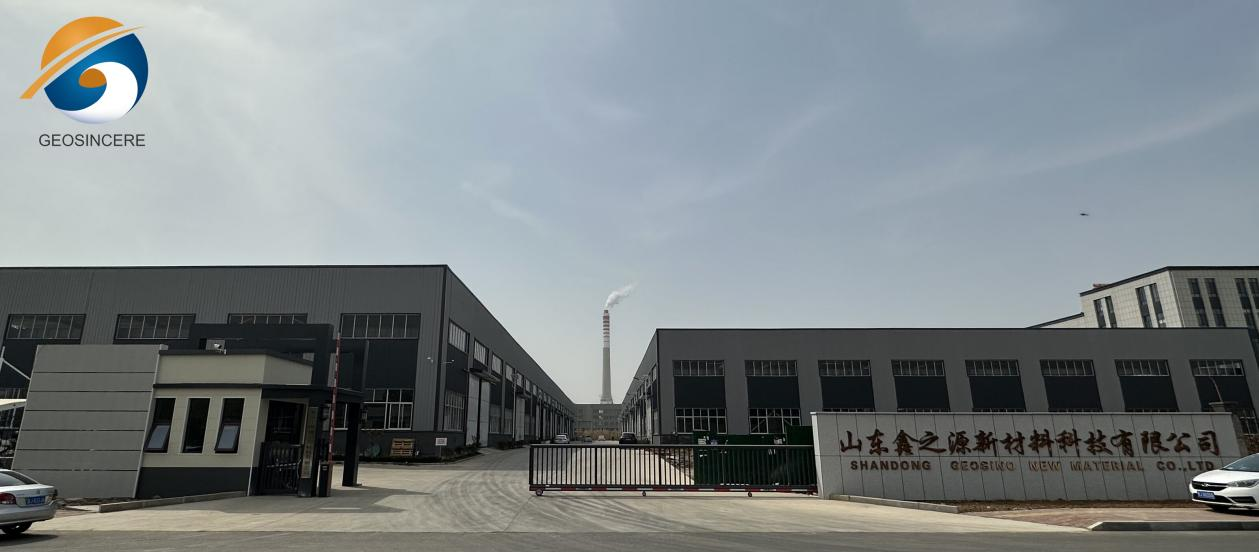
Shandong GEOSINO New Material Co.,Ltd (Brand:Geosincere) is the professional geomembrane and geosynthetics manufacturer and wholesaler located in Taian City, Shandong Province, PRChina. We are not a local overseas distributer, we are an professional manufacturer, exporter and wholesaler for such geosynthetic products as geomembanes, geotextiles, geogrids, geocells, geosynthetic clay liners (GCLs), drainage boards, etc. GEOSINCERE is always committed to geomembrane research and development, manufacturing and installation services. We can provide our customers with most extensive lines of geomembranes and geotextiles for civil, mining, environmental and aquaculture engineering applications.
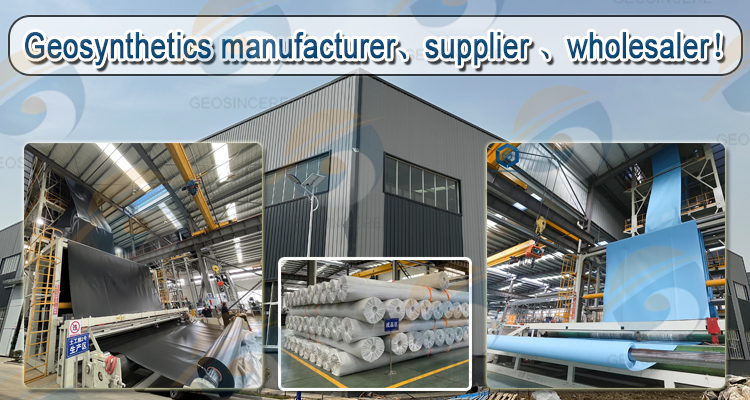
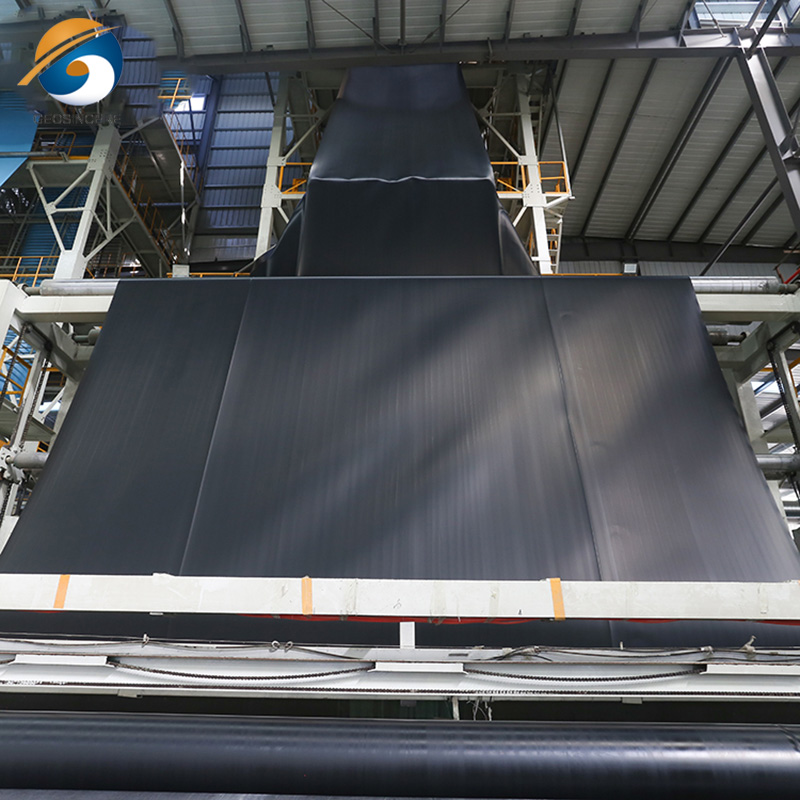
GEOSINCERE has been keeping on investing in technological innovation, manufacturing facilities improvement and turnkey engineering abilities. We have invested 10 million dollars into our manufacturing factory which is equipped with state-of-the-art automatic production lines to manufacture high quality geomembranes and other geosynthetics with optimized processes. GEOSINCERE has over 160 employees and its own 24,000 square meters state-of-art manufacturing factory with many automatic geosynthetic production lines, professional machines and testing equipment.Our extensive lines of geosynthetics products are well known for their ensured quality, high performance, excellent durability and best cost effectiveness. GEOSINCERE brand geomembranes and other geosynthetics products and solutions can meet your requirements by our solid technologies, innovative engineering solutions and excellent customer services. GEOSINCERE always tries our best to solve the most complex civil, mining and environmental challenges with our innovative and high performance geosynthetic products. Quality assurance, factory price and fast delivery time are our competitive advantages.

Hope to be your partner!


