

Can Water Pass Through Drainage Geotextile Membrane ?
Beneath the surfaces of our current world—beneath the roads we pressure on, the foundations of our buildings, the holding partitions that structure our landscapes, and even the inexperienced roofs that crown our structures—lies a critical, but regularly overlooked, component: the drainage geotextile membrane. This state-of-the-art artificial cloth is a cornerstone of geotechnical engineering, a self-discipline committed to fixing challenges associated to earth materials. Far from being a easy fabric, a drainage geotextile is a engineered answer that performs a couple of indispensable functions: separation, filtration, drainage, and reinforcement. Its utility has revolutionized building and civil engineering, main to greater durable, cost-effective, and sustainable infrastructure. This article delves into the composition, functions, applications, and set up nice practices of this integral material, illuminating why it simply is the unsung hero of the constructed environment.
1. Understanding the Material: More Than Just a Drainage Geotextile Membrane
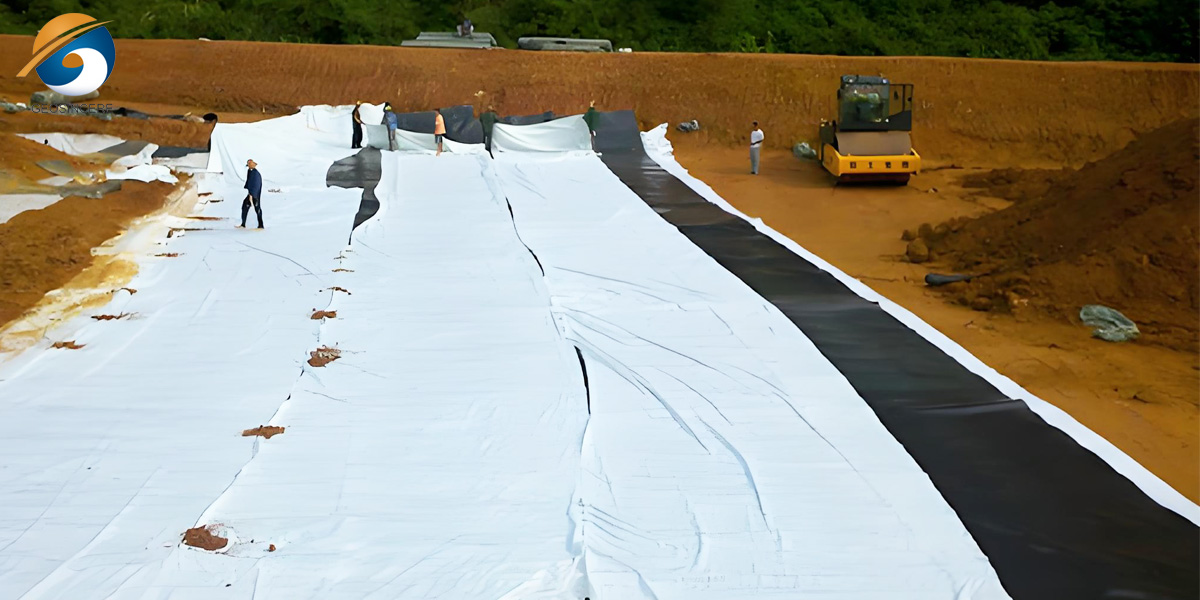
At its core, a drainage geotextile membrane is a permeable fabric material, normally manufactured from artificial polymers like polypropylene or polyester. These substances are chosen for their superb durability, excessive resistance to organic degradation, and robust mechanical properties. The manufacturing system is what offers geotextiles their particular characteristics, and they are mainly produced in two forms:
1.1 Woven Drainage Geotextile Membrane
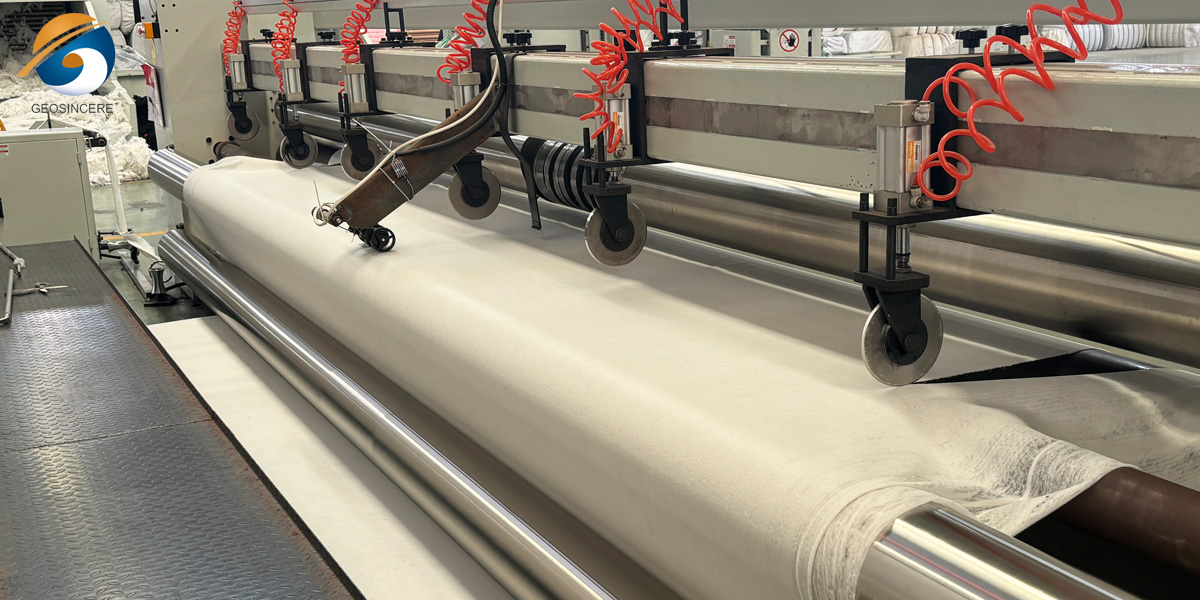
Created by way of interlacing yarns in a normal pattern, a lot like standard garb fabric. This technique effects in a cloth with excessive tensile electricity and low elongation, making it notable for purposes requiring soil stabilization and reinforcement. However, their filtration abilities can be greater directional.
1.2 Non Woven Drainage Geotextile Membrane
Produced through randomly arranging artificial fibers and then bonding them collectively thru mechanical (needle-punching), thermal, or chemical means. Needle-punched non-wovens are the most frequent for drainage applications. Their tangled, fibrous shape creates a dense, felt-like sheet that is perfect for separation, filtration, and safety functions. They enable water to pass by thru whilst keeping soil particles.
The key houses that outline a geotextile cloth's suitability for drainage functions include:
- Porosity: The share of void house in the material, which influences its basic permeability.
Permittivity:The capability to permit water to go with the flow thru its airplane underneath everyday pressures—this is the imperative property for drainage.
- AOS (Apparent Opening Size) or Filtration Opening Size: A measure of the superb pore size, which determines what dimension of soil particles it can retain. Selecting the right AOS is necessary to stop soil washout (clogging) whilst permitting water to pass.
- Tensile Strength: The resistance to breaking below tension, vital for withstanding stresses at some stage in and after installation.
- Puncture and Burst Strength:The potential to face up to harm from sharp rocks or irregular subgrade pressures.
- UV Resistance:The sturdiness of the polymer when uncovered to daylight for prolonged durations earlier than being covered.
2. Drainage Geotextile Membrane Multifunctional Role: A Synergy of Engineering Functions
The actual genius of the drainage geotextile membrane lies in its capacity to operate a number of engineering features simultaneously, developing a synergistic impact that appreciably enhances the overall performance and sturdiness of the whole system.
2.1 Separation: The Great Divider
This is one of its most crucial roles. In many building sites, a stable, robust subgrade soil (like a compacted gravel base) is positioned over a softer, finer subsoil. Under the repeated masses of visitors or structural weight, these two wonderful layers have a tendency to mix. The finer soil particles migrate upwards into the gravel, contaminating it and lowering its drainage and load-bearing capacity. Conversely, the gravel can be pushed down into the smooth soil, developing ruts and instability. The fabric geotextile positioned between the two layers acts as a bodily barrier, stopping this intermixing. By keeping the integrity of each layer, it ensures the designed structural overall performance is retained for decades.
2.2 Drainage Geotextile Membrane - Filtration
In drainage applications, water wishes to escape, however soil have to remain put. This is the unique feature of filtration. When a geotextile membrane is positioned towards soil, it permits water to skip via its aircraft freely, relieving hydrostatic stress that can purpose structural failure. Simultaneously, it retains the soil particles, stopping erosion and the loss of quality materials. The cautiously engineered pore shape of non woven geotextile fabric is best for this. It is designed to be "reverse graded"—the pores are smaller on the soil aspect and large on the drainage combination side, which helps forestall clogging and ensures long-term performance.
2.3 Drainage: The Conduit for Water
While the important drainage is frequently treated via pipes or coarse aggregate, the geo fabric itself contributes to this function. Its in-plane permeability (transmissivity) lets in water that has entered the cloth to drift alongside its aircraft toward a detailed outlet or series system. This is specially vital in purposes like vertical keeping wall drains or at the back of basis walls, the place the non woven geotextile acts as a conduit, channeling water away from the shape and mitigating water pressure.
2.4 Reinforcement: The Hidden Strengthener
While geotextile fabric for driveway are extra recognized for reinforcement, non woven landscape fabric additionally make a contribution to this function. By distributing hundreds over a wider area, the geotextile can enhance the normal bearing ability of tender subsoils. It absorbs tensile stresses that the soil by myself can't withstand, efficiently growing a extra stable, composite material. This is indispensable for constructing on gentle ground, stabilizing steep slopes, and setting up strengthened soil structures.
3. Drainage Geotextile Membrane Pervasive Applications
The versatility of drainage geotextile membranes makes them relevant throughout a sizeable spectrum of industries.
3.1 Road and Pavement Construction
Used underneath avenue bases and railway ballast to separate them from the subgrade. This prevents "pumping" of pleasant soils, reduces rutting, and extends the pavement's carrier life, main to huge financial savings in maintenance.
3.2 Retaining Walls and Slope Drainage
Placed vertically at the back of preserving walls, they filter water from the backfill soil and direct it to weep holes, stopping the build-up of unfavourable hydrostatic stress at the back of the wall.
3.3 Erosion Control
Beneath riprap (rock armor) on shorelines, riverbanks, and ditches, woven geotextile fabric stop the underlying soil from being washed away whilst permitting groundwater to vent, stabilizing the erosion safety layer.
3.4 Landfills and Environmental Protection
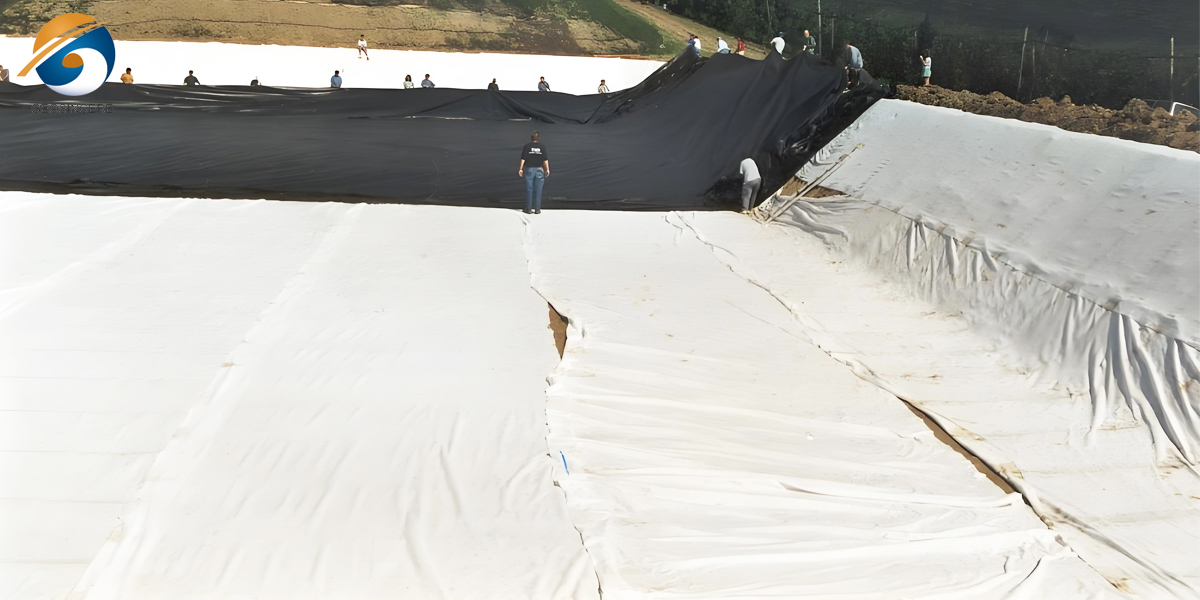
They are quintessential in landfill liner and cowl systems, the place they guard geomembranes from puncture and supply drainage paths for leachate and fuel collection.
3.5 Sporting Fields and Landscaping
Used underneath synthetic turf for drainage and separation, and in planter containers and inexperienced roofs to forestall soil from washing out whilst making sure applicable drainage for plant health.
3.6 Drainage Systems
Geofabric wrap French drains and subsurface drainage pipes, performing as a filter to forestall silt and clay from clogging the pipe and the surrounding gravel, making sure the machine stays functional.
4. Drainage Geotextile Membrane Installation: The Critical Final Step
Even the highest-quality non woven geotextile membrane will underperform if installed incorrectly. Proper installation is paramount. Key steps include:
- Site Preparation: The subgrade must be graded and cleared of sharp debris, rocks, and vegetation that could puncture the material.
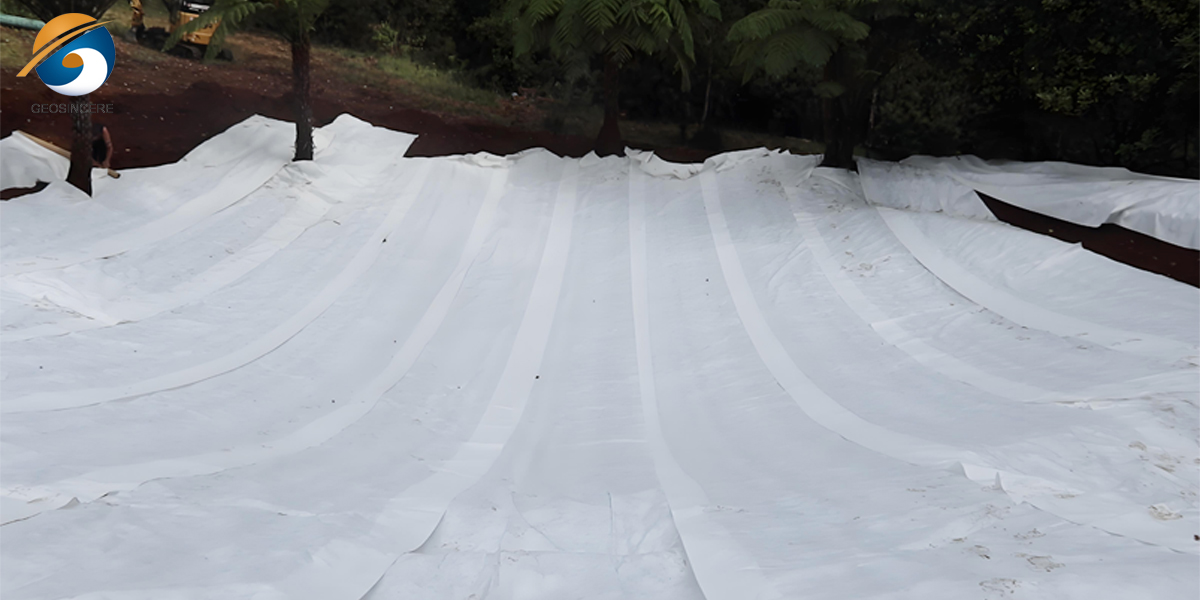
- Placement:Rolls are deployed manually or mechanically, with adjacent rolls overlapped by a specified amount (typically 12 to 18 inches). The overlap must be sufficient to ensure continuity of function.
- Anchoring: On slopes, the top of the geotextile should be anchored in a trench to prevent slippage.
- Backfilling: The initial layer of backfill material (e.g., drainage aggregate) should be placed carefully, preferably by dropping it from a low height to avoid damaging the fabric. Equipment should not directly drive on the unprotected geotextile.
Conclusion
The drainage geotextile membrane is a quintessential example of a high-tech material that solves fundamental, age-old engineering problems. By performing the silent, unseen roles of separator, filter, drain, and reinforcer, it ensures the integrity, durability, and safety of the infrastructure that supports modern life. Its use translates directly into reduced maintenance costs, longer service life for projects, and a more sustainable approach to construction by minimizing the use of virgin aggregates and preventing premature failures. As engineering challenges grow more complex and the demand for resilient infrastructure increases, the role of this versatile and powerful material will only become more central, solidifying its status not just as a component, but as a foundational element of intelligent design.
Choose a Reliable Drainage Geotextile Membrane Supplier to Quote Price for You
Shandong Geosino New Material Co.,Ltd (GEOSINCERE Geosynthetics) has been keeping on investing in technological innovation, manufacturing facilities improvement and turnkey engineering abilities. We have invested 10 million dollars into our manufacturing factory which is equipped with state-of-the-art automatic production lines to manufacture high quality HDPE geomembranes and other geosynthetics with optimized processes. Our extensive lines of geosynthetics products are well known for their ensured quality, high performance, excellent durability and best cost effectiveness.
GEOSINCERE brand HDPE geomembranes and other geosynthetics products and solutions can meet your requirements by our solid technologies, innovative engineering solutions and excellent customer services. GEOSINCERE always tries our best to solve the most complex civil, mining and environmental challenges with our innovative and high performance geosynthetic products. Quality assurance, factory price and fast delivery time are our competitive advantages.


