Nonwoven Stabilization Fabric Drainage Geotextile for Sale
Dual-function geotextile for stabilization and drainage
This nonwoven geotextile reinforces soil and removes surplus water simultaneously to reduce settlement risk.
High tensile strength & puncture resistance
Robust nonwoven geotextile withstands construction impact and long-term underground loading.
Reliable filtration performance
Blocks fine soil particles to prevent clogging and maintain smooth drainage long term.
Perfect for infrastructure works
Suitable for roads, railways, parking lots and athletic fields to extend project service life.
Nonwoven stabilization fabric drainage geotextile is a type of geotextile material used in civil engineering and construction applications. It is designed to provide both stabilization and drainage functions in various projects such as roads, railways, embankments, retaining walls, and landfills.
Nonwoven geotextiles are manufactured by bonding or needle-punching synthetic fibers together. These fibers are typically made of polyester, polypropylene, or a blend of both. The nonwoven nature of the fabric means that the fibers are randomly arranged, creating a porous structure with excellent filtration and drainage properties.
The primary purpose of nonwoven stabilization fabric drainage geotextile is to improve the overall performance and longevity of the engineered structures. It acts as a separation layer, preventing the mixing of different soil layers and maintaining their individual characteristics. This separation reduces the potential for differential settlement and maintains the integrity of the structure.

Another important function of the geotextile is drainage. It allows water to pass through the fabric while retaining soil particles. This prevents the buildup of pore pressure and enhances the overall stability of the structure. By promoting efficient water drainage, the geotextile helps to prevent erosion and maintain the integrity of the soil.
Nonwoven stabilization fabric drainage geotextiles are available in various thicknesses, strengths, and filtration properties to suit different project requirements. The selection of the appropriate geotextile depends on factors such as soil conditions, expected loads, and the specific application.
Overall, nonwoven stabilization fabric drainage geotextiles play a vital role in civil engineering and construction projects by providing stabilization and drainage functions. They are widely used to enhance the performance, durability, and longevity of engineered structures while minimizing the potential for soil erosion and settlement.
Parameter
Item | Test Method | Unit | 10 | 15 | 20 | 25 | 30 | 35 | 40 | 45 | 50 | 60 |
Index Properties | ||||||||||||
Ultimate Tensile Strength. MD | ASTM D4595 | KN/m | 1 | 11 | 14 | 17 | 19 | 24 | 27 | 30 | 37 | 41 |
Ultimate Tensile Strength, TD | ASTM D4595 | KN/m | 6 | 10 | 12 | 15 | 17 | 21 | 25 | 28 | 34 | 38 |
Tensile Elongation | ASTM D4595 | % | 45 | 45 | 50 | 50 | 50 | 60 | 60 | 60 | 60 | 60 |
Grab Tensile Strength. MD | ASTM D4632 | N | 400 | 600 | 850 | 1000 | 1250 | 1450 | 1700 | 1900 | 2100 | 2500 |
Grab Tensile Strength, TD | ASTM D4632 | N | 350 | 550 | 700 | 900 | 1100 | 1250 | 1450 | 1600 | 1800 | 2150 |
Grab Elongation | ASTM D4632 | % | 45 | 45 | 50 | 50 | 50 | 60 | 60 | 60 | 60 | 60 |
Trapezoid Tear Strength. MD | ASTM D4533 | N | 160 | 300 | 350 | 430 | 490 | 540 | 630 | 710 | 770 | 920 |
Trapezoid Tear Strength, TD | ASTM D4533 | N | 140 | 270 | 330 | 400 | 450 | 510 | 610 | 690 | 750 | 900 |
CBR Puncture Strength | ASTM D6241 | N | 1000 | 1800 | 2300 | 2700 | 3200 | 3600 | 4400 | 4800 | 5800 | 6900 |
Apparent Opening Size 090 | ASTM D4751 | mm | 0.12 | 0.11 | 0.11 | 0.10 | 0.09 | 0.08 | 0.08 | 0.08 | 0.08 | 0.08 |
Water Flow Q100 | ASTM D4491 | L/m2/s | 250 | 235 | 220 | 200 | 185 | 165 | 125 | 110 | 90 | 80 |
Weight | ASTM D5261 | G/m2 | 100 | 150 | 200 | 250 | 300 | 350 | 400 | 450 | 500 | 600 |
Thickness | ASTM D5199 | mm | 1.2 | 1.8 | 2.3 | 2.9 | 3.2 | 3.6 | 3.9 | 4.2 | 4.4 | 4.8 |
Roll width | / | m | 6 | 6 | 6 | 6 | 6 | 6 | 6 | 6 | 6 | 6 |
Roll Length | / | m | 300 | 200 | 150 | 100 | 100 | 100 | 80 | 80 | 50 | 50 |
Nonwoven Stabilization Fabric Drainage Geotextile for Sale Features
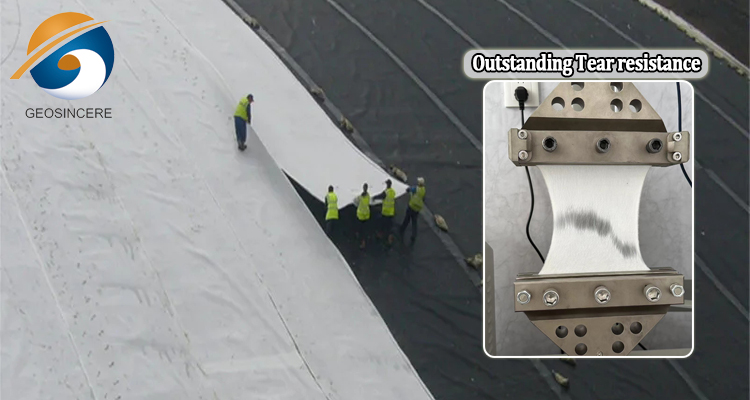
Nonwoven Stabilization Fabric Drainage Geotextile possesses several notable features that make it an excellent choice for various applications. These features include:
High Tensile Strength: This nonwoven geotextile bears heavy subgrade loads and reduces foundation deformation.
Great Puncture Resistance & Long Durability: The geotextile resists sharp particle damage during backfilling and long underground service.
Acid and Alkali Resistance & Anti-corrosion: Stable fiber structure protects the geotextile from corrosion in complex soil environments.
Outstanding Anti-aging Performance: Maintain stable geotextile properties under long-term underground exposure.
Excellent Permeability and Filtration: Fast water drainage while blocking fine soil particles to prevent clogging.
Withstands Severe Construction Loading: The geotextile stays intact under heavy construction machine loads.
Extend Project Service Life: Improve overall stability of roads, railways and landfill subgrade.
Easy Installation: Lightweight geotextile rolls simplify laying work and cut construction time.
Main Applications

Nonwoven stabilization fabric drainage geotextiles have a wide range of applications in civil engineering and construction projects. Here are some common applications where these geotextiles are used:
Road Construction:
Nonwoven geotextiles are often used in road construction projects to provide stabilization and separation functions. They are placed between the subgrade soil and the road base or sub-base layers. The geotextile prevents the mixing of different soil layers, improves the load-bearing capacity, and enhances the overall stability of the road.
Railway Embankments:
Geotextiles are used in railway embankments to provide reinforcement and prevent soil erosion. They help distribute the load from passing trains, reduce settlement, and improve the overall stability of the embankment.
Retaining Walls:
Nonwoven geotextiles are used in the construction of retaining walls to provide reinforcement and drainage. They help retain the soil behind the wall, prevent soil erosion, and enhance the overall stability of the structure.
Landfills:
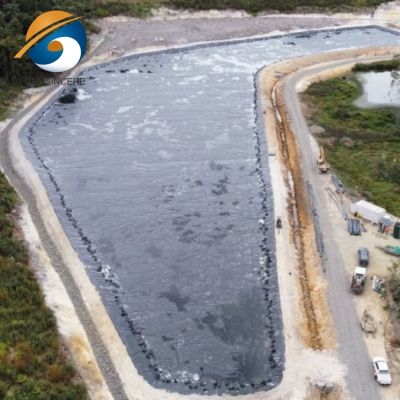
Geotextiles are used in landfill projects to provide separation and filtration functions. They are placed between the waste material and the underlying soil layers to prevent the mixing of contaminants, promote proper leachate drainage, and enhance the overall performance of the landfill liner system.
Drainage Systems:
Nonwoven geotextiles are used in various drainage systems, including subsurface drainage and erosion control applications. They allow water to pass through while retaining soil particles, thereby improving the efficiency of the drainage system and preventing soil erosion.
Coastal and Riverbank Protection:
Geotextiles are used in erosion control projects along coastlines and riverbanks. They help stabilize the soil, prevent erosion caused by water currents, and protect the shoreline or riverbank from damage.
These are just a few examples of the applications of nonwoven stabilization fabric drainage geotextiles. They are versatile materials used in various civil engineering and construction projects to enhance stability, improve drainage, and prevent soil erosion.
Key Benefits for Buyers
Factory direct supply of nonwoven geotextile
Custom specs for different civil project demands
Strict quality inspection before shipment
Stable performance for long-term underground use
FAQ
Q: What is non-woven stabilization drainage geotextile?
A: Needle-punched geotextile combining soil stabilization and drainage for civil projects.
Q: What functions does this geotextile have?
A: Stabilization, drainage, filtration and separation to protect subgrade.
Q: What raw materials are used?
A: PP or polyester fibers with good underground chemical stability.
Q: What weights are available?
A: 100–800g/m². Heavier grades offer stronger mechanical performance.
Q: Non-woven vs woven geotextile?
A: Non-woven has better permeability; woven delivers higher tensile strength.
Q: What testing standards apply?
A: ASTM standards D4595, D5261, D6241, D4751, D4491.
Q: Where is this geotextile used?
A: Roads, railways, parking lots, sports fields, landfills and slope works.
Q: Can it stop soil loss?
A: Yes, it traps fine soil particles and prevents drain clogging.
Q: What roll widths can you supply?
A: 1m–6m, custom widths acceptable.
Q: How fast is delivery?
A: Stock items ship within 2–3 working days.

Hope to be your partner!