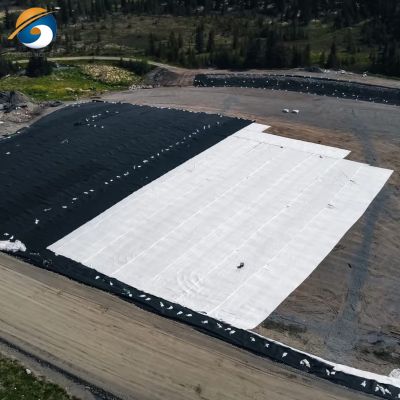
Hdpe geomembrane selection guide
HDPE geomembrane selection guide refers to a structured engineering approach used to evaluate, specify, and procure high-density polyethylene geomembranes based on project design life, environmental exposure, mechanical load, and regulatory requirements, ensuring long-term containment performance and construction reliability.
Technical Parameters & Specifications
A reliable HDPE geomembrane selection guide begins with quantifiable parameters that directly influence performance and service life.
| Parameter | Typical Range | Engineering Significance |
|---|---|---|
| Thickness | 0.5 – 3.0 mm | Controls puncture resistance and durability |
| Density | ≥ 0.94 g/cm³ | Defines HDPE material classification |
| Tensile Strength (Yield) | ≥ 15 MPa | Resistance to stress and deformation |
| Elongation at Break | ≥ 700% | Crack resistance and flexibility |
| Carbon Black Content | 2.0 – 3.0% | UV resistance for exposed liners |
| Oxidative Induction Time (OIT) | ≥ 100 min | Long-term thermal aging resistance |
Structure & Material Composition
Understanding internal structure is essential when applying an HDPE geomembrane selection guide in engineering design.
Base Polymer: High-density polyethylene resin, typically virgin-grade
Carbon Black: Finely dispersed for UV and weather protection
Antioxidants: Primary and secondary stabilizers for aging resistance
Surface Type: Smooth, single-textured, or double-textured
Optional Additives: Processing aids for extrusion stability
Manufacturing Process
Manufacturing quality directly affects the validity of any HDPE geomembrane selection guide.
Raw Material Qualification: Resin index, density, and contamination checks
Gravimetric Dosing: Precise blending of resin and additives
Extrusion: Flat-die or blown-film geomembrane lines
Thickness Calibration: Online measurement and tolerance control
Surface Texturing: Inline embossing for slope stability
Cooling & Annealing: Stress reduction in polymer structure
Quality Control: Mechanical, thermal, and visual inspections
Industry Comparison
An HDPE geomembrane selection guide often requires comparison with alternative liner materials.
| Material | Chemical Resistance | Service Life | Cost Level | Typical Applications |
|---|---|---|---|---|
| HDPE Geomembrane | Excellent | 20–50 years | Medium | Landfills, mining, ponds |
| LLDPE Geomembrane | Very Good | 15–30 years | Medium | Irregular subgrades |
| PVC Liner | Moderate | 10–20 years | Low | Temporary containment |
| Clay Liner | Low | Variable | Low | Supplementary barrier |
Application Scenarios
A practical HDPE geomembrane selection guide must align with end-user roles and project types.
EPC Contractors: Landfill liners, heap leach pads, tailings dams
Engineering Consultants: Environmental and hydraulic containment design
Distributors: Stocking standard thicknesses and roll sizes
Developers: Industrial ponds and infrastructure protection
Core Engineering Pain Points & Solutions
Leakage Risk: Addressed through appropriate thickness and welding quality
UV Degradation: Solved by verified carbon black dispersion
Stress Cracking: Mitigated by high OIT and elongation values
Installation Failure: Reduced by selecting compatible surface textures
Risk Warnings & Mitigation Recommendations
Incorrect application of an HDPE geomembrane selection guide can introduce long-term project risk.
Avoid underspecifying thickness for heavy loads
Do not mix geomembranes from different production batches
Verify chemical compatibility with contained media
Ensure subgrade preparation meets design assumptions
Procurement & Selection Guide
Define containment purpose and regulatory requirements
Determine exposure conditions (UV, chemicals, temperature)
Select appropriate thickness and surface texture
Review manufacturer QA/QC and test reports
Confirm welding method and field testing plan
Assess logistics, roll size, and site handling
Align material choice with design service life
Engineering Application Case
In a municipal landfill expansion project, a 2.0 mm double-textured HDPE geomembrane was selected using a structured HDPE geomembrane selection guide. The liner system accommodated steep slopes and aggressive leachate chemistry, achieving regulatory approval and stable performance during phased cell construction.
FAQ
What thickness is most common? 1.5 mm and 2.0 mm.
Is HDPE suitable for chemical waste? Yes, with compatibility checks.
When is textured geomembrane required? On slopes requiring shear resistance.
Does thicker always mean better? Only when matched to load conditions.
Can recycled HDPE be used? Not recommended for critical containment.
How is seam quality verified? Air channel or vacuum testing.
What controls service life? OIT, UV exposure, and stress conditions.
Is HDPE flexible in cold climates? Within specified temperature limits.
Can HDPE be repaired on site? Yes, using extrusion welding.
Does HDPE replace clay liners? Often used in composite liner systems.
CTA – Commercial & Technical Request
For project-specific HDPE geomembrane selection guide support, including thickness recommendations, pricing, technical datasheets, or engineering samples, procurement and engineering teams may submit formal requests for technical documentation and quotation packages.
E-E-A-T Author Credentials
This guide is prepared by engineering professionals with over 15 years of experience in geomembrane manufacturing, containment system design, and international EPC project execution across landfill, mining, and water infrastructure sectors.