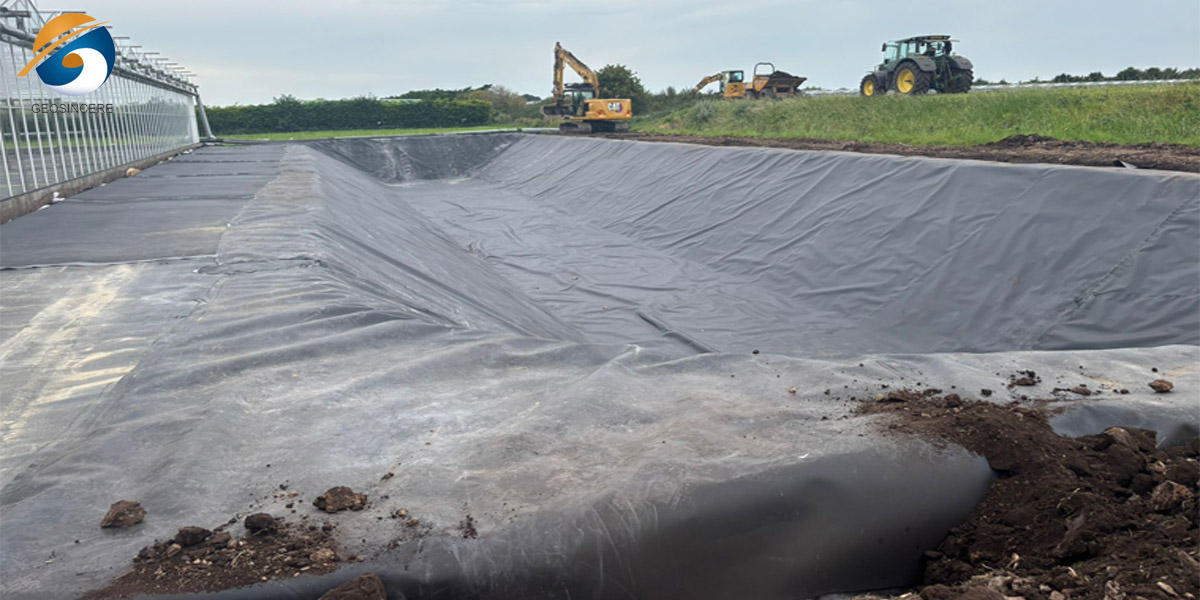
Ultimate Guide to Choosing HDPE Smooth Geomembrane
In the equally complex and detailed fields of geotechnical and environmental engineering, a material with the extent of influence as High-Density Polyethylene (HDPE) has is hardly found. The hdpe smooth geomembrane has been a major player in the revolution of containment and barrier systems, with its protective role against contamination, leakage, and environment worsening being highly recognized. The polymer science and civil engineering amalgamation is epitomized in this case through the broad usages of this material, from the protection of the earth's water resources to the rehabilitation of the earth via the safe disposal of the waste. HDPE smooth geomembrane is the premier long-term containment solution due to its being composed of certain substances, having some properties, being usable in some ways and having some particularities with regard to the installation. This article explores all these factors that lend HDPE smooth geomembrane its status.
1. HDPE Smooth Geomembrane Composition and Manufacturing
Basically, an HDPE smooth geomembrane is an elastic, smooth surface, non-permeable membrane manufactured from high-density polyethylene resin. The term "high-density" is a description of the polymer's linear structure with almost no branching, thus the resulting material is very strong (it has high tensile strength), hardly affected by chemicals and can last for a very long time (together with other characteristics) as compared to a low-density one. To make a continuous sheet of a given thickness, the manufacturing process is in general one of flat die or circular die extrusion. Most of the time, the "smooth" surface is a product of the extrusion process, giving a uniform, non-textured look.
The polymer is usually mixed with the following ingredients that will improve its functioning: carbon black (2-3%) for ultraviolet (UV) protection, antioxidants for resistance to heat over a long period and anti-oxidants to obviate attack on the product during installation and service. Geomembrane thus obtained is made in large rolls, the width of which may be up to 7.5 meters while the length can be more than 100 meters, thus enabling the production of vast areas of containment, which are almost without field welds, to be continuous and sealed.
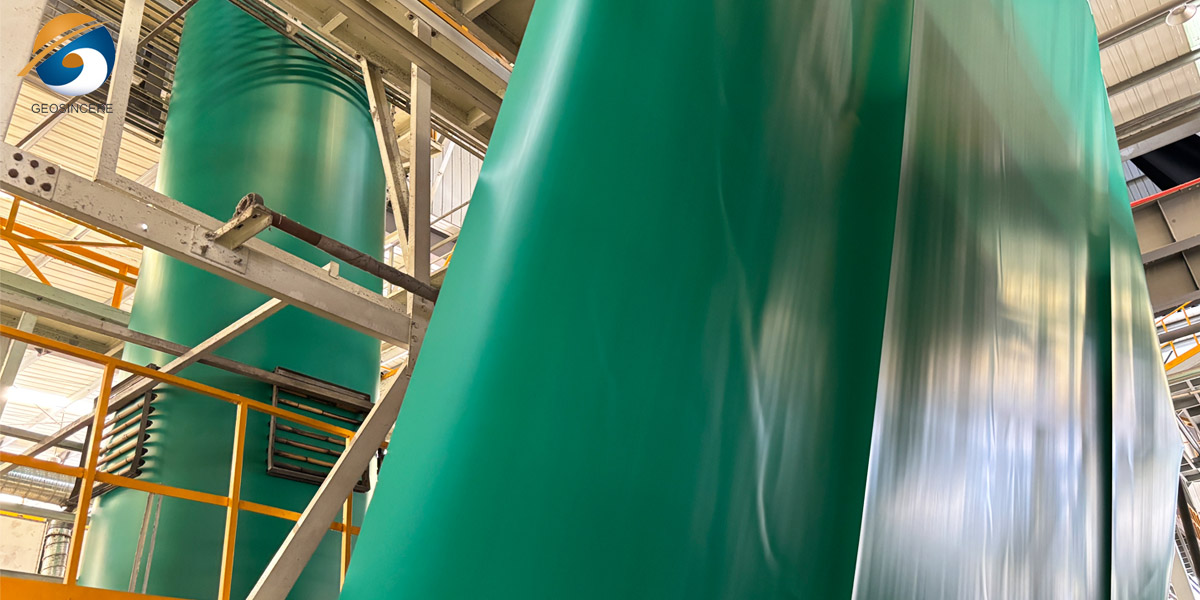
2. Why HDPE Smooth Geomembrane is the Best Choice?
HDPE smooth geomembrane has been massively popular, which generally means that the product has qualities that stand up to time, user/application trials - in this case, a series of outstanding mechanical, chemical, and physical properties has been the rationale behind this .
2.1 Impenetrability and Low Permeability Coefficient
The HDPE geo membranes exhibit extremely low hydraulic conductivity. Thus they are almost impenetrable barriers to fluids (water, leachate) and gases (methane, radon). Fundamentally, this is the main operation of these materials.
2.2 Fabrication of HDPE with utmost chemical resistance
HDPE is immune to attack by a very broad spectrum of chemical substances. These include the strongly acidic, alkaline and salt constituents, as well as the municipal/industrial leachates. Therefore, application areas include hazardous waste landfills, chemical storage ponds, and mining leach pads.
2.3 Great Strength and Elongation at Yield Point (Exceeding)
HDPE liner is strong, especially so, against penetration and tearing caused by excessive pressure, and, if set up right and re-inforced, it will hence be able to survive considerably subgrade settlement and applied forces.
2.4 Stress Cracks Resistance in an Environmental Context (ESCR)
ESCR is a very important property in the context of usage over a long period of time, and is the ability of the material to withstand absence of cracks under tensile stress and on addition of agents such as surfactants. Manufacturers make HDPE products to have high ESCR.
2.5 Solar and Weathering Insulation
This is because carbon black, the component responsible for ultra-violet protection, also provides resistance to degradation by sunlight, ozone, and extreme temperatures. Hence, the performance in an uncovered application can be expected to last for a great number of years.
2.6 Practicality of use
Although the procurement of the hdpe geomembrane materials for the first time may be expensive as compared to other material alternatives, the very long service period (usually the material is designed for more than 50 years), reliability, and the low maintenance that will be required, are what give the material a superior life-cycle cost.
3. HDPE Smooth Geomembrane Versatile Applications: From Landfills to Water Conservation
Due to its toughness, HDPE smooth geomembrane is a tool that can be found practically everywhere in a wide variety of applications:
3.1 Environmental Containment:
- Landfills: Along with serving as basal liners and final caps for municipal solid waste (MSW) and hazardous waste facilities, it stops the waste liquid from going into the water that people drink.
- Wastewater and Treatment Lagoons: These geomembrane sheet are installed in anaerobic digesters, equalization ponds, and evaporation ponds for industrial and municipal treatment plants.
3.2 Water Resources Management:
- Potable Water Reservoirs: To keep water fresh and safe, the storage facilities where drinking water is kept are lined with plastic membranes.
- Irrigation Canals and Ponds: By sealing agricultural water conveyance and storage, the membrane helps to cut down on water loss through infiltration.
- Decorative and Fire Protection Ponds: The given pipe can offer a safe, leak-proof barrier.
3.3 Mining and Industrial:
- Heap Leach Pads and Tailings Impoundments: The use of the polyethylene to hold the leachate in the metal extraction process (copper, gold) is one of the most challenging applications for which the industry has been employed, essentially, isolating mine tailings from the environment.
- Secondary Containment: The lining of bunds around fuel tanks and chemical storage areas with the aim of containment of spills constitutes the most common use of secondary containment.
3.4 Civil Engineering:
- Tunnel and Civil Works Waterproofing: The membrane is placed as a barrier layer over the primary structure in civil works and tunnels to protect it from water infiltration.
- Vapor Barriers: The hdpe membrane helps to conserve moisture and reduce the entry of radon gas that comes from the earth into building foundations.
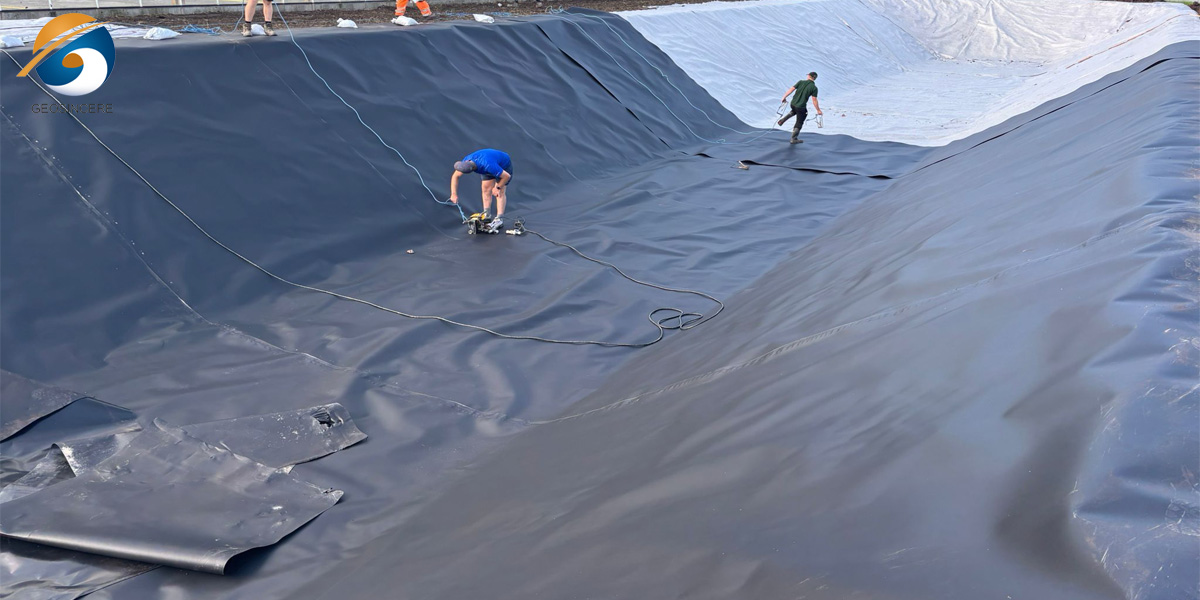
4. HDPE Smooth Geomembrane Installation
A hdpe geomembrana's functioning is limited to the extent that the installation itself is of high quality. A thorough and precise approach to the process is necessary.
4.1 Subgrade Preparation
The base should be not only smooth and compacted but also free from any sharp stones, roots, or litter that could cause perforation. Typically, a protective geotextile layer is placed over a rocky subgrade to serve as a cushion.
4.2 Panel Deployment and Scanning
Panels that are taken out of their rolls are positioned properly and temporarily fixed in place. The production of durable, waterproof field seams is by far the most important feature of the whole operation. In the case of smooth HDPE, this is almost entirely achieved by dual-track hot wedge fusion welding . With this method, the surfaces to be joined are melted under very controlled heating and squeezing, and the continuous, homogeneous joint that is formed has the same strength as the original material. Non-destructive methods are used to check all the seams (e.g., air pressure testing) and destructive methods (shear and peel tests on field samples) to ascertain that they are secure.
4.3 Detail Work
Fabrication of penetrations, corners, and transitions as well as their welding require the highest degree of accuracy and custom making.
4.4 Protection and Cover
The design may call for the placement of a protective geotextile along with a soil or ballast covering on top of the geomembrane to protect it from mechanical wear and UV rays.
5. Smooth vs. Textured: A Contextual Choice
We are talking here about the smooth version, but it would be necessary to draw a comparison between the two types of high density polyethylene geomembrane as well. Textured geomembrane possess a roughened (either co-extruded or structurized) surface of one or both sides that ensures higher friction at the interface with soils or geosynthetics. They are mainly used on steep side slopes (e.g., landfill caps, reservoir walls) where maintaining stability is an issue.
On the other hand, the smooth geo membrane sheet presents advantages in scenarios where high friction is not the main factor: it offers a more consistent and measurable weld, often has slightly higher chemical resistance due to the greater thickness of the sheet itself, and is generally more cost-effective for large, flat-lined areas such as pond bases and landfill floors.
Conclusion
The HDPE smooth geomembrane is an outstanding example of how materials engineering can be changed by innovation. Technically, it is not a simple plastic sheet but a high-performance engineered barrier made to withstand the harshest environmental and geotechnical challenges. Its first to last combination of impermeability, chemical inertness, mechanical strength, and longevity has resulted in its being the default choice for the construction of containment infrastructures all around the globe.
It is the geomembrana in hdpe that is the real hero and goes unnoticed, out of sight, helping to save the earth from the undesirable by-products of human activities and the precious water resources. Also, as engineering norms change and material science makes strides forward, the material and its use will keep on improving, thus, it will be even more firmly established as the impermeable protector of our earth and resources.
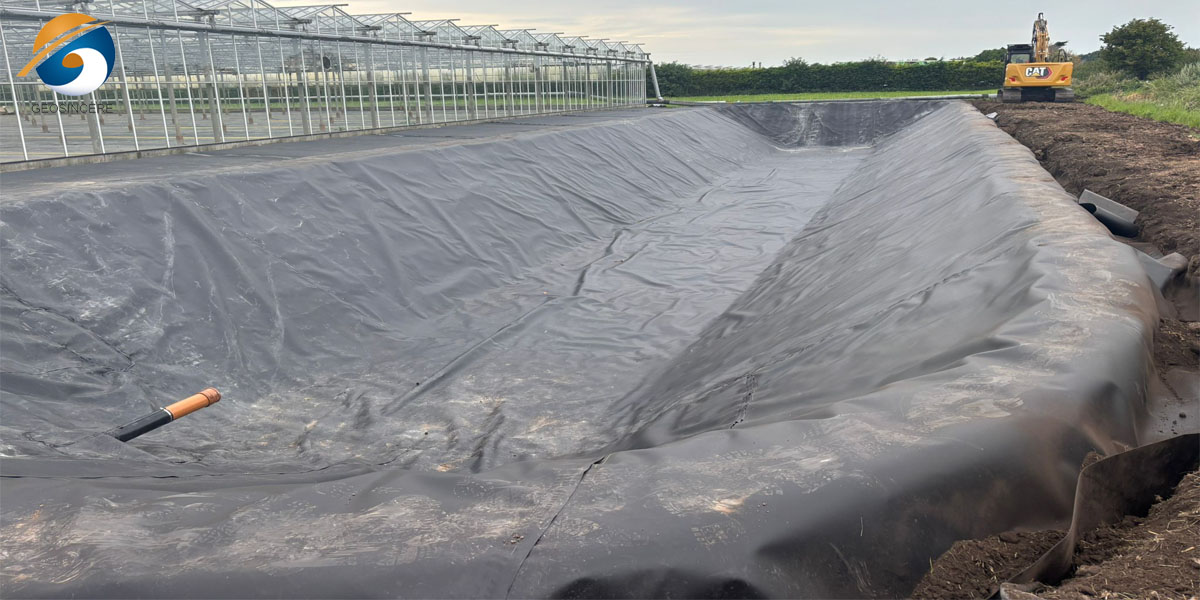
Reasons to Choose GEOSINCERE Geosynthetics :
- Finest raw materials and recipes
- Factory of IGS member HDPE liners
- Every size is available
- Reasonable price, factory direct price.
- Firm and reliable packaging.
- Quick production cycle
- Provide samples free of charge
- Professional guidance services
Pick a Trustworthy Supplier to Get your Price Offer:
Shandong Geosino New Material Co., Ltd.(GEOSINCERE Geosynthetics)is continuously leading the innovation of technology, improving manufacturing facilities and providing turnkey engineering services. We invested $10 million in our production plant, which is fully loaded with state-of-the-art automatic production lines, to produce top-quality HDPE geomembrane and other geosynthetics with customer-friendly processes.
GEOSINCERE is always orienting the company through technological product innovation, improvements of manufacturing facilities and completion of engineering services. The company has put 10 million US dollars into its factory, which is fully equipped with state-of-the-art automated production lines to produce high-quality geosynthetic clay liners and other geosynthetics with the best possible processes. We have a full line of geosynthetics products that are recognized for their guaranteed quality, high performance, great durability, and good price.
GEOSINCERE-branded HDPE geomembranes and other geosynthetics goods and services can fulfill your needs through our reliable technologies, creative engineering solutions, and impeccable customer services. GEOSINCERE is always committed to resolving the most difficult challenges in the fields of civil, mining, and environmental sectors by providing innovative and high-performance geosynthetic products. Our competitive advantages are quality assurance, factory price, and quick delivery time.