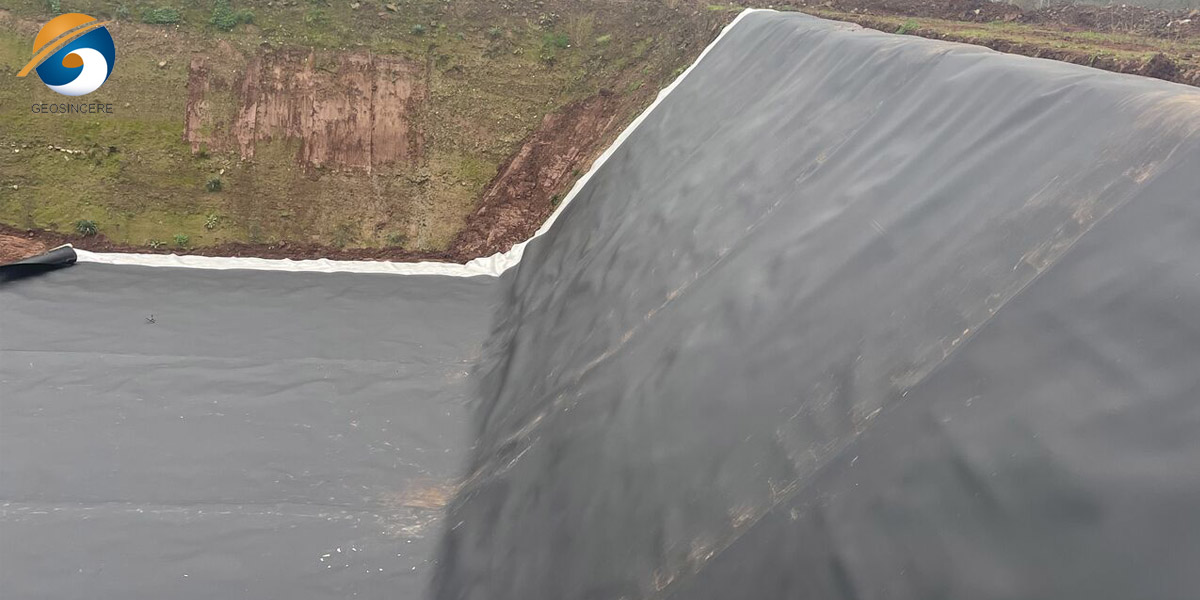
How Much Does Geomembrane for Sale?
If you’re running any of these - landfill, industrial wastewater lagoon, fish or irrigation pond, or managing tailings in a mining site, - then picking the right geomembrane is one of the most crucial decisions. A top-class liner makes it certain that your project is not only leak-free, safe, and compliant with the environmental regulations but also durable for many decades.
GEOSINCERE Geosynthetics, a global supplier of geomembrane, has been partnering with many clients in waste management, aquaculture, mining, energy, and infrastructure sectors. The majority of customers often inquire:
- Which geomembrane thickness should I choose?
- Is HDPE or LLDPE a more suitable choice?
- What specification is required for a landfill compared to a pond or a mining project?
- How can I ensure quality before purchasing?
- Where to buy high-quality geomembrane at a competitive rate?
This all-round guide aids you in unravelling these questions and makes it easy for you to make a final decision on what liner your project needs.
1. What is Geomembrane? Understanding the Basics
Geomembrane, a synthetic impermeable liner or barrier, is a product of polymerization of polymeric materials including HDPE, LLDPE, PVC, and other resins. The invention was mainly designed for controlling fluid and gas movement and it is widely used in the following areas: civil engineering, environmental protection, mining, landfill, water containment, and industrial applications. Besides being an impermeable material, geomembrane is also resistant to wear and tear and is hence the preferred material for long-term containment safety and environmental compliance.
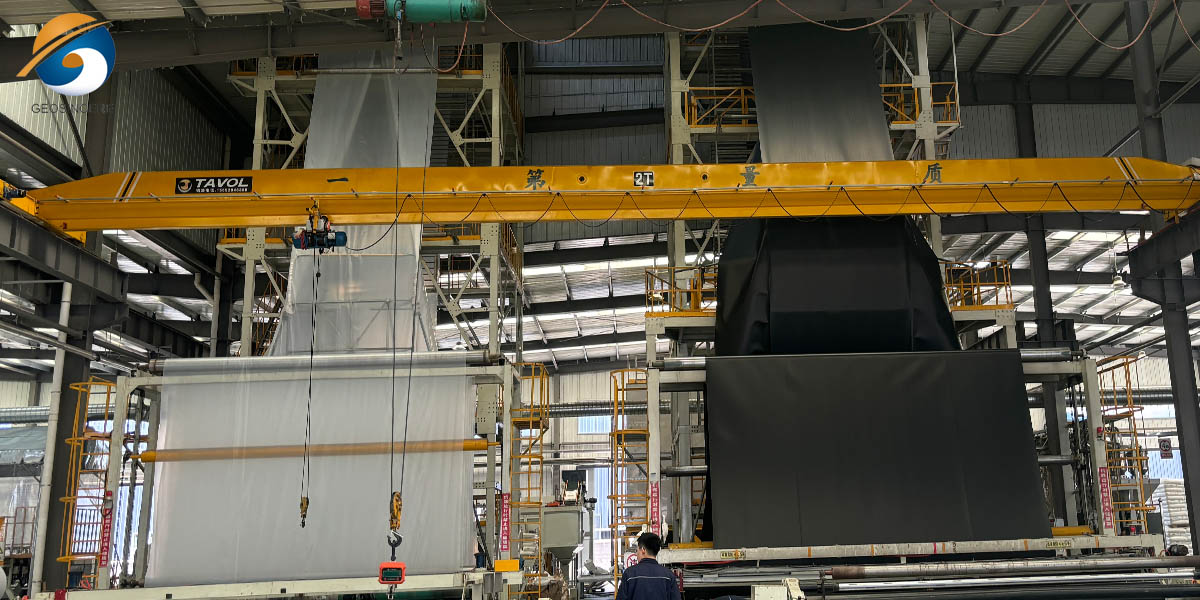
2. Why HDPE Geomembrane is the Industry Standard?
Currently, among the pool of geomembrane materials, HDPE (High-Density Polyethylene) has gained much acceptance and indeed become the industry gold standard for most eco-friendly and modern projects. Its harmonious blend of mechanical strength, chemical resistance, and prolonged period of service life makes it the perfect match for any situation and a wide range of applications.
2.1 Extremely Low Permeability
Regarding the rate of permeability, HDPE geo membranes stands out. Its tightness in movement of liquids and gases is such that it can be used in various sectors such as landfills, tailings ponds, reservoirs, and wastewater treatment plants where containment has to be maintained at all cost.
2.2 Excellent Chemical Resistance
More so, HDPE is credited for its ability to resist an array of acids, alkalis, salts, and organic chemicals implying that it is a dependable material for industrial waste containment, mining, and chemical storage projects without any potential material degradation.
2.3 UV and Weather Resistance
Provided it has the right amount of carbon black and UV stabilization, hdpe liner can endure sunshine exposure, temperature changes, and rough weather conditions, and are therefore suitable for outdoor open-air installations.
2.4 Long Service Life
Even under normal operating and prevailing weather and environmental conditions, hdpe geomembrane can have a lifespan of more than 50 years. This service life basically means that the need for maintenance is not frequent and at the same time, the total life-cycle cost is lower.
2.5 High Tensile Strength
The high tensile strength and puncture resistance are some of the distinctive features owed to HDPE, thus, it can survive and can carry on with the project by being able to resist stresses from subgrade settlement, hydrostatic pressure, and construction activities. It is due to such reliability that one can guarantee the necessary support throughout a project's lifespan.
2.6 Cost-Effectiveness for Large Areas
Given its durability and the fact that it is obtainable in wide sheets, geomembrane sheet is evidently a cheap solution for huge projects. Lower maintenance and long-term performance make it an economical choice among alternative lining materials as well.
3. Geomembrane for Sale – Types & Properties You Should Know
People also ask/Before investing in geomembrane, it is essential to understand the different types available and their respective performance characteristics. Each geomembrane material and surface structure is designed to meet specific engineering requirements, and selecting the right option directly affects durability, safety, and overall project cost.
3.1 HDPE Geomembrane (High Density Polyethylene)
HDPE membrane is the dominated product in the geosynthetics industry and suitable for most applications. As we all know, those materials and surface finishes of hdpe geomembrana is the very core or have a big part in serving particular engineering needs they are also instrumental in ensuring the final product is durable and not harmful to the environment and a project with good cost efficiency. Thus, making the wrong choice on this issue corrosively affects the safety and the total project expense./Furthermore, it is very important for such projects to last longer and to do this, HDPE stand out with minimal permeability and a lifetime of almost 50-70 years. In addition, it is relevant to mention the fact that such a product is also easy to install, which permits to reach a global market, a significant advantage in being actively present in the landfills, etc. The fact that its presence is greater in very large areas is the reason for it being used in land reclamation, mining areas, industrial waste ponds, and the like, the use of it is now quite widespread.
3.2 LLDPE Geomembrane (Linear Low Density Polyethylene)
Compared with HDPE, LLDPE geomembrane contains more flexible and softer polymers which are ideal for the majority of projects as the polymers elongation is much higher, so that is much easier to apply a double sided tape. LLDPE geomembrane liner has superior elongation and flexibility that make it adapt to the irregularities of any kind of soil without breaking, also, it shows very low probability for stress cracking in the future. For these reasons, it is very suitable for various aquatic and wastewater-related applications, such as fishponds, artificial lakes, golf ponds, wastewater lagoons, and agricultural irrigation ponds, where it is very convenient to use anti-leakage installations requiring some time and effort for putting them together.
3.3 Textured Geomembrane
Would you please let me know which applications can be better with the use of the textured geomembrane, and also, what is the role of the roughened surface texture in the improvement process of the soil? Besides the fact that the lining material is now being considered as one of the best, most of the world's construction places are not possible to be executed but, if any, using this type of geomembrane, the situation would be different. The increased roughness increases the host of the lining to be briskly with the environment and makes the heaps way safer. So, as the soil is kept stable, it can not dislodge the waterproofing membrane, thus, the liner does not break, and the water is retained in the pond. When a large amount of force is applied, the geo membrane sheet escapes from the ground and the remnants increase exponentially.
3.4 Smooth Geomembrane
Usually, smooth geomembrane is applied to present variegated sealing uses where the issue of slope stability is of secondary importance. That is advantageous in a way that it allows for efficient welding and the possibility for strong seam integrity thus providing an effective seepage barrier. Having a comparison of the textured ones, the smooth geomembranes are usually less expensive, which is more baseline in terms of functionality for the projects such as pond linings, wastewater treatment facilities, irrigation canals, and the common foundation sealing.
3.5 Geomembrane Thickness Guide
Below is a general thickness recommendation:
Project Type | Recommended Thickness |
Fish Pond / Farm Pond | 0.5mm – 1.0mm |
Decorative Lake | 0.75mm – 1.0mm |
Landfill Bottom Liner | 1.5mm – 2.0mm |
Landfill Capping | 1.0mm – 1.5mm |
Mining Heap Leaching | 1.5mm – 2.0mm (textured optional) |
Industrial Wastewater Pond | 1.5mm – 2.0mm |
Oil & Gas Containment | 1.5mm – 2.0mm |
Reservoir / Dam Lining | 1.0mm – 2.0mm |
GEOSINCERE Geosynthetics engineers can also customize specific thicknesses according to your project drawings.
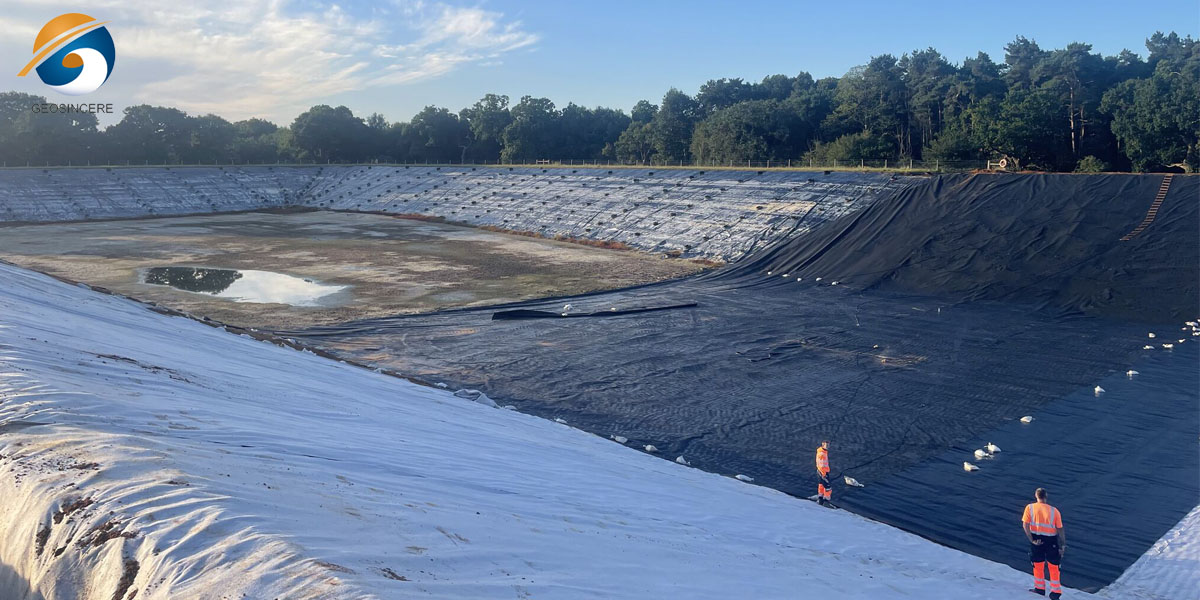
4. How Much Does Geomembrane for Sale Cost?
The price of geomembrane depends on the choice of the material, thickness, surface structure, quality standards, and quantity of the order. Knowledge on these elements plays a key part in a buyer's decision-making process thereby avoiding unnecessary expenses and at the same time maximizing the performance of the product over a long period of time.
4.1 Typical Geomembrane Material Prices (Per Square Meter)
4.1.1 HDPE Geomembrane
HDPE is the most common polymer that is used in the environmental and industrial sectors. It usually comes with a price range from USD 0.90 to 7.50 per square meter, and this range is mainly based on thickness and the requirement for certification. Thinner HDPE liners are usually used for light-duty jobs, and the thicker ones with the higher quality standard are normally found in landfills, mining sector or hazardous containment operations, which means higher unit prices are the result of all the above.
4.1.2 LLDPE Geomembrane
Usually, the LLDPE geomembrane is costing USD 1.00-6.50 per square meter. Despite the fact that it is less rigid than HDPE, the higher cost is a result of the increased elongation and the higher ability to conform to the situation. LLDPE liners are more often used in projects with complex shapes or in those where soil conditions are not uniform, and thus, the flexibility of the liner can reduce stress during installation and thus minimize failures.
4.1.3 PVC Geomembrane
PVC geomembrane costs around USD 1.50 and 6.00 per square meter. It is widely used in decorative ponds, water features, and projects that require resistance to mechanical abuse or ease of handling. However, the plasticizer used in PVC liners may have a shorter service life under the influence of aggressive chemicals or sunlight as compared to HDPE or LLDPE.
4.1.4 EPDM and Composite Liners
Most EPDM and composite geomembranes start are priced from USD 2.00 per square meter and can increase up to USD 7.00, based on performances. They are usually chosen for niche applications that need elasticity, thermal resistance, or multi-layered protection.
4.2 Example Price Ranges for HDPE Geomembrane
4.2.1 Light-Duty HDPE Liners (0.5–0.75 mm)
Such a thin geomembrane costs around USD 0.50 to 1.90 per square meter. They are used in projects like aquaculture ponds, temporary water storage, and small landscaping where weights and chemical use are not high.
4.2.2 Medium-Duty HDPE Liners (1.0–1.5 mm)
The average thickness of HDPE liners is most likely to range from USD 1.00 to 3.50 per square meter. This type is commonly used in wastewater lagoons, irrigation canals, and municipal water containment projects because of an optimal balance between cost and strength.
4.2.3 Heavy-Duty HDPE Liners (2.0-3.0 mm)
The standard HDPE geomembranes generally range from USD 2.20 to 3.50 per square meter. In case of heavy-duty, these are the right choice, and should be able to withstand the conditions of a landfill, the harmful environment of mining tailings ponds, and the undesirable waste of industrial production, where practical projects easily last for a very long time. It is not only chemical attack that is the main concern but also the structural needs of these industries if an environmental accident occurs.
Compared to the smooth membrane, textured HDPE geomembranes are generally more expensive on inclined slopes due to the manufacturing process and frictional resistance gaining extra expenses being about 15-35%.
4.3 Other Key Factors Affecting Geomembrane Cost
4.3.1 Thickness
Thickness is directly proportional to material use, thus, as thickness increases, so does the cost. The issue of puncture resistance is very crucial when it comes to selecting a long-term liner, even better, one that can reduce long-run costs.
4.3.2 Material Quality
Purely original resin-based geomembranes are more costly, but it turns out that they are better as they feature few variations over their lifespan, hence, they are always in good condition, and they can serve awhile without any problems related to aging and micro-beating.
4.3.3 Order Volume
In like manner, the quantity of the order has a direct bearing on the cost per unit. The price of large land areas can be from 10 to 30 percent lower than that of small - scale constructions.
4.3.4 Installation and Accessories
Furthermore, transportation and personnel costs along with welding, seam testing, protective geotextiles, and anchoring systems are other feasible costs that can add an extra $0.50 to $3.00 per square meter to the total project budget. The cost is determined by a number of factors including the site's characteristics and the level of quality required.
Summarize
The newest survey conducted among customers shows that the cost of geomembrane for sale has many variables that might affect the price, e.g. Material type, the thickness of the sheet, the surface texture (smooth or textured), and order volume. The possibility of bulk buying with standard conditions can lead to a dramatic decrease in unit costs, whereas the demand for a more qualitative level of performance and additional services increases the overall project budget. Overall, selecting the right geomembrane based on application needs ensures both cost efficiency and long-term containment performance.
For reliable quality, competitive pricing, and a full range of certified geomembrane solutions, Shandong Geosino New Material Co., Ltd. (GEOSINCERE Geosynthetics) is a recommended supplier for global projects.