

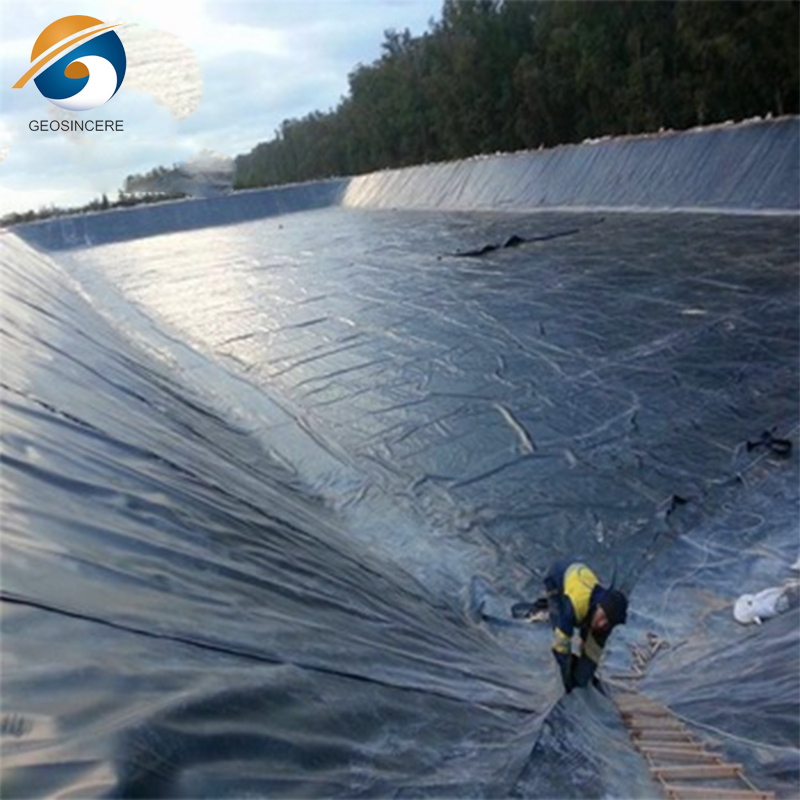
China HDPE Geomembrane Industrial Landfill Liner System
HDPE (High-Density Polyethylene) geomembrane is a type of synthetic liner commonly used in industrial landfill applications. It is a robust and impermeable material designed to provide a barrier against the migration of liquids and gases in landfills, thus helping to prevent environmental contamination.
HDPE geomembrane is highly impermeable to liquids and gases. It acts as a barrier, preventing the migration of contaminants from the landfill into the surrounding environment, including groundwater.The thickness of the HDPE geomembrane used in landfill applications varies depending on the specific requirements of the site and the type of waste being contained. Typically, thicknesses range from 0.5 to 2.5 millimeters (20 to 100 mils).HDPE geomembrane liners have a long service life, typically exceeding 30 years. Their resistance to ultraviolet (UV) radiation and environmental stress cracking ensures their durability over extended periods.
An HDPE (High-Density Polyethylene) geomembrane landfill liner is a synthetic liner used in landfill construction to provide a barrier against the migration of liquids and gases. It is designed to prevent the contamination of soil, groundwater, and the surrounding environment by effectively containing and isolating waste materials.HDPE geomembrane liners are made from high-density polyethylene, which is a durable and chemically resistant material. HDPE exhibits excellent resistance to a wide range of chemicals commonly found in landfill environments, ensuring long-term stability and containment.
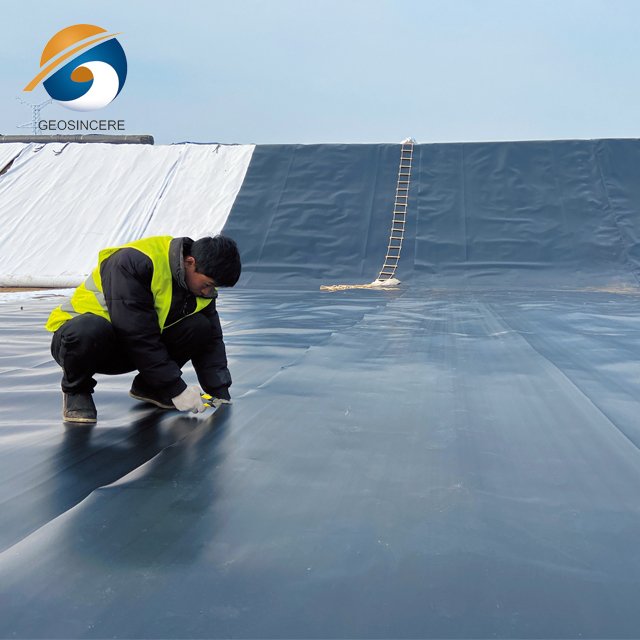
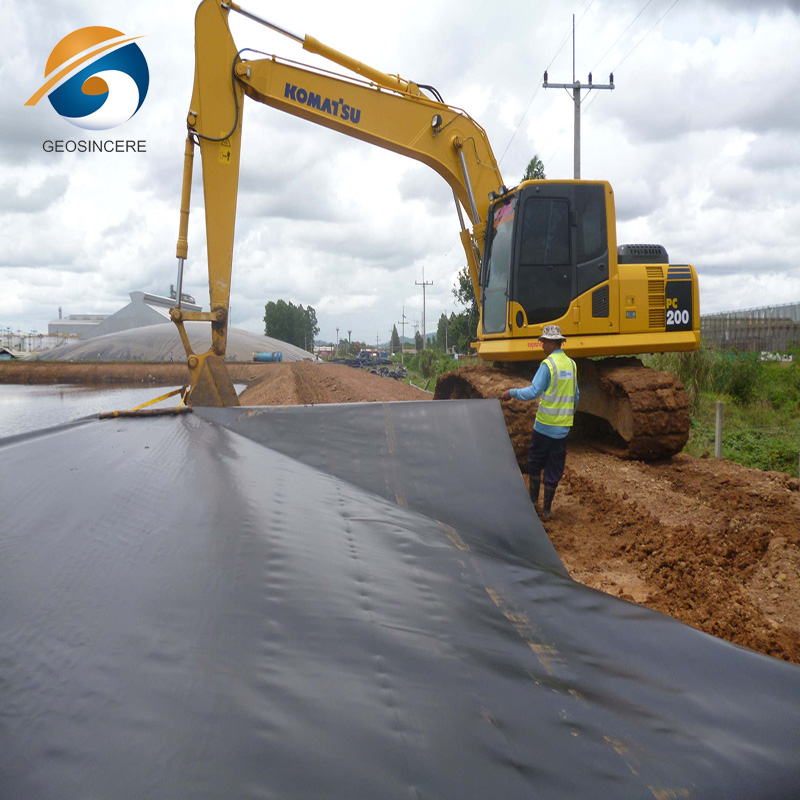
The primary purpose of an HDPE geomembrane landfill liner is to create an impermeable barrier. It prevents the migration of liquid waste, known as leachate, from the landfill into the underlying soil and groundwater. This helps to protect water resources and prevent environmental contamination. The thickness of an HDPE geomembrane landfill liner varies depending on factors such as the waste type, site conditions, and regulatory requirements. Generally, HDPE liners used in landfills range from 0.75 to 3 millimeters (30 to 120 mils) in thickness.HDPE geomembrane liners are installed by overlapping and heat-welding the seams together. This fusion process creates a continuous and watertight barrier, ensuring that there are no weak points or potential pathways for leachate to escape.
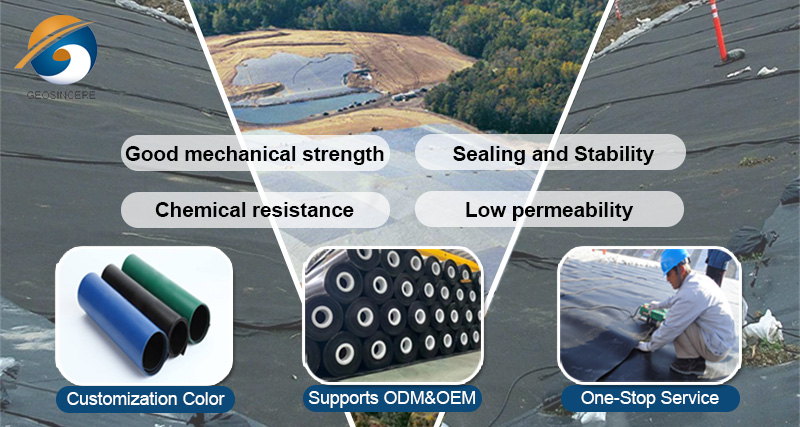
Parameter
ltem | Detailed item | Unit | Standard | Test Frequency | GS075 | GS010 | GS015 | GS020 | GS030 |
Mechanical Properties | Thickness | mm | D5199 | per roll | 0.75 | 1.00 | 1.50 | 2.00 | 3.00 |
Density | g/cc | D1505/D792 | 90.000kg | 0.94 | |||||
Tensile Properties | |||||||||
Yield Strength | KN/m | D6693 Type Iv | 9.000 kg | 11 | 15 | 22 | 29 | 44 | |
Break Strength | KN/m | 20 | 27 | 40 | 53 | 80 | |||
Yield Elongation | % | 12 | 12 | 12 | 12 | 12 | |||
Break Elongation | % | 700 | 700 | 700 | 700 | 700 | |||
Tear Resistance | N | D1004 | 20.000kg | 93 | 125 | 187 | 249 | 374 | |
Puncture Resistance | N | D4883 | 20.000kg | 240 | 320 | 480 | 640 | 960 | |
Stress Crack Resistance | Hr. | D5397 | per GRl GM-10 | 300 hr. | |||||
Carbon black content | % | D4218 | 9.000kg | 2.0-3.0% | |||||
Carbon black dispersion | D5596 | 20.000kg | For 10 different views: 9 in Categories 1 or 2 and 1 in Category 3 | ||||||
Reference Properties | Oxidative Induction Time | ||||||||
Standard OlT | min | D3895 | 90.000kg | 100 min | |||||
High pressure OlT
| D5885 | 90.000kg | 400 min | ||||||
Oven Aging at 85°C retained after 90 days
| % | D5721 | per each formulation | 55% | |||||
Standard OlT | D3895 | 80% | |||||||
High pressure OlT | D5885 | 80% | |||||||
UV Resistance | |||||||||
High Pressure OlT_% retained after 1600 hrs | % | D5885 | per each formulation | 50% | |||||
Roll Size | Roll widthe | m | 7 | 7 | 7 | 7 | 7 | ||
Roll Length | m | 280 | 210 | 140 | 105 | 70 | |||
Size stability | % | 2% | |||||||
China HDPE Geomembrane Industrial Landfill Liner System Features
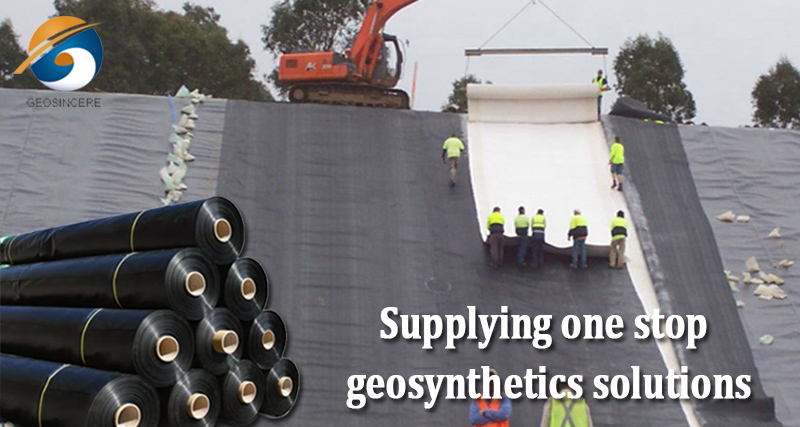
Excellent Chemical Resistance.
Outstanding Stress Crack Capacity.
Lowest Permeability.
Excellent UV Resistance.
Stable Low Temperature Embrittlement Resistance.
Proven Performance.
Fast Deployment.
Easy Transportation.
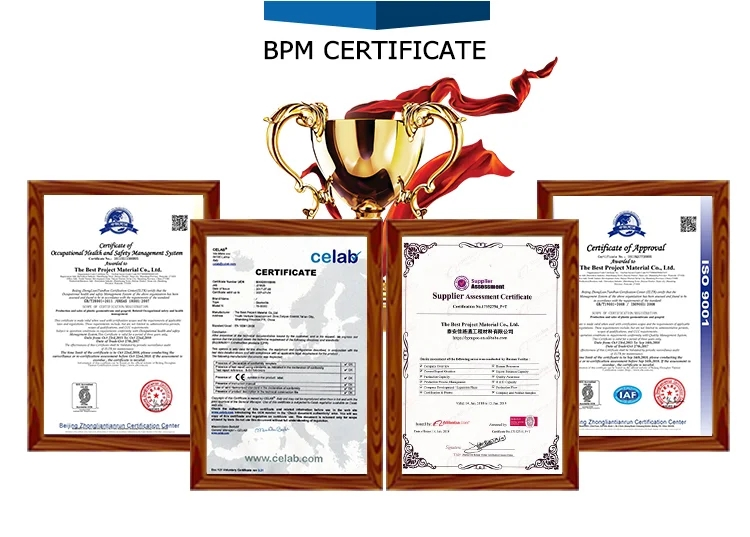
ISO9001 Certificated Geomembrane Factory.
Meet or Exceed All Aspects of GRI GM13.
Complete Width and Thickness Specifications.
Competitive Factory Price.
ODM/OEM are Available.
Applications of China HDPE Geomembrane Industrial Landfill Liner System
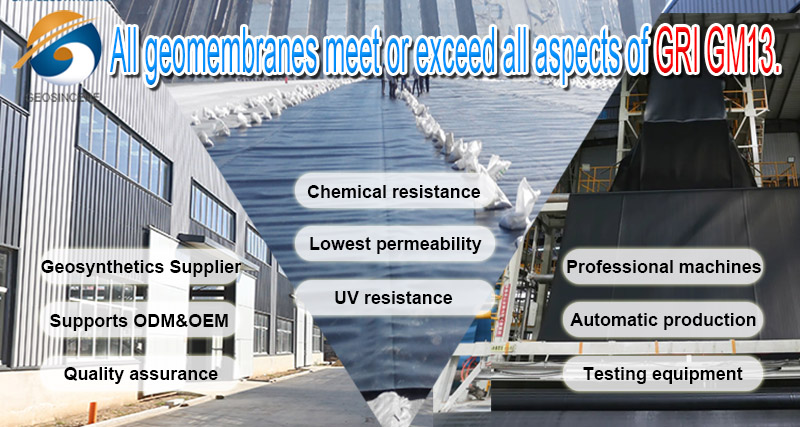
China HDPE geomembrane industrial landfill liners have a wide range of applications in the management and containment of solid and hazardous waste. Here are some common applications of HDPE geomembrane landfill liners in China:
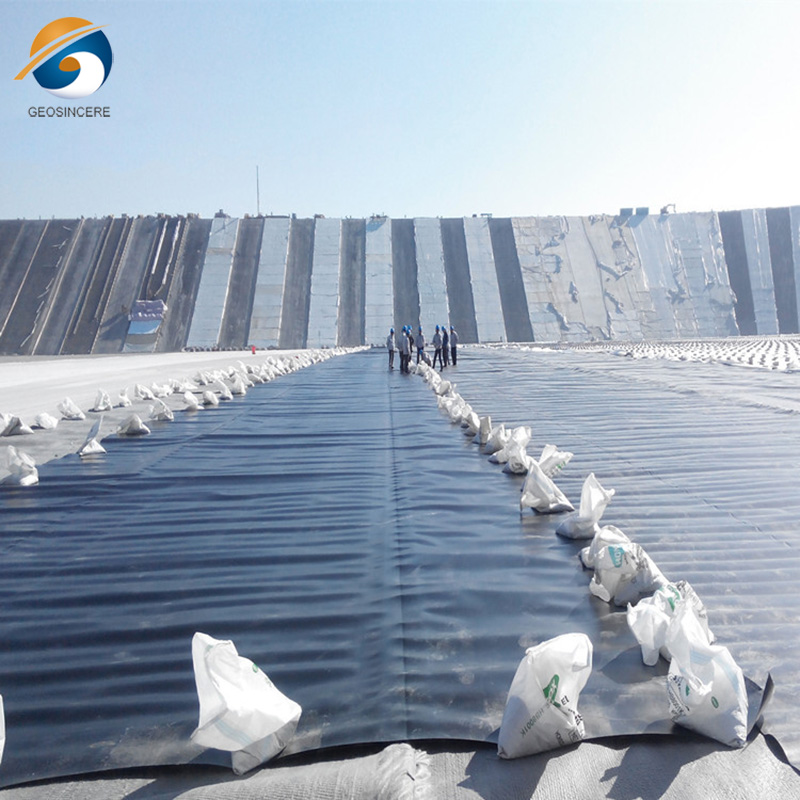
Landfill Liners: HDPE geomembrane liners are widely used as primary liners in landfill cells to prevent the migration of leachate (liquid waste) from the landfill into the soil and groundwater. They serve as a critical barrier to protect the environment from potential contamination.
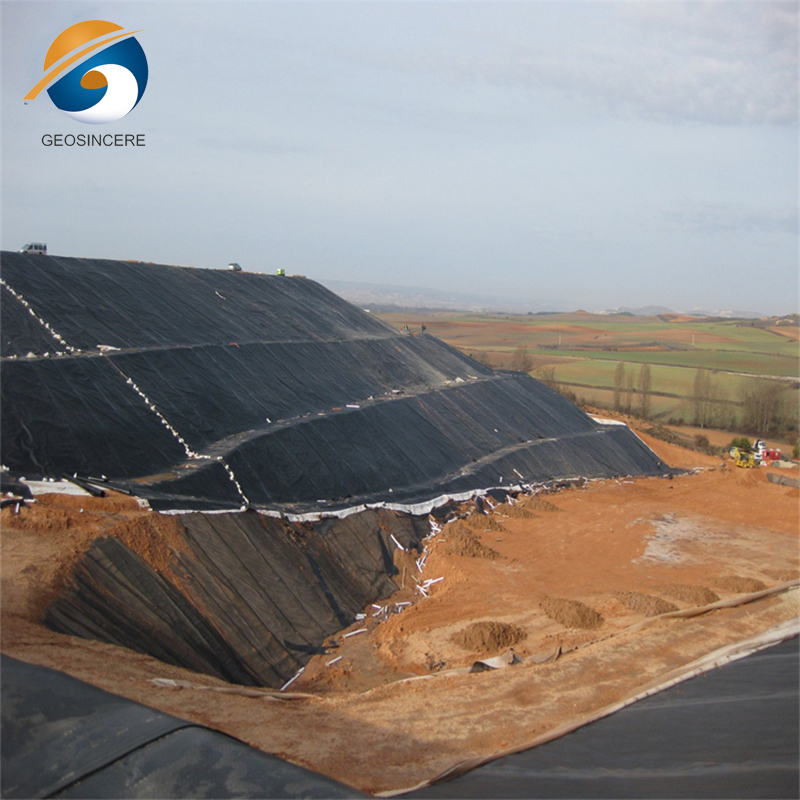
Landfill Caps and Covers: HDPE geomembrane liners are also utilized as closure caps and covers for landfill sites. These liners help to prevent the infiltration of water into the waste mass, minimize the release of gases, and provide a barrier against windblown debris.
Waste Containment Ponds: In industrial facilities, HDPE geomembrane liners are employed in the construction of containment ponds for the storage and treatment of liquid waste. The liners prevent the seepage of hazardous substances into the surrounding soil and groundwater, ensuring environmental protection.
Industrial Storage Facilities: HDPE geomembrane liners are used in the construction of storage facilities for various industrial materials and chemicals. These liners provide containment for potentially hazardous substances, preventing their release into the environment.
Mining Applications: HDPE geomembrane liners are utilized in mining operations for various purposes, including the containment of tailings (waste materials from mineral processing) and the lining of mine pits and ponds. The liners help to control the migration of pollutants and protect water resources.
Environmental Remediation: In the case of contaminated sites, HDPE geomembrane liners can be used as part of remediation efforts. They are employed to isolate and encapsulate contaminated soil or waste materials, preventing further spread of pollutants.
Waste Water Treatment: HDPE geomembrane liners are utilized in wastewater treatment plants to line tanks, lagoons, and other containment structures. They prevent the leakage of treated or untreated wastewater, ensuring proper management of effluents.
Agriculture and Aquaculture: HDPE geomembrane liners are employed in agricultural applications such as irrigation ponds and water storage reservoirs. They help to retain water, prevent seepage, and protect water resources. Additionally, they are used in aquaculture facilities to line fish ponds and prevent water loss.
Product Packing
Selling Packing:Customer's company Logo mark can be designed and added.
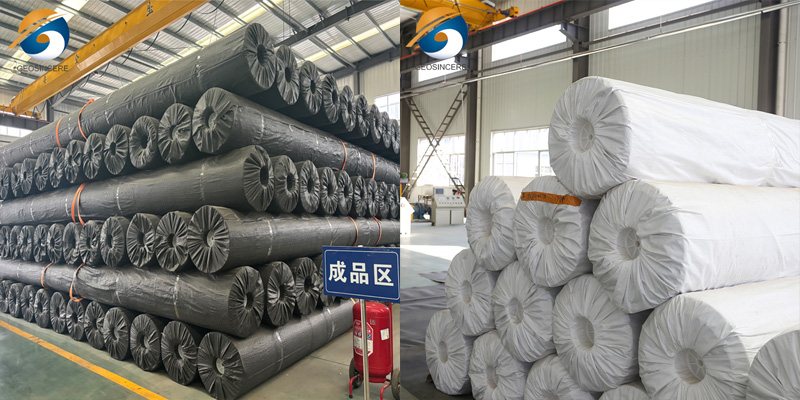
Outer Packing:Packed in Double-layer woven bags to ensure smooth arrival and avoid rough handling.
Transport Packing: Put in the container.
Company Profile
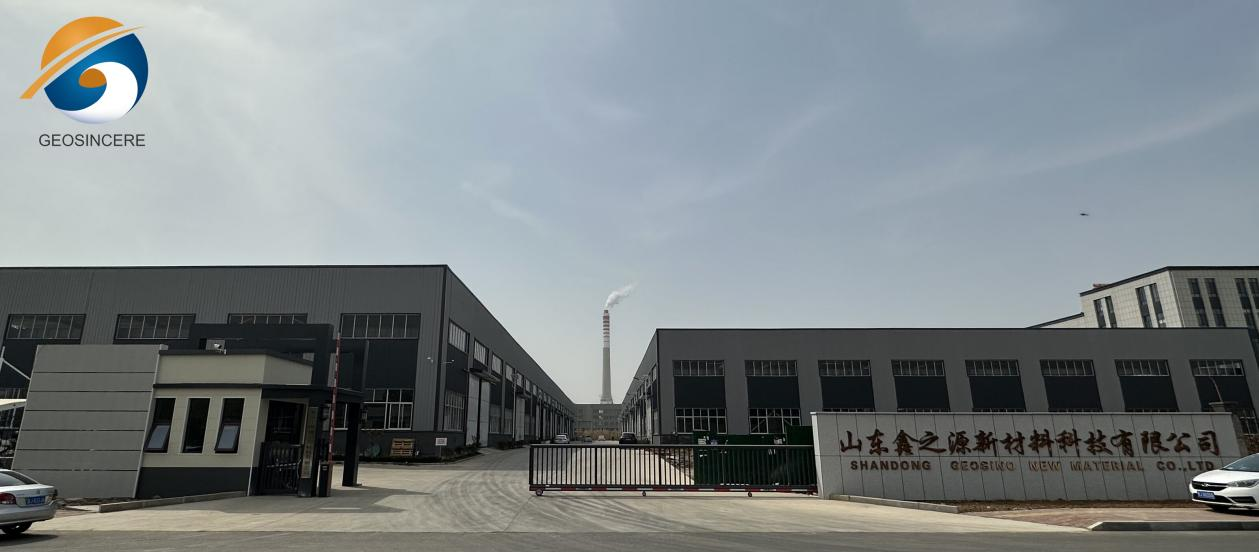
Shandong GEOSINO New Material Co.,Ltd (Brand:Geosincere) is the professional geomembrane and geosynthetics manufacturer and wholesaler located in Taian City, Shandong Province, PRChina. We are not a local overseas distributer, we are an professional manufacturer, exporter and wholesaler for such geosynthetic products as geomembanes, geotextiles, geogrids, geocells, geosynthetic clay liners (GCLs), drainage boards, etc. GEOSINCERE is always committed to geomembrane research and development, manufacturing and installation services. We can provide our customers with most extensive lines of geomembranes and geotextiles for civil, mining, environmental and aquaculture engineering applications.
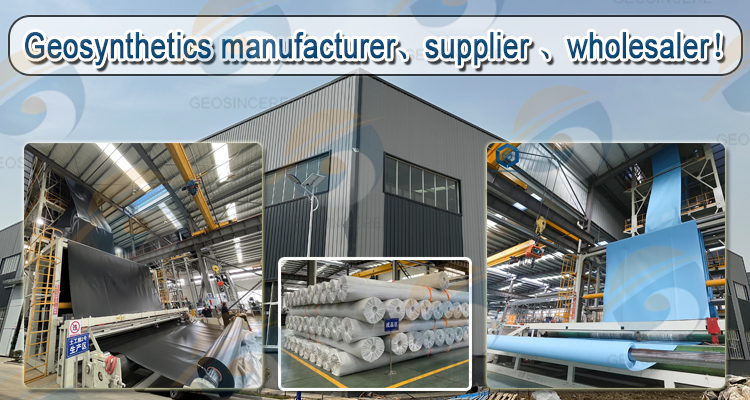
GEOSINCERE has been keeping on investing in technological innovation, manufacturing facilities improvement and turnkey engineering abilities. We have invested 10 million dollars into our manufacturing factory which is equipped with state-of-the-art automatic production lines to manufacture high quality geomembranes and other geosynthetics with optimized processes. GEOSINCERE has over 160 employees and its own 24,000 square meters state-of-art manufacturing factory with many automatic geosynthetic production lines, professional machines and testing equipment.Our extensive lines of geosynthetics products are well known for their ensured quality, high performance, excellent durability and best cost effectiveness. GEOSINCERE brand geomembranes and other geosynthetics products and solutions can meet your requirements by our solid technologies, innovative engineering solutions and excellent customer services. GEOSINCERE always tries our best to solve the most complex civil, mining and environmental challenges with our innovative and high performance geosynthetic products. Quality assurance, factory price and fast delivery time are our competitive advantages.

Hope to be your partner!


