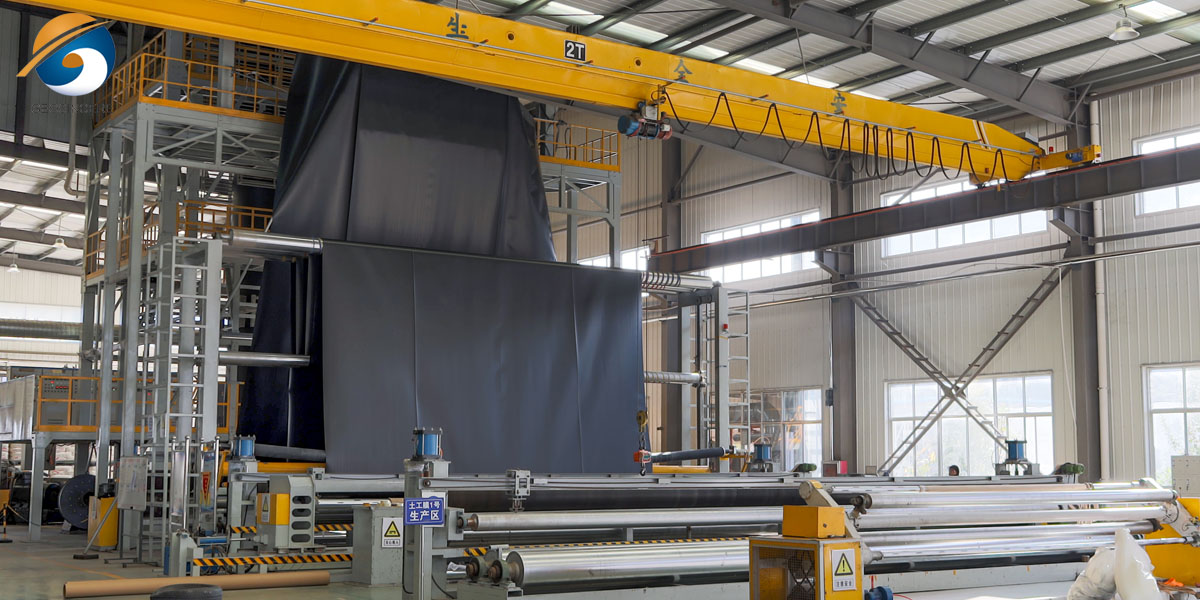
What is the Role of Geomembrane Liner Landfill?
Today, we produce more waste than ever, and respectively, the challenge to dispose of municipal and industrial solid waste in a safe and environmentally friendly way remains one of the main problems that humankind has to deal with. The modern engineered landfill is not just a simple "dump" where waste is being thrown carelessly, but rather a highly complex containment system meant to keep the waste isolated from the nearby environment. Geomembrane liner represent a crucial component that is at the core of this safety system. As the main hydraulic barrier, geomembrane liner landfill is absolutely essential for completely preventing the movement of contaminated leachate, which is a toxic mixture that results from rainwater percolation, into the soil below the landfills and groundwater. The article touches on many aspects of practicality, material science, installation, longevity, etc. of how geomembrane landfill liner serve as both the cornerstone of environmental protection and advanced landfill technology.
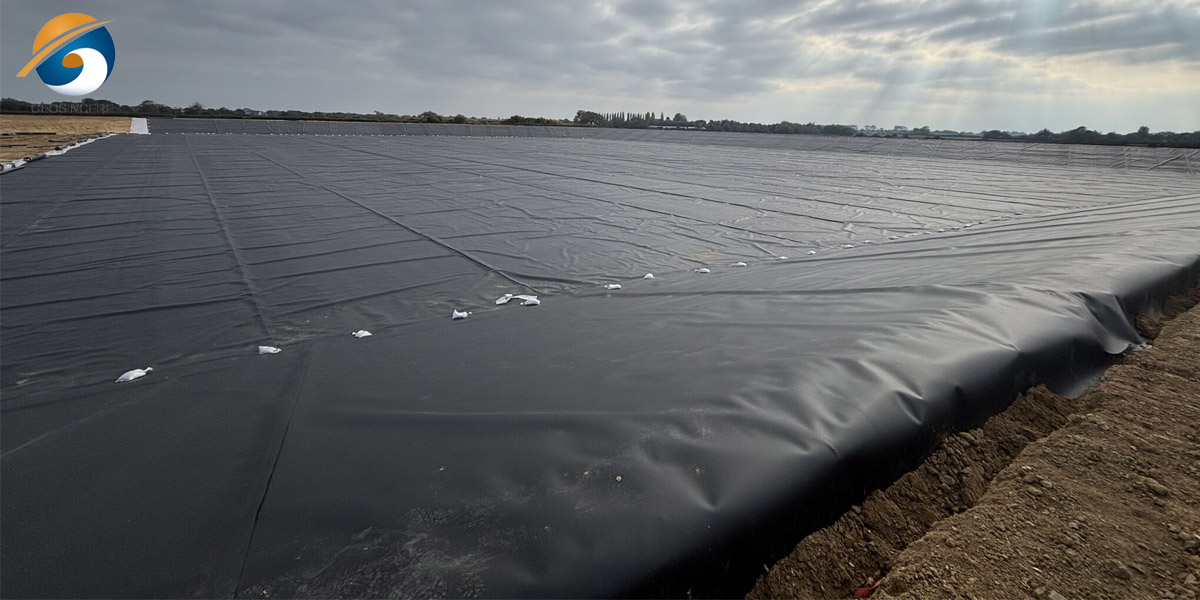
1. The Imperative for Containment: From Open Dumps to Engineered Barriers Using Geomembrane Liner Landfill
Geomembrane liner landfill was a common practice in the past to dispose of waste in unlined pits, which resulted in serious pollution of water supplies and health hazards to people. Later on, the concept of a "sanitary landfill," thereby, containment, was introduced, with the first liner material being compacted clay. Still, clay liner is not impermeable; also, they may be damaged due to uneven settling or drying out. Synthetic geomembranes were the turning point in landfill development. These manufactured sheets are very flexible and have an incredibly low permeability, thus, a single sheet can be considered a very efficient barrier. For the best of both worlds, Chapter 258 (Subtitle D) in the United States and similar regulations around the world require composite liner systems that combine a clay liner with a geomembrane. This way, the synthetic sheet's low permeability and the clay's attenuation capacity are utilized.
2. Different Geomembrane Liner Landfill and Their Characteristics
Not all plastics can serve satisfactorily in this tough use case. Geomembrane liners come from a variety of polymer resins base, and each has a set of chemical, mechanical, and endurance characteristics.
2.1 High-Density Polyethylene (HDPE)
HDPE is currently the most popular choice of geomembrane for landfill. Geo membranes features mostly the following characteristics: exclusive resistance to chemicals (very important for the treatment of harsh leachates), high mechanical strength, low permeability, and cost competitiveness. Both smooth and textured types are offered (the latter also improving the interface friction with soils and geosynthetics). HDPE geomembrane is the only material running the risk of issue with stress cracking, which is usually solved by the selection of resin and the welding process quality.
2.2 Linear Low-Density Polyethylene (LLDPE)
Is more flexible and can elongate to a greater extent than HDPE, that is why it is more suitable for subgrade indistinctness and less likely to cause stress cracking. The difference in the use of these two materials refers mainly to cases where differential settlement is the issue.
2.3 Polyvinyl Chloride (PVC)
Thanks to its high flexibility and ability to be seamed, PVC geomembrane can be installed more easily on complex shapes. Nevertheless, compared to primary landfill liners, it has been found that the resistance of PVC liner to chemicals, exposure to UV, and the migration of plasticizers is comparatively less. That is why it is more frequently used for secondary containment or canals.
2.4 Flexible Polypropylene (fPP) and Reinforced Polyethylene (RPE)
fPP has high flexibility and is resistant to a considerable range of chemicals. By incorporating the scrim grid, the RPE offers exceptional tensile strength for the instance when a high load-bearing capacity is a necessity.
2.5 Ethylene Propylene Diene Monomer (EPDM)
This synthetic rubber is mainly recognized for its high resistance to UV and weather conditions but is less likely to be a primary base liner because of the issue of seam strength.
The choice is based on a thorough evaluation of leachate nature, weather conditions, ground conditions, intended lifespan, and the budget of the project, but in general HDPE keeps its position as the most popular material for primary landfill liner usage.
3. The Anatomy of a Geomembrane Liner Landfill System: More Than Just a Sheet
Typically,a geomembrane sheet is never placed alone. It is an integral component of a well-thought-out composite assembly that plays a crucial role in achieving a high level of containment, environmental sustainability, and compliance with the law and regulations. The various elements of a landfill liner system cross-section, listed from bottom to top, are as follows:
3.1 Prepared Subgrade
The ground layer is extensively smoothed and compressed to make sure the weight is evenly distributed. It is necessary for the ground to be devoid of any sharp rocks, roots, or trash because these could create pressure points that might cause damage to the liner system above.
3.2 Leachate Collection Layer
Granular materials that are very efficient at allowing water to pass through, such as gravel or some essentially manufactured geonets, are what make up this layer. Its main purpose is to collect the leachate and direct it to the leachate collection pipes while at the same time, minimizing the hydraulic pressure on the hdpe membrane.
3.3 Protective Geotextile
On top of the drainage layer, a protective geotextile is added for the purpose of safeguarding the hdpe geomembrana against puncture or abrasion that might be caused by the aggregate, equipment loads, or the waste placement during the landfill operations.
3.4 Primary Composite Liner
The main barrier enclosing the waste is a high density polyethylene geomembrane landfill liner system, usually with a thickness between 1.5 and 2.5 mm, that is laid right over a compacted clay liner (CCL).
3.5 Leak Detection System (Secondary Liner)
There is a secondary clay layer and a geo membrane sheet under the primary liner in a double-lined landfill. The leak detection system allows for the quick leak detection and provides a layer of protection for the environment and assurance to the regulators.
3.6 Final Cover System
Upon landfill shutdown, the final covering system is installed—usually, this includes a geomembrana in hdpe over a clay layer—to keep out rainwater, control landfill gas emissions, and guarantee the site’s stability and environmental safety in the long run.
This whole multi-layered system composition ensures that the geomembrane liner landfill system stays an effective, long-lasting barrier against contamination of the environment.
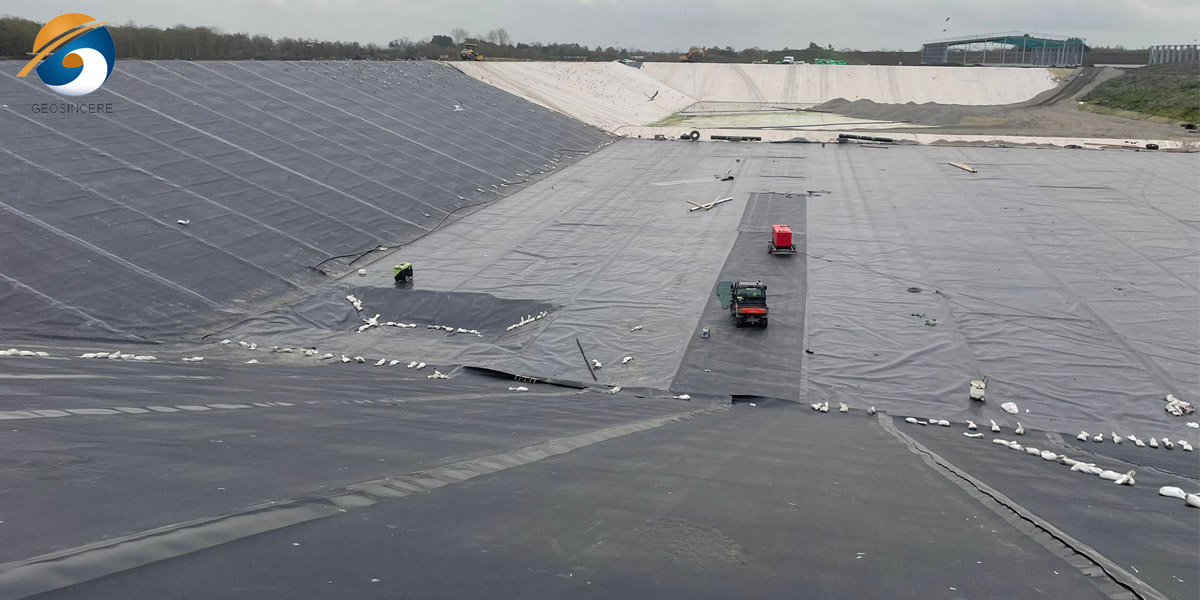
4. Geomembrane Liner Landfill Installation: A Crucible of Quality Assurance
It would be pointless to manufacture a brilliant hdpe geo membrane roll if the field installation were careless and poorly done. It is the installation stage that requires the most skills because this is where the liner is placed, joined, and tested.
4.1 Panel Deployment and Scanning
Massive panels are unrolled and oriented to reduce the number of seams to the least. The scanning process is what makes the barrier continuous and is, therefore, the most important step. For HDPE and LLDPE, thermal fusion welding (dual hot wedge or extrusion) is the norm, and here the polymer is being melted to create a uniform, strong seam. For every inch of the seam, there is a meticulous inspection.
4.2 Quality Control and Assurance (QC/QA)
A robust QC/QA program is non-negotiable. It includes:
4.3 Destructive Testing
Field seams’ pieces are cut out and tested in a lab for shear and peel strength.
4.4 Non-Destructive Testing (NDT)
The main methods are air lance testing (using compressed air to detect unbonded seams) and vacuum box testing (for the patched areas and details). More advanced techniques such as electrical leak location (ELL) surveys are performed on the installed geomembrane liner before the cover; this high-voltage method is capable of detecting holes as small as a pinhole, thus ensuring the integrity of the landfill before it is put into operation.
4.5 Protection and Covering
After verification, the hdpe geomembrane liner has to be layered with a protective one (geotextile and drainage) in order to guard it against UV degradation, wind uplift and any kind of damage during waste placement.
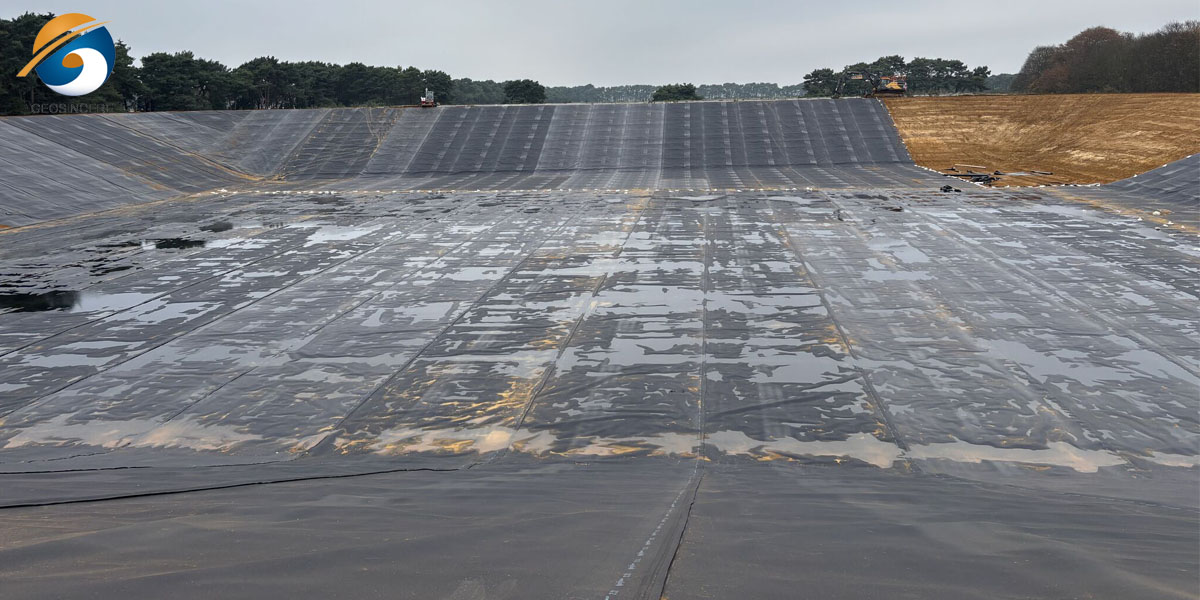
5. Geomembrane Liner Landfill Long-Term Performance and Durability Considerations
One of the main reasons a landfill is designed to contain a substance over such a long time is that it is a concern for the environment. For this reason, the long-term performance of the geomembrane liner becomes a central concern.
5.1 Degradation Mechanisms
Among them are oxidative degradation (which is accelerated by heat, stress, and certain chemicals), stress cracking and biological degradation (however, most polymers are highly resistant). Today’s resins have antioxidants and carbon black (for UV stabilization) included to effectively slow down these processes significantly.
5.2 Service Life Predictions
They employ methods such as the modeling of antioxidant depletion rates by Arrhenius which helps manufacturers and engineers to forecast service life. If high-quality HDPE geomembranes are installed correctly and are well protected, they are expected to maintain their essential barrier functions for a few hundred years under average landfill conditions. This "design life" is well beyond the facility’s operating period.
6. Beyond the Base: Geomembrane Liner Landfill Caps and Closure
Geomembranes cover landfill bases and extend to the top as well. In a final cover system, a geomembrane cap serves as a water infiltration barrier, thus minimizing the leachate generation post-closure. Also, hdpe landfill liner cooperates with gas collection layers in the containment of methane emissions. The challenges at this level are different compared to the base liner and they have to do with the exposure to settlement, root penetration, and the requirement of slope stability.
Conclusion
A modern geomembrane liner landfill is essentially a silent hero, a technology that makes it possible for society to keep its waste under control in a responsible way. It stands for the success of geosynthetic engineering from the aspect of a very accurate chemistry of the polymer resins to the precise art of field seaming and integrity testing. As landfill designs move closer to even more safety and the remediation of the old, unlined sites continues, the geomembrane liner landfill will still be the main barrier ensuring that the valuable groundwater resources are guarded and that environmental health is protected for future generations. Its successful implementation stands for the fusion of material science, strict engineering, and constant quality assurance in the service of planet stewardship.
Choose a Reliable Supplier to Quote Price for You
Shandong Geosino New Material Co., Ltd. (GEOSINCERE Geosynthetics) has been keeping on investing in technological innovation, manufacturing facilities improvement and turnkey engineering abilities. We have invested 10 million dollars into our manufacturing factory which is equipped with state-of-the-art automatic production lines to manufacture high quality HDPE geomembranes and other geosynthetics with optimized processes. Our extensive lines of geosynthetics products are well known for their ensured quality, high performance, excellent durability and best cost effectiveness.
GEOSINCERE Geosynthetics has been keeping on investing in technological innovation, manufacturing facilities improvement and turnkey engineering abilities. We have invested 10 million dollars into our manufacturing factory which is equipped with state-of-the-art automatic production lines to manufacture high quality Geosynthetic clay liners and other geosynthetics with optimized processes. Our extensive lines of geosynthetics products are well known for their ensured quality, high performance, excellent durability and best cost effectiveness.
GEOSINCERE Geosynthetics brand HDPE geomembranes and other geosynthetics products and solutions can meet your requirements by our solid technologies, innovative engineering solutions and excellent customer services. GEOSINCERE Geosynthetics always tries our best to solve the most complex civil, mining and environmental challenges with our innovative and high performance geosynthetic products. Quality assurance, factory price and fast delivery time are our competitive advantages.